

Method and apparatus for signaling ad-hoc group of mobile units
- Summary
- Abstract
- Description
- Claims
- Application Information
AI Technical Summary
Benefits of technology
Problems solved by technology
Method used
Image

Examples
Embodiment Construction
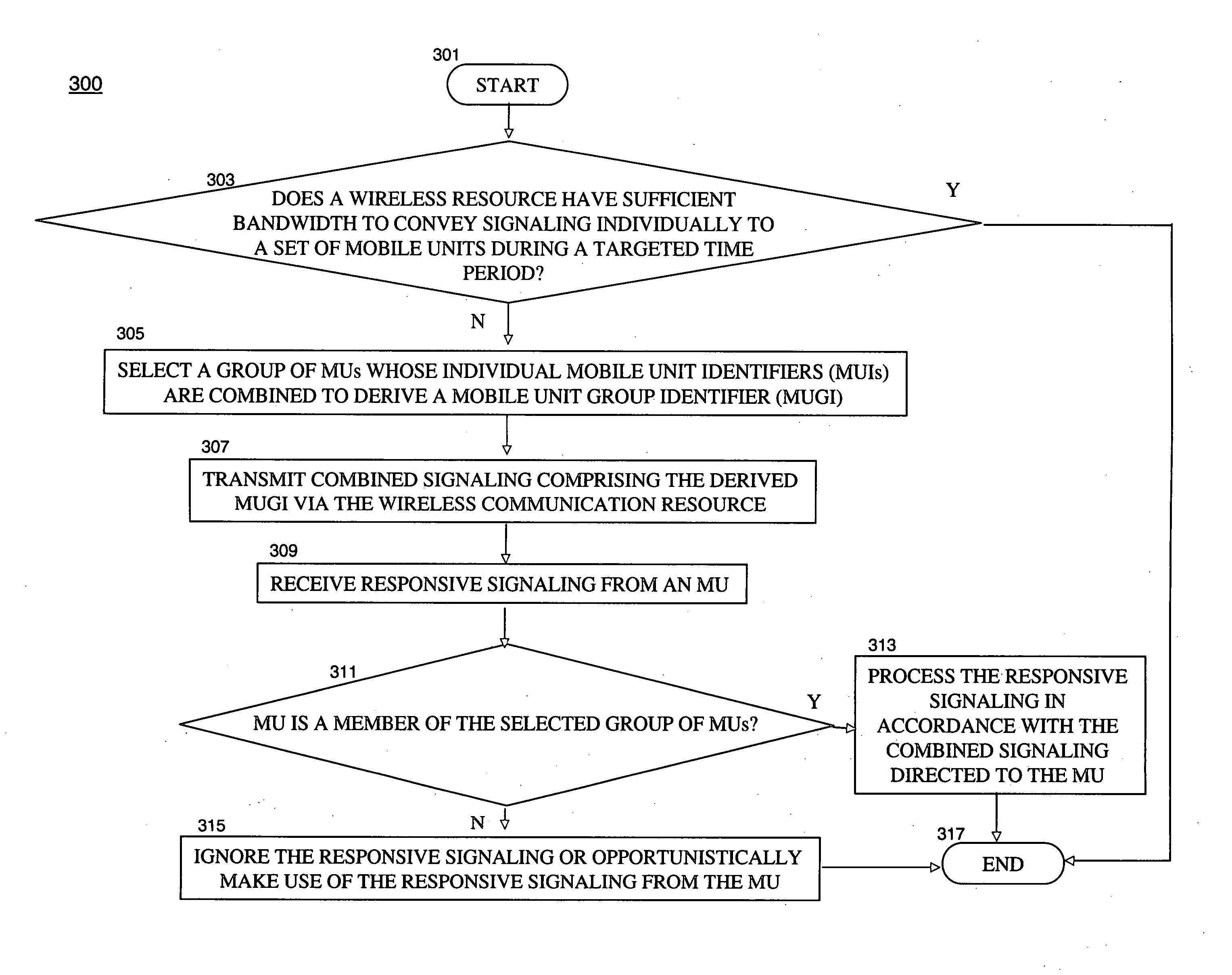
[0010] Various embodiments are described for signaling an ad-hoc group of mobile units (MUs). The ad-hoc group may merely be a group of MUs for which signaling awaits transmission via a wireless communication resource. Signaling such a group involves deriving a mobile unit group identifier (MUGI) by combining individual mobile unit identifiers (MUIs) of the targeted ad-hoc group. The individual MUIs are either an identifier of each MU or derived from an identifier of each MU. The derived MUGI is then included in combined signaling that is transmitted via the wireless communication resource. A receiving MU determines whether the MUGI could have been derived from its MUI in combination with at least one other MU's MUI. When it determines that the MUGI could have been derived from its MUI, the receiving MU processes the signaling as directed to itself.
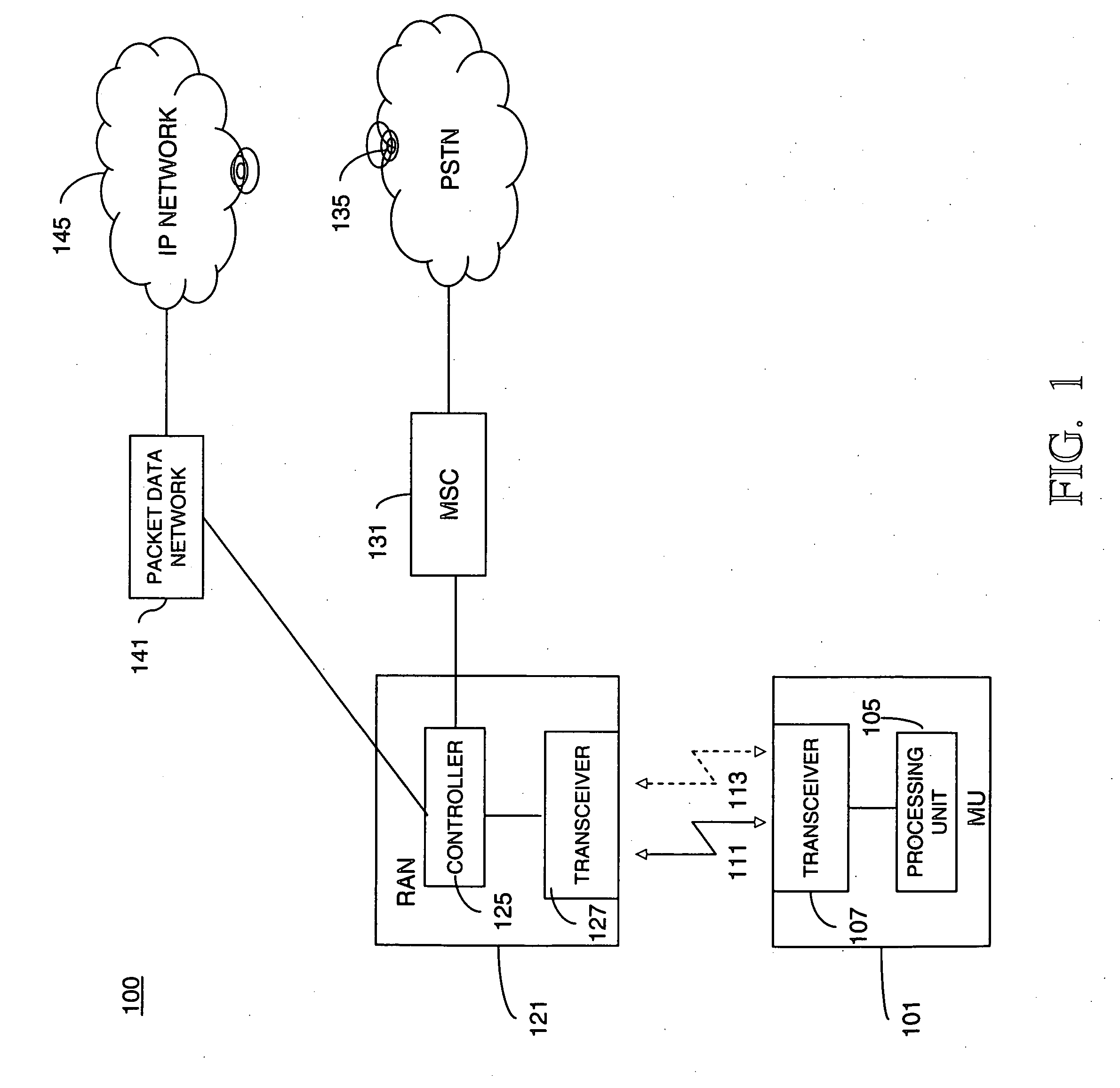
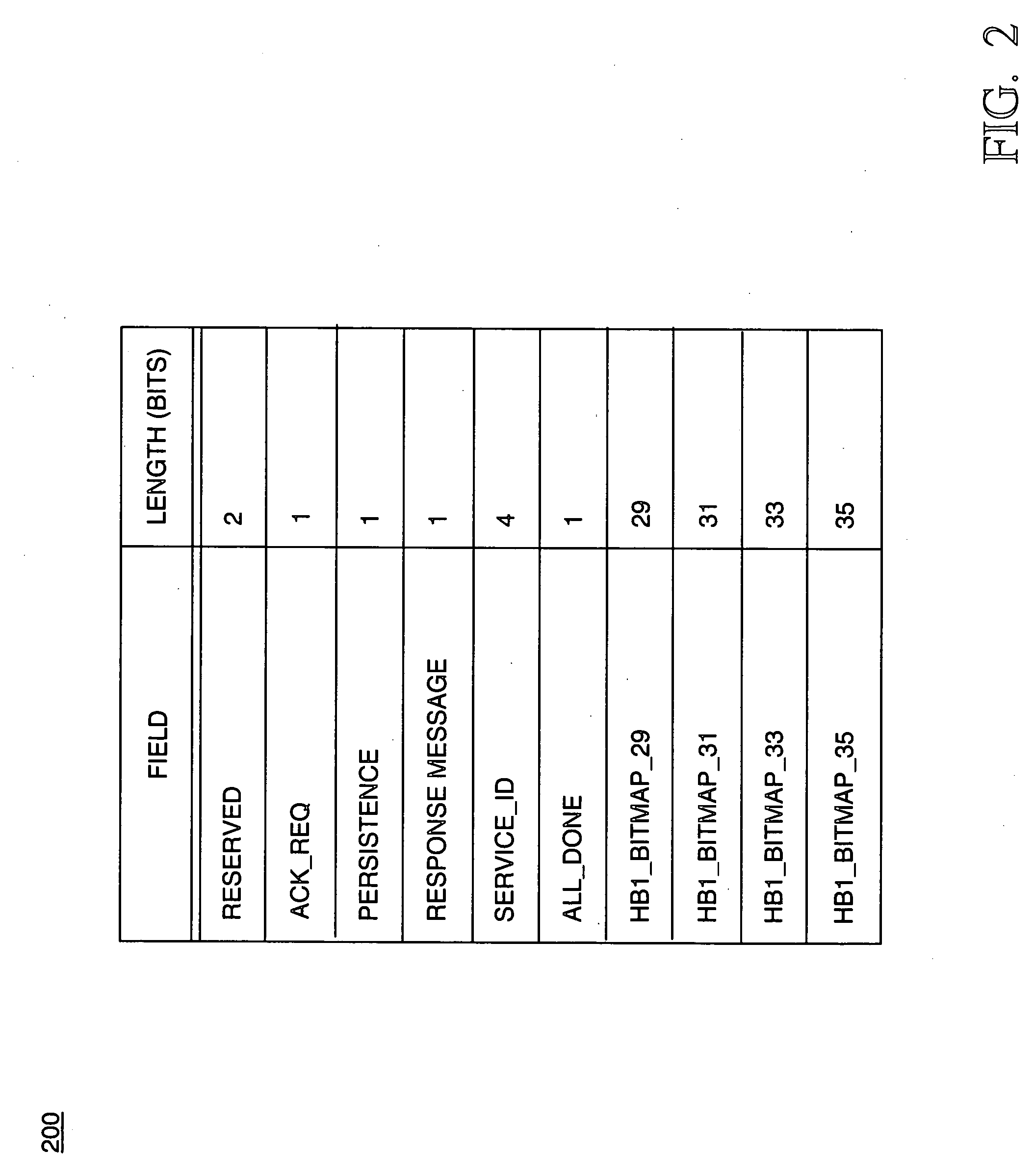
[0011] The disclosed embodiments can be more fully understood with reference to FIGS. 1-4. FIG. 1 is a block diagram depiction of a wir...
PUM
 Login to View More
 Abstract
Description
Claims
Application Information
 Login to View More