Signal processing system for tonal noise robustness

US20060265215A1Active Publication Date: 2006-11-23BLACKBERRY LTD
22 Cites 17 Cited by

Patent Information

Authority / Receiving Office
US · United States
Current Assignee / Owner
Publication Date
2006-11-23

Smart Images

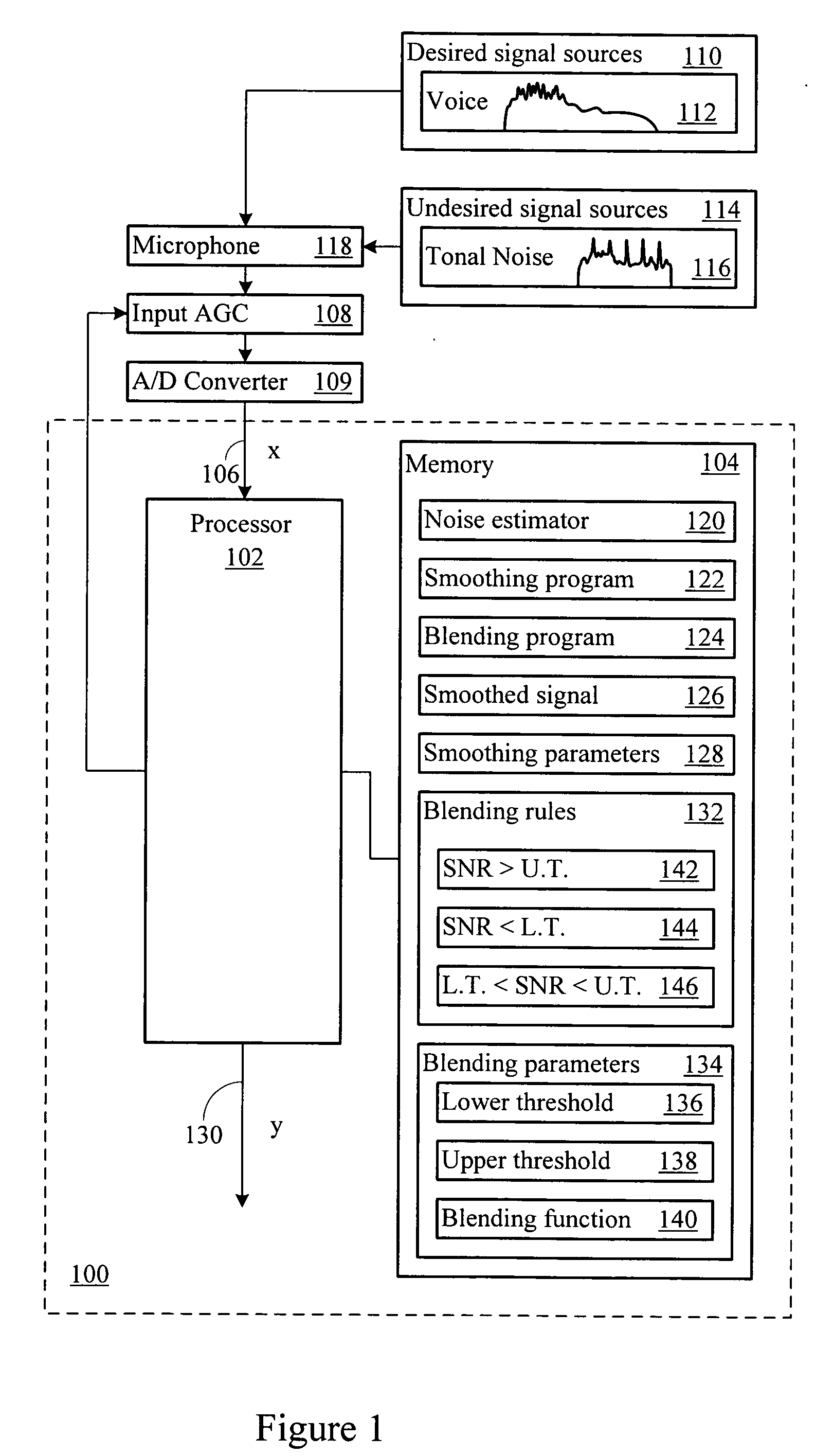
  • Figure 1
    Figure 1
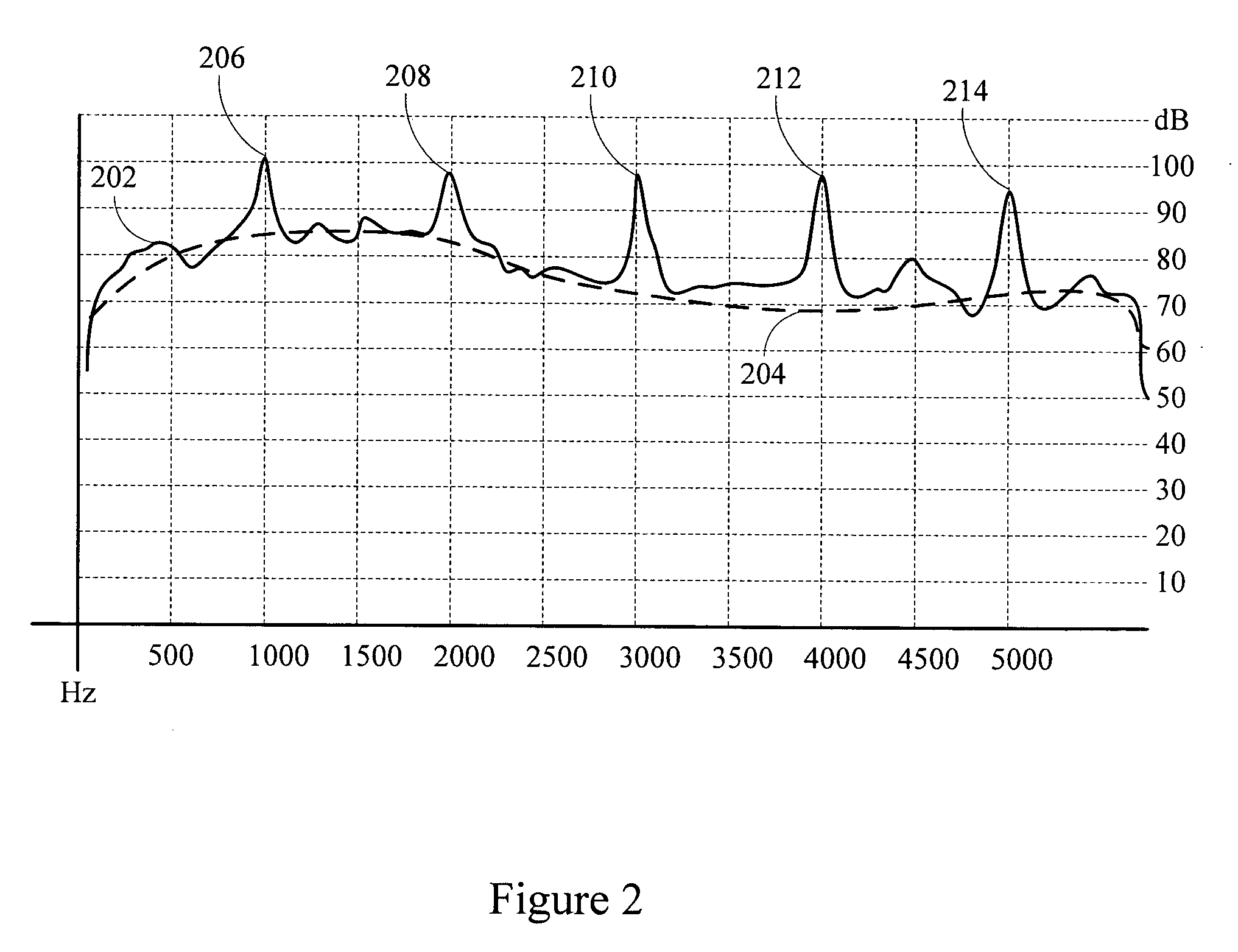
  • Figure 2
    Figure 2
  • Figure 3
    Figure 3
Patent Text Reader

Abstract

A processing system generates an output signal which includes desired signal components, and reduces or eliminates tonal noise. The output signal may be provided to any subsequent signal processing system, including voice recognition systems, pitch detectors, and other processing systems. The subsequent processing systems are less likely to mistake tonal input signal noise for desired signal content, to needlessly consume computational resources to analyze noise, and to take spurious actions induced by the tonal noise.
Need to check novelty before this filing date? Find Prior Art

Description

BACKGROUND OF THE INVENTION

[0001] 1. Technical Field

[0002] This invention relates to signal processing systems. In particular, this invention relates to a signal processing system which imparts a measure of robustness against tonal noise to other signal processing systems.

[0003] 2. Related Art

[0004] Most if not all signal processing systems must intelligently handle input signal noise. The input signal noise may mask, corrupt, distort or otherwise detrimentally affect desired components of the input signal. Input signal noise also may mimic desired input signal components and increase the difficulty of identifying, removing, or compensating for the input signal noise, regardless of the signal processing system or its purpose.

[0005] Tonal noise is one form of noise which mimics desired input signal components in some applications. For example, speech processing systems commonly detect and process voice signal components which contain harmonic activity. Vowel sounds and certain c...

Examples

Embodiment Construction

[0026] A signal processing system reduces the likelihood of detecting tonal noise as a signal component of interest for further processing. The signal processing system provides an output signal for subsequent processing circuitry or logic. The output signal includes desired signal content present in the input signal, while reducing or eliminating tonal noise. The subsequent processing stages may avoid spending time or computational resources to process noise which has been mistaken as a signal of interest.

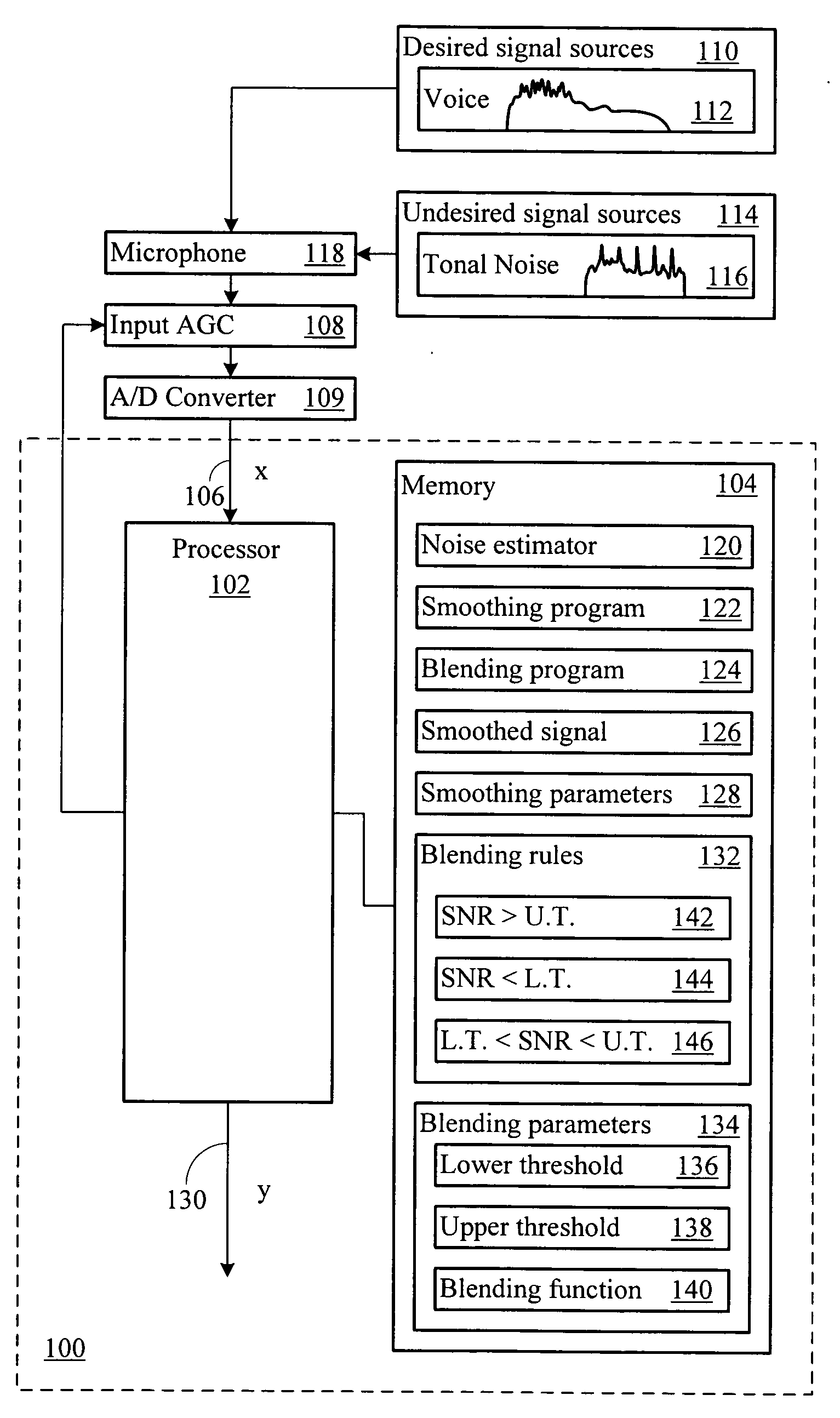
[0027] In FIG. 1, a processing system 100 includes a processor 102 and a memory 104. The processor 102 may control an automatic gain controller108 to establish or maintain a desired dynamic range for the input signal ‘x’106. The processor 102 receives the input signal ‘x’ and may digitize the input signal ‘x’106 with an analog to digital converter (ADC). The ADC may be part of or may be separate from the processor 102. Alternatively or additionally, the processor 102 may receive ...