
Anatomically approximate prosthetic mitral heart valve
a prosthetic and mitral valve technology, applied in the field of medical devices, can solve the problems of reducing the amount of oxygen supplied to the body, deteriorating quickly, and complex manufacturing process of tissue heart valves, and achieve the effect of reducing the overall height profile of the valve and increasing the area of the orifice valv
- Summary
- Abstract
- Description
- Claims
- Application Information
AI Technical Summary
Benefits of technology
Problems solved by technology
Method used
Image

Examples
Embodiment Construction
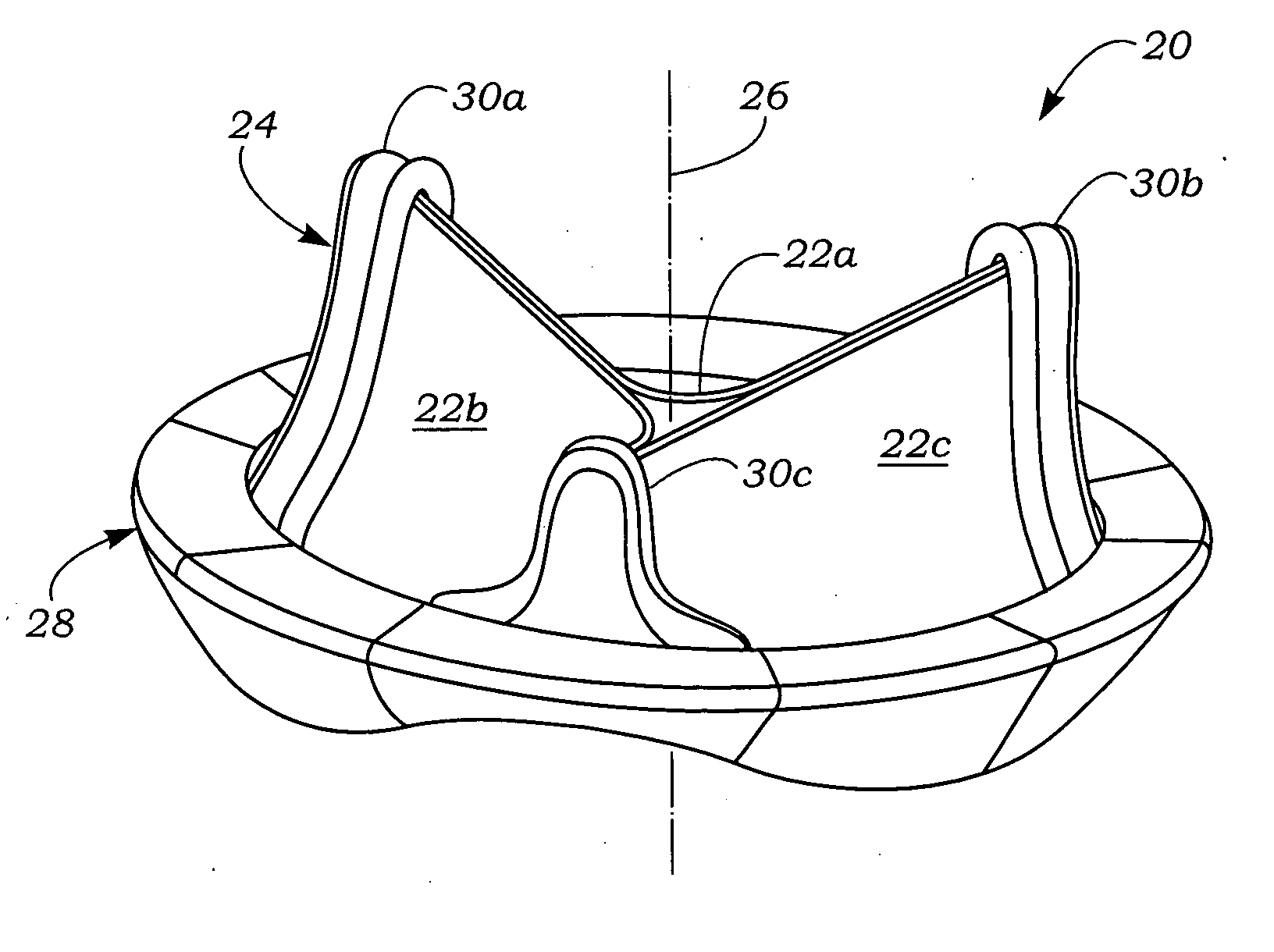
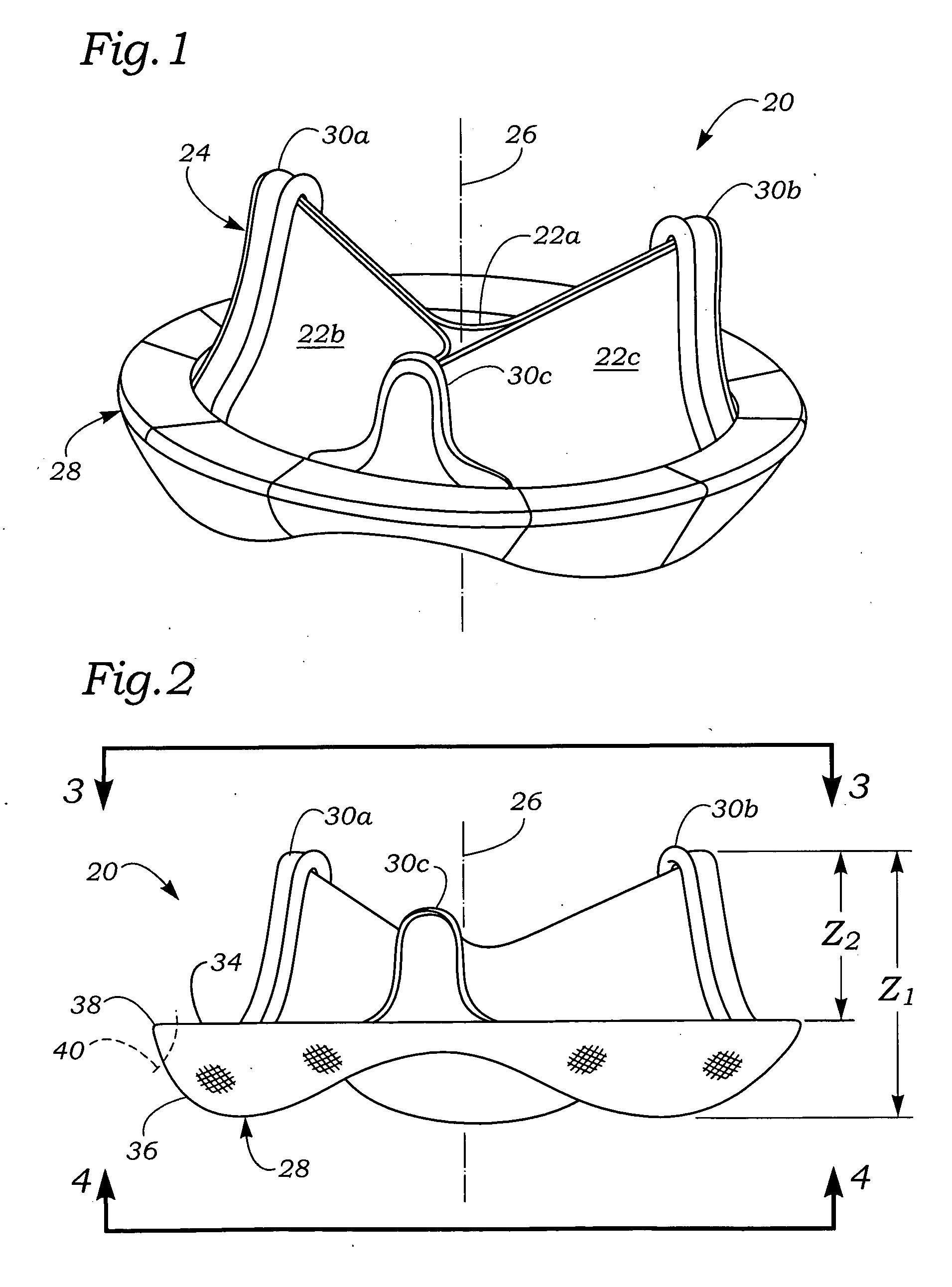
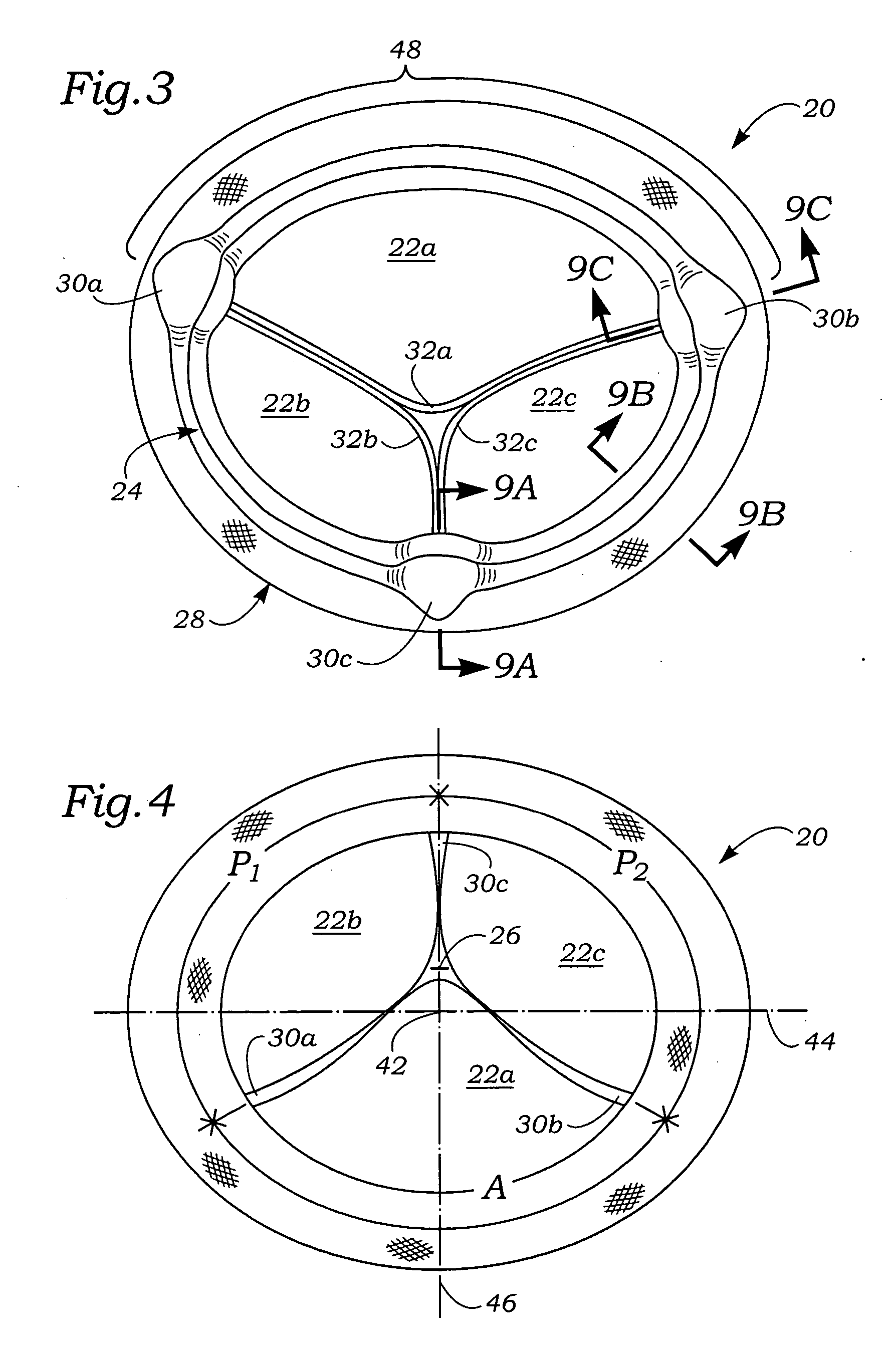
[0028] The present invention pertains to prosthetic heart valves that simulate the natural human heart valve anatomy, in particular for the mitral valve. For instance, the shape of the flow orifice is non-circular so as to mimic the shape of the mitral annulus in the systolic phase. Also, in a preferred embodiment three leaflets are utilized with at least one being substantially different than the other two. The reader will see from the following description and appended drawings various features of the exemplary valves that are intended to mimic the natural mitral valve. However, because of the nature of prosthetic heart valves in terms of durability and implantation requirements, a prosthetic valve cannot precisely mirror a natural valve. Accordingly, the prosthetic mitral valve disclosed herein is termed “anatomically approximate” to indicate one or more modifications from conventional prosthetic valves that render it more like a natural valve. It should be noted that one or more...
PUM
 Login to View More
 Abstract
Description
Claims
Application Information
 Login to View More