
Ophthalmic lens element
a technology of ophthalmology and lens elements, applied in the field of ophthalmology lens elements, can solve the problems of hyperopic foveal blur, eye cannot properly focus near objects on the retina, and the eye cannot properly focus distant objects on the retina
- Summary
- Abstract
- Description
- Claims
- Application Information
AI Technical Summary
Benefits of technology
Problems solved by technology
Method used
Image

Examples
Embodiment Construction
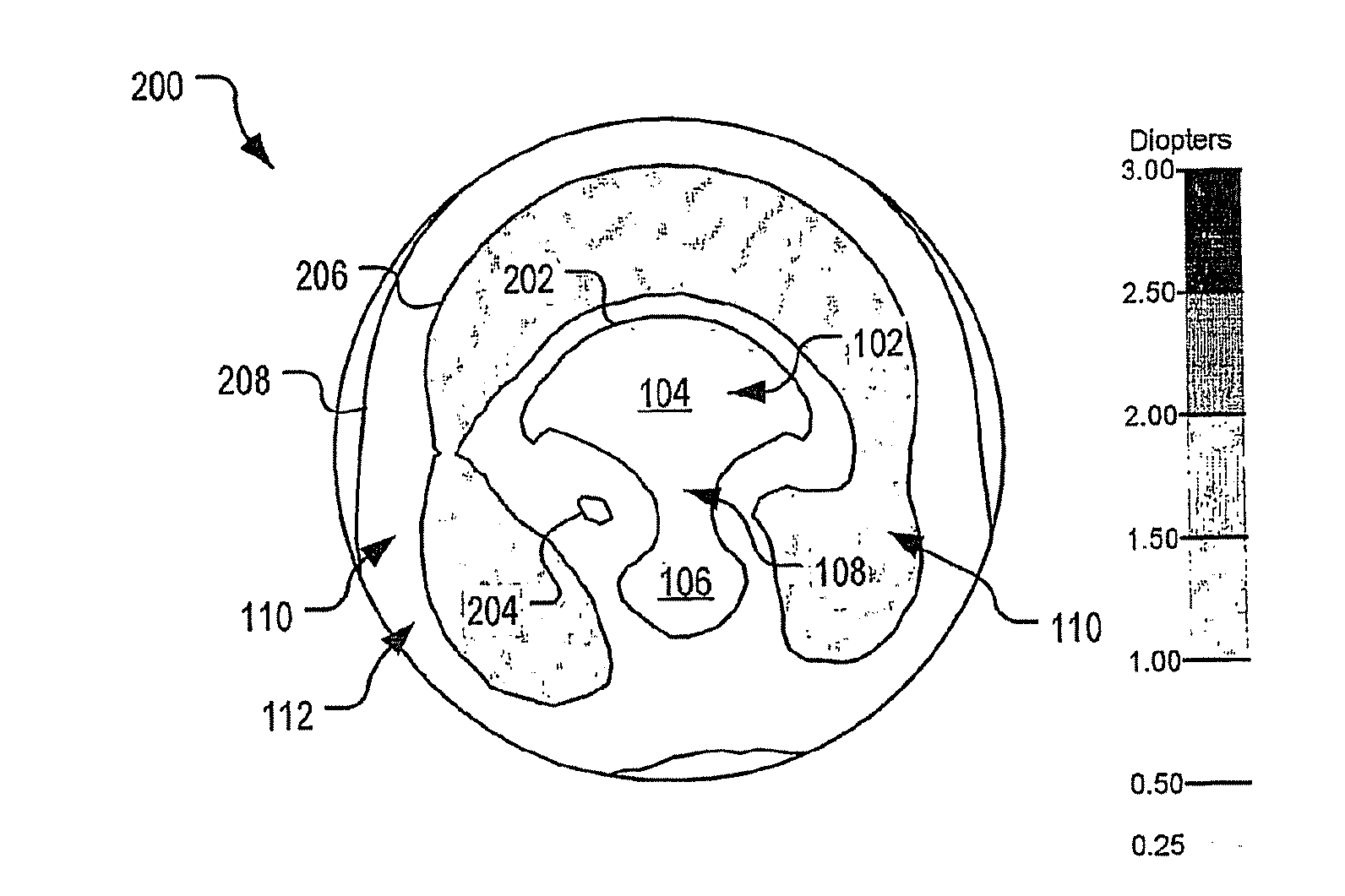
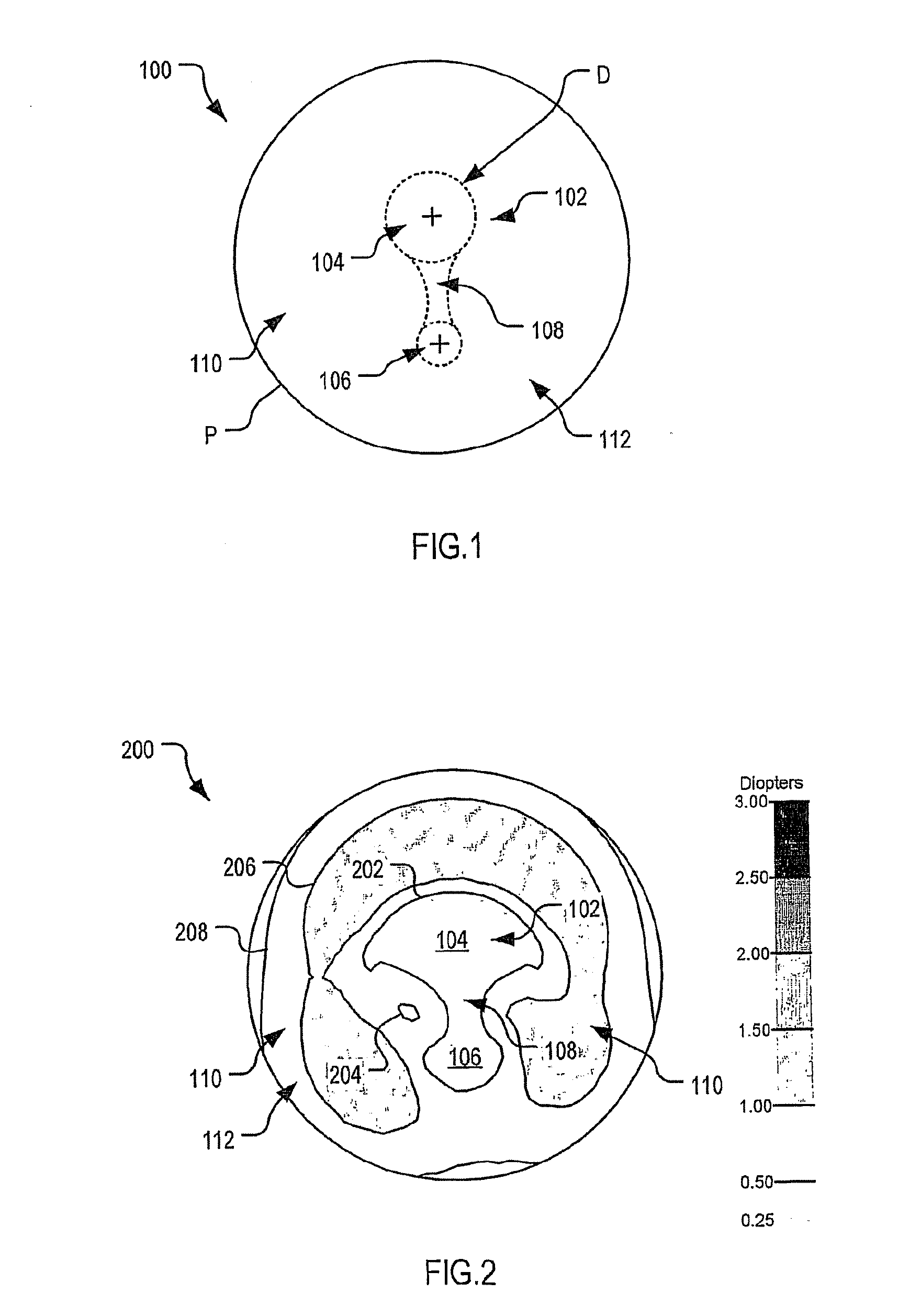
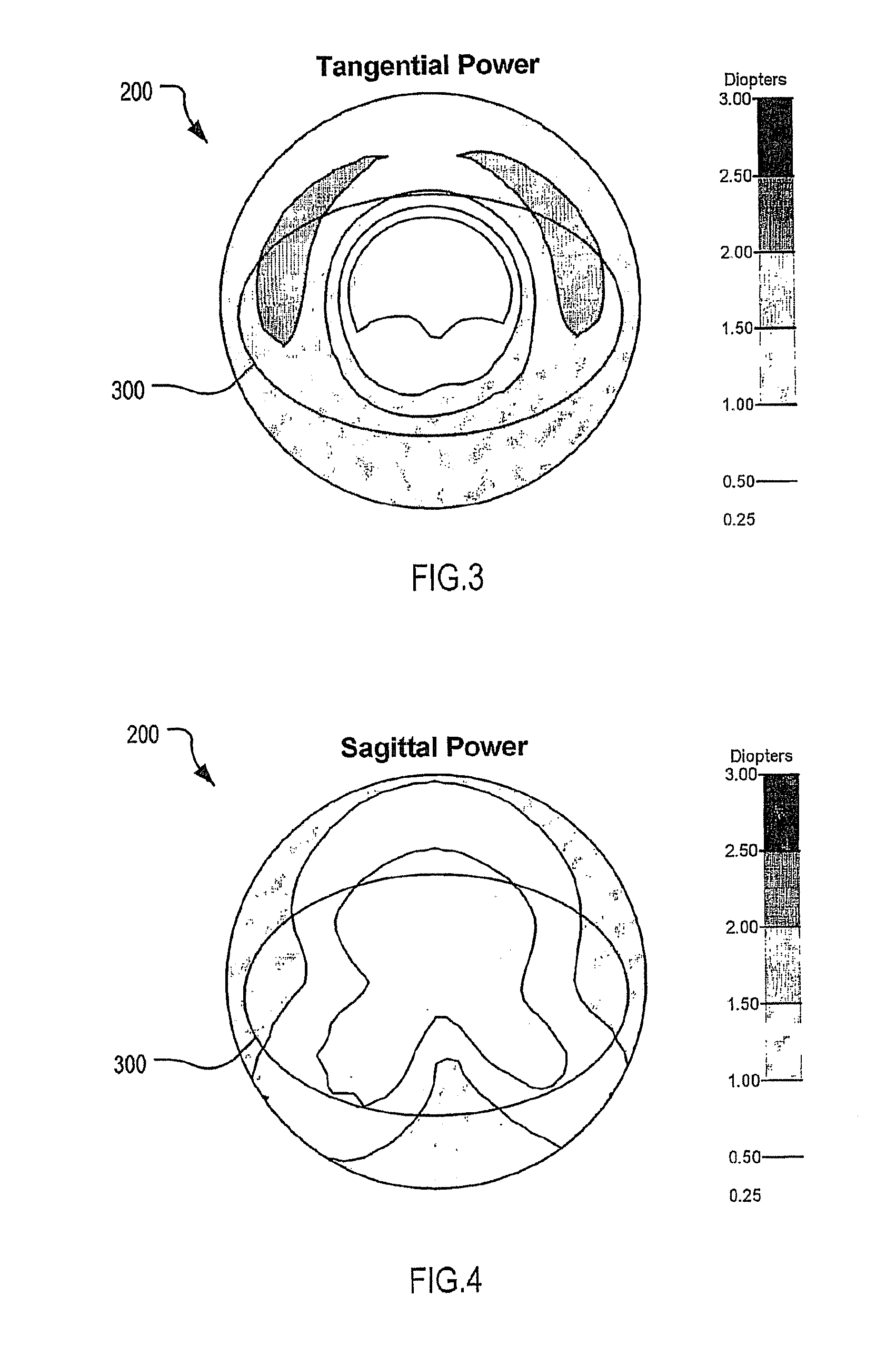
[0124]With reference to FIG. 2 to FIG. 5, an optical lens element 200 according to an embodiment of the present invention was designed having a 3.25 D base curve. In the depicted example, the lens element 200 has a diameter of 60 mm. The contour plots of surface astigmatism, tangential power, sagittal power and mean surface power respectively for the optical lens element 200 are given in FIG. 2 to FIG. 5 respectively. FIG. 3 to FIG. 5 also depict, for reference, a lens overlay 300 representing an example of a lens shape which may be cut from the lens element 200. In the present case, lens overlay 300 represents the outline of a frame measuring 55×35 mm centered 2 mm above the geometric centre of the ophthalmic lens element 200.
[0125]As shown in FIG. 2, the 0.5 D astigmatic contour 202 defines a region of low surface astigmatism including the distance viewing zone 104, the near viewing zone 106, and the corridor 108. The depicted embodiment provides a relatively wide distance viewing...
PUM
 Login to View More
 Abstract
Description
Claims
Application Information
 Login to View More