
Methods for the Treatment of Fibromyalgia and Chronic Fatigue Syndrome
- Summary
- Abstract
- Description
- Claims
- Application Information
AI Technical Summary
Benefits of technology
Problems solved by technology
Method used
Image

Examples
example 1
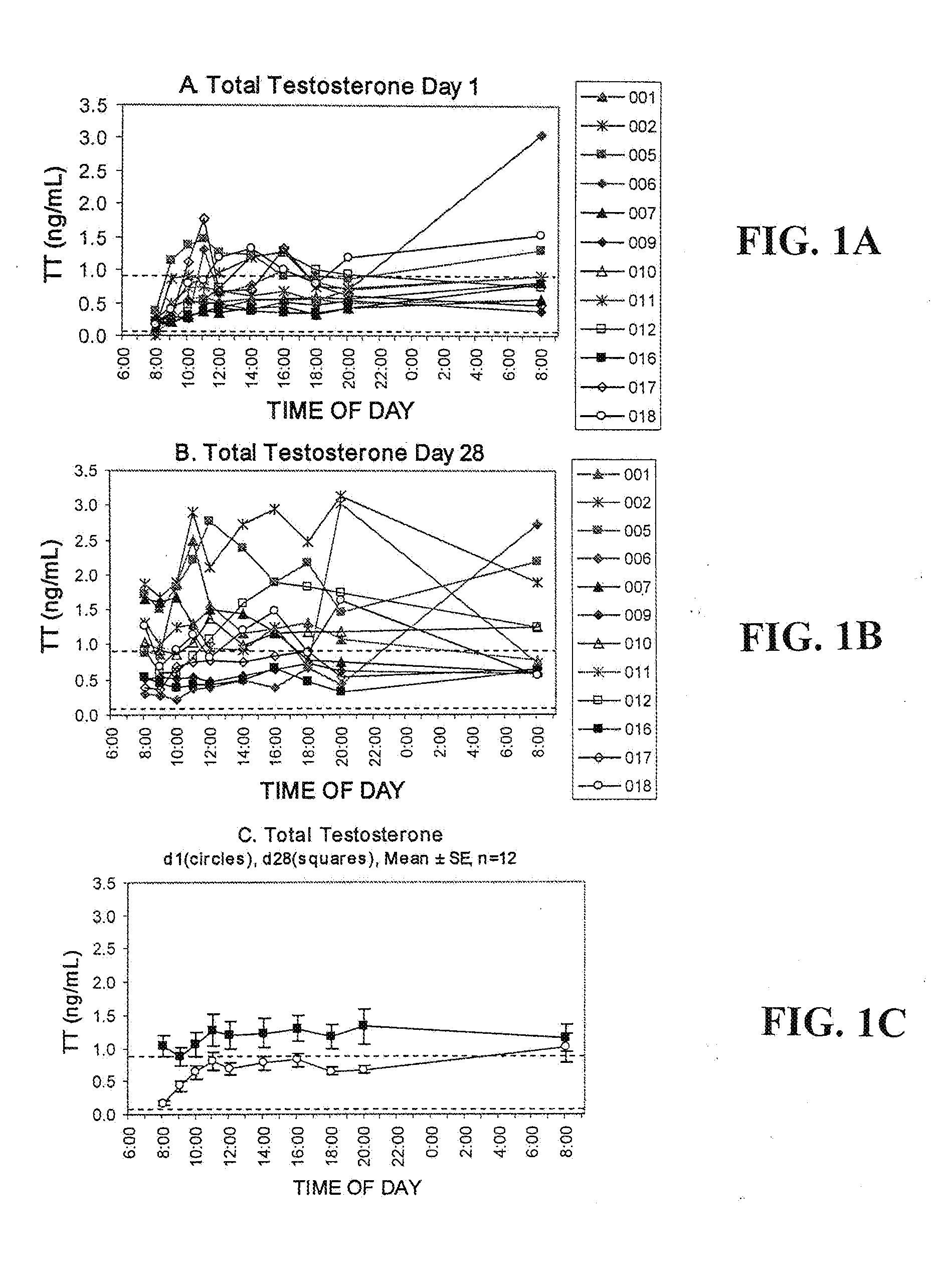
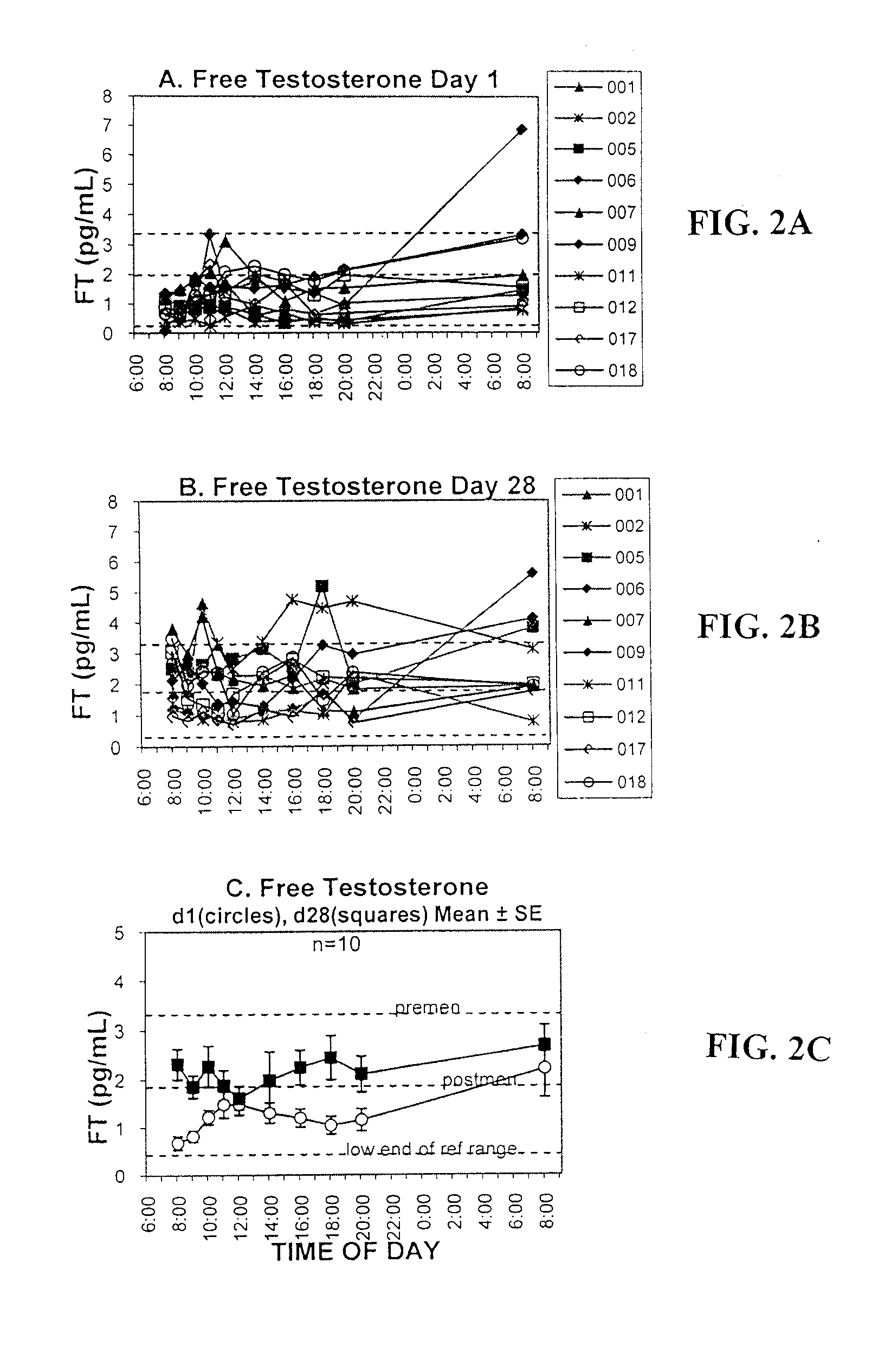
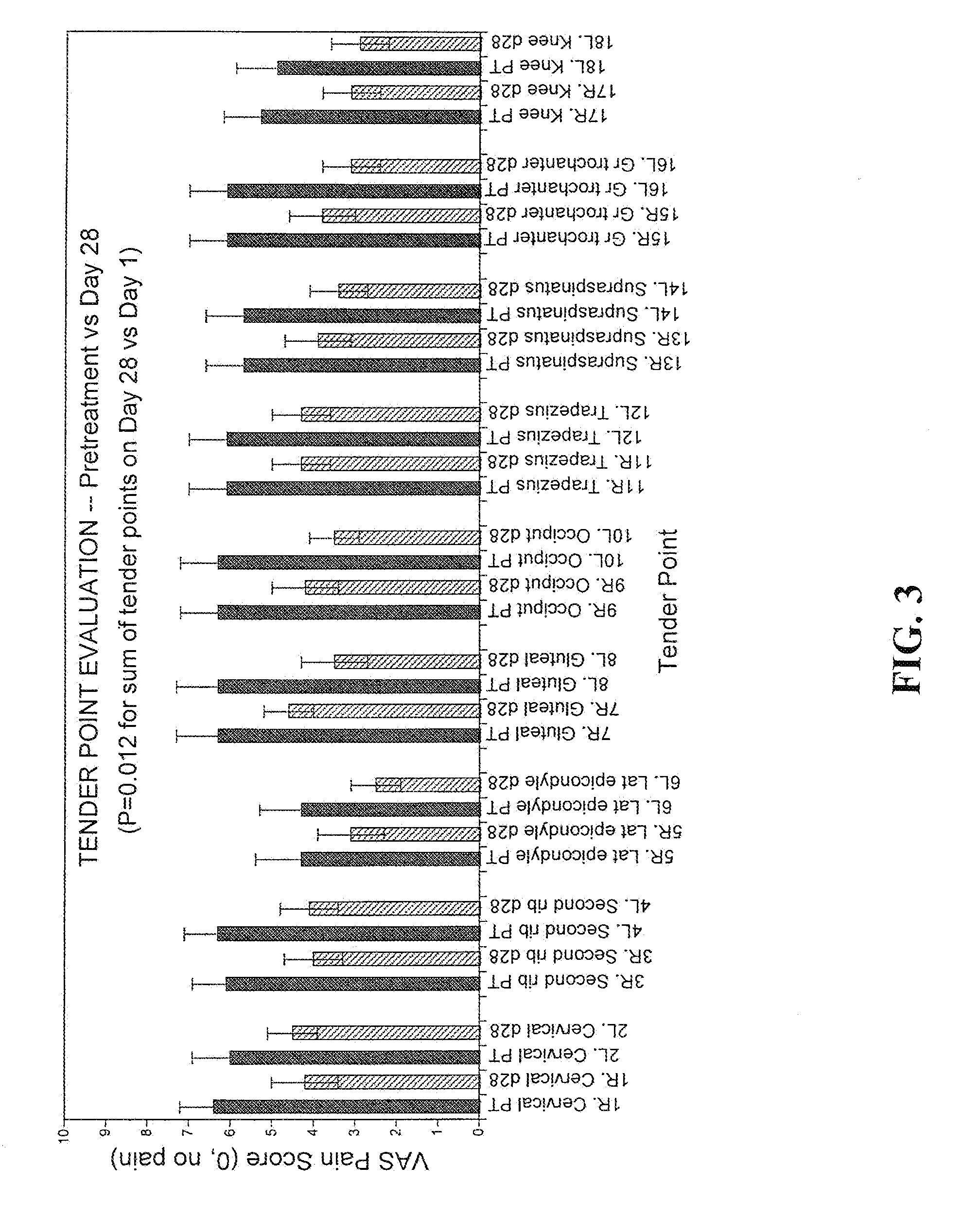
[0064]A clinical trial was performed to investigate the pharmacokinetics and efficacy of transdermal delivery of hormones for treatment of fibromyalgia, the data from which can be used to plan further studies relating to fibromyalgia-related pain. Women were recruited by institutional review board-approved advertising. Subjects aged 40-55 and diagnosed for fibromyalgia using American College of Rheumatology criteria (11 / 18 bilateral tender points above and below the waist, chronic fatigue, etc., (Wolfe, F. et al., 1990. Arthrit. Rheumat. 33:160-172) were selected for the study if they fit additional criteria. Women were included if, in addition to meeting all other criteria, they agreed to keep their medicines unchanged during the study (decreases in analgesics were permitted). Women taking hormone replacement therapy were enrolled if they agreed to come off hormone therapy at least 2 weeks prior to, and for the duration of, the study, in addition to meeting other eligibility criter...
example 2
[0094]This study will be performed to confirm the results of the trial discussed in Example 1 above. The study will be employ a randomized, double blind placebo controlled design in eighty to one hundred patients. In the previous open label study of 12 patients, we tested the hypothesis that the fibromyalgia muscle pain and fatigue symptoms of women, aged 40-60 with Fibromyalgia Syndrome (FMS), are caused by abnormally low circulating levels of testosterone. Further, we tested the hypothesis that treatment of FMS patients with testosterone gel delivered transdermally will decrease the fibromyalgia-related pain and fatigue in these patients. The goals for this blinded efficacy study are very similar. Specifically, the goals are to conduct a placebo controlled study in FMS. for testosterone treatment for fibromyalgia-related pain and fatigue in FMS patients. Patients will be treated for 3 months, have a possible extension to 6 months, and will employ symptomatic FMS efficacy endpoints...
PUM
 Login to View More
 Abstract
Description
Claims
Application Information
 Login to View More