
Recovery of sugars from ionic liquid biomass liquor by solvent extraction
a technology of biomass liquor and solvent extraction, which is applied in the direction of sugar food ingredients, glucose production, other chemical processes, etc., can solve the problems of biomass recalcitrance to enzymatic hydrolysis, affecting the overall economic viability, and removing 5-carbon and 6-carbon monosaccharides from either an il-free supernattan
- Summary
- Abstract
- Description
- Claims
- Application Information
AI Technical Summary
Problems solved by technology
Method used
Image

Examples
example 1
Boronic Acid Extraction of Sugars from Pure Ionic Liquid and Ionic Liquid-Water Systems
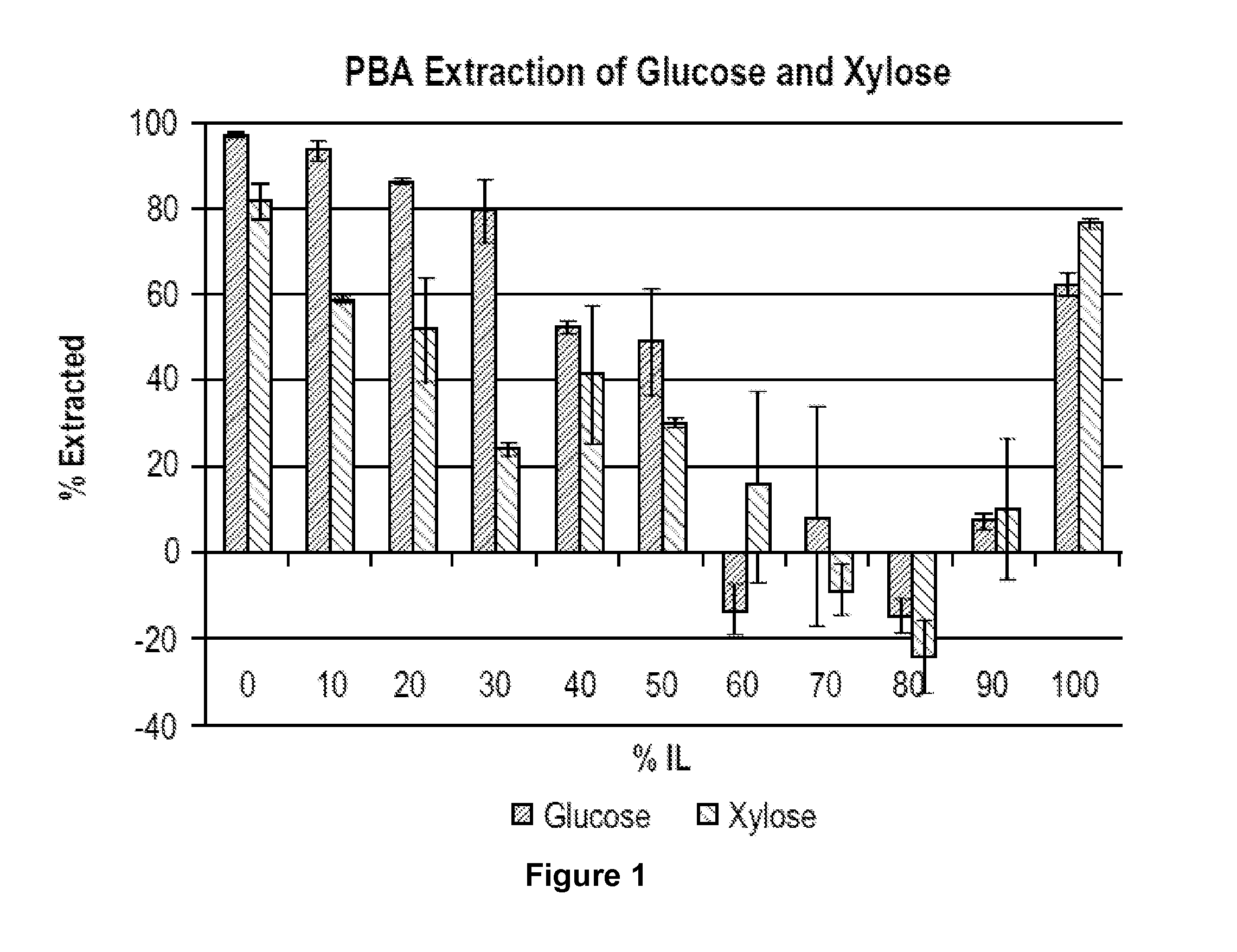
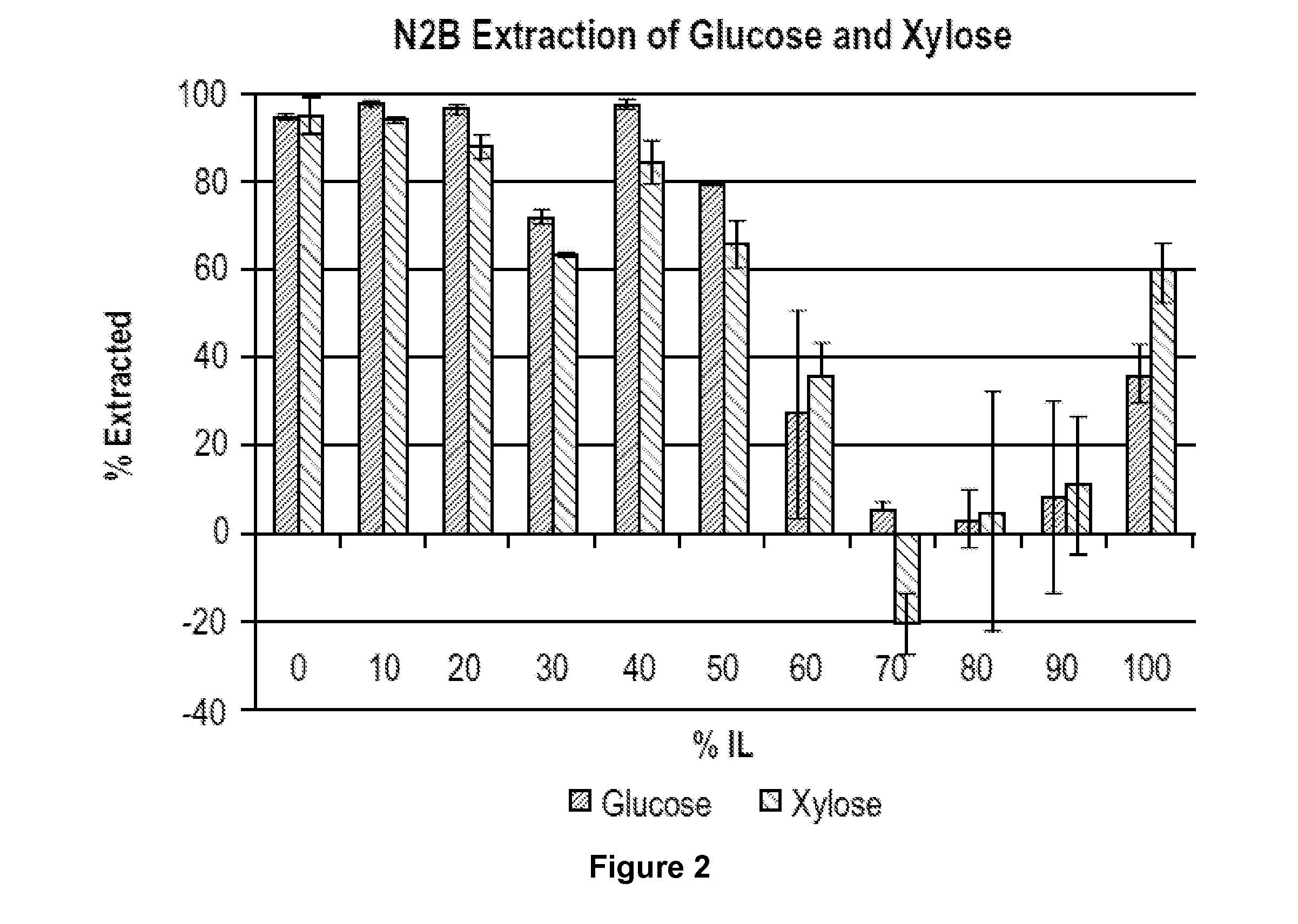
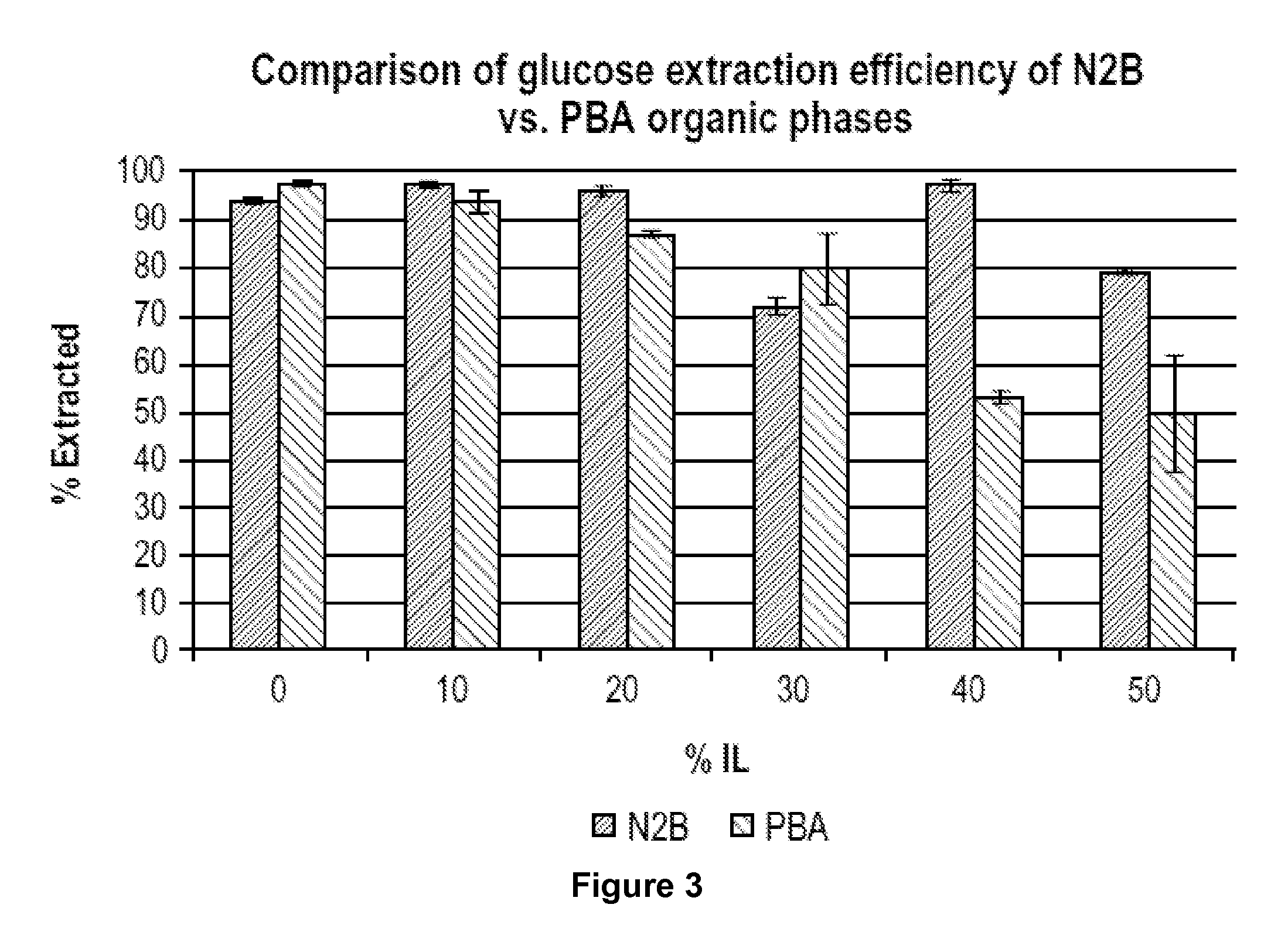
[0057]Pretreatment of cellulosic biomass is necessary for its enhanced accessibility and digestibility by enzymes into fermentable sugars. The dissolution of biomass into ionic liquids (ILs) has been shown to be a promising alternative pretreatment technology, facilitating faster breakdown of cellulose into monomeric sugars, either enzymatically or through chemical catalysis. However, the miscibility of both the ILs that dissolve biomass and sugars in water is a potential challenge to the development of an IL based pretreatment process as there has to be a high percentage recovery of both in order for the process to be feasible. To address this challenge solvent extraction technology, based on the chemical affinity of boronates such as phenylboronic acid (PBA) and naphthalene-2-boronic acid (N2B) to complex sugars, is applied to the extraction of glucose, xylose and cellobiose from aqueous solutio...
PUM
| Property | Measurement | Unit |
|---|---|---|
| pH | aaaaa | aaaaa |
| volume | aaaaa | aaaaa |
| total volume | aaaaa | aaaaa |
Abstract
Description
Claims
Application Information
 Login to View More