
Liquid coolant with microencapsulated phase change materials for automotive batteries
a technology of automotive batteries and liquid coolants, which is applied in the direction of secondary cell service/maintenance, propulsion by batteries/cells, electrochemical generators, etc., can solve the problems of battery temperature rise in excess of safe limits, negative impact on battery operation ability, and battery failure to completely destroy batteries, etc., to achieve the effect of reducing power fade, reducing capacity fade, and adding heat exchange capability
- Summary
- Abstract
- Description
- Claims
- Application Information
AI Technical Summary
Benefits of technology
Problems solved by technology
Method used
Image

Examples
Embodiment Construction
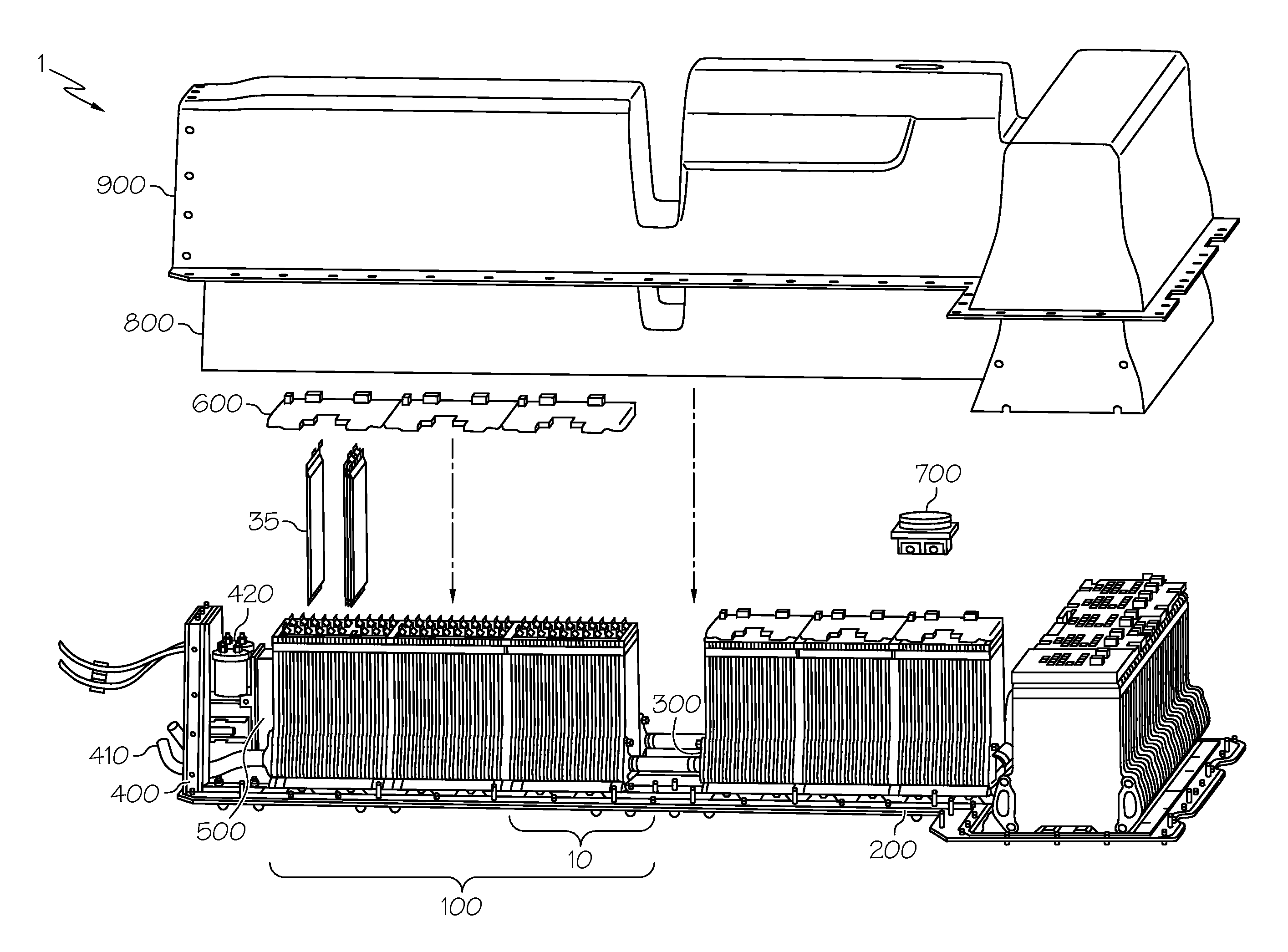
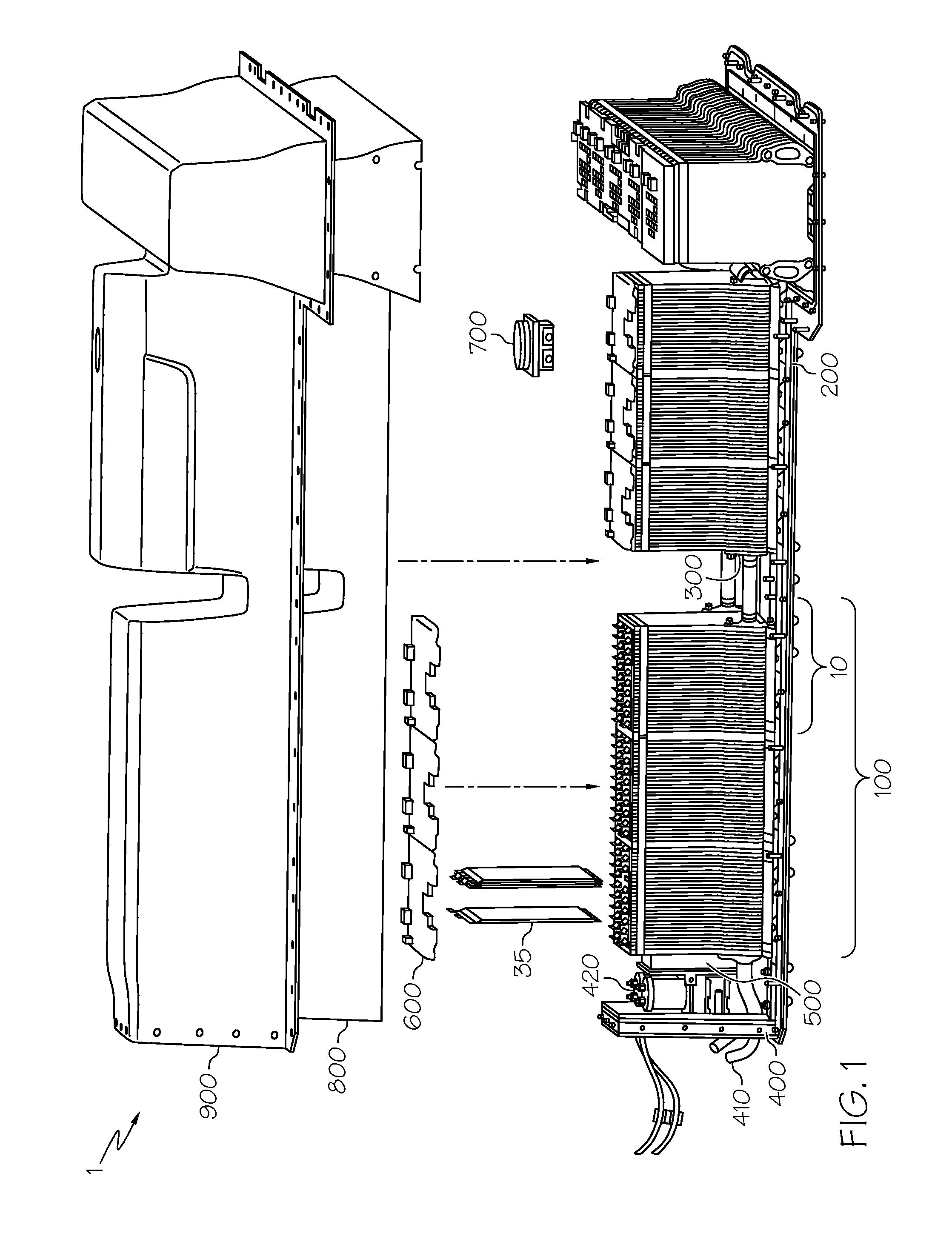
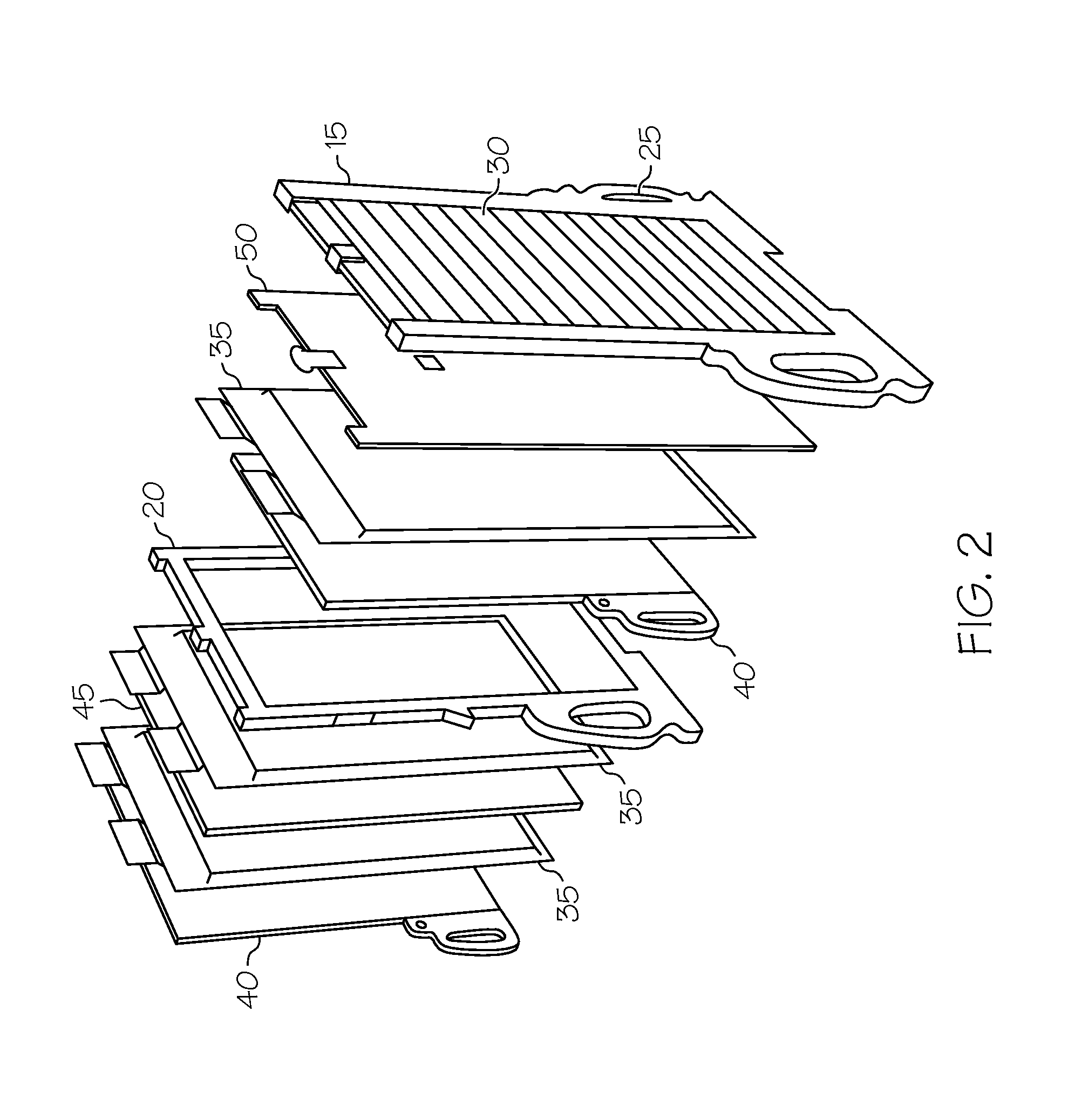
[0020]Referring first to FIG. 1, a vehicular propulsion system 1 employing numerous battery packs 10 (also known as battery modules) is shown in a partially-exploded view. Depending on the power output desired, numerous battery packs 10 may be combined to define a battery section 100; such may be aligned to be supported by a common tray 200 that can also act as support for coolant hoses 300 that can be used in configurations where supplemental cooling may be desired. A bulkhead 400 may define a primary support structure that can function as an interface for the coolant hoses 300, as well as house a battery disconnect unit in the event battery service is required. In addition to providing support for the battery section 100, tray 200 and bulkhead 400 may support other modules, such as a voltage, current and temperature measuring module 500. Placement of individual battery cells 35 (to be discussed in more detail below) relative to battery packs 10 is shown, as is the covering thereof...
PUM
 Login to View More
 Abstract
Description
Claims
Application Information
 Login to View More