
Novel Process for the Synthesis of 7-Chloro-4-(piperazin-1-yl)-quinoline
- Summary
- Abstract
- Description
- Claims
- Application Information
AI Technical Summary
Benefits of technology
Problems solved by technology
Method used
Image

Examples
example 1
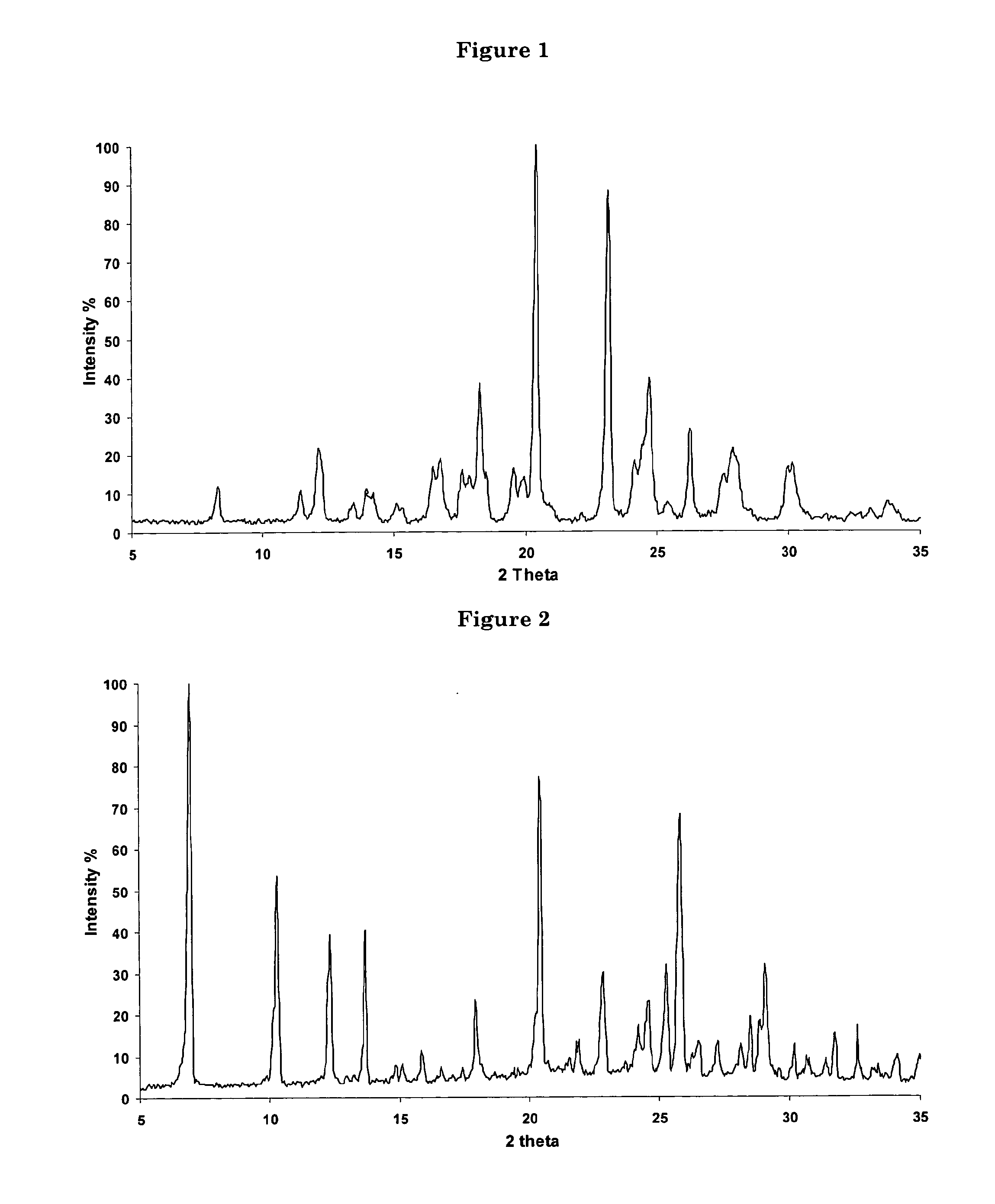
[0052]An anhydrous solution of piperazine (54 kg) in 150 l of methanol was stirred until a clear solution was obtained. 50 kg 4,7-dichloroquinoline were then slowly added to the solution. The latter was refluxed for 8 hours and cooled to RT. The resulting suspension was filtered and the solvent removed under reduced pressure. The oil obtained was washed with water (150 l) until solid precipitation occurred. The precipitate was filtered and washed with water to yield 72 kg of crystalline 7-chloro-4-(piperazin-1-yl)-quinoline Form B, containing 25% of water (w / w).
[0053]Yield=86% (calculated on dry material).
[0054]1H NMR (200 MHz CDCl3), δ: 1.92 (bs, 1H); 3.16 (s, 8H); 6.81 (d, J=5.1 Hz, 1H); 7.40 (dd, J=2.2 Hz, J=9.0 Hz, 1H); 7.94 (d, J=9.0 Hz, 1H); 8.02 (d, J=2.2 Hz, 1H); 8.58 (d, J=5.1 Hz, 1H).
[0055]Purity
[0056]The content of piperazine starting material still potentially remaining was assessed by means of gas chromatography analysis.
[0057]Gas Chromatographic Conditions:
[0058]Column...
example 8
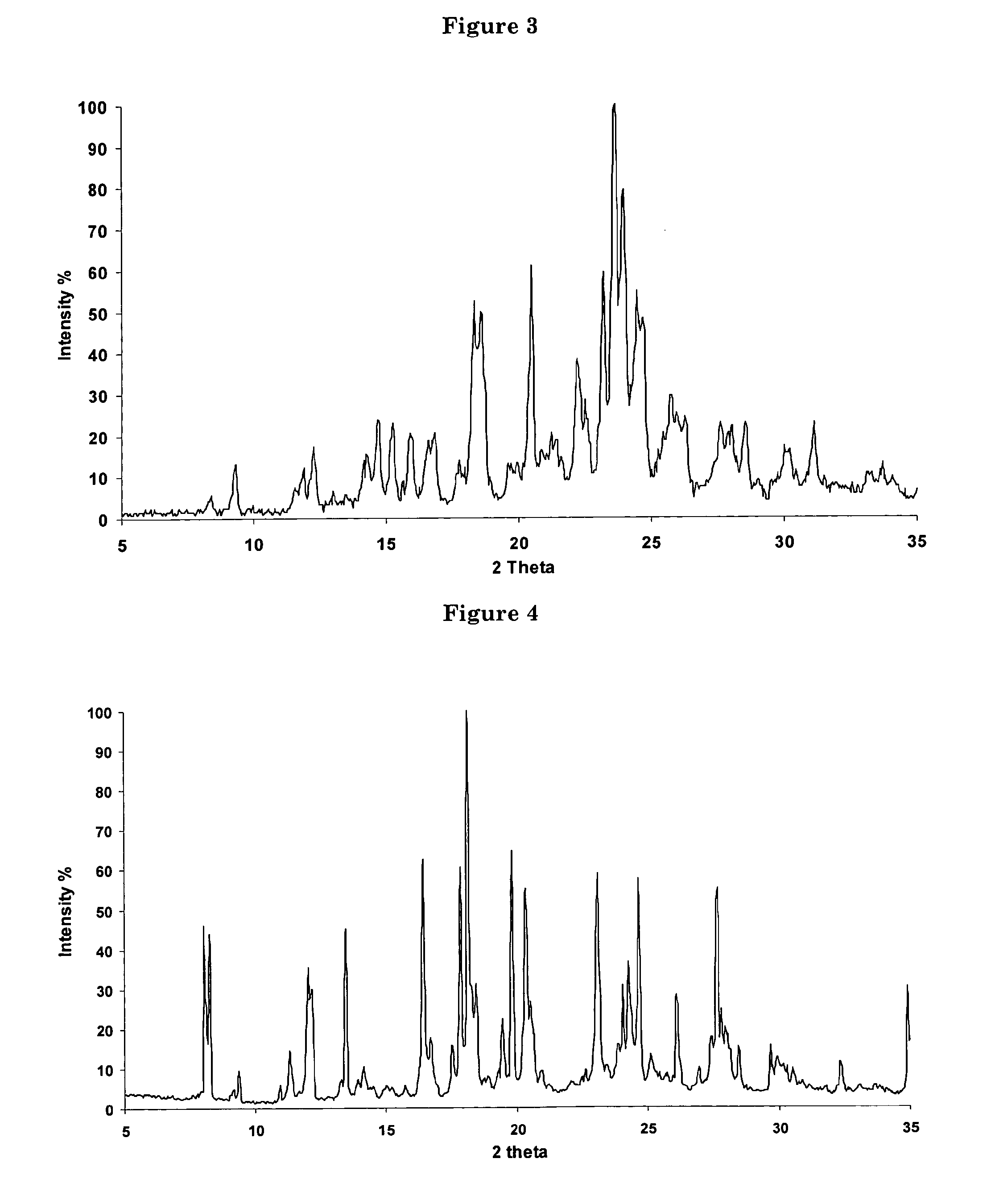
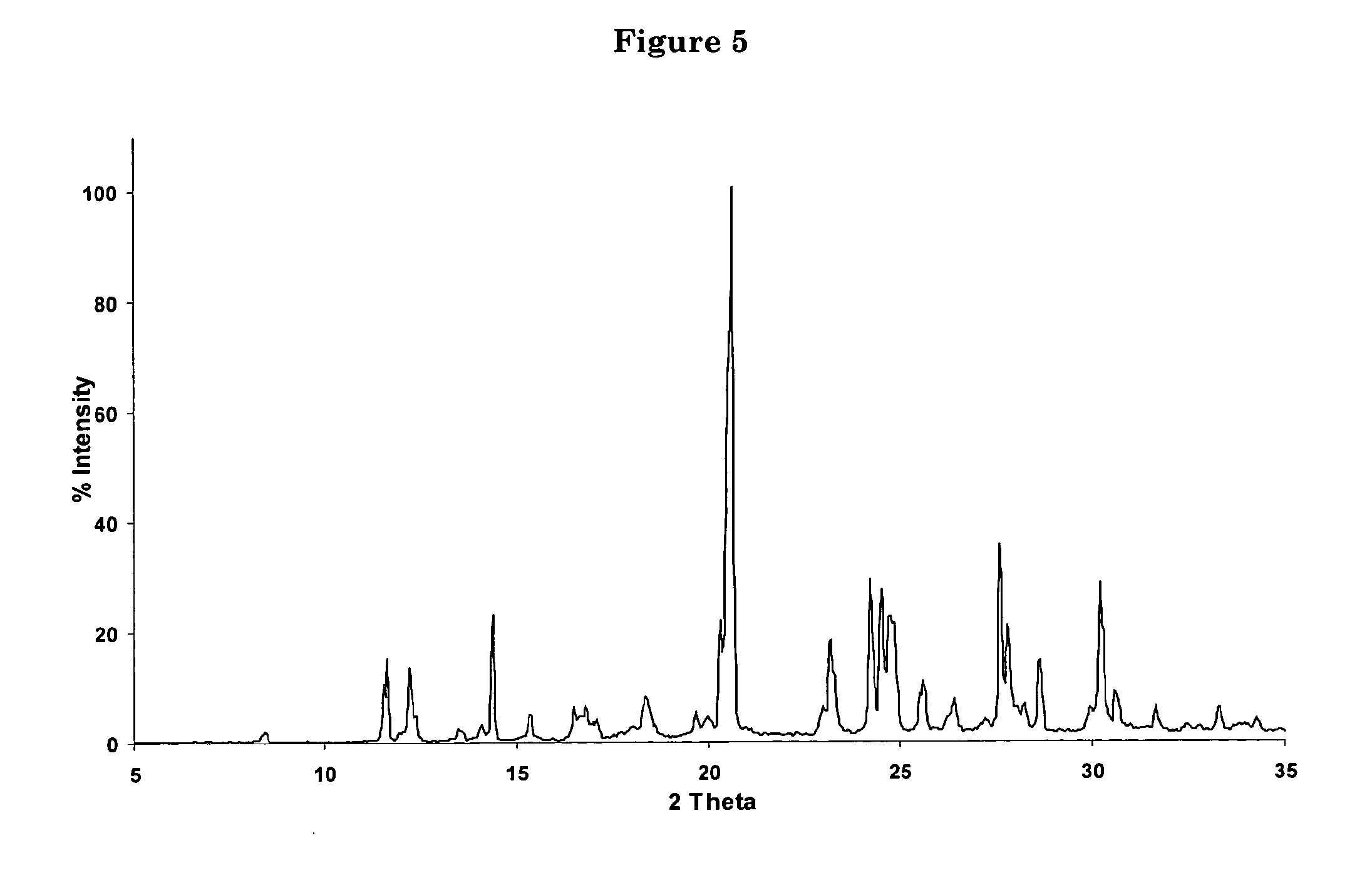
[0087]The crystalline solid obtained in example 7 was solved in hot hexane and the resulting solution allowed to cool back to RT. Upon cooling, a further crystalline Form of 7-chloro-4-(piperazin-1-yl)-quinoline, Form C, was obtained.
example 9
[0088]The crystalline solid obtained in example 7 was solved in CH2Cl2 at RT. Upon concentration under reduced pressure, a further crystalline Form of 7-chloro-4-(piperazin-1-yl)-quinoline, Form D, was obtained.
PUM
| Property | Measurement | Unit |
|---|---|---|
| Fraction | aaaaa | aaaaa |
| Angle | aaaaa | aaaaa |
| Angle | aaaaa | aaaaa |
Abstract
Description
Claims
Application Information
 Login to View More