Process for percutaneous operations

US20170119481A1Active Publication Date: 2017-05-04AURIS HEALTH INC
12 Cites 204 Cited by

Patent Information

Authority / Receiving Office
US · United States
Current Assignee / Owner
Publication Date
2017-05-04

Smart Images

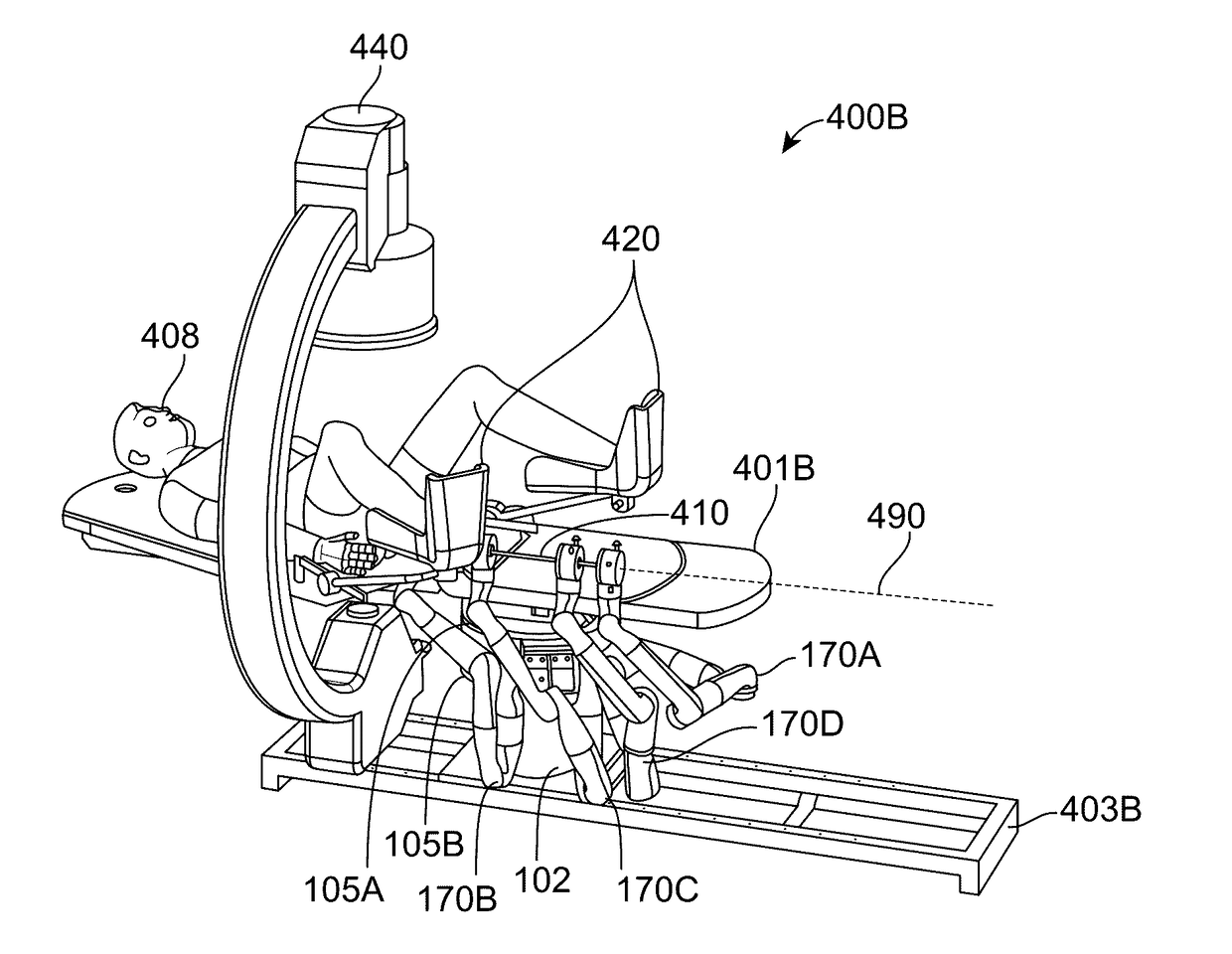
  • Figure 1
    Figure 1
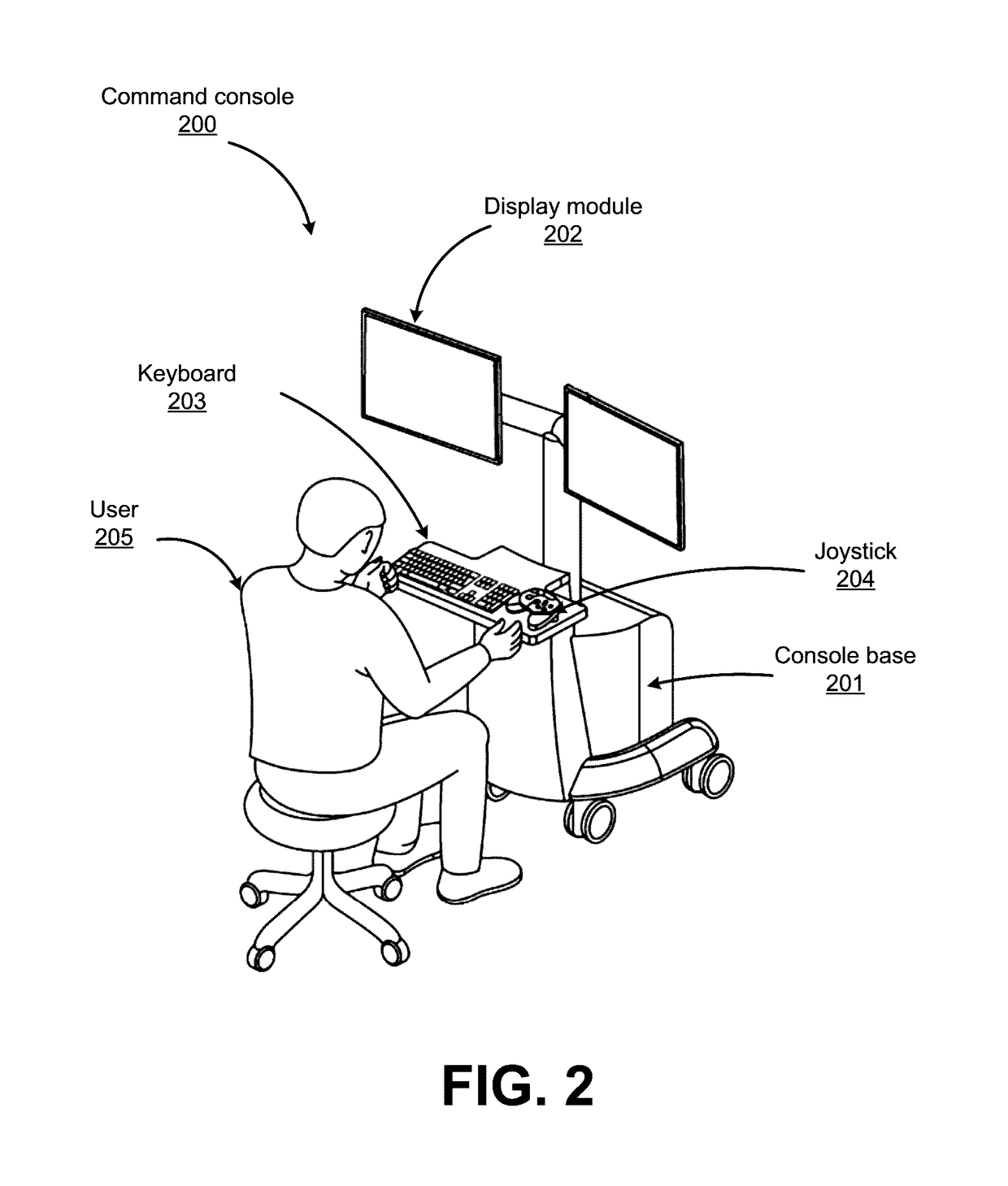
  • Figure 2
    Figure 2
  • Figure 3
    Figure 3
Patent Text Reader

Abstract

A method is described for performing a percutaneous operation on a patient to remove an object from a cavity within the patient. The method includes advancing a first alignment sensor into the cavity through a patient lumen. The first alignment sensor provides its position and orientation in free space in real time. The alignment sensor is manipulated until it is located in proximity to the object. A percutaneous opening is made in the patient with a surgical tool, where the surgical tool includes a second alignment sensor that provides the position and orientation of the surgical tool in free space in real time. The surgical tool is directed towards the object using data provided by both the first and the second alignment sensors.
Need to check novelty before this filing date? Find Prior Art

Description

CROSS-REFERENCE TO RELATED APPLICATIONS

[0001] This application claims the benefit of and priority to U.S. Provisional Application No. 62 / 249,050, filed Oct. 30, 2015, which is incorporated herein by reference.BACKGROUND

[0002] 1. Field of Art

[0003] This description generally relates to surgical robotics, and particularly to lithotomy devices and procedures using a surgical robotics system.

[0004] 2. Description of the Related Art

[0005] Every year, doctors perform thousands of procedures to remove urinary stones from patients' urinary tracts. Urinary stones may include kidney stones found in the kidneys and ureters as well as bladder stones found in the bladder. Such urinary stones form as a result of concentrated minerals and cause significant abdominal pain once they reach a size sufficient to impede urine flow through the ureter or urethra. Such stones may formed from calcium, magnesium, ammonia, ur acid, cysteine, or other compounds.

[0006] To remove urinary stones from the bladder and ur...

Examples

Embodiment Construction

I. Overview

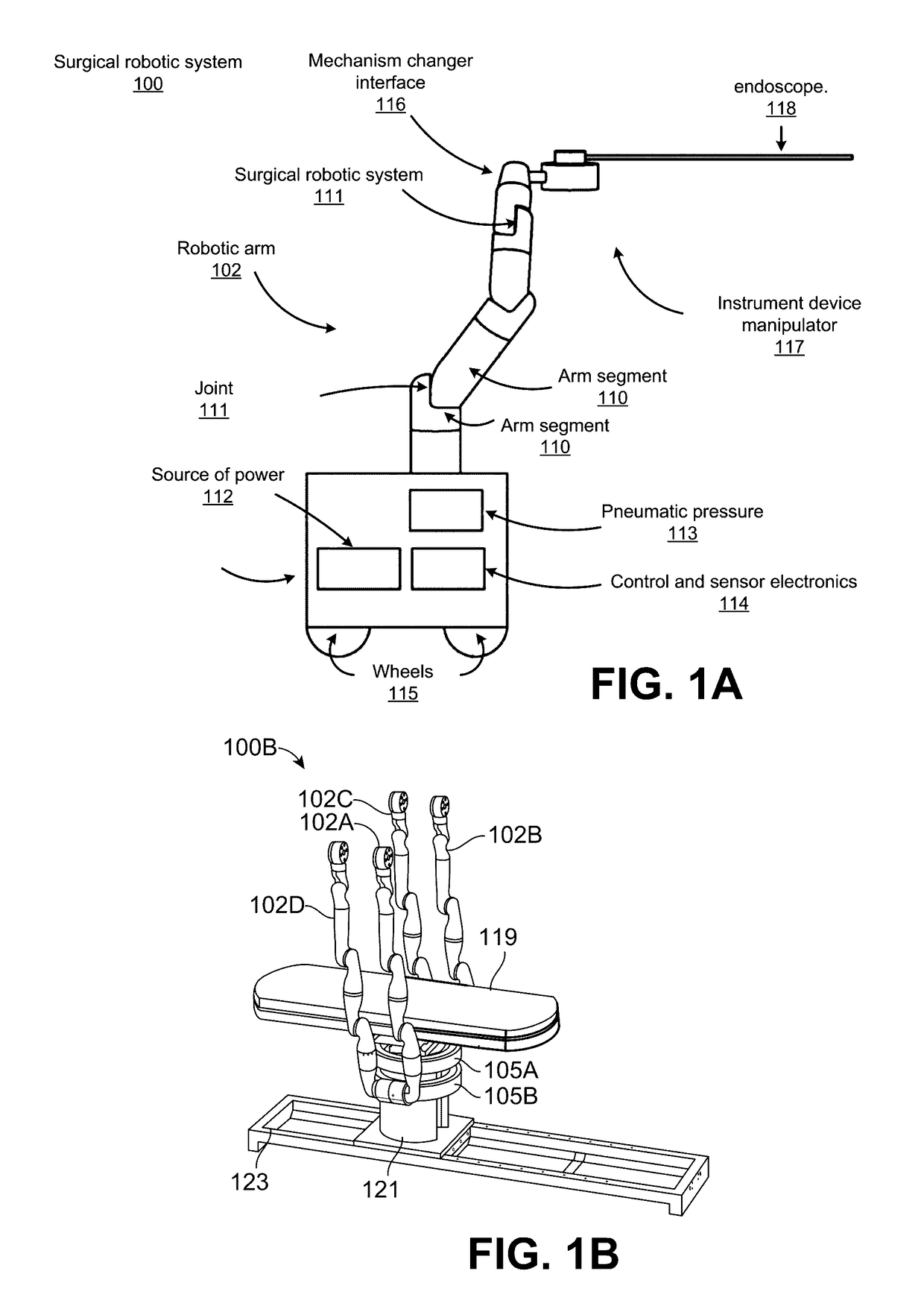
[0041]I.A. Surgical Robotics System

[0042]FIG. 1A shows an example surgical robotic system 100, according to one embodiment. The surgical robotic system 100 includes a base 101 coupled to one or more robotic arms, e.g., robotic arm 102. The base 101 is communicatively coupled to a command console, which is further described with reference to FIG. 2. The base 101 can be positioned such that the robotic arm 102 has access to perform a surgical procedure on a patient, while a user such as a physician may control the surgical robotic system 100 from the comfort of the command console. In some embodiments, the base 101 may be coupled to a surgical operating table or bed for supporting the patient. Though not shown in FIG. 1 for purposes of clarity, the base 101 may include subsystems such as control electronics, pneumatics, power sources, optical sources, and the like. The robotic arm 102 includes multiple arm segments 110 coupled at joints 111, which provides the robotic arm 1...