
Apparatus for measuring ammonia in biochemical processes
a biochemical and ammonia technology, applied in the direction of instruments, biological water/sewage treatment, material electrochemical variables, etc., can solve the problems of high detrimental to proper wastewater treatment, difficult task in view, and improper treatment of wastewater, so as to maximize the efficiency of the treatment process
- Summary
- Abstract
- Description
- Claims
- Application Information
AI Technical Summary
Benefits of technology
Problems solved by technology
Method used
Image

Examples
example
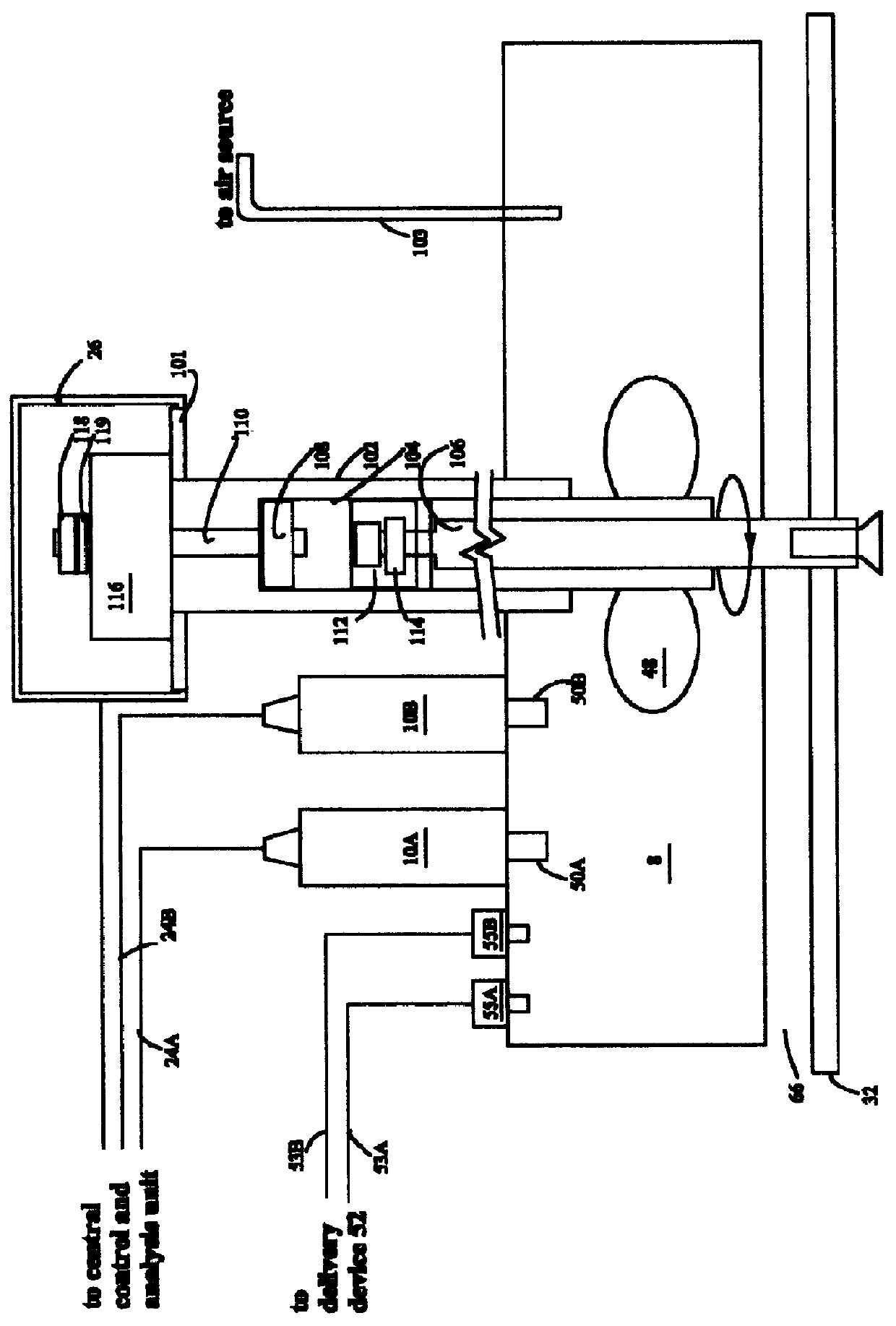
The apparatus for measuring ammonia was composed of one automatic sampler with the same configuration as the apparatus shown in FIG. 3 wherein sample container 8 had a capacity of 500 ml. After a fresh mixed liquor sample was captured in the sample container, approximately 1.0 ml of 10 N of KOH solution was introduced into the sample to bring the pH to 12.0+0.3. In this particular example, a pH probe is not needed. The volume of sample container 8 is known and it is, therefore, possible to add a known quantity of pH adjustment solution into chamber 8 that will automatically result in the desired pH =12.+-.0.3. More than 99.9% of ammonia in the mixed liquor was in free form (NH.sub.3) at this pH level. The ammonia gas probe measured the ammonia concentration within a short period of time as shown in FIG. 11. Table 1 lists the parameters and final results of the two ammonia analysis cycles.
After the ammonia measurement, sample container 8 was opened to release the finished sample and ...
PUM
 Login to View More
 Abstract
Description
Claims
Application Information
 Login to View More