
Optical filter with little variation in chromatic dispersion
a technology of chromatic dispersion and optical filter, which is applied in the field of optical filter with little variation in chromatic dispersion, can solve the problem of much less bandwidth than the total bandwidth, and achieve the effect of good spectral respons
- Summary
- Abstract
- Description
- Claims
- Application Information
AI Technical Summary
Benefits of technology
Problems solved by technology
Method used
Image

Examples
Embodiment Construction
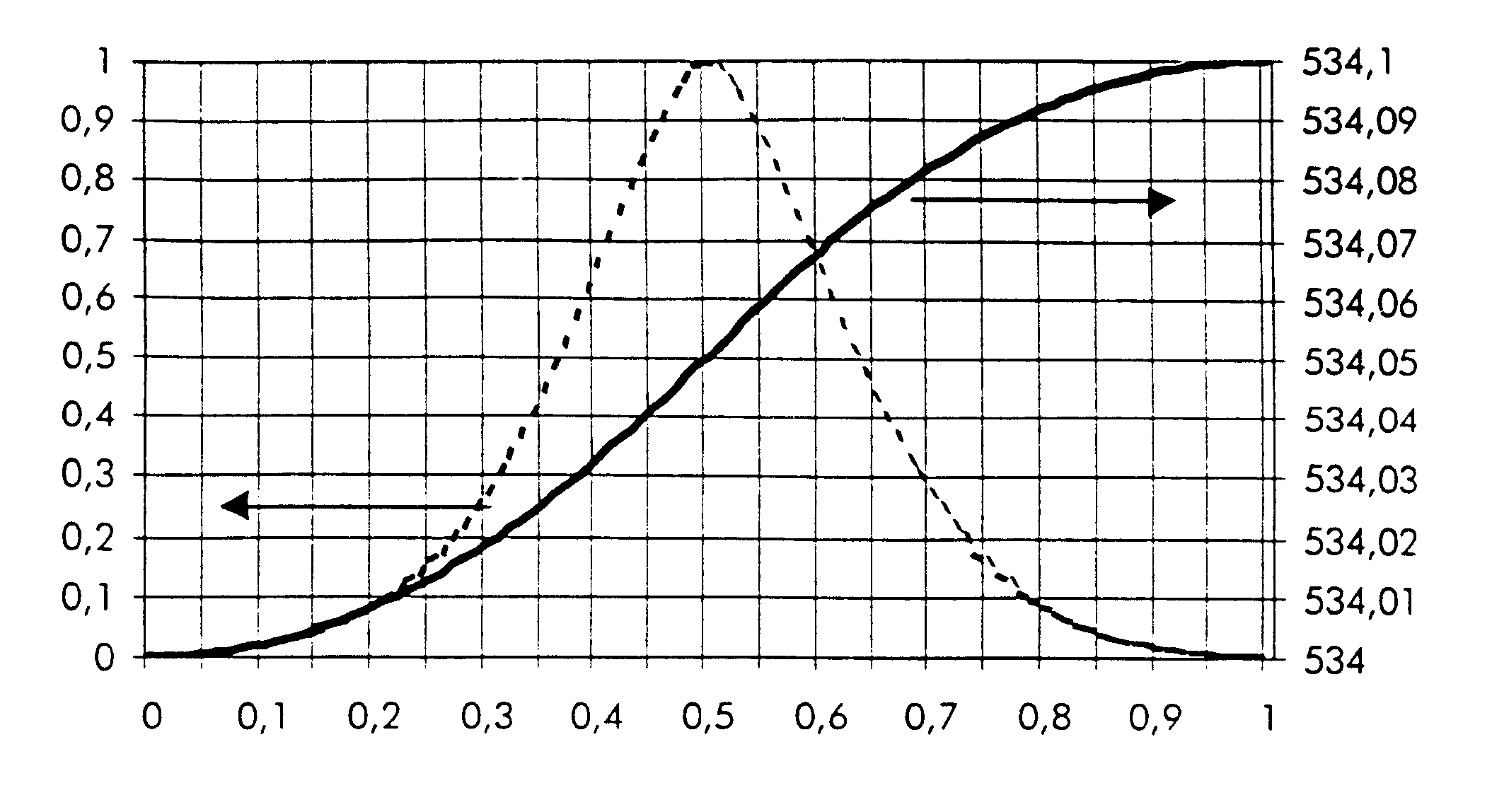
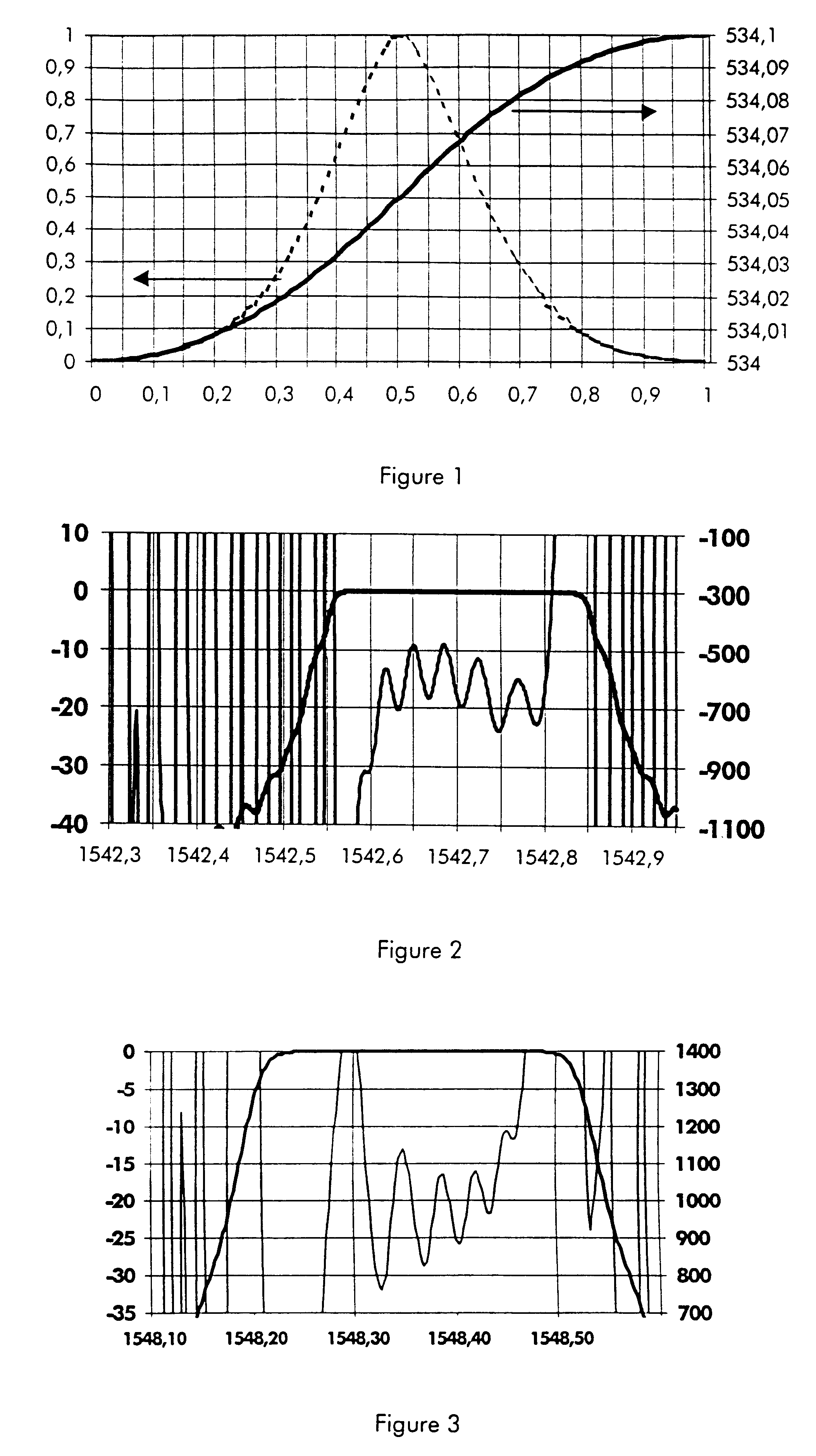
To provide a filter having both good spectral response and acceptable dispersion, the invention proposes using a Bragg grating presenting chirp or pitch variation that is S-shaped, i.e. in which the second derivative of the function which associates the pitch of the filter with position along the filter changes sign. It is also possible to speak in terms of the concave side changing in the graph of the same function. This chirp can be associated with an apodization shape to improve the spectral characteristics of the filter; such apodization of the filter typically makes it possible to minimize the sidelobes of the filter.
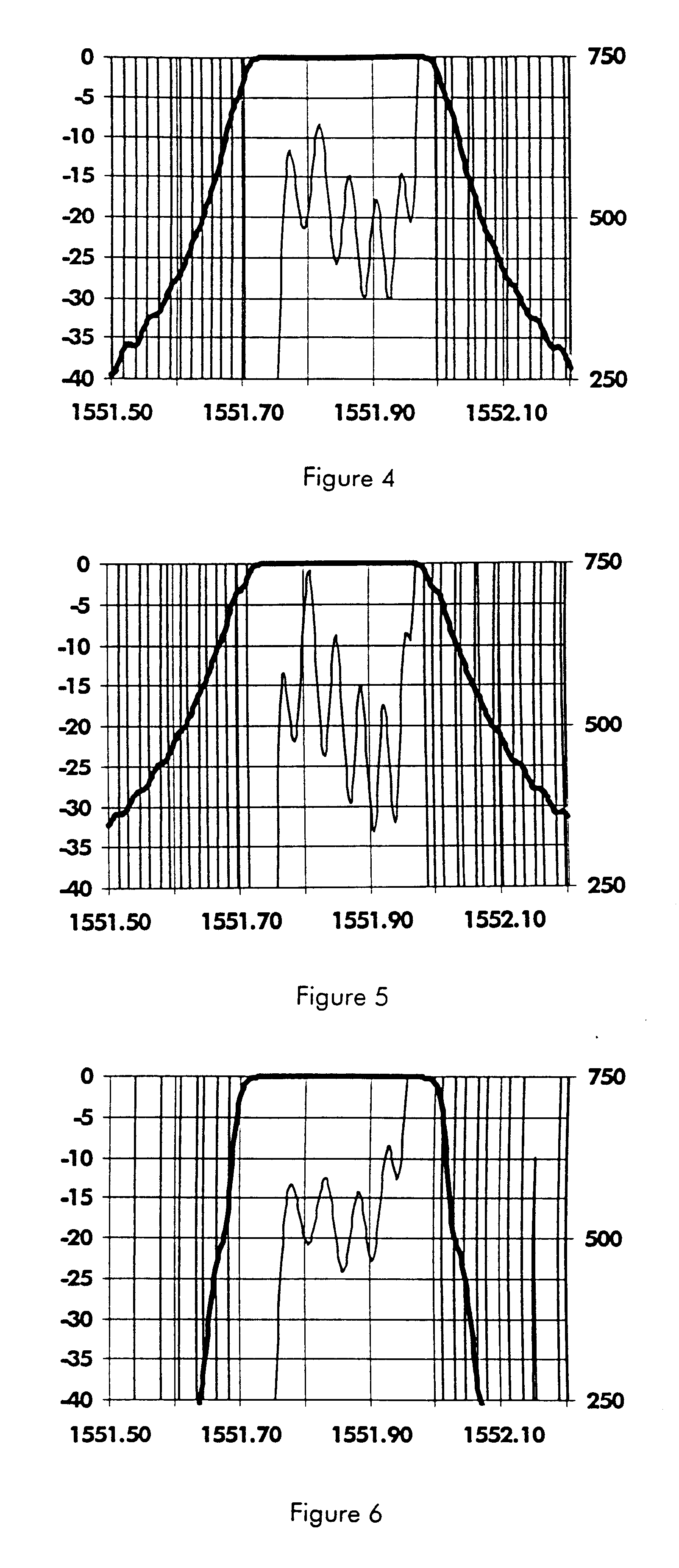
The invention makes it possible to provide a filter which reflects at least one channel and which passes the other channels. The spectral characteristics of the filter are measured in reflection by considering the attenuation of the filter outside the reflection band; it is advantageous for the sidelobes to be attenuated by at least 30 dB relative to the wavelength...
PUM
 Login to View More
 Abstract
Description
Claims
Application Information
 Login to View More