
Water magnetizer
a magnetizer and water technology, applied in water-boiling vessels, electrostatic separators, water-over prevention, etc., can solve the problems of unfavorable drinking water, unfavorable boiled water, and undetectable limescale formation, so as to prevent limescale formation, improve taste, and dissolve more oxygen
- Summary
- Abstract
- Description
- Claims
- Application Information
AI Technical Summary
Benefits of technology
Problems solved by technology
Method used
Image

Examples
Embodiment Construction
Wherever possible in the following description, like reference numerals will refer to like elements and parts unless otherwise illustrated.
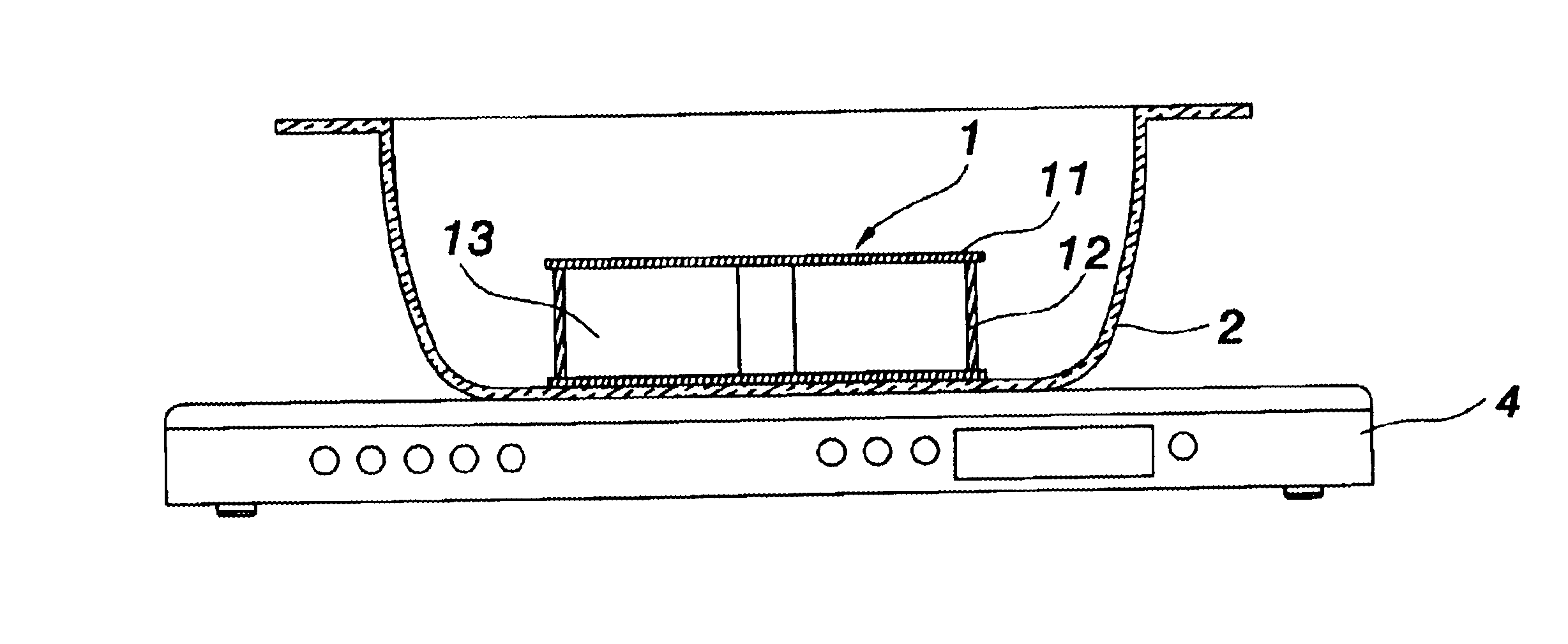
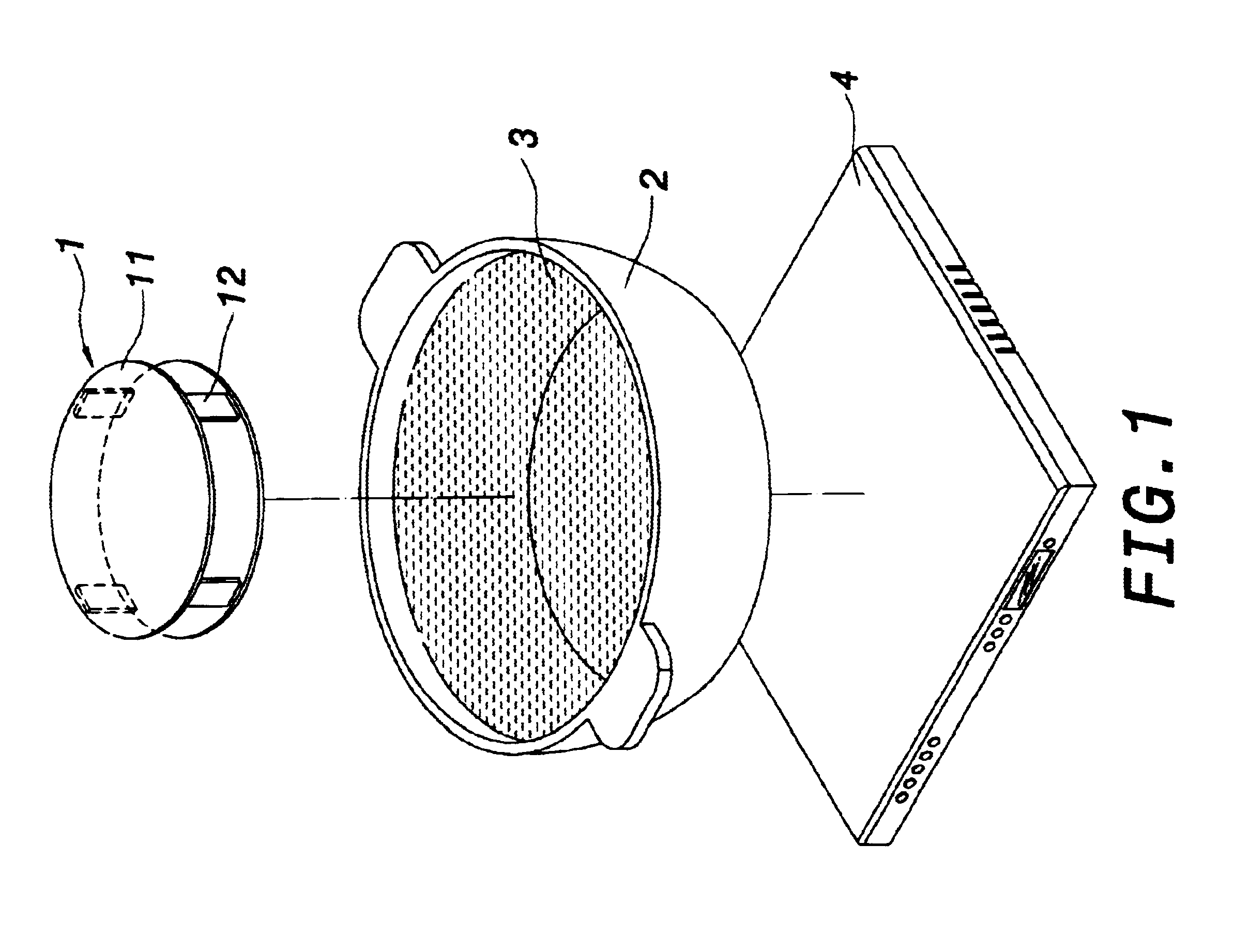
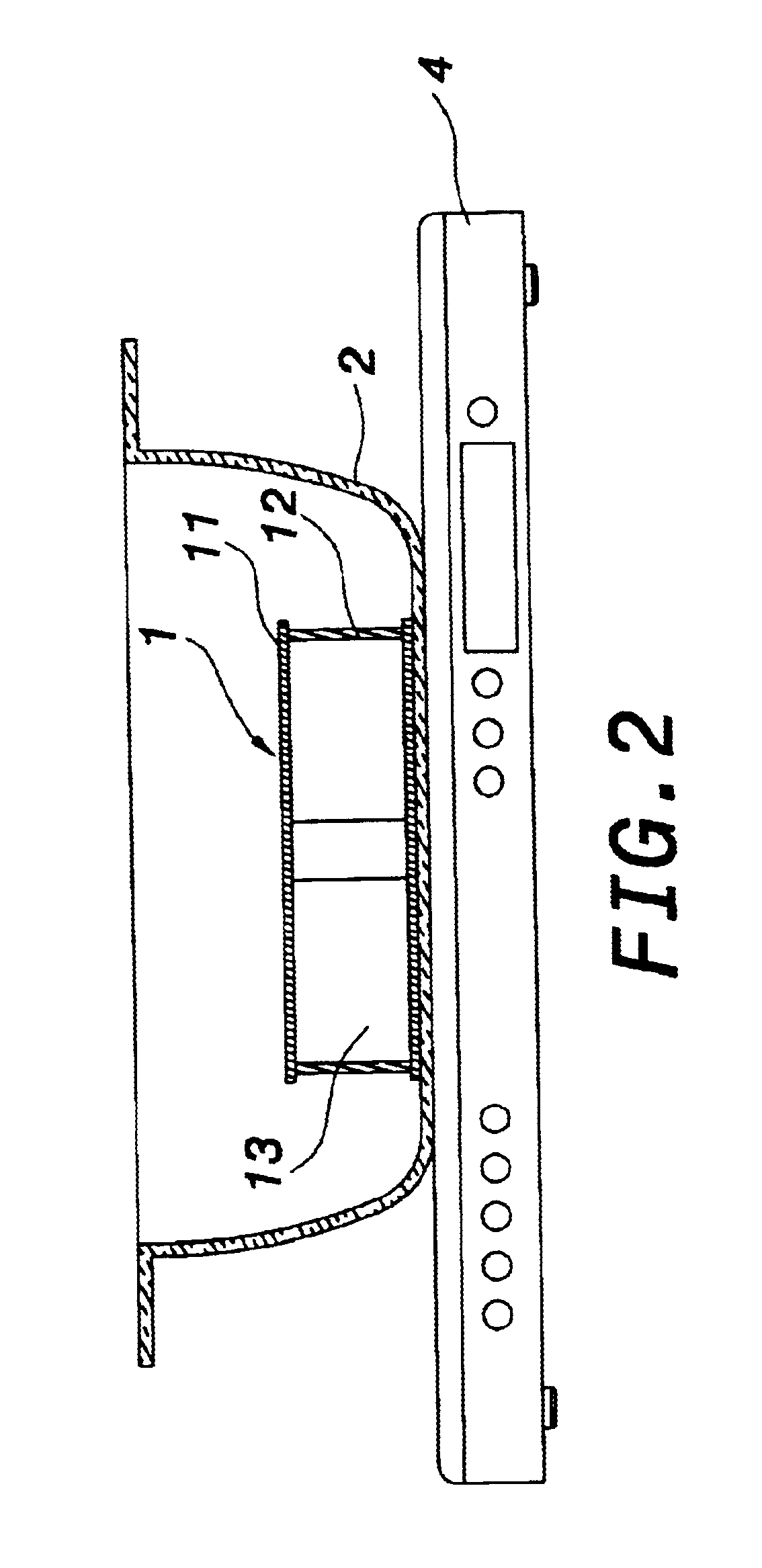
FIG. 1 and FIG. 2 show a water magnetizer according to one preferred embodiment of the present invention. The water magnetizer includes a permeance member 1 which consists of two parallel disks 11 spaced apart each other by a plurality of partitions 12 located along the periphery of the disks 11, such that there is clearance 13 between the two parallel disks 11. The permeance member 1 is placed into a cooking recipient 2 that can be made of permeance material or non-permeance material. One of the parallel disks 11 is attached onto a bottom of the cooking recipient 2. The cooking recipient 2 is charged with water 3 and placed onto an electromagnetic heater 4.
In FIG. 3, when the electromagnetic heater 4 powers on, inner coils (not shown) of the electromagnetic heater 4 regularly vibrate at high frequency to change the direction of electric current,...
PUM
| Property | Measurement | Unit |
|---|---|---|
| magnetic permeance property | aaaaa | aaaaa |
| magnetic reluctance | aaaaa | aaaaa |
| magnetic | aaaaa | aaaaa |
Abstract
Description
Claims
Application Information
 Login to View More