
Redundant field drive for an electric machine
a technology of redundancy field and electric machine, which is applied in the direction of emergency power supply arrangement, electric generator control, dynamo-electric converter control, etc., can solve problems such as loss of generated power
- Summary
- Abstract
- Description
- Claims
- Application Information
AI Technical Summary
Problems solved by technology
Method used
Image

Examples
Embodiment Construction
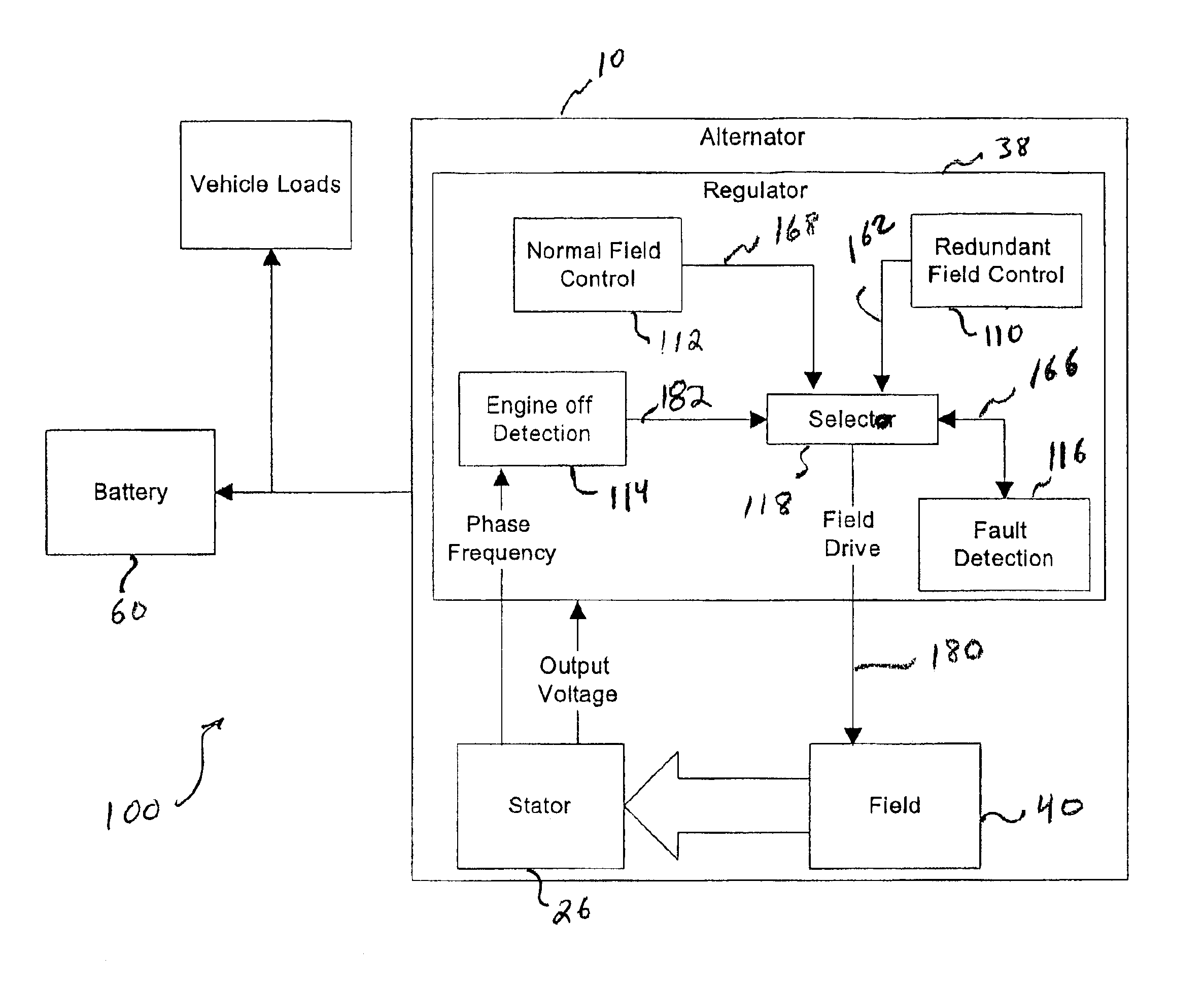
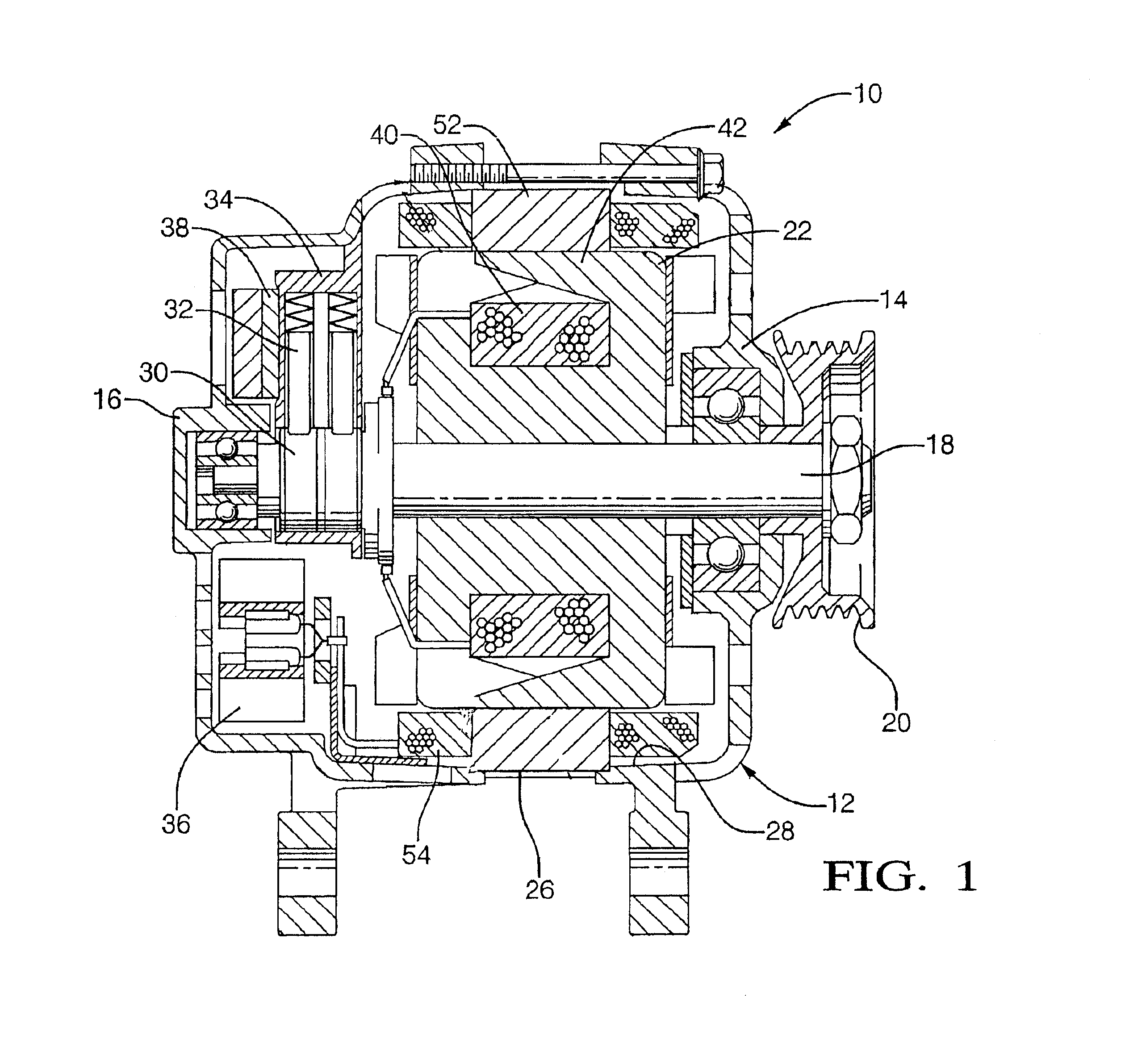
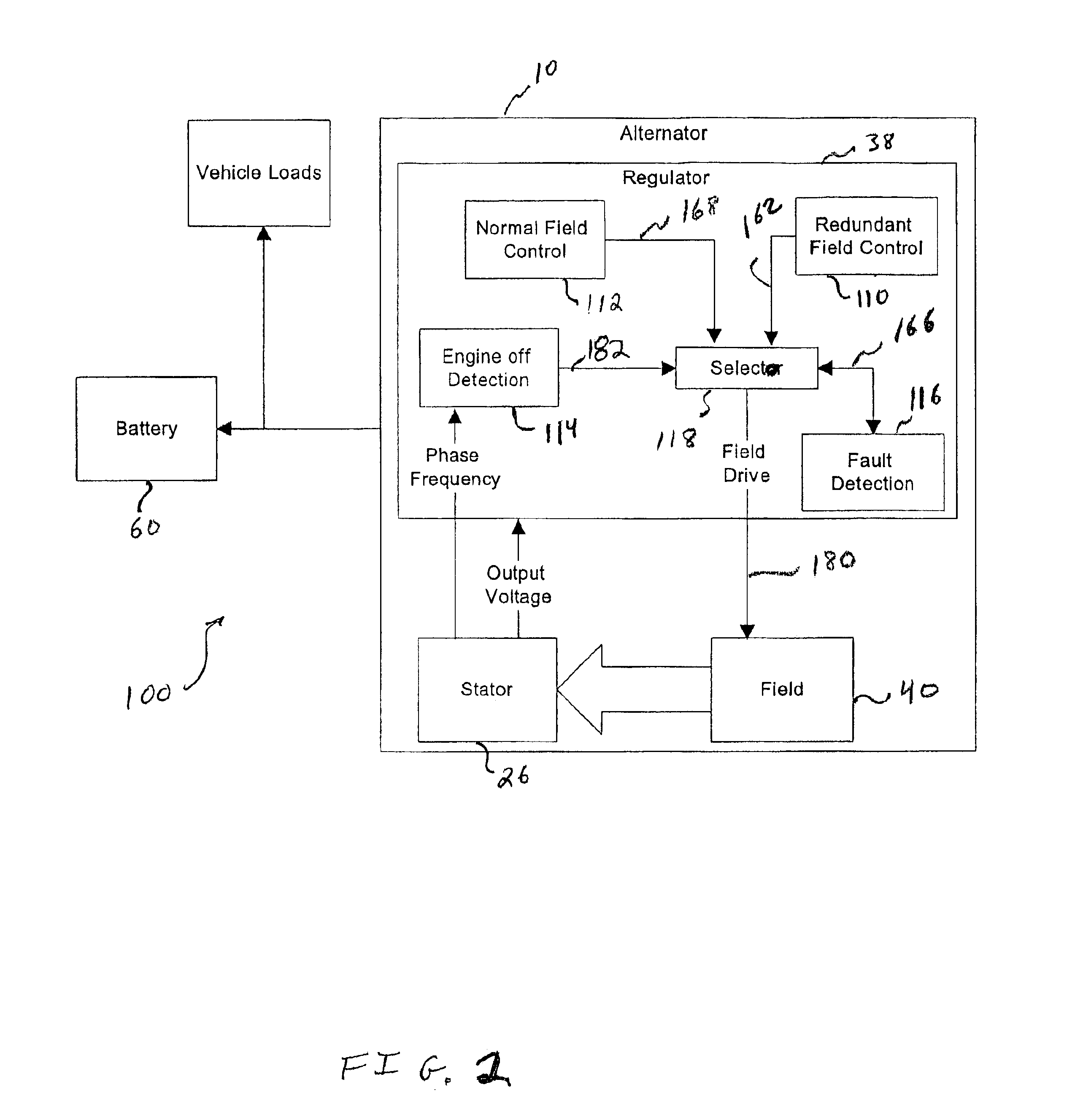
Disclosed herein in an exemplary embodiment is a redundant control algorithm configured to maintain a fixed set-point voltage for a vehicle power system even when certain faults occur that would otherwise result in loss of generator system operation. More particularly, in an exemplary embodiment a circuit is implemented that monitors the input system voltage (also denoted B.sup.+ in FIGS. 2 and 3), and creates an asynchronous (e.g., not linked to any clock or clocking in the control system) control command to result in vehicle power system response with a limit cycle around a fixed voltage set point. This allows the alternator to continue to generate power and the battery to continue to charge as needed, and yet prevents undercharging / overcharging the battery. It should be appreciated that generally in the art, alternator refers to an alternating current electric machine, while generator often refers to an electric machine with a direct current output (often as a function of rectifi...
PUM
 Login to View More
 Abstract
Description
Claims
Application Information
 Login to View More