
Super long range crash-bang round
a long-range, crash-bang technology, applied in the field of shotgun cartridges, can solve the problems of inaccurate targeting, less than ideal as a less-lethal weapon or deterrent force, and not disclose the weighty mass positioned in the projectile for greater distance, accuracy, stability, etc., and achieve greater stability in flight and greater accuracy in targeting
- Summary
- Abstract
- Description
- Claims
- Application Information
AI Technical Summary
Benefits of technology
Problems solved by technology
Method used
Image

Examples
Embodiment Construction
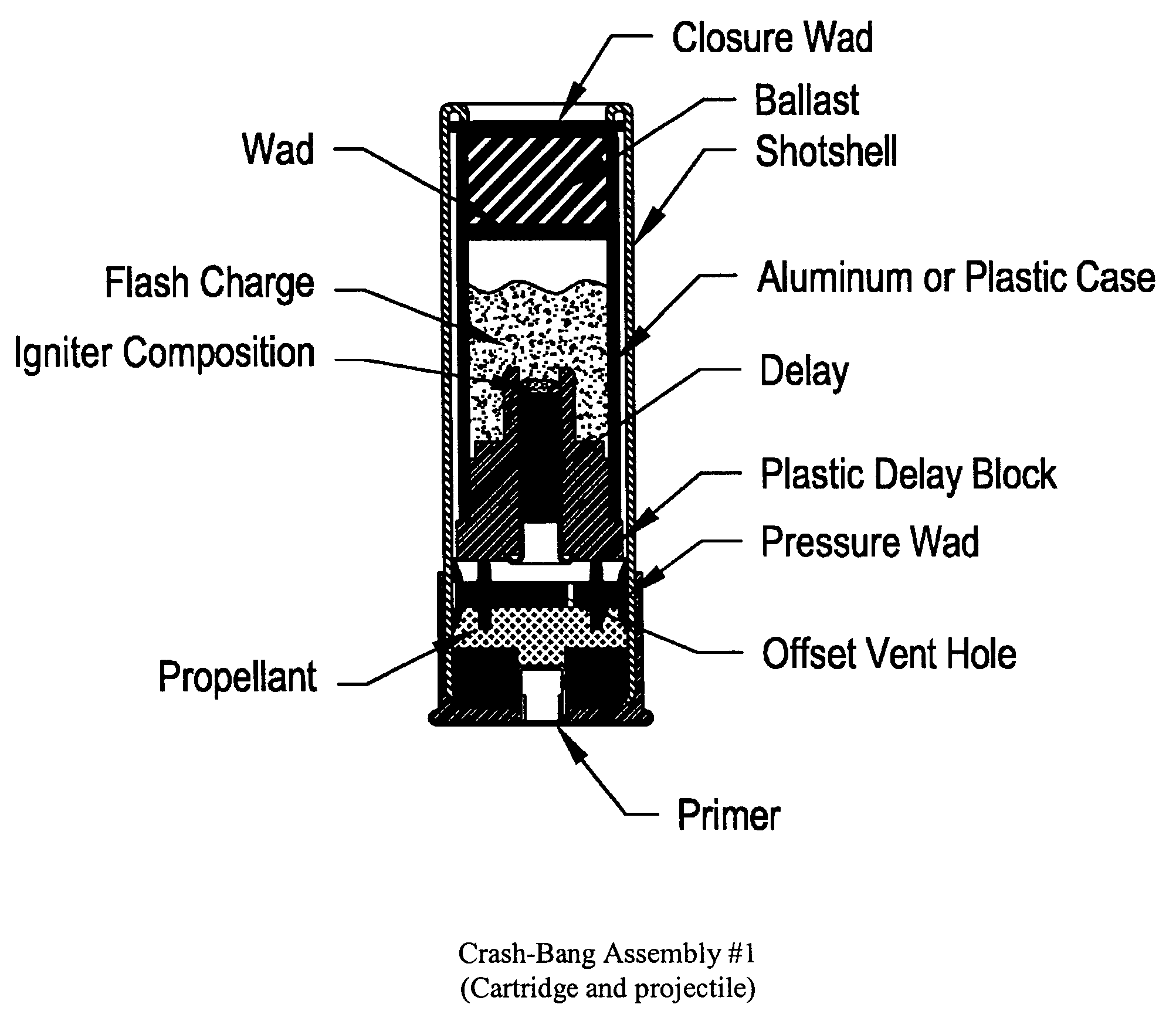
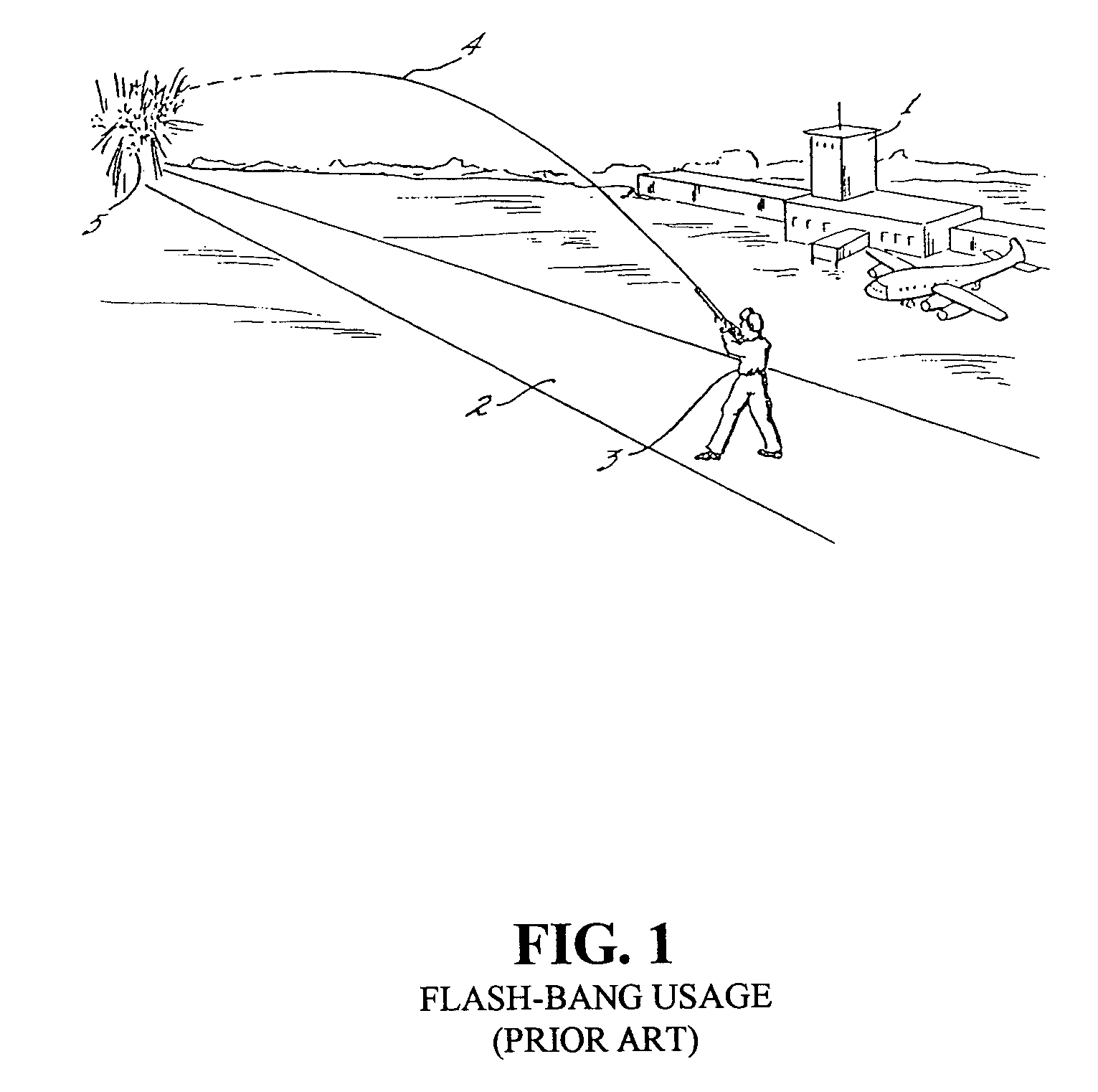
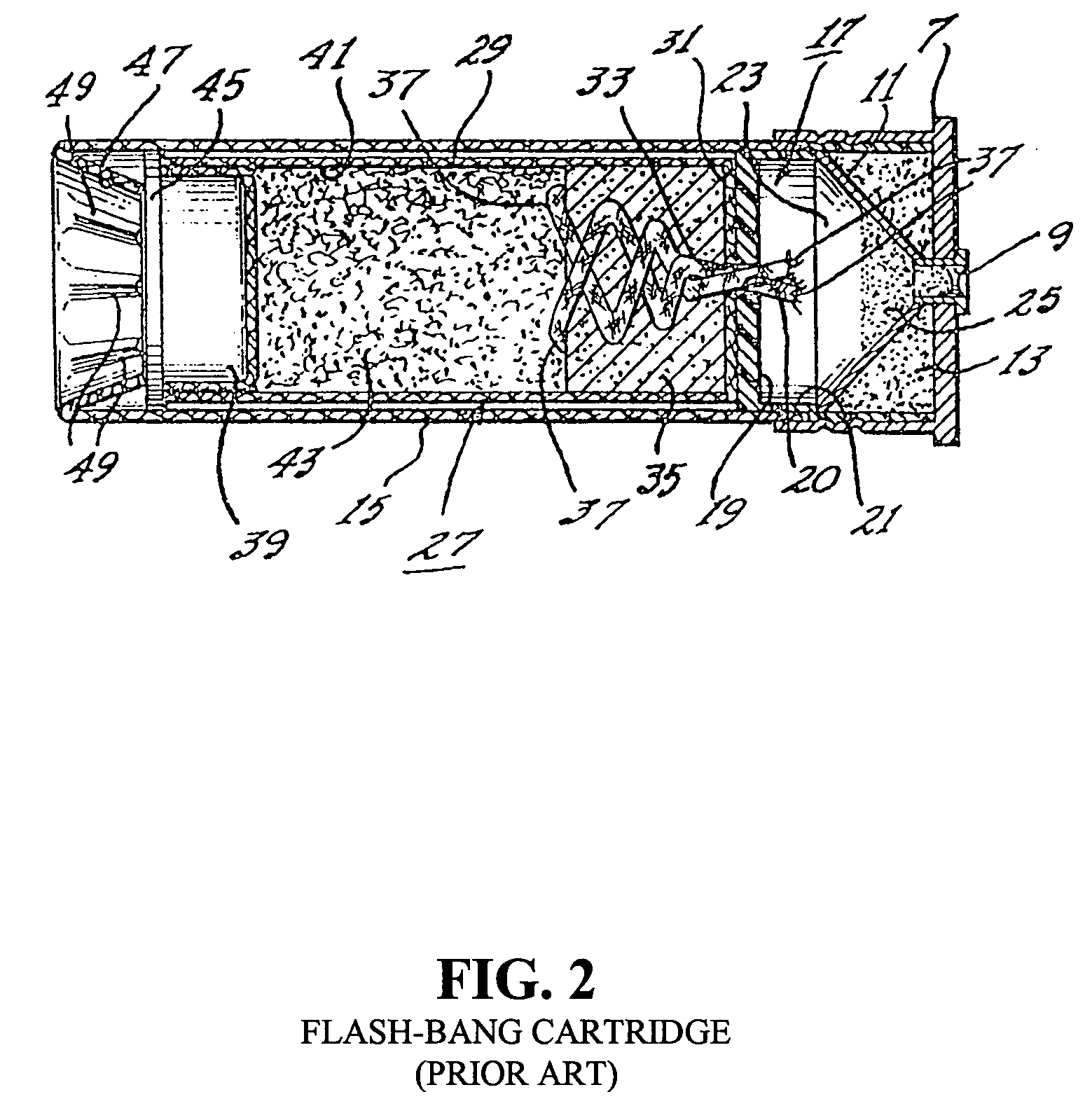
[0026]The presently preferred embodiments of the present invention were originally developed in response to a U.S. Marine Corps request for shotgun rounds capable of delivering a “flash-bang”-type air burst at ranges of 400 feet, 600 feet and 800 feet. The rounds were intended for less-lethal use both as a deterrent and as a means for determining the intent of potentially hostile groups at extended stand off ranges. The following design requirements were set forth in the U.S. Marine Corps request:[0027]1. Standard shotgun shell cartridges were to be used;[0028]2. Standard propelling methods were to be used, i.e., igniting nitrocellulose based smokeless propellants in the shot shell (no miniature rocket motors); and[0029]3. Projectile must disintegrate into low energy fragments upon detonation.
[0030]There is a key problem when attempting to meet this combination of requirements. The desire for a projectile that can travel up to 800 feet requires a fairly heavy weight as ballast, beca...
PUM
 Login to View More
 Abstract
Description
Claims
Application Information
 Login to View More