

Appearance changing decorations on fabric using disappearing ink
a technology of fabric and decoration, applied in the field of fabric decoration, can solve problems such as giving the concealed image a broken/fragmented look
- Summary
- Abstract
- Description
- Claims
- Application Information
AI Technical Summary
Benefits of technology
Problems solved by technology
Method used
Image

Examples
embodiment
Preferred Embodiment
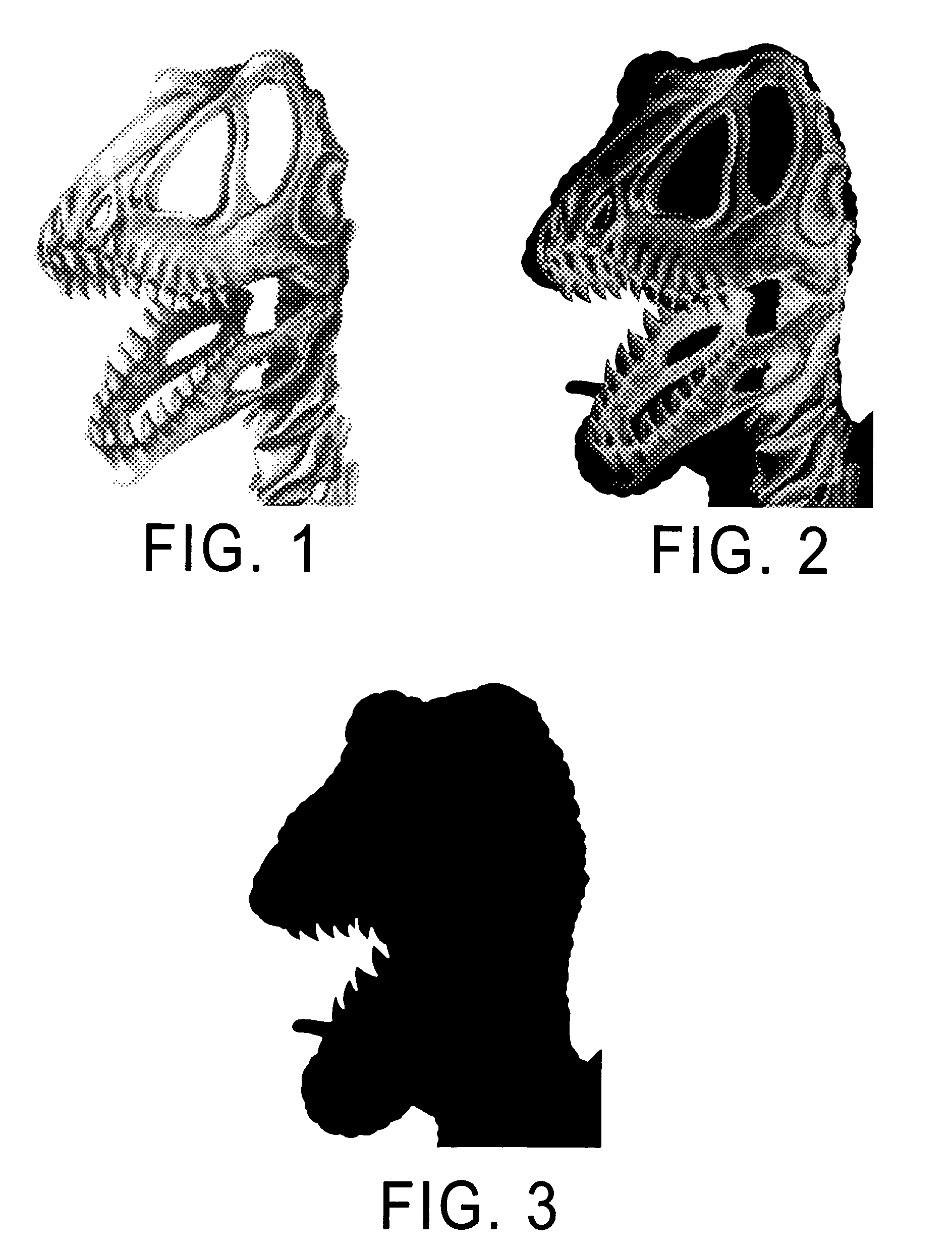
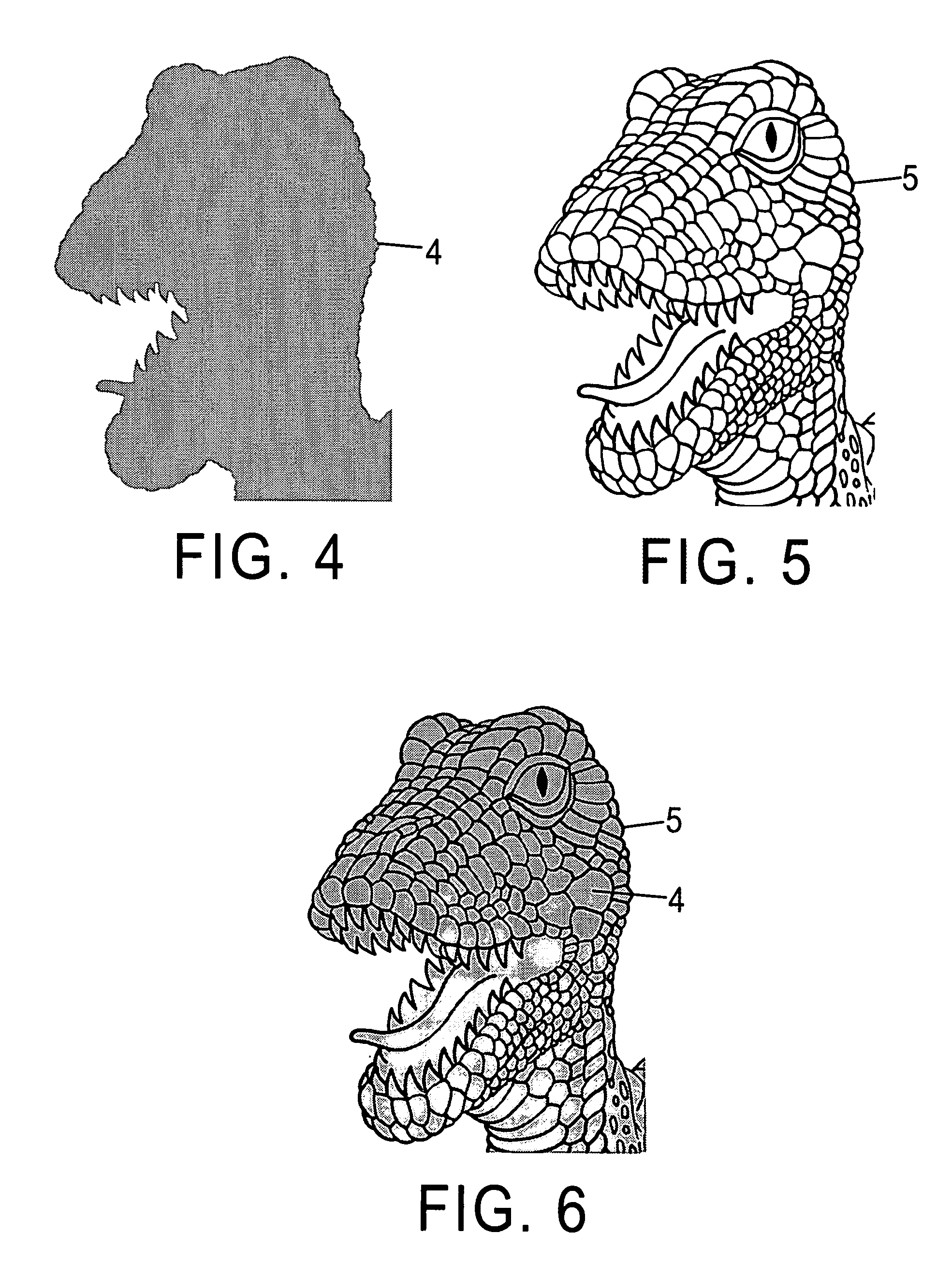
[0046]A preferred embodiment of the novelty fabric decorating process comprising of thermochromic (heat-activated) disappearing fabric ink, that is screen printed onto fabric in predetermined patterns, whereby allowing fabric decorations to perform dramatic transformations or allowing a hidden graphic or a hidden message printed with standard (non disappearing) fabric inks to remain concealed, until such time that the thermochromic disappearing ink begins the transition to transparent, revealing the hidden graphic or the hidden message is illustrated in FIGS. 1, 2, 3, 4, 5, 6, 7 and 8. Dramatic appearance changing designs can be created for clothing that provide and ever-changing interactive experience for the person wearing the garment.
[0047]Thermochromic ink is defined as ink that has the ability to change color or to become invisible when a pre-selected temperature is reached. Thermochromic disappearing inks have the ability to reverse back to a colorized stat...
PUM
| Property | Measurement | Unit |
|---|---|---|
| temperature | aaaaa | aaaaa |
| temperature | aaaaa | aaaaa |
| temperature | aaaaa | aaaaa |
Abstract
Description
Claims
Application Information
 Login to View More