Supercharge Your Innovation With Domain-Expert AI Agents!

Plasma processing method, plasma processing apparatus and storage medium

a plasma processing and plasma technology, applied in the field of micro lens formation, can solve the problems of reducing the sensitivity of the solid state imaging device, etc., and achieve the effect of large surface area

Inactive Publication Date: 2011-11-15
TOKYO ELECTRON LTD
View PDF14 Cites 0 Cited by
  • Summary
  • Abstract
  • Description
  • Claims
  • Application Information

AI Technical Summary

Benefits of technology

This approach enables the rapid formation of micro lenses with large surface areas, enhancing light focusing and sensitivity by significantly reducing both horizontal and diagonal distances between lenses, thereby improving the productivity and performance of CCD solid state imaging devices.

Problems solved by technology

However, if the lenses are made to contact each other by the softening, the lens shape would be collapsed due to a surface tension therebetween.
Accordingly, though it is possible to reduce the D1 to zero within a processing time set by considering a throughput of a production line, the D2 still remains great, thus impeding the improvement of the sensitivity of the solid state imaging device.

Method used

the structure of the environmentally friendly knitted fabric provided by the present invention; figure 2 Flow chart of the yarn wrapping machine for environmentally friendly knitted fabrics and storage devices; image 3 Is the parameter map of the yarn covering machine
View more

Image

Smart Image Click on the blue labels to locate them in the text.
Viewing Examples
Smart Image
  • Plasma processing method, plasma processing apparatus and storage medium
  • Plasma processing method, plasma processing apparatus and storage medium
  • Plasma processing method, plasma processing apparatus and storage medium

Examples

Experimental program
Comparison scheme
Effect test

experiment 1

Initial Evaluation

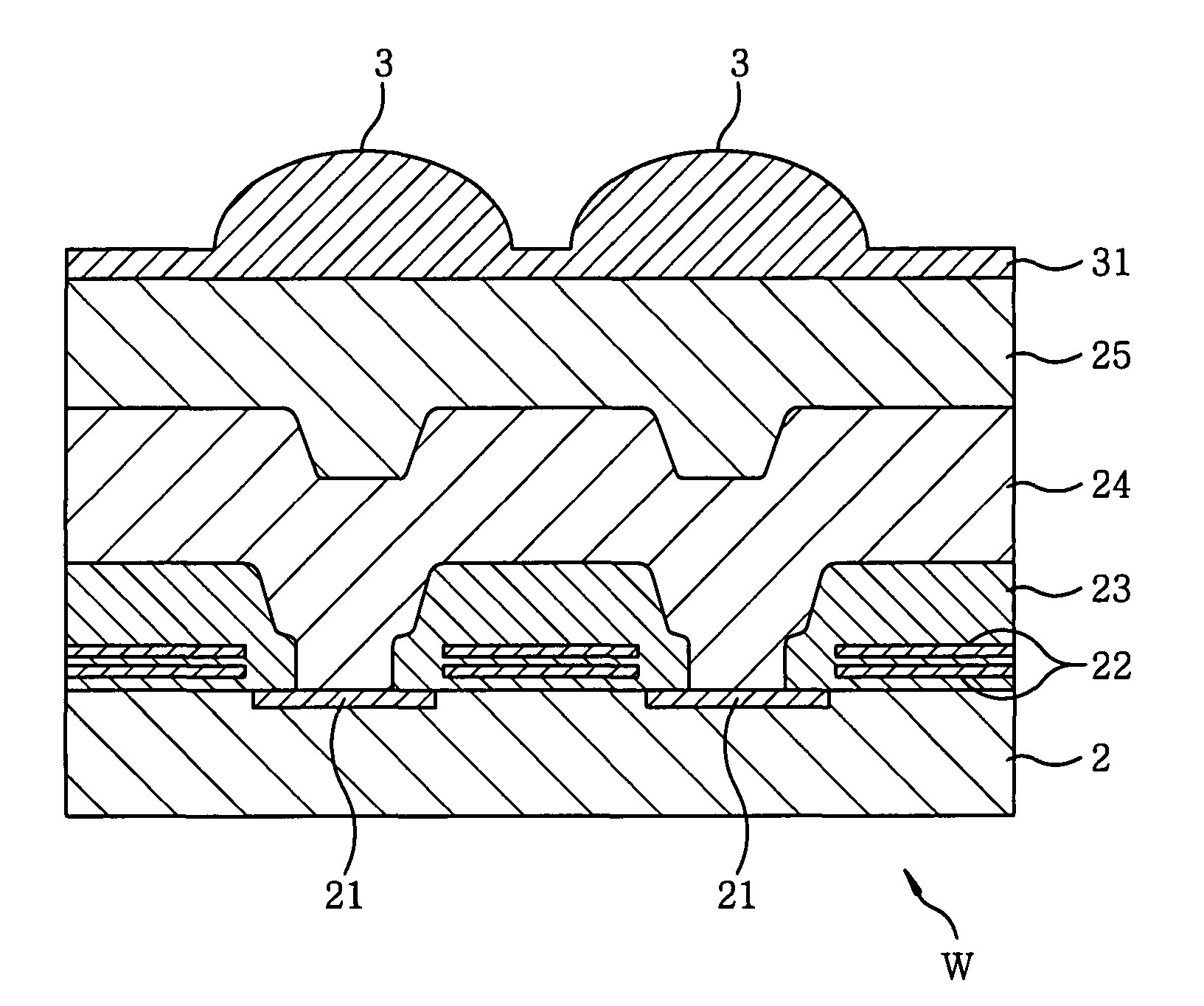
[0070]Etching was performed on the wafer W shown in FIG. 2A under the following processing conditions, to thereby form micro lenses 3:[0071]frequency of the high frequency power supply 63: 13.56 MHz;[0072]electric power of the high frequency power supply 63: specified separately;[0073]processing pressure: 5.3 Pa (40 mTorr);[0074]processing gas: CF4 / C4F8=100 / 10 sccm;[0075]temperature of the wafer W: 30° C.; and[0076]processing time: etching was performed until 1.25 μm of the transcription film 31 was etched and immediately thereafter, the etching was stepped.

example 1-1

[0077]In the above processing conditions, the electric power of the high frequency power supply 63 was set to be 1400 W.

example 1-2

[0078]In the above processing conditions, the electric power of the high frequency power supply 63 was set to be 2000 W.

the structure of the environmentally friendly knitted fabric provided by the present invention; figure 2 Flow chart of the yarn wrapping machine for environmentally friendly knitted fabrics and storage devices; image 3 Is the parameter map of the yarn covering machine
Login to View More

PUM

PropertyMeasurementUnit
diagonal distance D2aaaaaaaaaa
temperatureaaaaaaaaaa
Login to View More

Abstract

A plasma processing method includes the steps of: loading a substrate on a lower electrode, the substrate having a resist mask formed on a transcription film; supplying a processing gas into a processing chamber; forming a magnetic field, which is oriented toward one direction and perpendicular to a line connecting an upper and the lower electrode; supplying a high frequency power to the lower electrode in the processing chamber to thereby form an electric field; converting the processing gas into a plasma by a magnetron discharge caused by a presence of an orthogonal electromagnetic field; and forming lenses on the transcription film by using the plasma. The high frequency power is supplied to the lower electrode while controlling the magnitude of the electric power divided by a surface area of the substrate to be in a range from about 1200 W / 31415.9 mm2 to 2000 W / 31415.9 mm2.

Description

CROSS REFERENCE TO PRIOR APPLICATIONS[0001]This application claims priority from U.S. Provisional Application No. 60 / 792,978 filed Apr. 19, 2006 and Japanese Patent Application Nos. 2006-068049, filed Mar. 13, 2006 and JP 2006-286591, filed Oct. 20, 2006.FIELD OF THE INVENTION[0002]The present invention relates to a method for forming micro lenses that are used as, e.g., on-chip lenses for use in such a device as a CCD (charged coupled device) or an LCD (liquid crystal display) device.BACKGROUND OF THE INVENTION[0003]In a CCD solid state imaging device or a MOS (metal-oxide semiconductor) solid state imaging device, micro lenses are formed to improve the efficiency of focusing light to photosensitive parts, to thereby increase the amount of incident light upon pixels and improve the sensitivity of the device. The micro lenses corresponding to the pixels in one-to-one correspondence are arranged in, e.g., a matrix pattern. To ameliorate the sensitivity of the CCD or CMOS (complimenta...

Claims

the structure of the environmentally friendly knitted fabric provided by the present invention; figure 2 Flow chart of the yarn wrapping machine for environmentally friendly knitted fabrics and storage devices; image 3 Is the parameter map of the yarn covering machine
Login to View More

Application Information

Patent Timeline
no application Login to View More
Patent Type & Authority Patents(United States)
IPC IPC(8): B23K9/02H01L27/14G02B3/00
CPCB29D11/00365G02B3/0012
Inventor AMEMIYA, HIROKITODA, AKIHITONAGAHATA, HIROSHI
Owner TOKYO ELECTRON LTD
Features
  • R&D
  • Intellectual Property
  • Life Sciences
  • Materials
  • Tech Scout
Why Patsnap Eureka
  • Unparalleled Data Quality
  • Higher Quality Content
  • 60% Fewer Hallucinations
Social media
Patsnap Eureka Blog
Learn More