
Method for evaluating quality of Chinese patent medicament by using metabonomics
A technology of quality evaluation and metabolomics, applied in the field of quality control and evaluation of traditional Chinese medicine, can solve problems such as inability to control components, difficulty reflecting safety and effectiveness, insufficient explanation of multi-component and multi-target synergy characteristics of traditional Chinese medicine, and achieve Ensure safe and effective, stable and controllable internal quality
- Summary
- Abstract
- Description
- Claims
- Application Information
AI Technical Summary
Problems solved by technology
Method used
Image

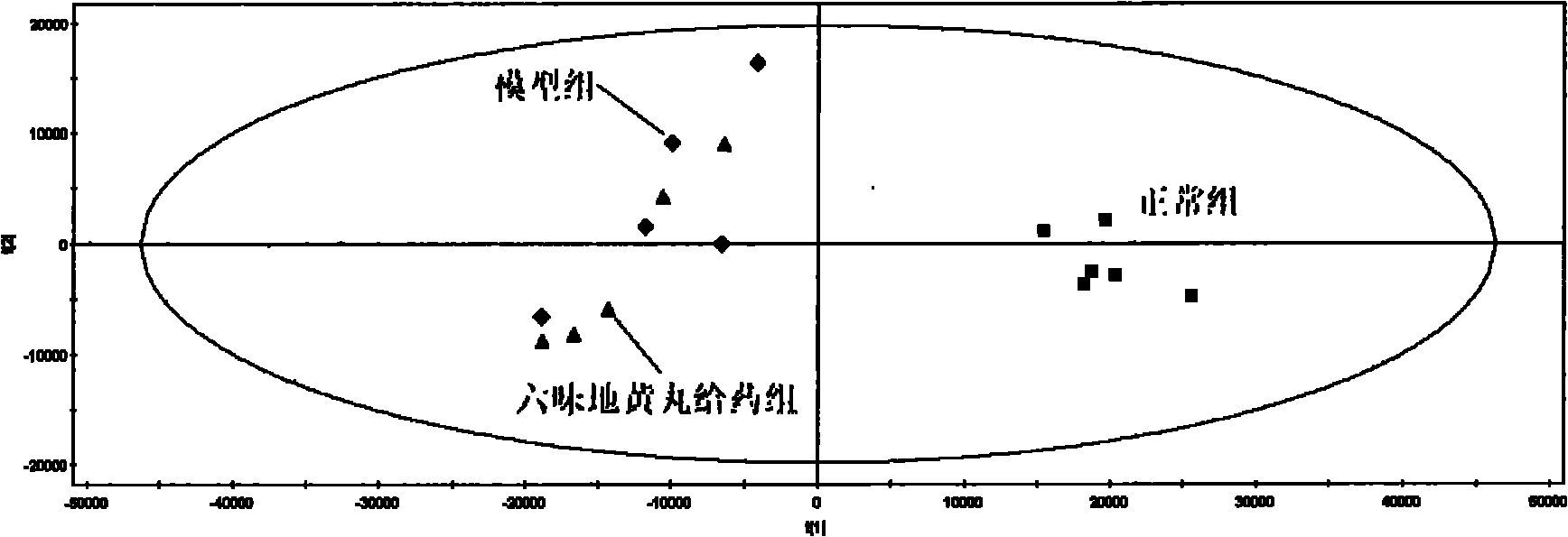
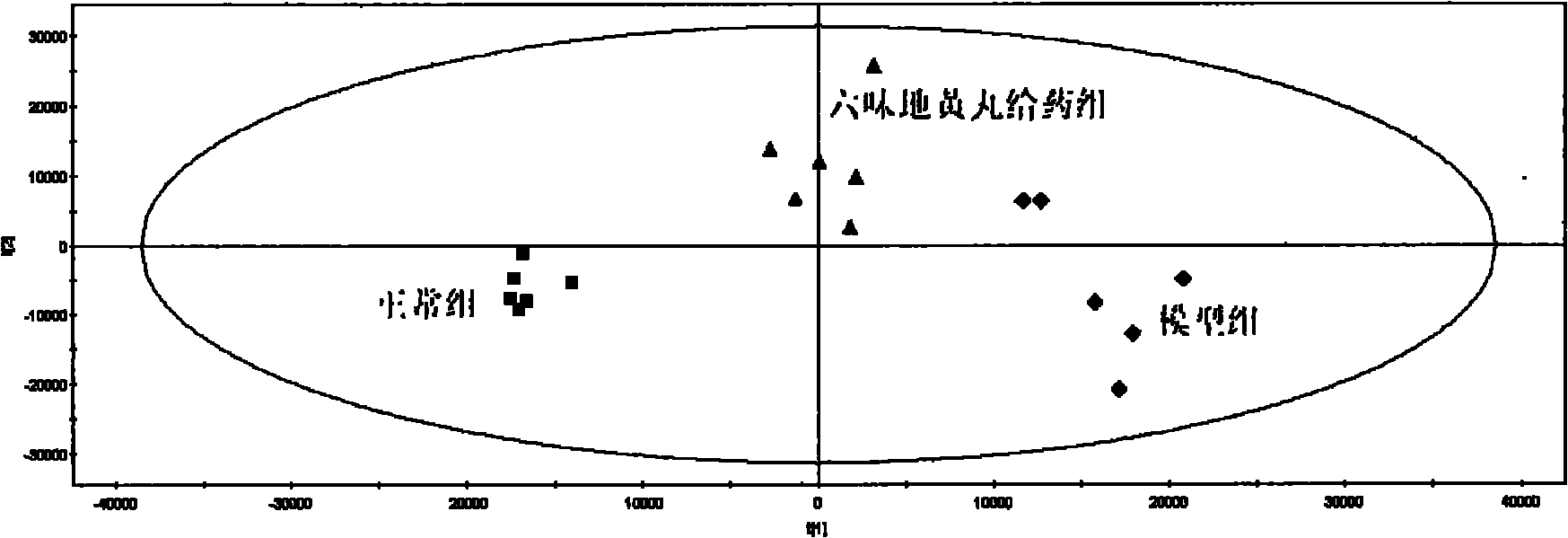
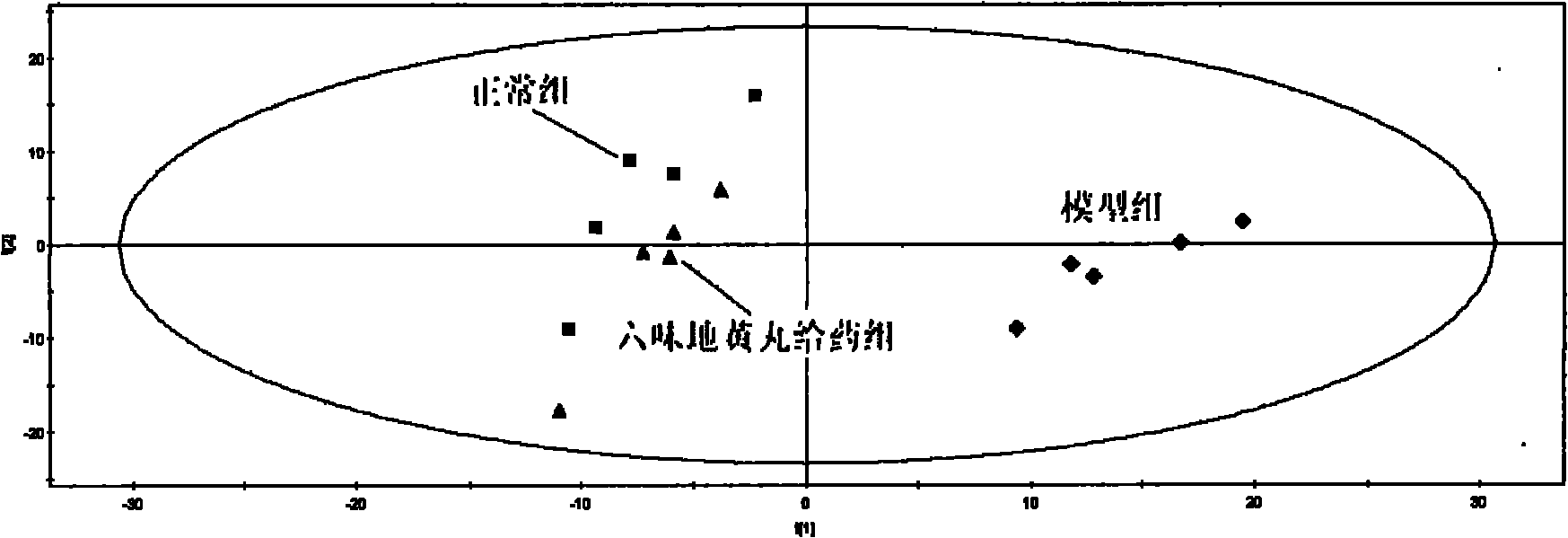
Examples
Embodiment 6
[0025] The quality control and evaluation method of embodiment Liuwei Dihuang Wan
[0026] 1. Screening of animal models of kidney yin deficiency
[0027] Liuwei Dihuang Wan is composed of Rehmannia glutinosa, Cornus officinalis, Chinese yam, Alisma, Moutan cortex and Poria cocos. It is a classic prescription for nourishing yin and tonifying kidney. Therefore, we must first establish and optimize an animal model of kidney yin deficiency that is more in line with the theory of traditional Chinese medicine. At present, the most commonly used animal models of kidney yin deficiency include thyroxine-type kidney-yin deficiency model, adrenal cortex hormone-type kidney-yin deficiency model, and heat-induced traditional Chinese medicine-type kidney-yin deficiency model.
[0028] Successful disease treatment must partially normalize defects in metabolic networks without interfering with the regulation of other metabolic pathways essential for maintaining health. After thousands of y...
PUM
 Login to View More
 Abstract
Description
Claims
Application Information
 Login to View More