
Low-friction sliding ring having an economical diamond coating
A technology of diamond layer and sealing ring, which is applied in engine sealing, metal material coating process, coating, etc., can solve problems such as bad bonding, diamond layer detachment, sealing ring damage, etc., and achieve long service life and excellent dry running The effect of the characteristic
- Summary
- Abstract
- Description
- Claims
- Application Information
AI Technical Summary
Problems solved by technology
Method used
Image

Examples
Embodiment 1
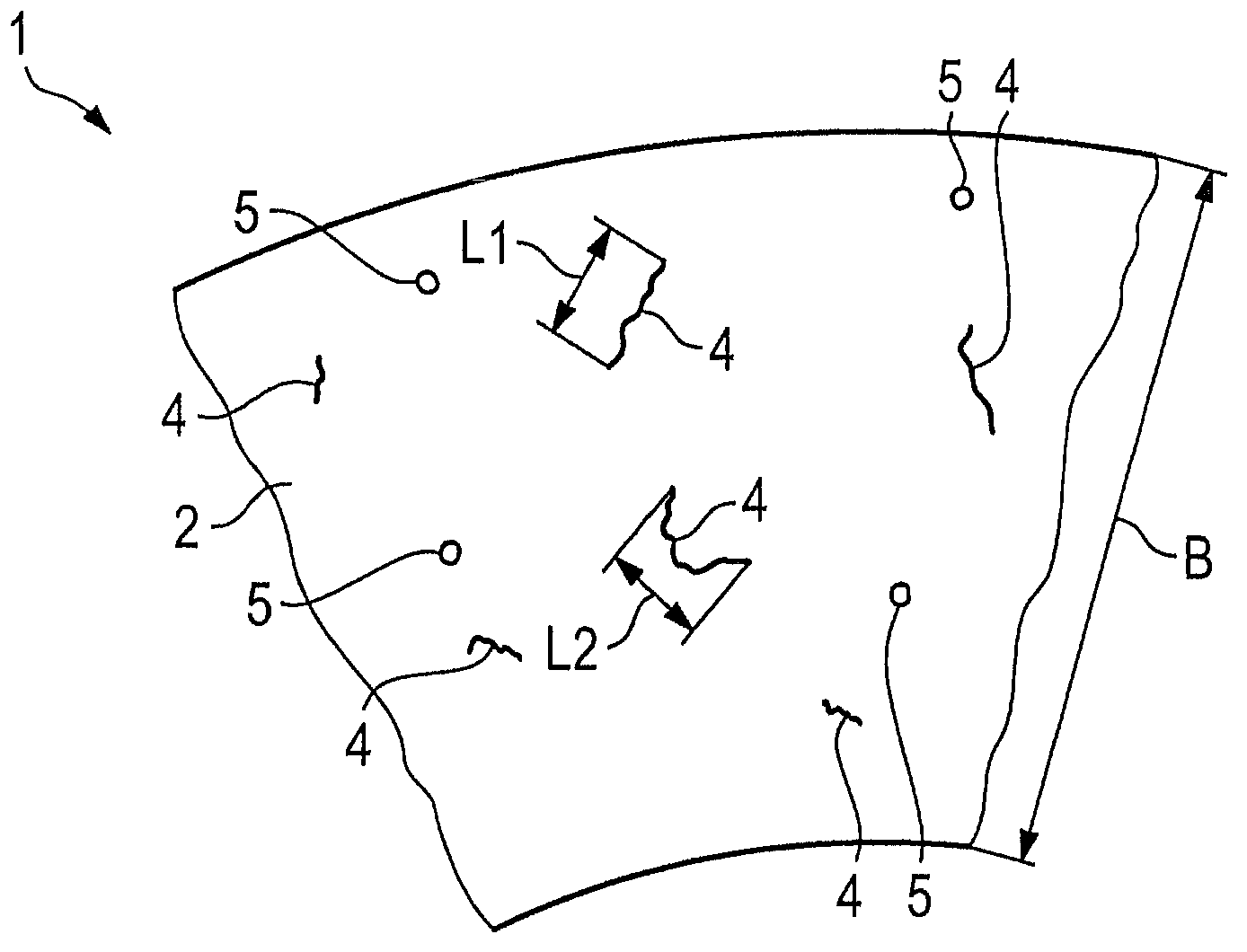
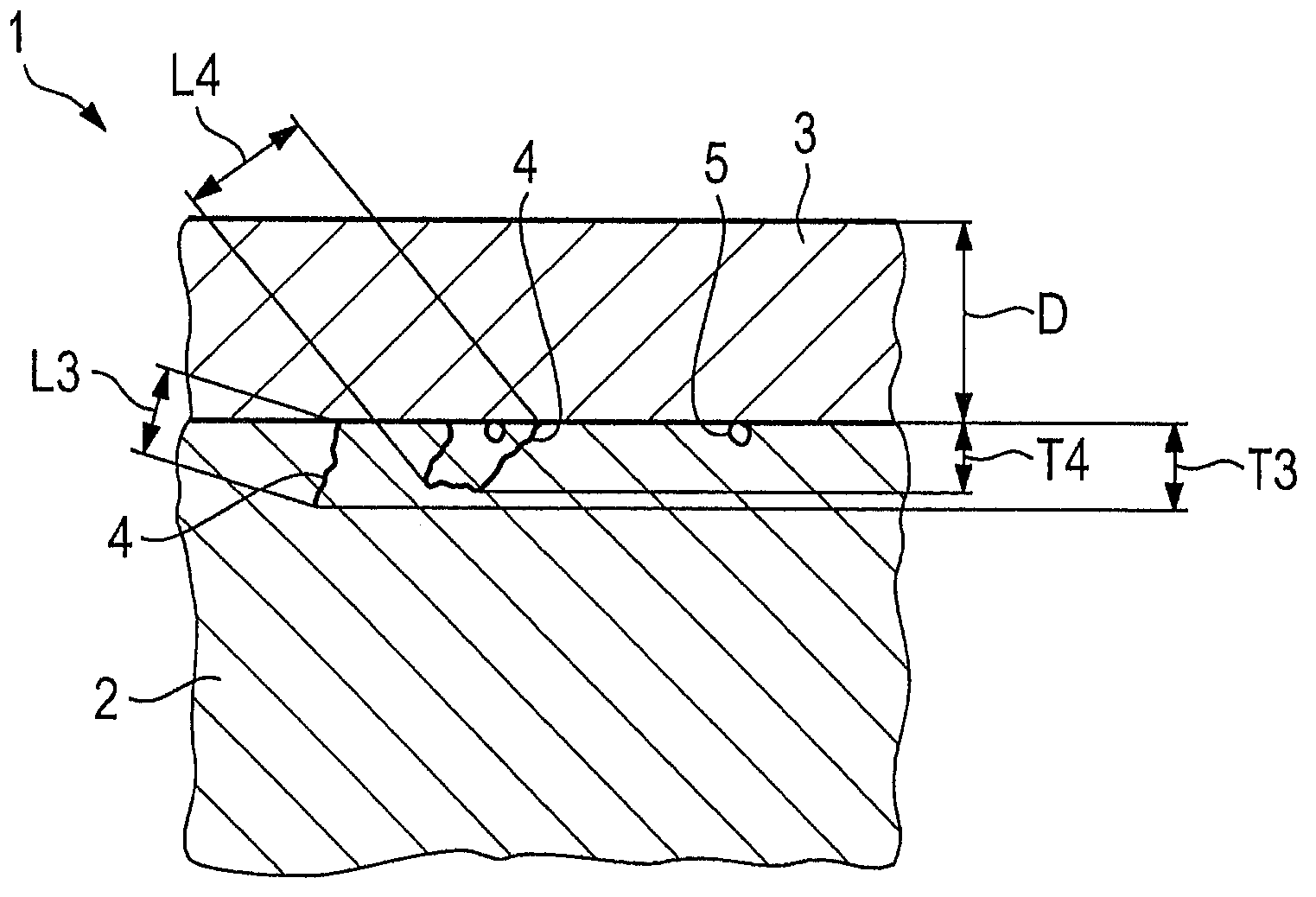
[0030] Here the thickness of the diamond is measured by means of the beta backscattering method. The crystal size was measured by means of an optical microscope with a magnification of 1000 times. Determination of roughness R by means of white light interferometer aAnd the SP3 component was determined by means of Raman spectroscopy. The pore size and pore distance were determined by means of an optical microscope and the slit length and slit depth, respectively, by determining the distribution of the number of slits of ionically inclined cuts (cuts with a minimum cut length of 1 mm) made in the substrate 2 . The hardness of the substrate was determined by means of a Vickers hardness test and the defect specific gravity, defined as the area ratio of uncoated defects on the surface of the substrate to the diamond-applied surface, was determined by means of an optical microscope.
[0031] Therefore, according to the present invention, a uniform and permanent diamond coat...
PUM
| Property | Measurement | Unit |
|---|---|---|
| thickness | aaaaa | aaaaa |
| thickness | aaaaa | aaaaa |
| thickness | aaaaa | aaaaa |
Abstract
Description
Claims
Application Information
 Login to View More