
Composite fiber with effects of heat accumulation, heat preservation and health protection
A composite fiber and health fiber technology, applied in the field of textile fabrics, can solve problems such as single performance
- Summary
- Abstract
- Description
- Claims
- Application Information
AI Technical Summary
Problems solved by technology
Method used
Image

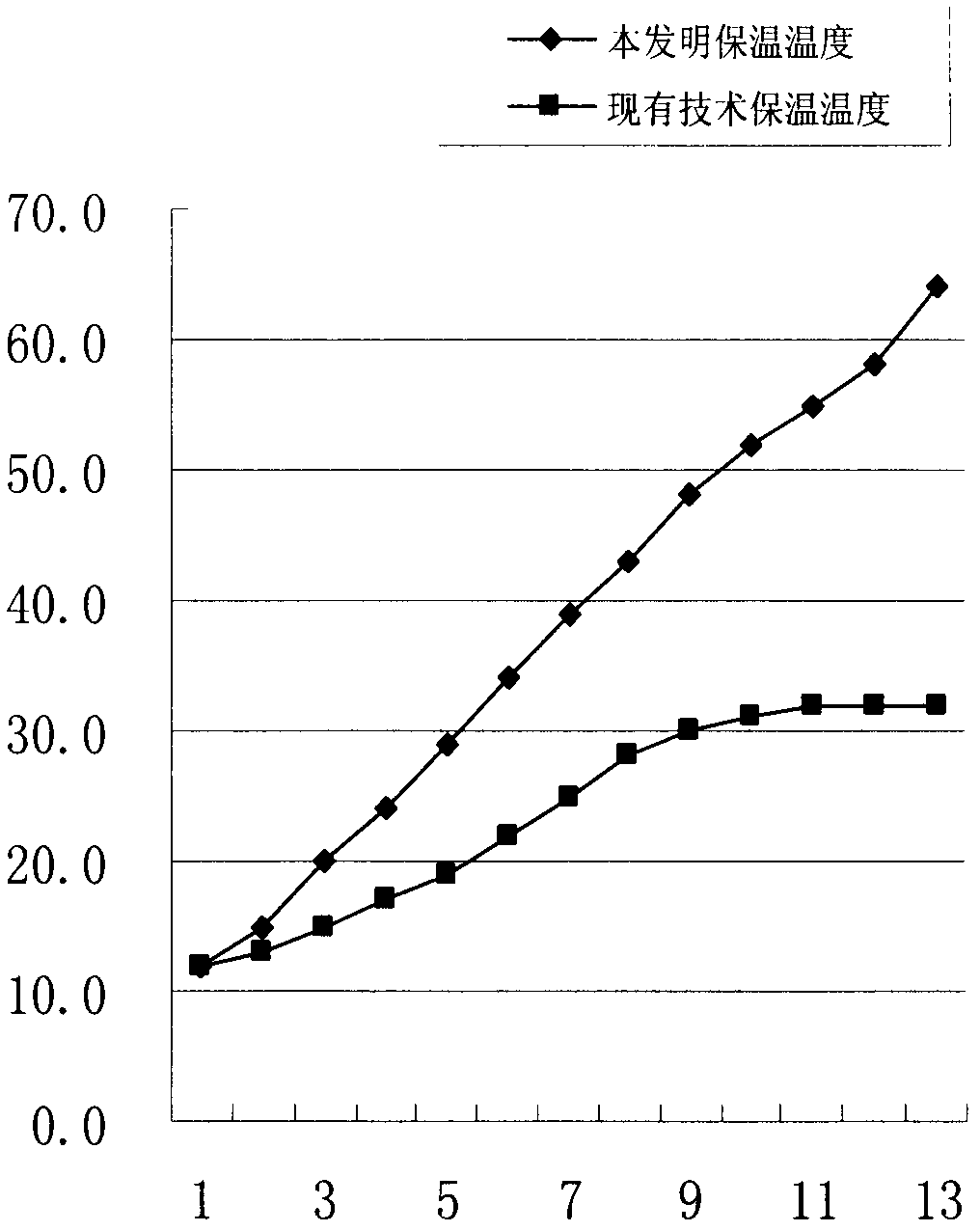
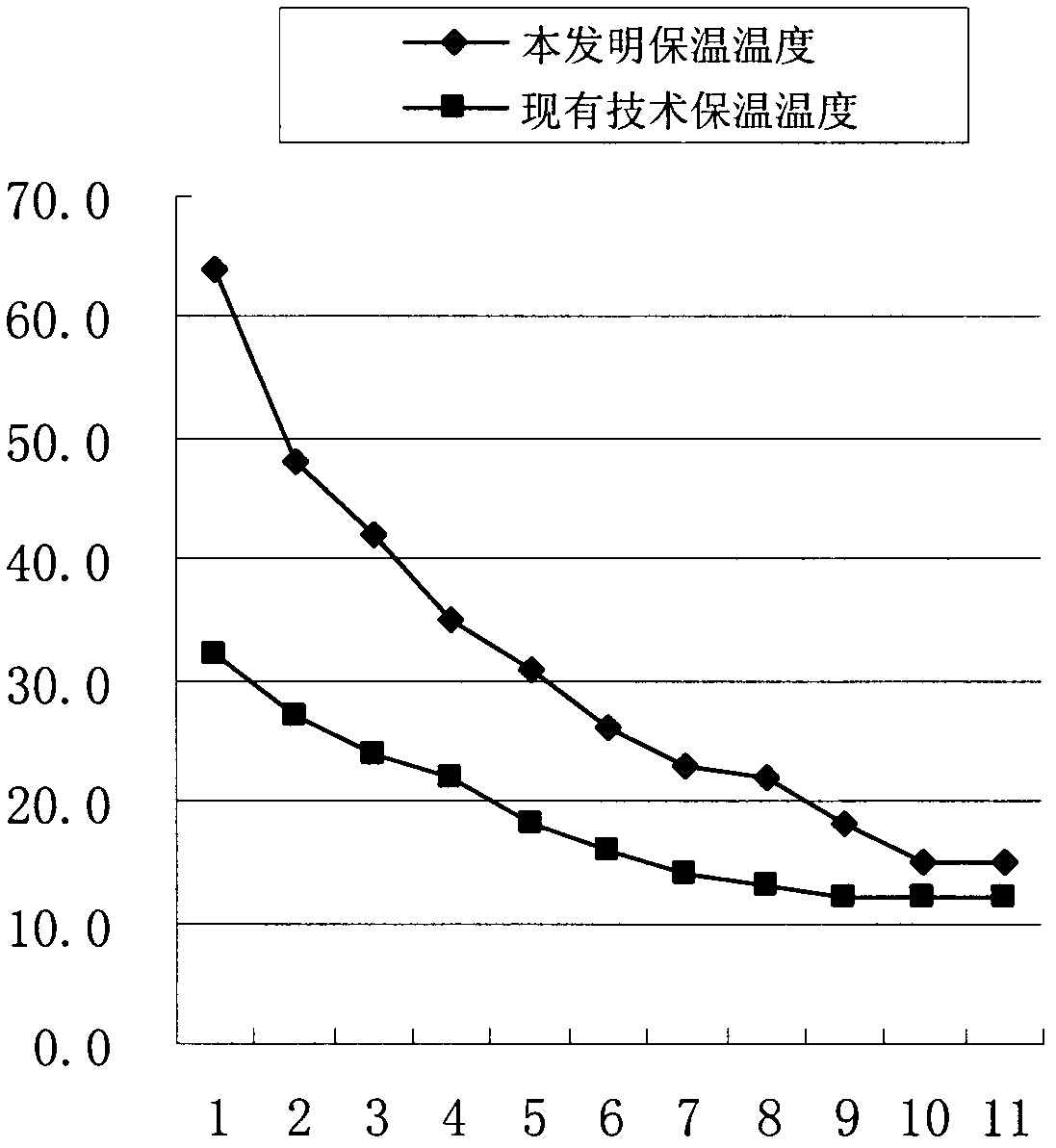
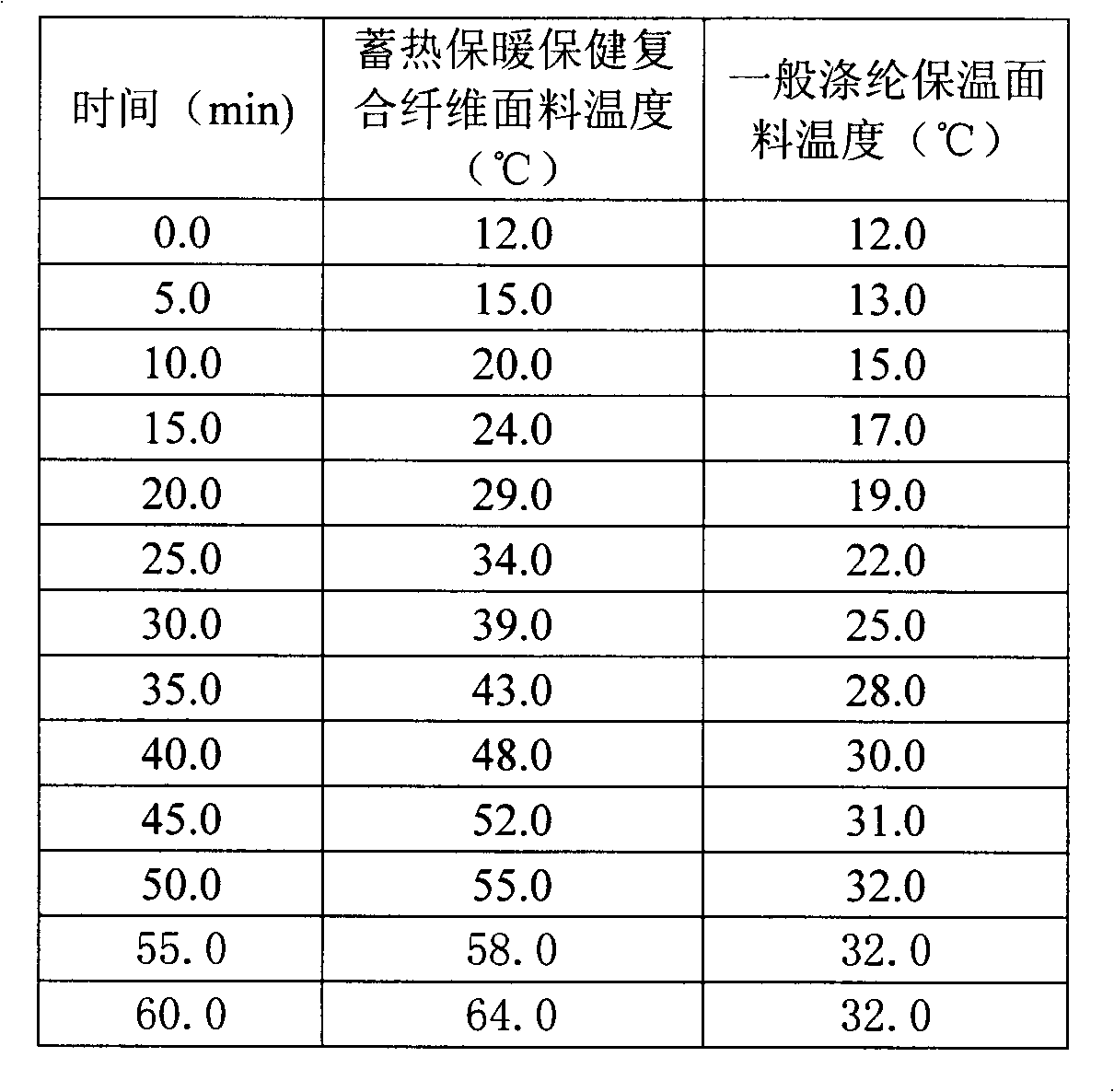
Examples
Embodiment 1-3
[0036] Embodiment 1-3: A kind of composite fiber with heat storage, heat preservation and health care effect, said composite fiber is obtained by the following process, which process includes the following steps:
[0037] Step 1. Keep the coffee grounds at a temperature of 400-450°C for 20 minutes, so that the organic matter in the coffee grounds can be pre-carbonized;
[0038] Step 2. Activate the pre-carbonized coffee grounds at a temperature of about 1800° C. After the activation treatment, the coffee carbon forms a honeycomb porous structure to obtain coffee carbon;
[0039] Step 3, nano-processing coffee carbon into 50-100 nanometer coffee carbon powder;
[0040] Step 4. Nano-processing the far-infrared nanomaterials into far-infrared nanoparticles of 50 to 100 nanometers. The far-infrared nanoparticles include the following components in mass percentage:
[0041] Silicon dioxide (SiO 2 ) 30.32%,
[0042] Aluminum oxide (Al 2 o 3 ) 31.41%,
PUM
 Login to View More
 Abstract
Description
Claims
Application Information
 Login to View More