
Gender identification of ginkgo biloba using molecular markers
A ginkgo and gender technology, applied in the field of ginkgo gender identification using molecular markers, can solve the problems of RAPD technology instability and failure to make up for the dominant marker characteristics of SCAR markers, and achieve the effect of reducing time and labor and protecting the urban environment
- Summary
- Abstract
- Description
- Claims
- Application Information
AI Technical Summary
Problems solved by technology
Method used
Image

Examples
Embodiment Construction
[0013] Hereinafter, the present invention will be described in detail with reference to the accompanying drawings.
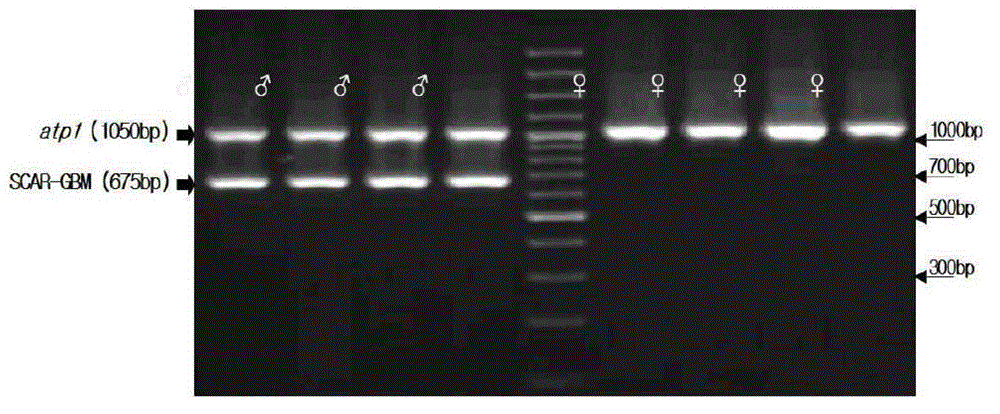
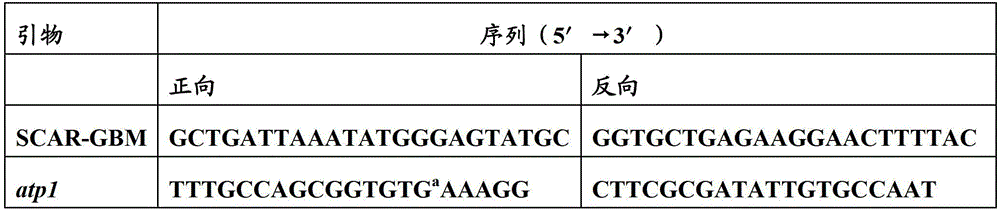
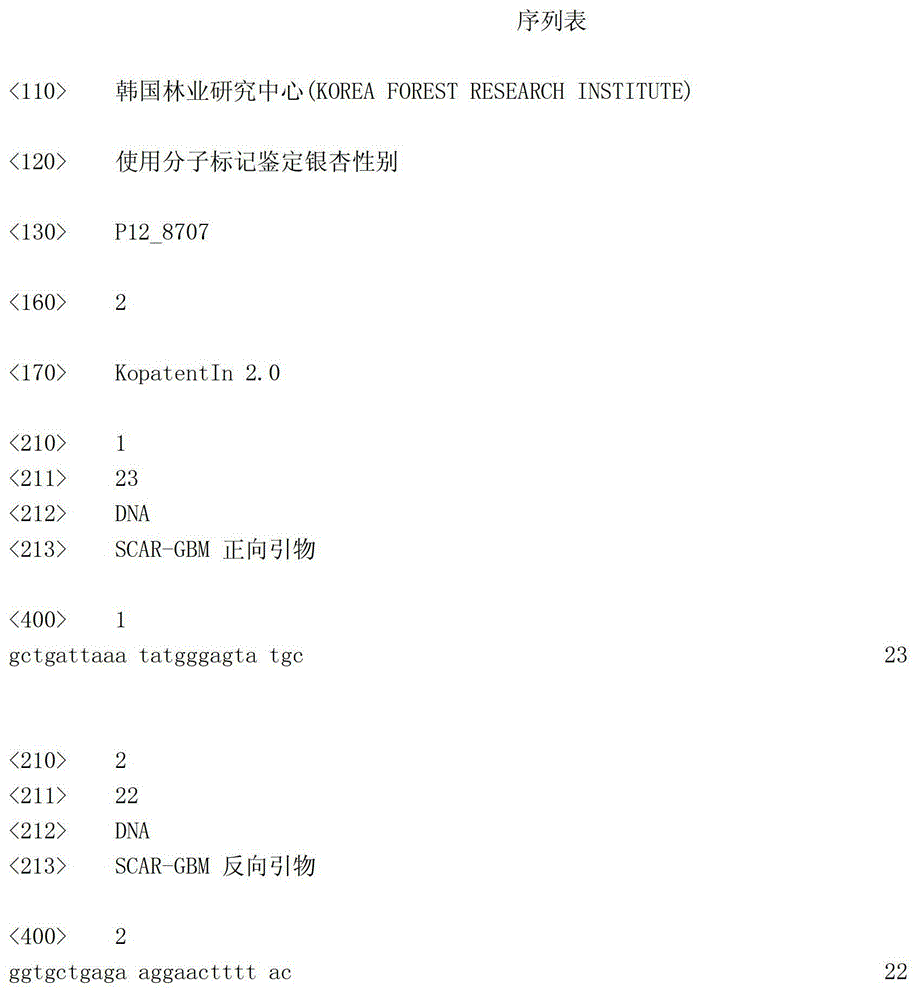
[0014] In order to achieve the purpose of the present invention, the present invention provides a pair of oligonucleotide primers named 'SCAR-GBM'.
[0015] As the primers for ginkgo sex identification provided by the present invention, the SCAR-GBM molecular marker has a sequence developed based on the sequence of the RAPD fragment, and this is disclosed in the present invention for the first time.
[0016] For the purposes of the present invention, "primer" refers to a single-stranded oligonucleotide sequence complementary to the nucleic acid strand to be copied, which can be used as a starting point for the synthesis of primer extension products. The length and sequence of the primers must be sufficient to enable the synthesis of extension products to initiate. The specific length and sequence of a primer may depend on the conditions under which the primer i...
PUM
 Login to View More
 Abstract
Description
Claims
Application Information
 Login to View More