Calcium acetate modified hydrophilia activated carbon and preparation method thereof

A technology of activated carbon and calcium acetate, which is applied in the field of hydrophilic activated carbon and its preparation, and the synthesis of hydrophilic organic functional groups. It can solve the problems of high carbon loss rate and the destruction of the pore structure of activated carbon, and achieve increased adsorption capacity, cheap raw materials, and good effect

A technology of activated carbon and calcium acetate, which is applied in the field of hydrophilic activated carbon and its preparation, and the synthesis of hydrophilic organic functional groups. It can solve the problems of high carbon loss rate and the destruction of the pore structure of activated carbon, and achieve increased adsorption capacity, cheap raw materials, and good effect

CN103537265AInactive Publication Date: 2014-01-29CENT SOUTH UNIV

Image

Smart Image Click on the blue labels to locate them in the text.
Viewing Examples
Smart Image
  • Calcium acetate modified hydrophilia activated carbon and preparation method thereof
  • Calcium acetate modified hydrophilia activated carbon and preparation method thereof
  • Calcium acetate modified hydrophilia activated carbon and preparation method thereof

Examples

Experimental program
Comparison scheme
Effect test

Embodiment 1

[0029] 1) Preparation of modified activated carbon

[0030] 10 g of ordinary commercial activated carbon was weighed with a balance and put into a beaker, washed 5 times with distilled water, and dried under vacuum at 120 °C for 12 h. Afterwards, the temperature of the vacuum furnace was raised to 800 °C and maintained for 1 h to remove the existing active groups on the surface of the activated carbon. Measure 100mL of saturated calcium hydroxide solution, soak the activated carbon in the lye, seal it, let it stand for 4 days, wash it with deionized water 6 times, and dry it under vacuum at 120°C for 12h. The activated carbon was activated at 400°C under vacuum for 1 hour, and when it was naturally cooled to room temperature, it was soaked in ethyl acetate reagent, sealed, and left to stand for 4 days. The ethyl acetate reagent was separated from the activated carbon by a gauze filter, and the activated carbon was reacted at 75° C. under vacuum for 18 h. The treated activate...

Embodiment 2

[0037] 1) Preparation of modified activated carbon

[0038] 10 g of ordinary commercial activated carbon was weighed with a balance and put into a beaker, washed 5 times with distilled water, and dried under vacuum at 110 °C for 24 h. Afterwards, the temperature of the vacuum furnace was raised to 950 °C and maintained for 0.5 h to remove the existing active groups on the surface of the activated carbon. Measure 100mL of saturated calcium hydroxide solution, soak the activated carbon in the lye, seal it, let it stand for 120h, wash it with deionized water 6 times, and dry it under vacuum at 105°C for 24h. The activated carbon was activated at 450°C under vacuum for 0.5h, and when it was naturally cooled to room temperature, it was soaked in ethyl acetate reagent, sealed and left to stand for 120h. The ethyl acetate reagent was separated from the activated carbon by a gauze filter, and the activated carbon was reacted at 85° C. under vacuum for 24 h. The treated activated car...

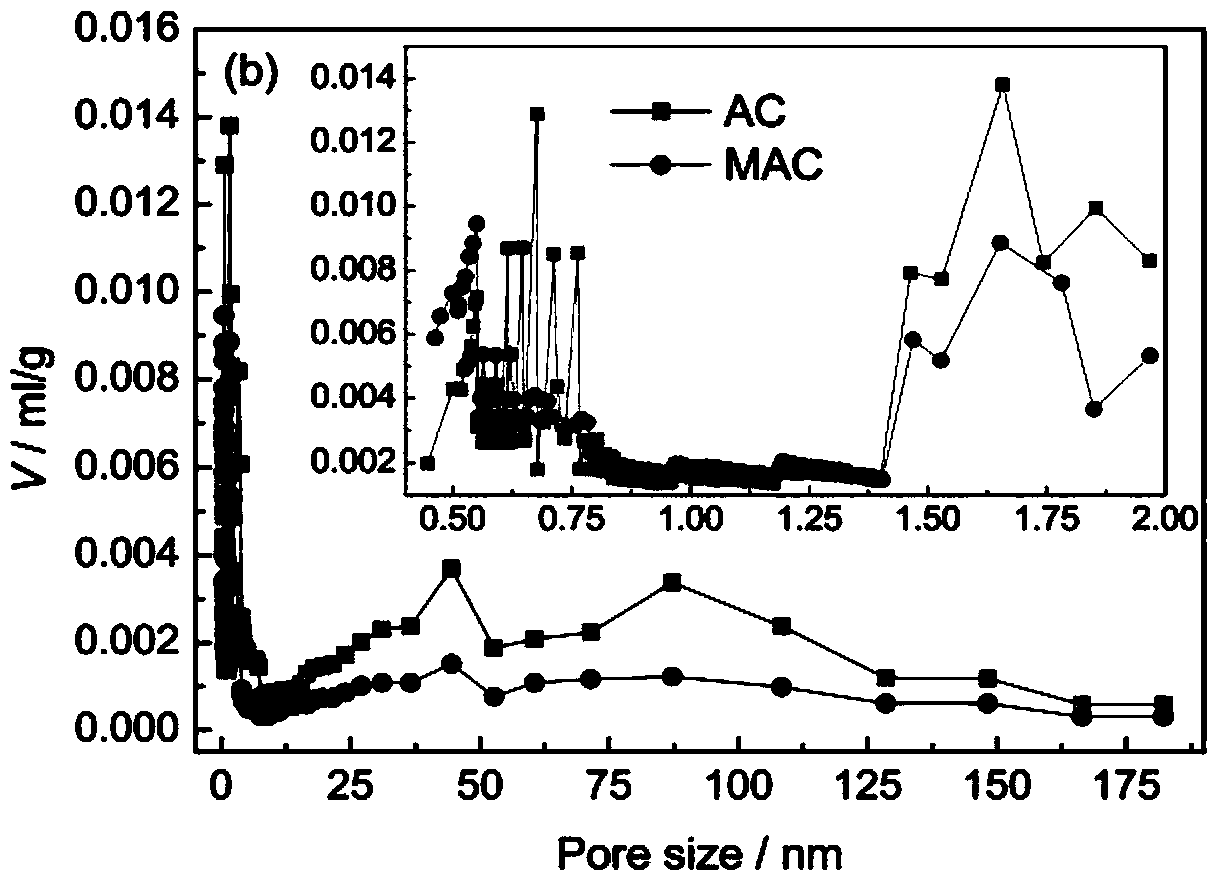
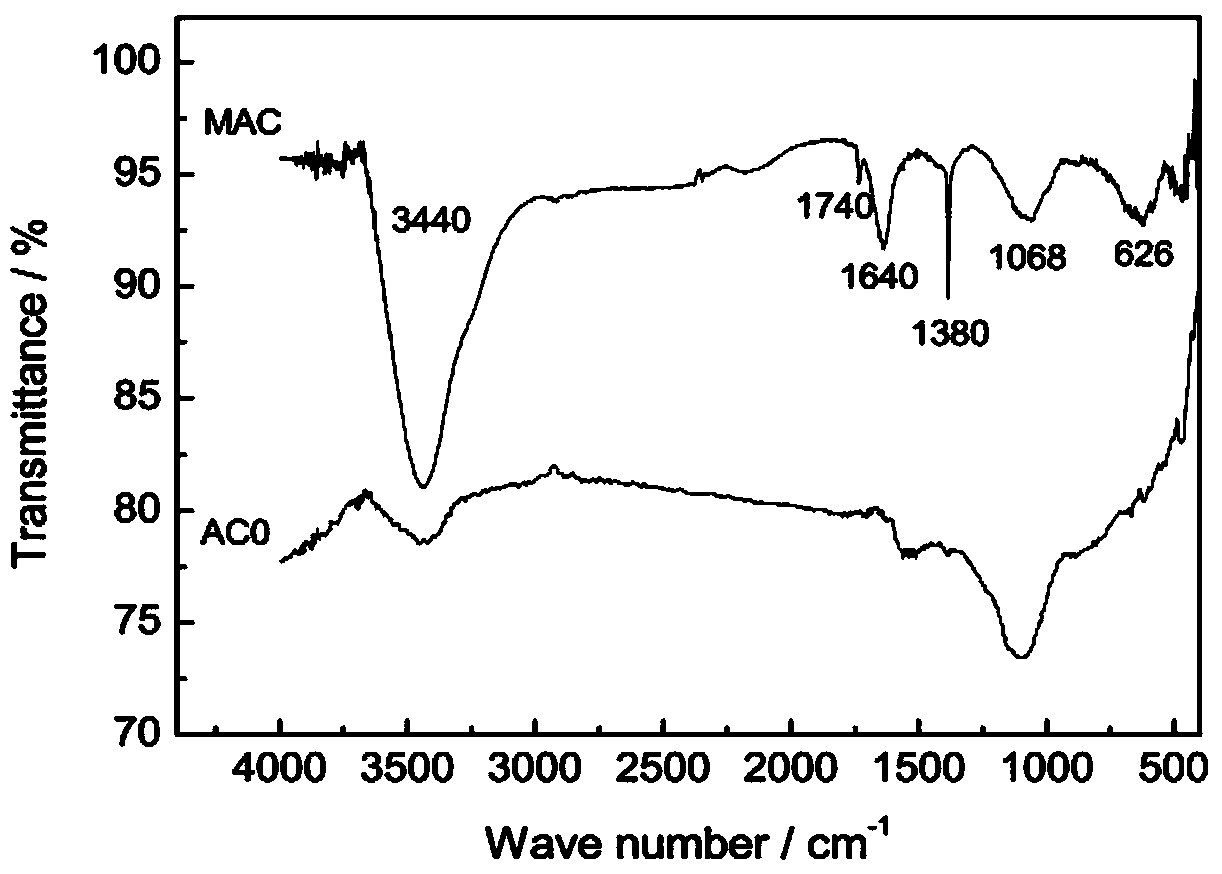
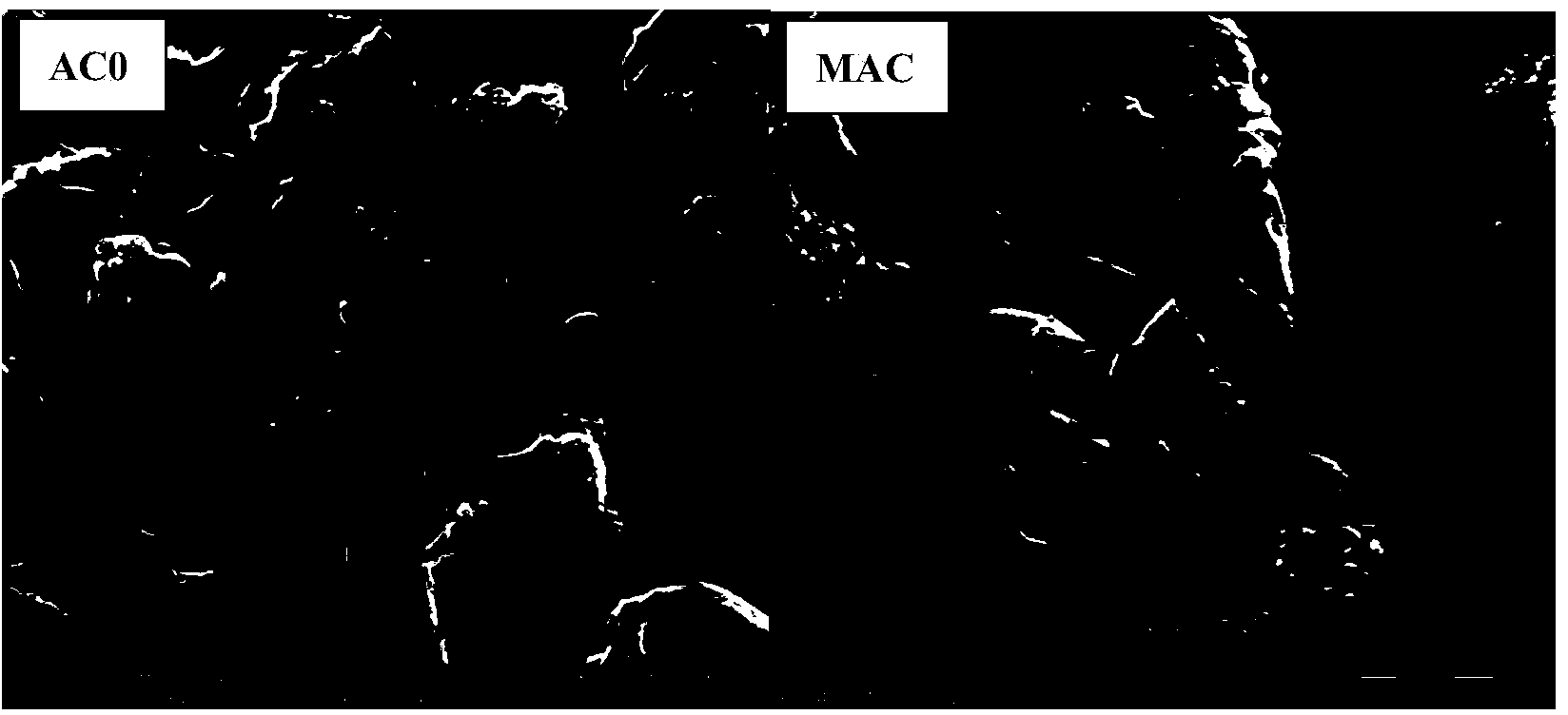
the structure of the environmentally friendly knitted fabric provided by the present invention; figure 2 Flow chart of the yarn wrapping machine for environmentally friendly knitted fabrics and storage devices; image 3 Is the parameter map of the yarn covering machine
Login to View More

PUM

PropertyMeasurementUnit
decomposition temperatureaaaaaaaaaa
specific surface areaaaaaaaaaaa
Login to View More

Abstract

The invention discloses calcium acetate modified hydrophilia activated carbon and a preparation method thereof. The calcium acetate is loaded on the surface of the carbon skeleton of the activated carbon so as to form the hydrophilia activated carbon. According to the preparation method, the activated carbon raw material is treated sequentially through steps of processing at a high temperature, soaking in a calcium hydroxide solution, drying, and activating, then soaking in ethyl acetate, carrying out esterolysis reaction, nitrogen purging desorption, and vacuum desorption so as to prepare the hydrophilia activated carbon. The preparation method is simple to operate and has low cost; and the prepared hydrophilia activated carbon has a stable structure and large specific surface area, is low in carbon loss, can strongly adsorb vapour and has large adsorption capacity, has stable adsorption performance and has good reusability.

Description

technical field [0001] The invention discloses calcium acetate-modified hydrophilic activated carbon and a preparation method thereof, in particular to the process of synthesizing hydrophilic organic functional groups on the surface of activated carbon by using organic reagents; it belongs to the field of catalytic modification. Background technique [0002] Water vapor is one of the ubiquitous substances in nature. However, in some specific environments, such as precision instrument laboratories, warehouses, petroleum liquefied gas stations, etc., it is necessary to strictly control the content of water vapor to prevent major safety accidents caused by short circuits, corrosion, condensation, etc. with loss. [0003] Adsorption is widely used because of its simple operation, easy recovery and avoidance of secondary pollution. Activated carbon has become one of the preferred adsorbents due to its developed pore structure, large specific surface area, abundant surface funct...

Claims

the structure of the environmentally friendly knitted fabric provided by the present invention; figure 2 Flow chart of the yarn wrapping machine for environmentally friendly knitted fabrics and storage devices; image 3 Is the parameter map of the yarn covering machine
Login to View More

Application Information

Patent Timeline
29 Jan 2014
Publication
CN103537265A
IPC
B01J20/22; B01J20/30
Inventors
李立清; 姚小龙