However, in the drawing process, the problem of how to determine the midpoint of an existing straight line is often encountered. In the known technology, there are two ways: 1. First measure the length of this
line segment, then divide by 2, and then use the existing The end of the line segment is used as the reference to measure to obtain the midpoint; this method needs to measure the size twice, and the accuracy of the measurement depends on the accuracy of the measuring tool used. The accuracy is as accurate as millimeters, and each measurement will produce an error of less than 1
millimeter. In addition, the operation of dividing by 2 is performed in the middle, so this method is not accurate, and it is energy-consuming and time-consuming.
2. It is necessary to make an auxiliary line. Use the
compass needle end to coincide with one end of the line segment. With the
radius greater than half the length of the line segment, draw a section of arc on both sides of the line segment, and then let the needle end coincide with the other end of the line segment. Draw a section of arc on both sides of this line segment with a
radius of , these four arcs form two intersection points, the intersection point connecting these two intersection points and the
middle line segment is the midpoint of this line segment; this method has more steps, and the more steps The more the more, the more time-consuming, and the more steps there are, the greater the accumulated error will be. When drawing, only the midpoint of this straight line is needed, and these four auxiliary arcs need to be erased after finding the midpoint, which is troublesome and time-consuming , and sometimes it is not erased cleanly, which makes the whole drawing messy. In addition, when drawing the first two arcs, because you don’t know where the intersection with the next two arcs is, if the arc you draw is short, it will When the latter two arcs may not form two intersections, it is necessary to go back and redraw the first two arcs. If the first two arcs are drawn long, to increase the success rate of intersecting with the latter two arcs, That increases the
workload for the subsequent erasing work. It can be seen that this method is time-consuming, laborious, and the accuracy is not high.
[0003] In addition, in the drawing process, it is often necessary to draw a circle or arc with a thick
solid line, a circle or an arc with a thin
solid line or a dotted line or a dotted line, and to draw a circle or arc with a
solid line requires that the pencil core of the compasses be soft and smooth. Thick ones, but drawing circles or arcs with thin solid lines or dotted lines or dotted lines requires hard and thin pencil leads for compasses. How to quickly and easily convert thick or thin pencil leads has become an urgent problem to be solved. Patent No. 200420015756.5 is a utility model patent: double-core compass, which is characterized in that the main leg of the compass is fixed with a double-head lead core foot by a nut, and the two ends of the double-head lead core foot are fixed with a thick and thin lead core by a sleeve cap. This technology can draw circles or arcs with thick and thin lines by turning the double-ended lead pin. It is time-consuming and labor-intensive to complete the conversion of the thick and thin lead cores, and it is difficult to turn the double-ended lead core feet to the proper position. Even if this structure is rotated to the proper position, the double-ended lead cores are more likely to occur during the drawing process. Rotation affects the drawing accuracy of the compasses
[0004] In the process of drawing, these problems often appear: 1. An existing straight line is the
diameter of the circle to be drawn. How to quickly and accurately find the center of the circle without measuring the length
2. Knowing a straight line, how to quickly and accurately find the midpoint without measuring the length



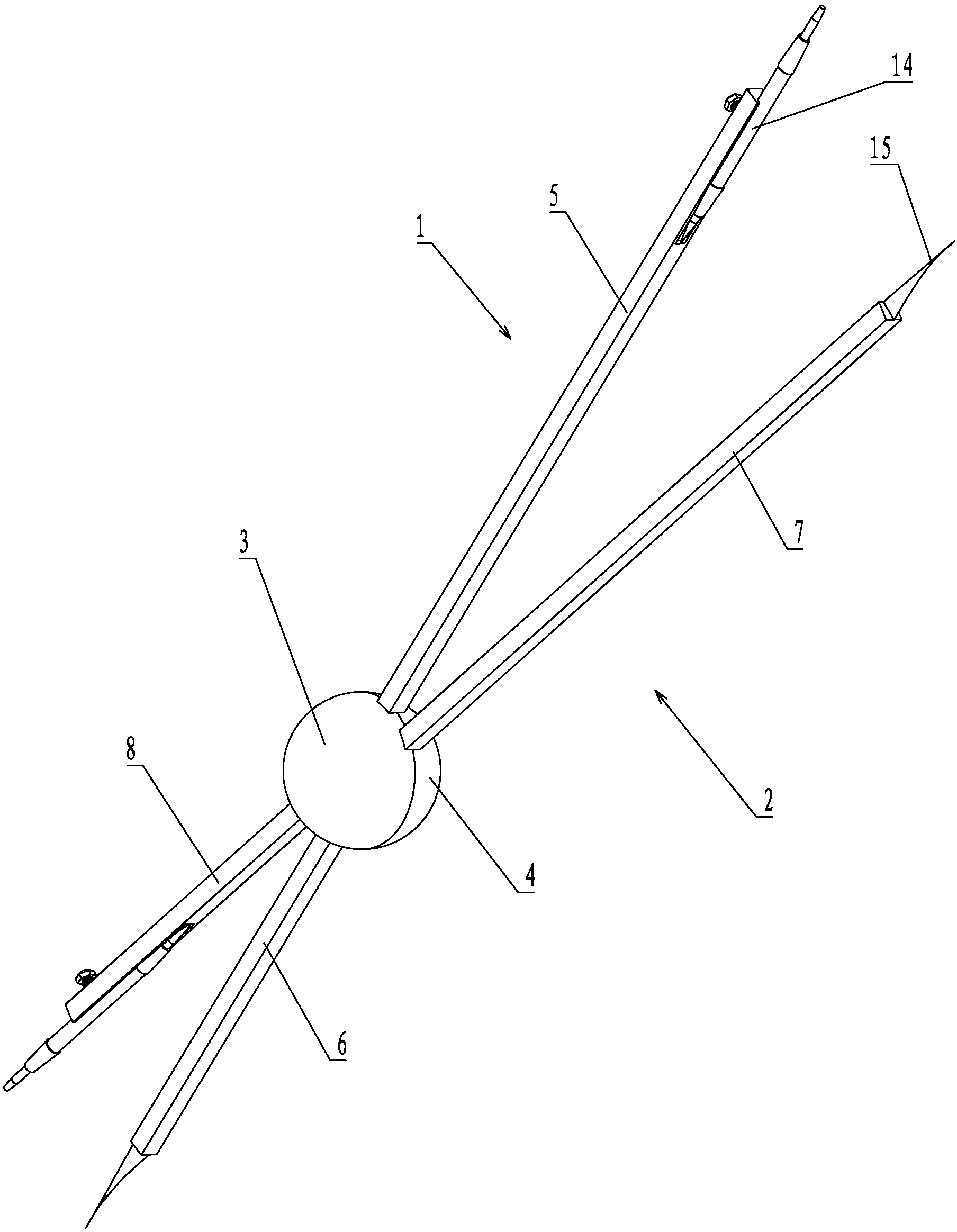
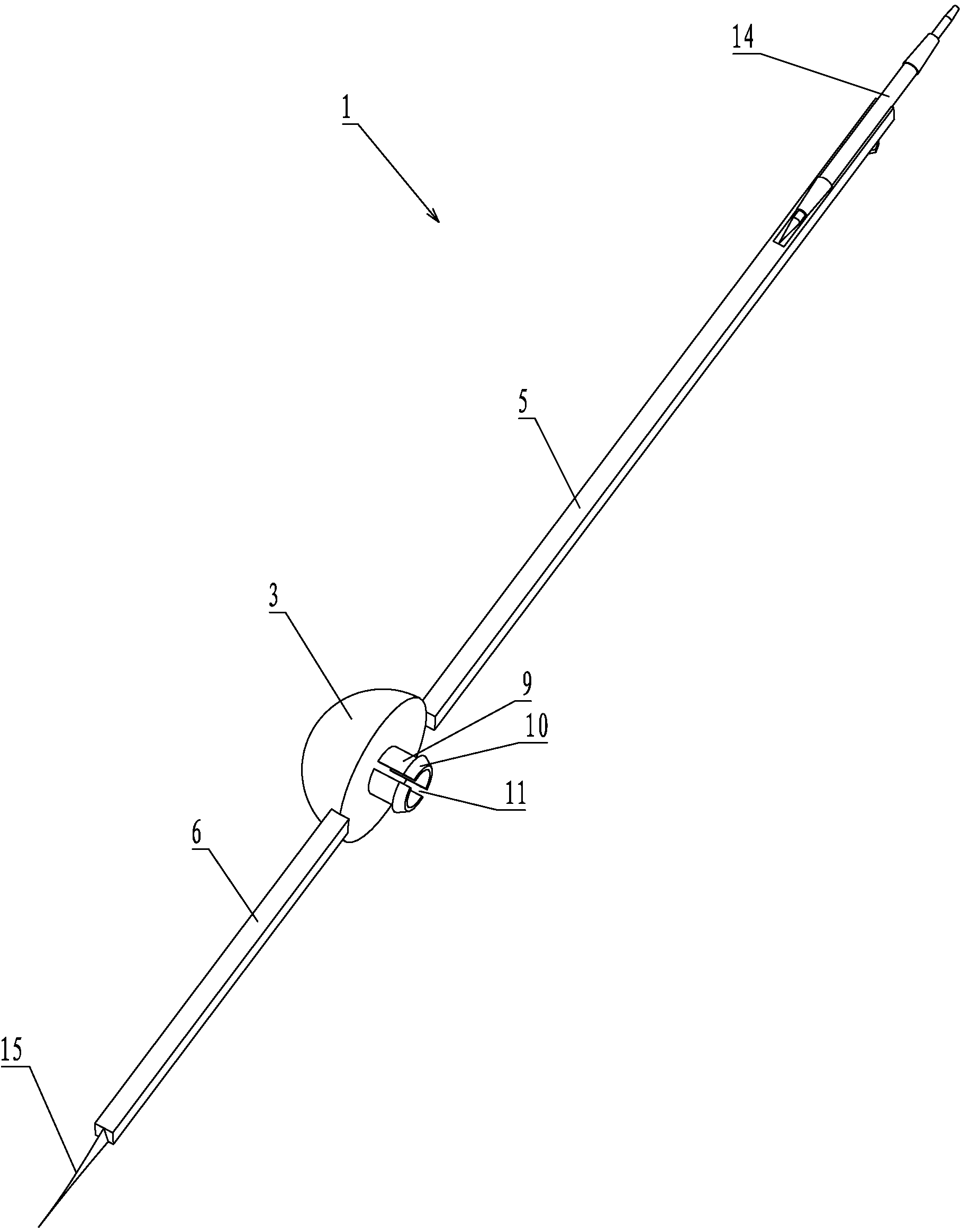
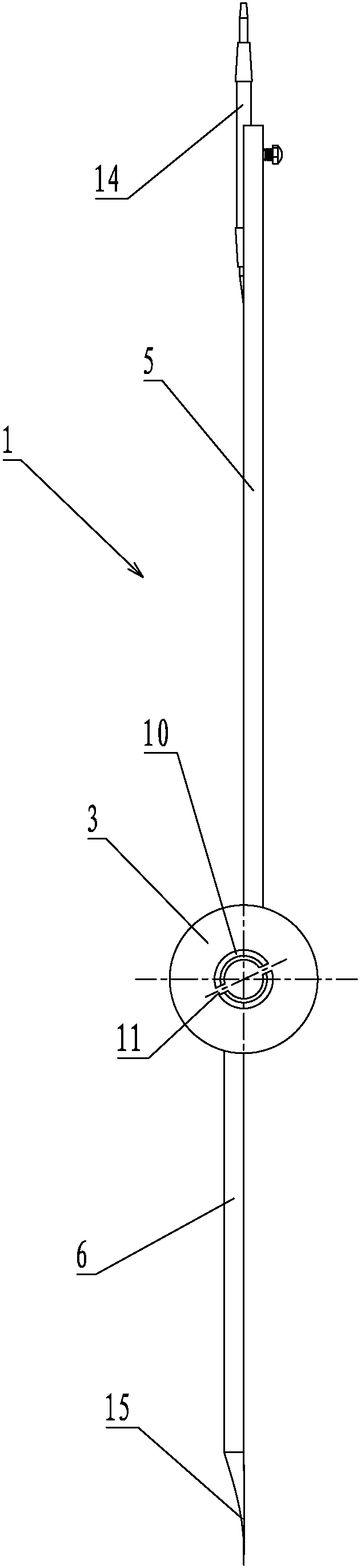
 Login to View More
  Login to View More