
Method for constructingmouse animal model with qi-deficiency typegastrointestinal dysfunction
A technology for gastrointestinal dysfunction and animal model, applied in the directions of pharmaceutical formulations, plant raw materials, preparations for in vivo experiments, etc., can solve problems such as difficulty in clarifying the pathogenesis, and achieve easy promotion, high stability, and good repeatability. Effect
- Summary
- Abstract
- Description
- Claims
- Application Information
AI Technical Summary
Problems solved by technology
Method used
Image

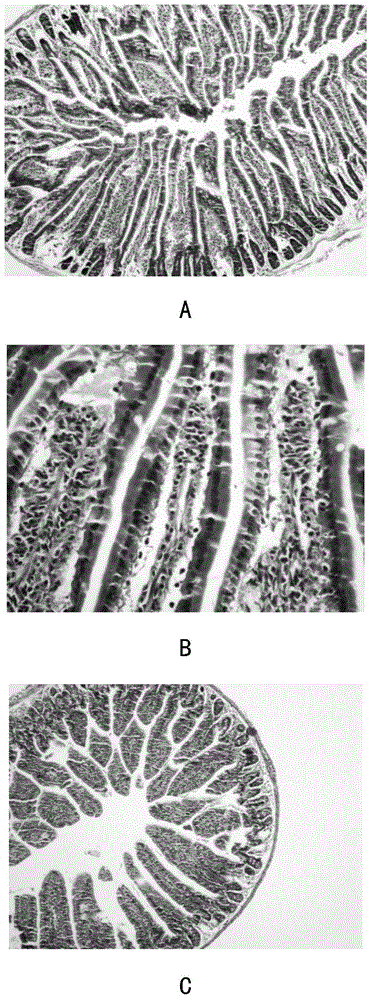
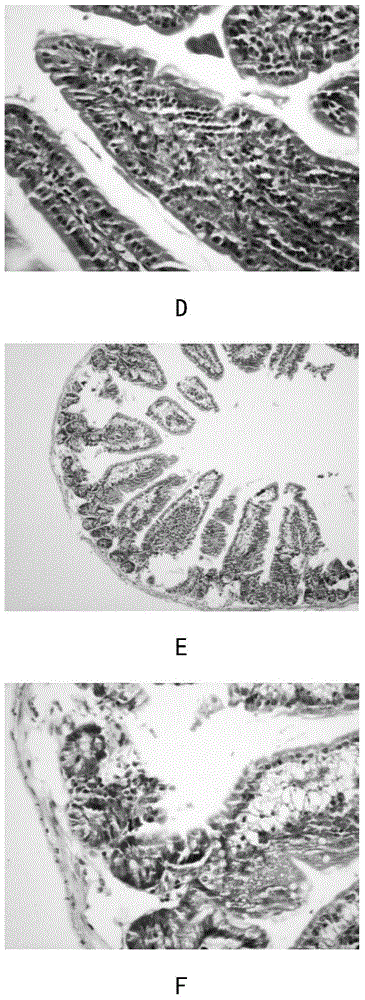
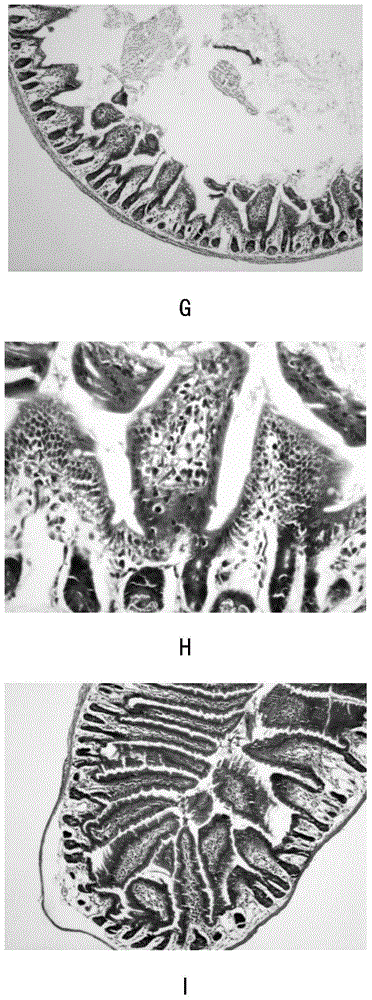
Examples
Embodiment 1
[0016] Embodiment 1: the preparation of medicine
[0017] (1) Sijunzi Decoction: Codonopsis 9g, Atractylodes macrocephala 9g, Poria cocos 9g, roasted licorice 6g
[0018] Each crude drug was soaked in water for 30 minutes, and boiled by the Chinese Pharmacy of Zhejiang Provincial Hospital of Traditional Chinese Medicine to contain 500 mg of crude drug per mL. According to the body surface coefficient conversion method, the mouse dose equivalent to the human clinical dose is 42.9mg / 10g·d (the calculation formula is: mouse dosage g / kg·d=human daily dose*0.0026 / 0.02).
[0019] (2) Glauber's salt supersaturated aqueous solution: Glauber's salt (sodium sulfate decahydrate Na 2 SO 4 10H 2 O) Pass through a 20-mesh sieve after crushing, gradually add to room temperature (about 20°C) distilled water, stir with a magnetic stirrer until Glauber's salt crystals are precipitated, and then stir for 15 minutes, the precipitated crystals are no longer dissolved, and the solution at this t...
Embodiment 2
[0020] Embodiment 2: the construction and verification of animal model
[0021] 1. Grouping of animals
[0022] There were 120 healthy adult male ICR mice, weighing 18-22g, randomly selected 24 as the control group, 24 as the modeling placebo group, and 72 as the experimental group according to the digital random table. The mice in the experimental group were randomly divided into model group, self-healing group and Sijunzi decoction group, 24 in each group.
[0023] 2. Group administration method
[0024] The control group was fed with normal diet for 10 days, and the modeling placebo group was given normal diet with normal saline for 10 days by intragastric administration at the same time. The mice in the experimental group were fed a normal diet with a dose of 0.3ml / 10g of Glauber's salt supersaturated aqueous solution orally for 10 days. After 10 days, some mice in the control group, the modeling placebo group, and the model group were killed immediately (observation of...
PUM
 Login to View More
 Abstract
Description
Claims
Application Information
 Login to View More