
Tunnel restraint information sending, receiving method and device
A technology for constraining information and sending methods, applied in the field of data network communication, and can solve problems such as inability to implement tunnel deployment
- Summary
- Abstract
- Description
- Claims
- Application Information
AI Technical Summary
Problems solved by technology
Method used
Image

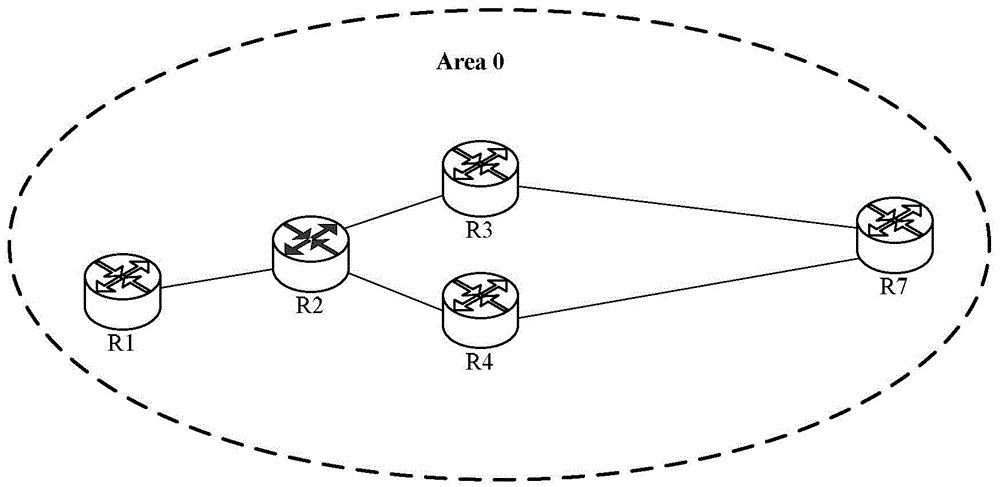
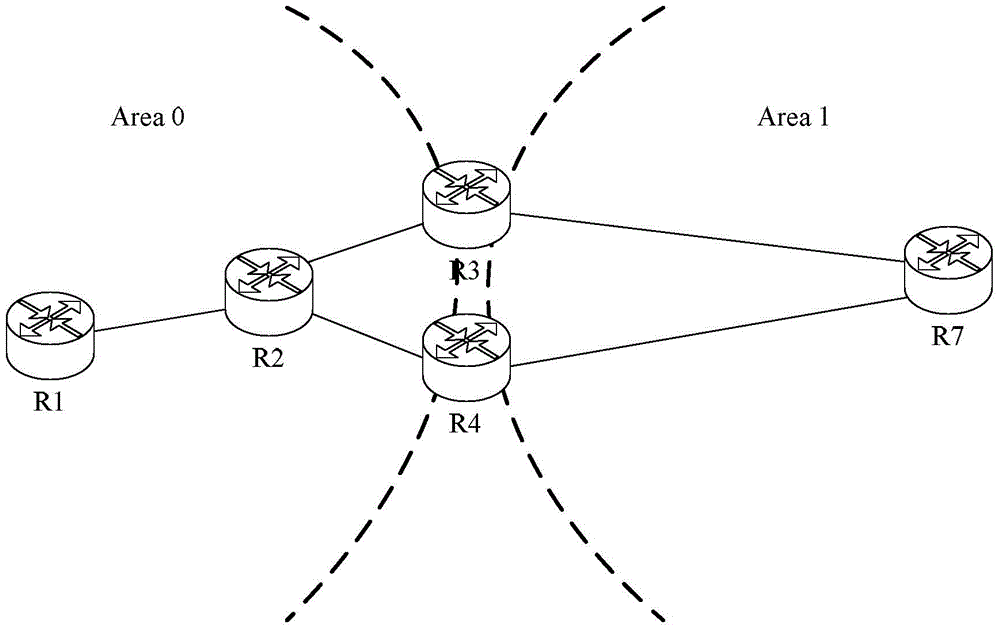
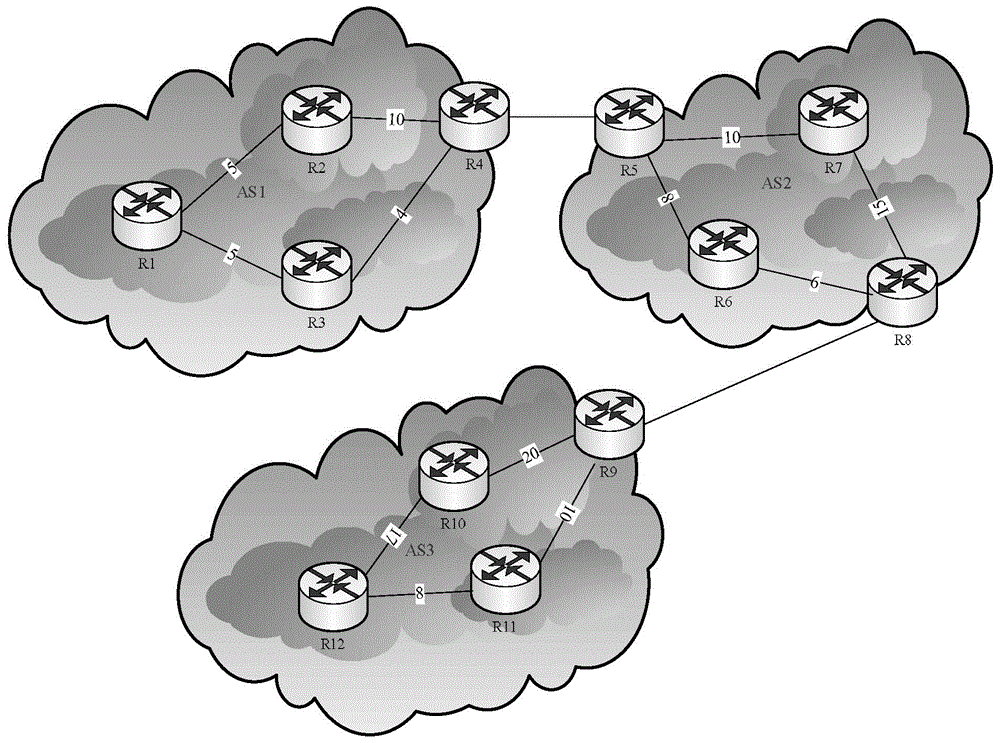
Examples
Embodiment 1
[0036] The inventor of the present application proposes that the existing object ERO (ExlucdeRouteObject) in RSVP-TE can be used to constrain the route calculation. In this way, the corresponding constraint information can be carried when the loose nodes perform path calculation.
[0037] Based on the above ideas, this embodiment provides a method for sending RSVP-TE tunnel restriction information, which mainly includes the following operations:
[0038] When there are loose points in the establishment of a tunnel, the head node sets the constraints between every two loose points in the tunnel, calculates the path between the head node and the first loose point, and passes the protocol message The calculated path information between the head node and the first loose point and the constraints between every two loose points are transmitted to the subsequent nodes, wherein the constraints between every two loose points are used Path exclusion based on loose node path computation...
Embodiment 2
[0161] This embodiment provides a device for sending RSVP-TE tunnel restriction information, which can be placed in a head node, and which at least includes the following units.
[0162] The path processing unit, when there are loose points in the establishment of a tunnel, sets the constraint conditions between every two loose points in the tunnel, and calculates the path between this node and the first loose point;
[0163] The transmission unit transmits the calculated path information from the current node to the first loose point and the constraints between every two loose points to subsequent nodes through protocol messages, wherein every two loose points Constraints between points are used for path exclusion in loose node path computation.
[0164] The above-mentioned transmission unit may carry the constraint condition between every two loose points through the object ERO of the protocol message. Preferably, the path information between every two loose points is carri...
PUM
 Login to View More
 Abstract
Description
Claims
Application Information
 Login to View More