
Pure organic phosphorescent material with afterglow luminescence performance and ultra-long service life, method for preparing pure organic phosphorescent material and application thereof
A technology with luminescence performance and ultra-long life, applied in the fields of luminescent materials, organic chemistry, chemical instruments and methods, etc., can solve the problems of limited practical application, expensive heavy metal elements, serious pollution and long-life phosphorescence generation conditions, etc., and achieves easy purification. , The synthesis process is simple, and the effect of prolonging the luminous life
- Summary
- Abstract
- Description
- Claims
- Application Information
AI Technical Summary
Problems solved by technology
Method used
Image

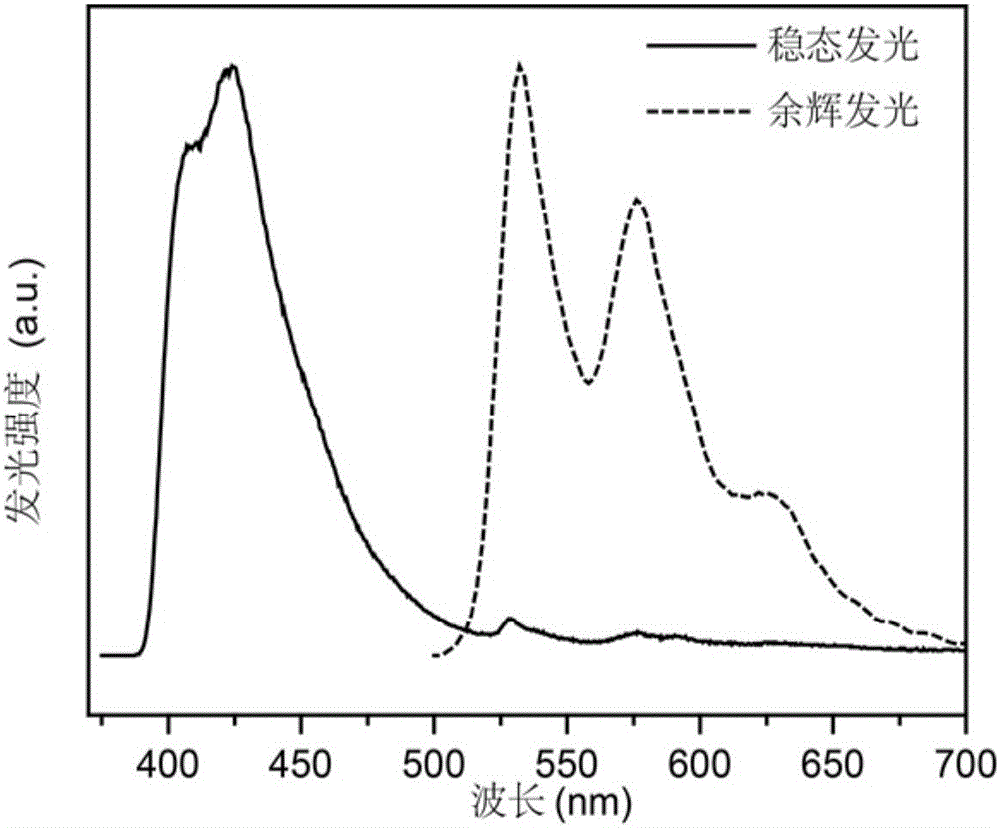
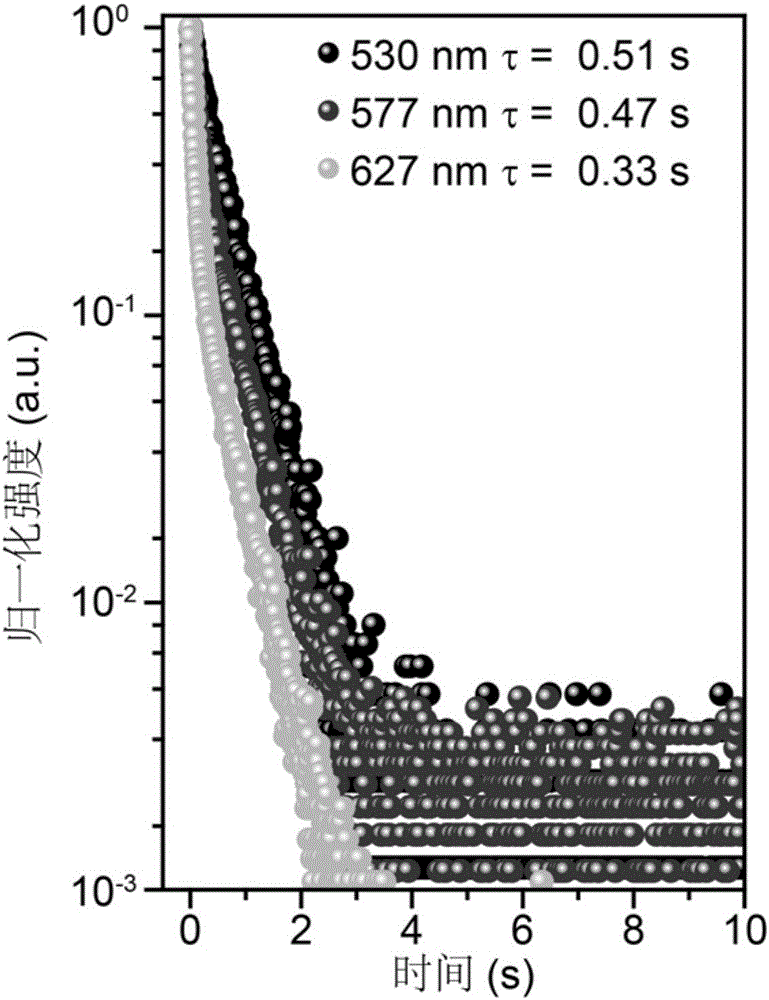
Examples
preparation example Construction
[0029] The synthesis method of the above-mentioned ultra-long-life pure organic phosphorescent material comprises the following steps:
[0030] ①React carbazole with phenylphosphorous dichloride at low temperature to obtain the intermediate dicarbazolylphenylphosphorus;
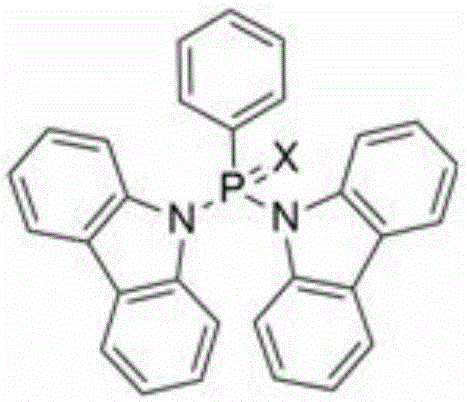
[0031] ② After sulfuration or selenization of the intermediates, the corresponding products DNCzPS and DNCzPSe (X are S and Se, respectively) can be obtained.
[0032] The final product obtained by the above method is a crystal.
[0033] The above-mentioned ultra-long-life pure organic phosphorescent materials are used in the preparation of products such as data encryption and anti-counterfeiting labels.
Embodiment 1D
[0034] The synthesis of embodiment 1DNCzPS
[0035] The structural formula of DNCzPS is as follows:
[0036]
[0037] Put carbazole (1.00 g, 5.99 mmol) into a 50 mL single-necked bottle, add a stirring bar, vacuumize and blow nitrogen, repeat 3 times. Use a syringe to slowly add 20 mL of freshly steamed anhydrous THF to dissolve carbazole. After the carbazole is completely dissolved, place the round bottom flask in an ice bath at 0°C and cool for 15 min. Add n-butyllithium (4.5mL, 1.6M) slowly to the carbazole solution dropwise at a rate of 1mL / 2min, resulting in a bright yellow solution. React at 0°C for about 1-2h. Add phenylphosphine dichloride (0.41mL, 2.99mmol) dropwise to the lithium reagent of carbazole, then slowly raise the temperature to room temperature 25°C at a rate of 2-3°C / min, and react at a low temperature of 0°C for 10-12 hours . After the reaction, pour the reaction liquid into water to quench the reaction, then extract three times with dichloromethan...
Embodiment 2D
[0039] The synthesis of embodiment 2DNCzPSe
[0040] The structural formula of DNCzPSe is as follows:
[0041]
[0042] Put carbazole (1.00 g, 5.99 mmol) into a 50 mL single-necked bottle, add a stirring bar, vacuumize and blow nitrogen, repeat 3 times. Use a syringe to slowly add 20 mL of freshly steamed anhydrous THF to dissolve carbazole. After the carbazole is completely dissolved, place the round bottom flask in an ice bath at 0°C and cool for 15 min. Add n-butyllithium (4.5mL, 1.6M) slowly to the carbazole solution dropwise at a rate of 1mL / 2min, resulting in a bright yellow solution. React at 0°C for about 1-2h. Add phenylphosphine dichloride (0.41mL, 2.99mmol) dropwise to the lithium reagent of carbazole, then slowly raise the temperature to room temperature 25°C at a rate of 2-3°C / min, and react at a low temperature of 0°C for 10-12 hours . After the reaction, pour the reaction liquid into water to quench the reaction, then extract three times with dichlorometh...
PUM
 Login to View More
 Abstract
Description
Claims
Application Information
 Login to View More