
A printing color paste for silk fabrics and a printing process using the printing color paste
A printing color paste and printing process technology, applied in the field of textile printing, can solve the problems of uneven dyeing, the dye cannot be spread evenly in time, and the dye concentration is high, and the effect of improving the effect, reducing the excessive concentration of the capsule core and enhancing the dyeing effect is achieved.
- Summary
- Abstract
- Description
- Claims
- Application Information
AI Technical Summary
Problems solved by technology
Method used
Image

Examples
Embodiment 1-8
[0048] A kind of printing color paste of real silk fabric, its technology comprises the steps:
[0049] S2i, uniformly mixing the dye, urea, paste and other components according to the formula amount at 20-40°C to obtain the capsule core;
[0050] S2ii, on the capsule core obtained by Si, spray the adhesive of formula quantity;
[0051] S2iii, on the mixture obtained by Sii, spray the capsule of the formula amount, and dry at 30-50°C to prepare printing paste;
[0052] Among them, spraying adopts spray drying method or fluidized bed gas suspension method;
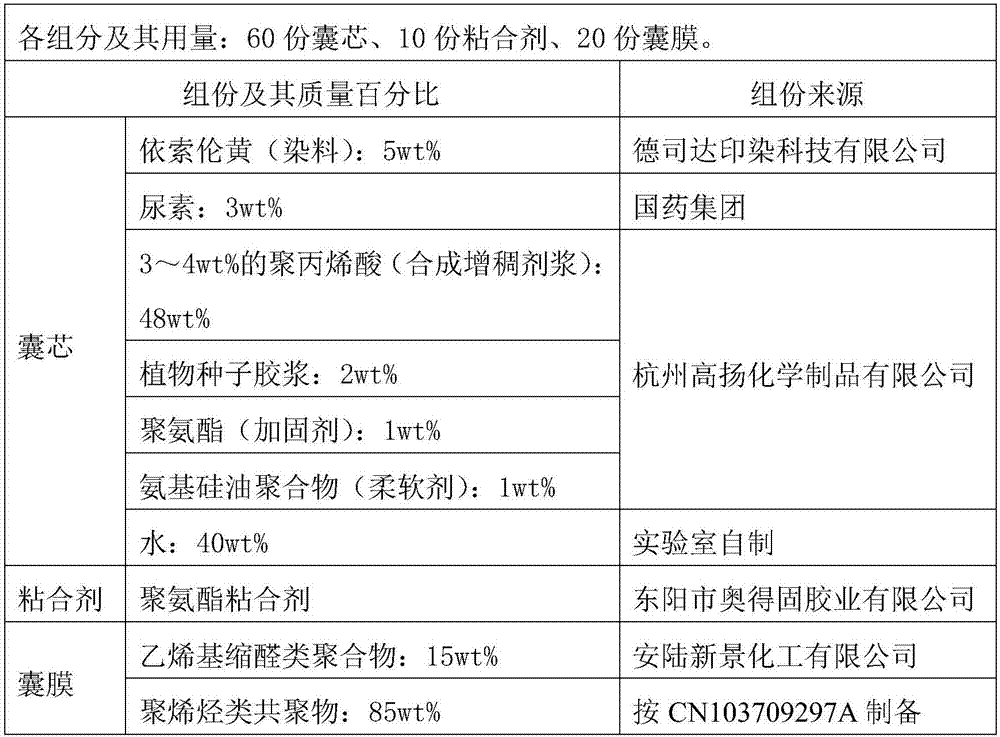
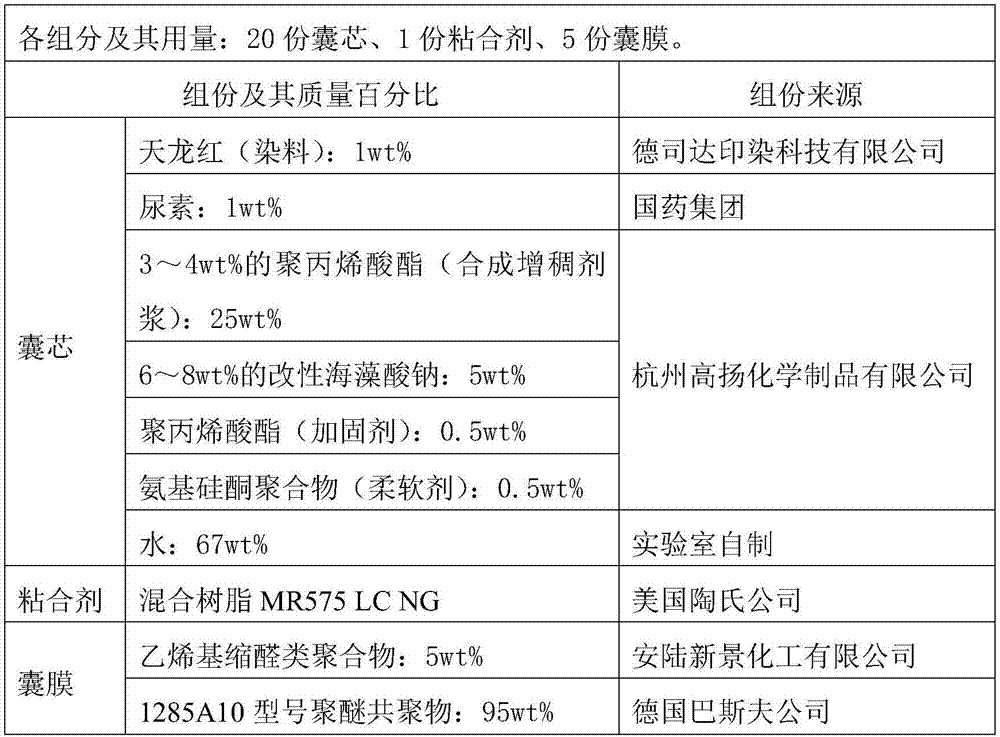
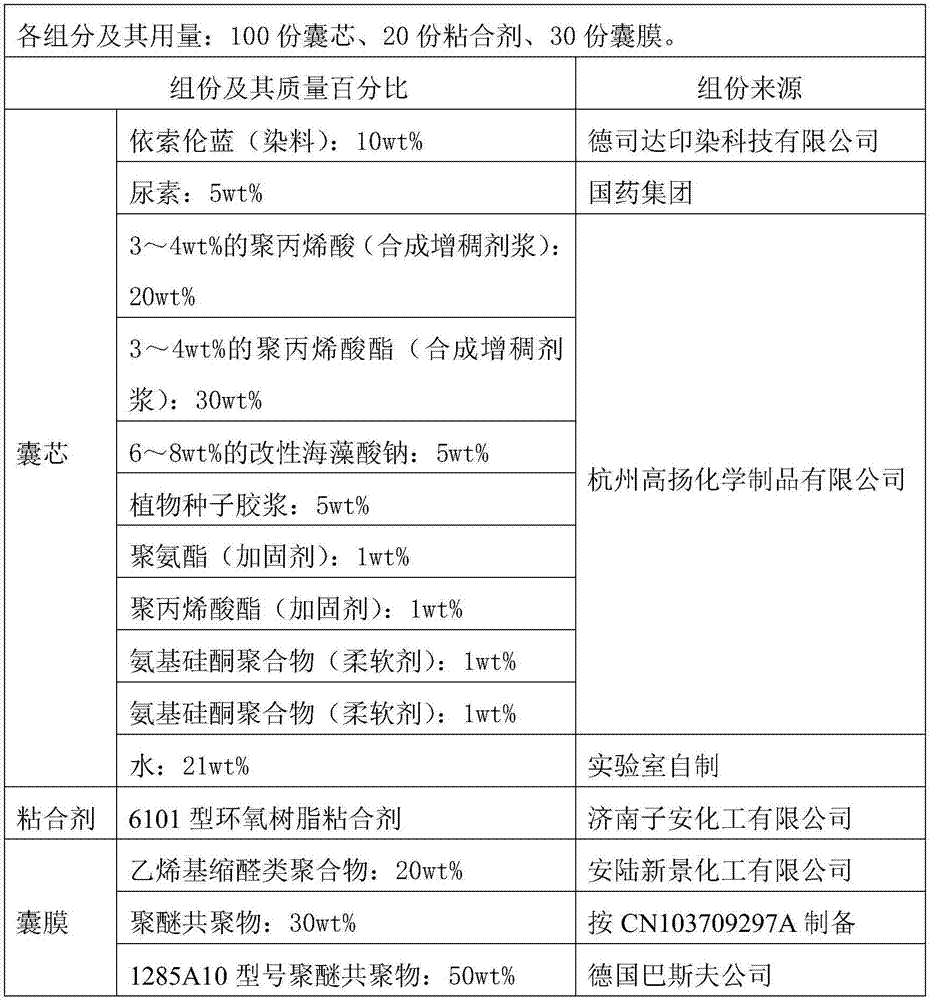
[0053] See Table 1 to Table 8 for the statistics of each component and related information of Examples 1-8.
[0054] Each component of the printing paste of table 1 embodiment 1 and relevant information statistics
[0055]
[0056] Each component of the printing paste of table 2 embodiment 2 and relevant information statistics
[0057]
[0058] Each component of the printing paste of table 3 embodiment 3 and relev...
Embodiment 9-16
[0071] A kind of printing, its technique comprises the steps:
[0072] S1, pre-treated silk fabric: Sli, pre-treated slurry treatment: add pre-treated slurry to the silk fabric at 20-40°C, and dry (10-30min) at 50-80°C after treatment, of which the silk The mass ratio of fabric and pretreatment slurry is 1: 5~20; S1ii, graft modification: add grafting agent in the real silk fabric that Sli handles and obtain, at 20~40 ℃, dipping and rolling two times (with liquid 70 ~80wt%), drying (1~5min) under 100~120 ℃, wherein the mass ratio of real silk fabric and grafting agent is 1: 10~50;
[0073] S2, prepare printing paste according to embodiment 1-8;
[0074] S3, at pH=6.0-6.5, apply the printing paste prepared in S2 to the silk fabric obtained in the pretreatment of S1 for printing treatment, wherein the mass ratio of the silk fabric to the printing paste is 1:0.5-5;
[0075] S4, drying, steaming, cleaning and finishing the printed silk fabric obtained in S3.
[0076] See Table ...
PUM
 Login to View More
 Abstract
Description
Claims
Application Information
 Login to View More