
Construction method of chronic hepatitis E virus mouse model
A hepatitis E virus and mouse model technology, applied in the field of biomedicine, can solve the problems of lack of animal models for HEV chronic infection and limited research on pathogenic mechanism, and achieve the effect of convenient breeding, low price and simple operation
- Summary
- Abstract
- Description
- Claims
- Application Information
AI Technical Summary
Problems solved by technology
Method used
Image

Examples
Embodiment 1
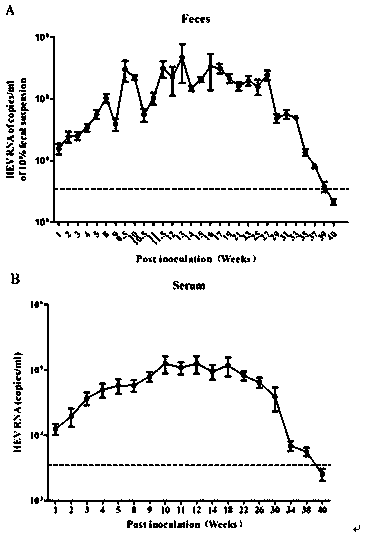
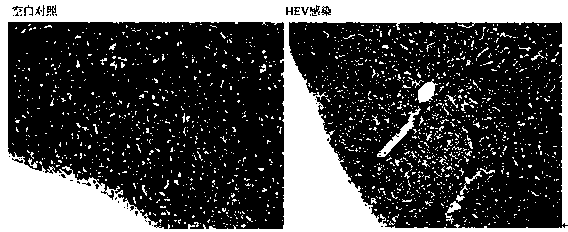
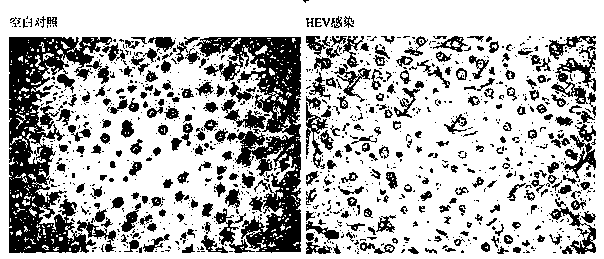
[0029] Embodiment 1: The construction method of the chronic hepatitis E virus mouse model is as follows:
[0030] 1. Collect feces from rhesus monkeys chronically infected for 93 weeks, prepare a 10% mass-volume ratio of PBS (pH7.4) feces suspension, shake vigorously to emulsify the feces, centrifuge at 12,000 g for 10 minutes at 4°C, and collect clear, 0.45 μm and 0.22 μm filter membrane to filter and sterilize, add double antibody solution (400U / mL penicillin and 1000U / mL streptomycin) of 5% of the filtrate volume to the filtrate, treat at 4 ℃ for 2 h, store in liquid nitrogen for later use, The virus copy number was determined to be 2.4×10 by Real-time qPCR 4 Copy number / mL;
[0031] 2. Inoculate the feces suspension treated with the above double antibody solution into SPF grade BALB / c mice through the tail vein;
[0032] 3. Collect feces and serum once a week for the detection of HEV RNA and the calculation of virus copies;
[0033] Fecal HEV RNA was extracted as follow...
Embodiment 2
[0038] Embodiment 2: The construction method of the chronic hepatitis E virus mouse model is as follows:
[0039] (1) Prepare a feces suspension in PBS (pH7.4) with a mass volume concentration of 15% from the feces of rhesus monkeys chronically infected with HEV, oscillate to emulsify the feces, centrifuge at 6°C and 10,000g for 10 minutes, collect the supernatant, and use 0.45 μm filter membrane and 0.22 μm filter membrane filter to sterilize, add double antibody solution (400U / mL penicillin and 1000U / mL streptomycin) in the filtrate to the filtrate, treat at 4°C for 2 h, store in liquid nitrogen for later use , the virus copy number was determined to be 2.1×10 by Real-time qPCR 5 Copy number / mL;
[0040] (2) Inject the feces suspension treated with the above double antibody solution into SPF grade BALB / c mice through the tail vein;
[0041] (3) Collect feces and serum every week for HEV RNA detection and virus copy detection;
[0042] The results showed that HEV RNA was c...
PUM
| Property | Measurement | Unit |
|---|---|---|
| Copy number | aaaaa | aaaaa |
Abstract
Description
Claims
Application Information
 Login to View More