A Linear Optimization and Power Periodic Fading Compensation Method Based on Sagnac Loop

A compensation method and linear optimization technology, applied in electrical components, electromagnetic wave transmission systems, transmission systems, etc., can solve the problems of transmission signal fading, different time delays, and inability to extract useful signals at the receiving end, achieving high tunability and realizing Power compensation, strong reconfigurability effect

CN113078953BActive Publication Date: 2022-08-05XIDIAN UNIV
0 Cites 0 Cited by

Patent Information

Authority / Receiving Office
CN · China
Patent Type
Patents(China)
Current Assignee / Owner
Publication Date
2022-08-05

Smart Images

  • Figure 1
    Figure 1
  • Figure 2
    Figure 2
  • Figure 3
    Figure 3
Patent Text Reader

Abstract

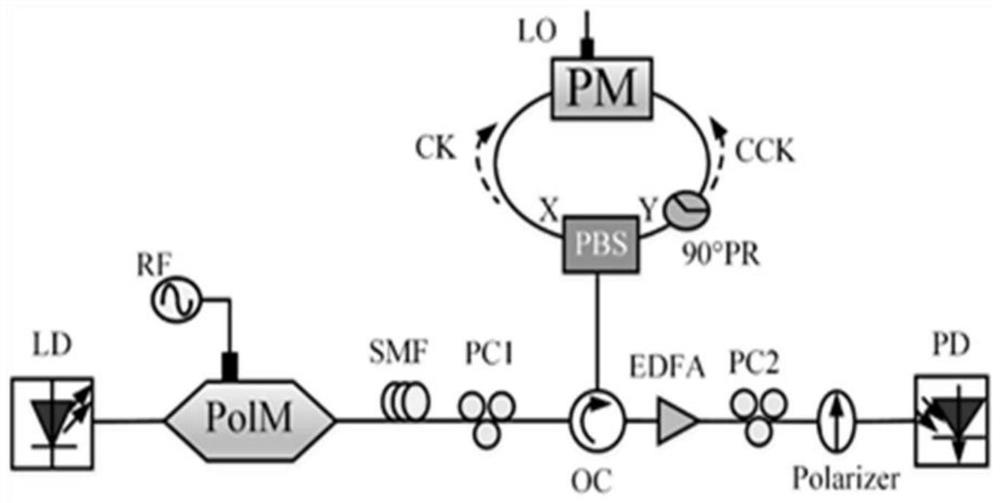
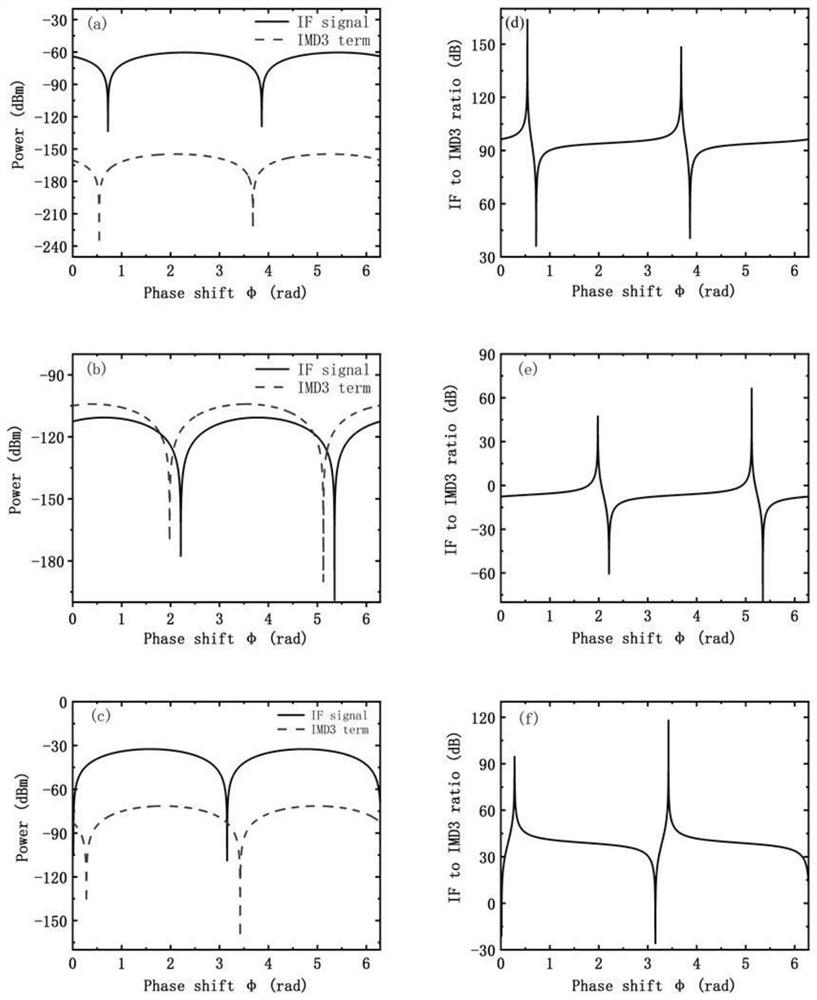
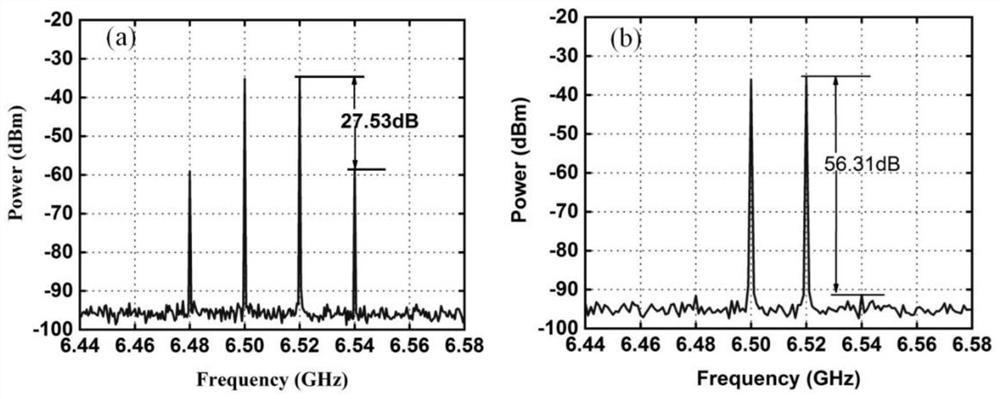
The invention discloses a linear optimization and power periodic fading compensation method based on Sagnac ring. The device is shown in Figure 1 of the accompanying drawing of the description, including a laser LD, a polarization modulator PolM, a single-mode fiber SMF, and a polarization controller. PC, Sagnac Ring, Erbium Doped Fiber Amplifier EDFA, Polarizer Polarizer and Photodetector PD. The RF signal is modulated onto the optical carrier by PolM, the odd and even order sidebands of the modulated signal in orthogonal polarization states are separated by the polarization controller and the polarization beam splitter PBS in the Sganac ring, and the phase modulator is used bidirectionally in the Sagnac ring PM makes one polarization state in the clockwise direction modulated by the LO signal, and by introducing an appropriate phase shift between the two orthogonal polarization directions of the down-converted signal, the power fading caused by dispersion can be compensated for after photoelectric conversion, and the third order can be eliminated. Intermodulation distortion, realizing linear optimization, the invention has simple and compact structure, flexible tuning, large working bandwidth and strong system reconfigurability.
Need to check novelty before this filing date? Find Prior Art

Description

technical field

[0001] The invention relates to the technical field of optical communication and microwave technology, and mainly relates to linear optimization and power periodic fading compensation of an analog photonic down-conversion link. Background technique

[0002] Microwave photonics is a new discipline that combines microwave radio frequency technology and photonics technology. It completes electrical signal processing in the optical domain, including signal generation, transmission, frequency mixing, filtering, etc. Microwave photonic links have the advantages of large communication capacity, low transmission loss, small size, light weight and anti-electromagnetic interference, and have broad application prospects in satellite communication, radar, electronic warfare and cable television. Microwave photonic frequency conversion technology is widely used in various fields of modern society. Traditional microwave down-conversion technology faces electronic bottlenec...

Examples

Embodiment Construction

[0032] Below in conjunction with the accompanying drawings, the embodiments of the present invention are described in detail: the present embodiment is implemented on the premise of the technical solution of the present invention, and provides a detailed implementation manner and a specific operation process, but the protection scope of the present invention is not limited to the following described embodiment.

[0033] As shown in the manual figure 1 As shown, in this embodiment, the device includes: a laser LD, a polarization modulator PolM, a single-mode fiber SMF, a polarization controller PC, a Sagnac ring, an erbium-doped fiber amplifier EDFA, a polarizer, and a photodetector PD. The Sagnac ring consists of an optical circulator OC, a polarization beam splitter PBS, a phase modulator PM and a 90° polarization rotator 90°PR.

[0034] In this example, the specific implementation steps of the method are:

[0035] Step 1: The laser generates a continuous light wave with a...