
Low-intensity treatment of hematological disorders
A blood and leukemia technology, applied in the direction of antibody medical ingredients, medical preparations containing active ingredients, drug combinations, etc., can solve problems such as low effective rate and depression of single-drug activity
Patent Information
- Authority / Receiving Office
- CN · China
- Patent Type
- Applications(China)
- Current Assignee / Owner
- Publication Date
- 2021-07-23
Smart Images
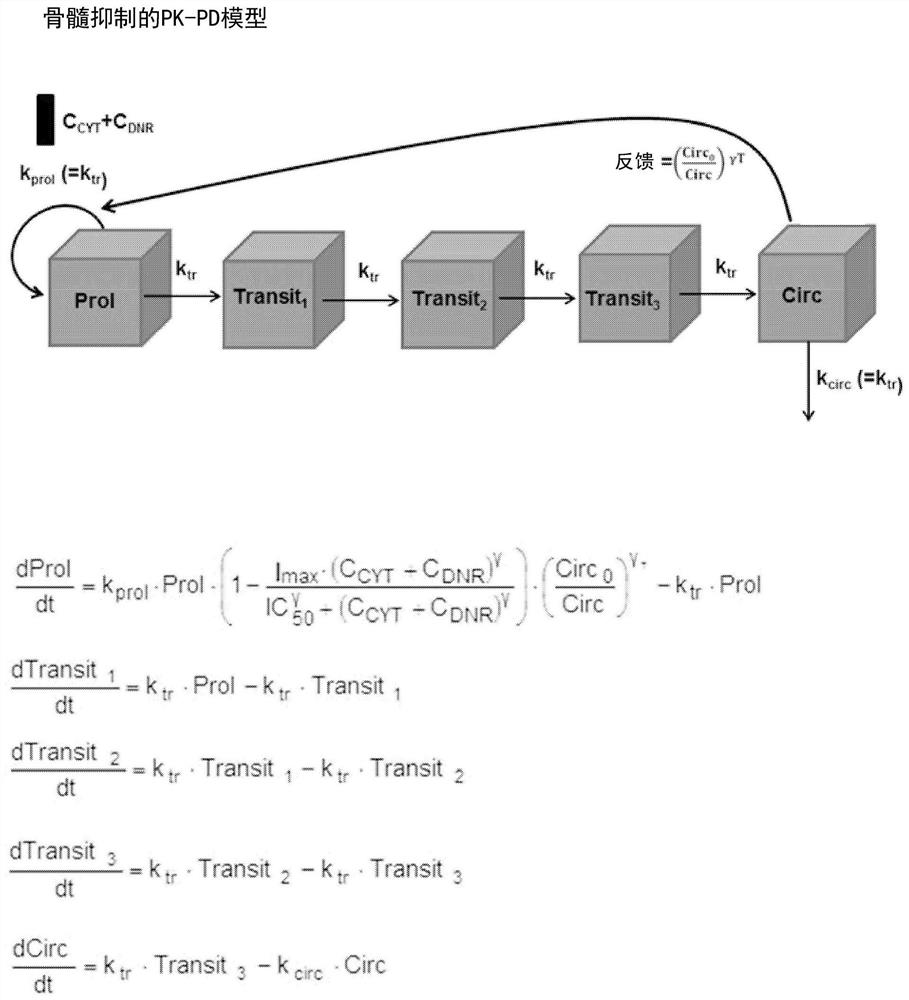
Figure 1 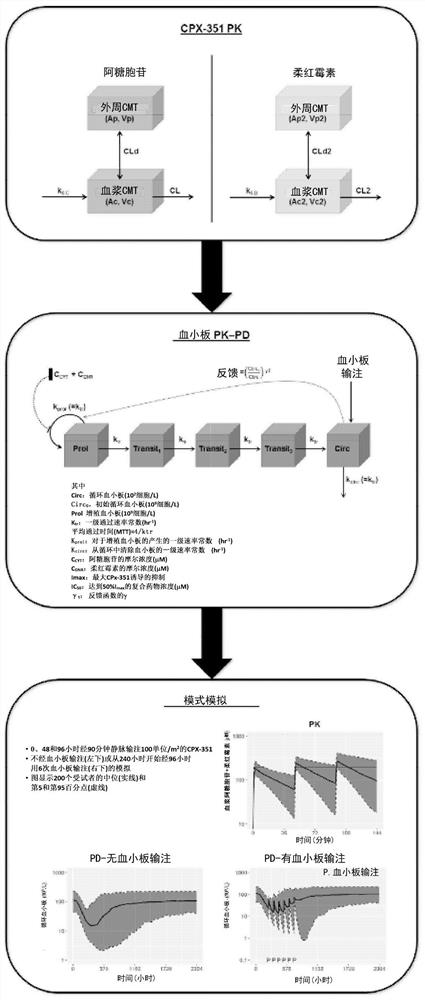
Figure 2 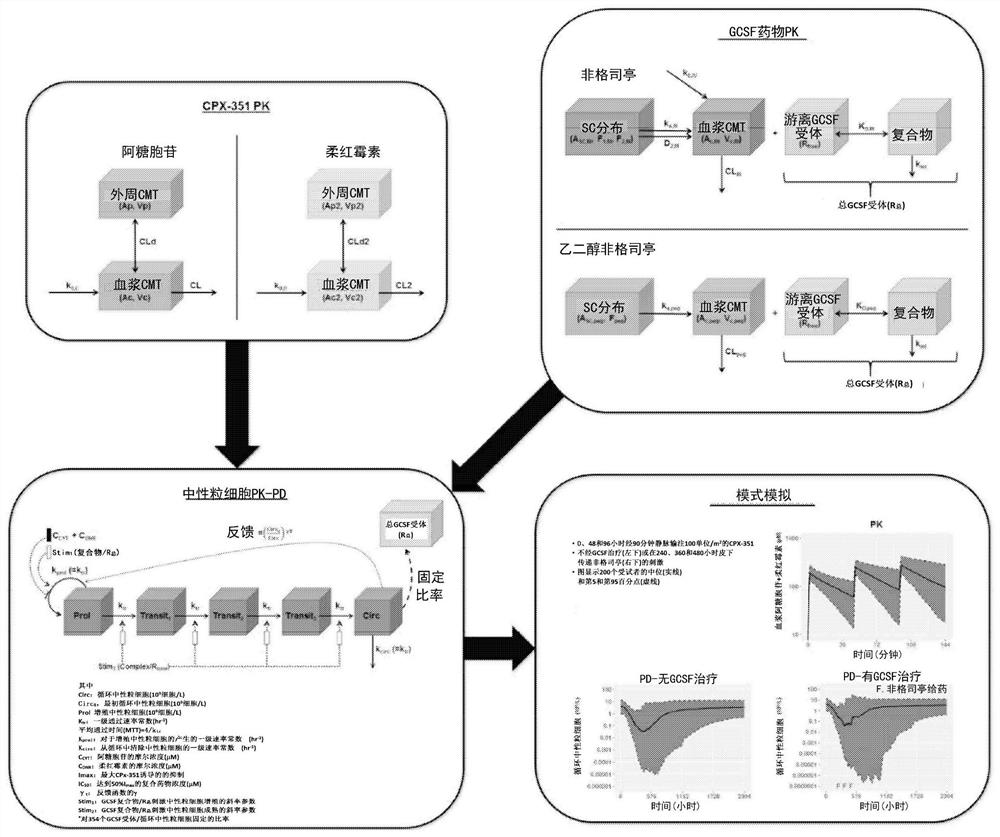
Figure 3
Abstract
Description
[0001] Cross References to Related Applications
[0002] This application claims priority to U.S. Provisional Application No. 62 / 736,393, filed September 25, 2018, and U.S. Provisional Application No. 62 / 772,372, filed November 28, 2018, the contents of each of which are incorporated herein by reference in their entirety. technical field
[0003] The present invention relates to compositions and methods for treating patients who are not eligible for conventional chemotherapy treatment. More particularly, the present invention relates to the treatment of hematological disorders susceptible to combination therapy with cytidine analogs and anthracyclines. Background technique
[0004] Combination chemotherapy involving cytidine analogs and anthracyclines has been well studied for the treatment of various cancers or blood proliferative disorders. Drug mixtures of cytidine analogues, cytarabine, and anthracyclines such as daunorubicin have been shown to be effective in patients...
Examples
Embodiment 17
[0082] Example 17+3 or CPX-351-induced population pharmacokinetics-pharmacodynamics (PK-PD) model of thrombocytopenia
[0083] The following CPX-351 studies were used for PK-PD modeling:
[0084] Research 101:
[0085] Phase 1 open-label dose-escalation study of CPX-351 in 48 adult patients with relapsed / refractory AML, ALL or MDS
[0086] CPX-351 dose: 3 to 134 units / m by 90-minute intravenous (IV) infusion on days 1, 3, and 5 2 (1 unit = 1 mg cytarabine and 0.44 mg daunorubicin)
[0087] PK data collection: intensive sampling on days 1, 3 and 5
[0088] PD data collection: Pre-dose; Days 1, 2, 3, 4, 5, 7, 14, 21, 28, 35, 42, and 56; and Follow-up (30 days after study discontinuation)
[0089] Research 206:
[0090] A phase 2 open-label study of CPX-351 in 26 adult patients with relapsed / refractory AML, ALL or MDS
[0091] CPX-351 dosage:
[0092] o Induction: Day 1, Day 3, and Day 5 (Second Induction: Day 1 and Day 3) IV infusion of 100 units / m 2 (Cytarabine 100mg / ...
Embodiment 2
[0134] Chemotherapy-induced neutropenia (CIN) model in patients treated with embodiment 2 CPX-351 and "7+3" the establishment of
[0135] CPX-351 and 7+3 studies and cytarabine / daunorubicin modeling are shown in Example 1.
[0136] The results are displayed as follows:
[0137] Table 4. Population PK parameters for GCSF agents
[0138]
[0139] Table 4. Population PK parameters for GCSF agents
[0140]
[0141] PK, pharmacokinetics; GCSF, granulocyte colony-stimulating factor; F 1 , the bioavailability of the primary absorption process; k a , the first-order absorption rate constant; F 2 , the bioavailability of the zero-order absorption process; D 2,fil , the duration of the zero-order absorption process; K D , the equilibrium dissociation constant of GCSF and GCSF receptor; CV, coefficient of variation; CL, clearance rate; WTKG, body weight (unit: kg); V c , distribution central volume; k int , First-order rate constants for the internalization of GCSF rece...
Embodiment 3
[0161] Simulation of alternative dosing regimens for CPX-351
[0162] Myelosuppression Curve Simulation for Low Dose / Regimen:
[0163] Days 1+5; various doses 2
[0164] Days 1+8; various doses 2
[0165] Days 1+8+15; various doses 2
[0166] Other regimens; various doses 2
[0167] Cell cycle timing and Vyxeos treatment effects were further examined using the PK / PD model described in Examples 1 and 2.
[0168] Simulation results for absolute neutrophil count (ANC): Simulations were performed using a previously developed mechanistic PK / PD model for absolute neutrophil count. Figure 8 Periods of ANC below 500 / uL following CPX-351 administration are shown. The duration of ANC<500 / uL prolongs with increasing dose. Depending on the treatment regimen, the duration of the administered dose may vary. Also shown is the duration of ANC suppression following Vyxeos standard day 1, day 3 and day 5 regimen or 7+3 treatment, where Vyxeos showed a longer duration of ANC suppressio...