Check patentability & draft patents in minutes with Patsnap Eureka AI!

Systems and methods for positioning reference signal staggering configuration

A technology for positioning reference signals and signals, applied in the field of location services for user equipment

Pending Publication Date: 2021-11-30
QUALCOMM INC
View PDF0 Cites 0 Cited by
  • Summary
  • Abstract
  • Description
  • Claims
  • Application Information

AI Technical Summary

Problems solved by technology

Aliasing ambiguity can be resolved using previous position estimates that can be used to produce an approximation of the expected position measurement

Method used

the structure of the environmentally friendly knitted fabric provided by the present invention; figure 2 Flow chart of the yarn wrapping machine for environmentally friendly knitted fabrics and storage devices; image 3 Is the parameter map of the yarn covering machine
View more

Image

Smart Image Click on the blue labels to locate them in the text.
Viewing Examples
Smart Image
  • Systems and methods for positioning reference signal staggering configuration
  • Systems and methods for positioning reference signal staggering configuration
  • Systems and methods for positioning reference signal staggering configuration

Examples

Experimental program
Comparison scheme
Effect test

Embodiment Construction

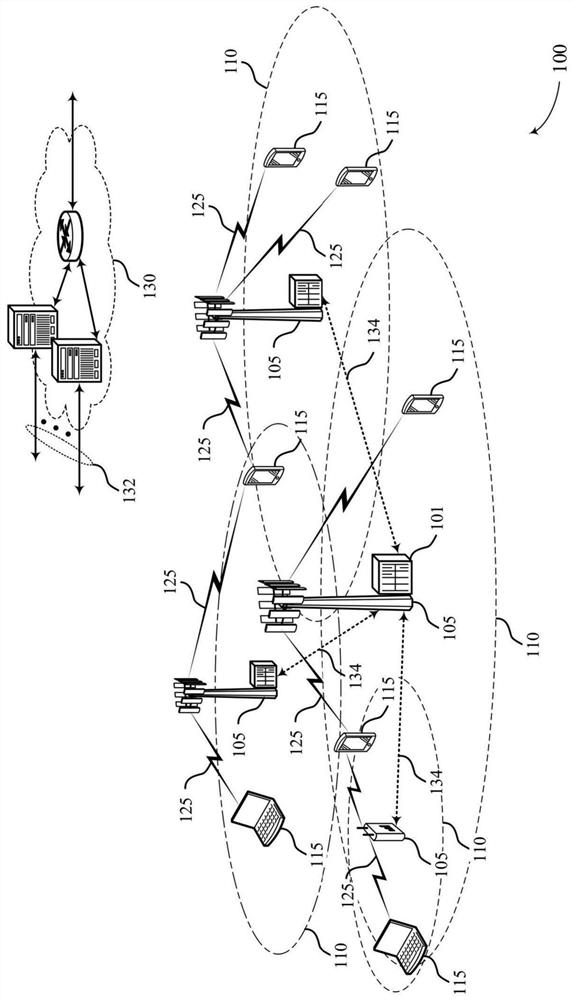
[0034] In position determination such as observed time difference of arrival (OTDOA) based positioning, a UE may measure time differences in received signals from multiple base stations. Since the location of the base station is known, the observed time difference can be used to calculate the location of the terminal. In OTDOA, a mobile station measures the time of arrival (TOA) of signals from a reference cell (eg, serving cell) and one or more neighboring cells. The TOA from a reference cell may be subtracted from the TOA from one or more reference cells to determine a reference signal time difference (RSTD). Using the RSTD measurements, the absolute or relative transmit timing for each cell, and the known position(s) of the physical transmit antenna(s) for the reference cell and neighboring cells, the UE's position can be calculated.

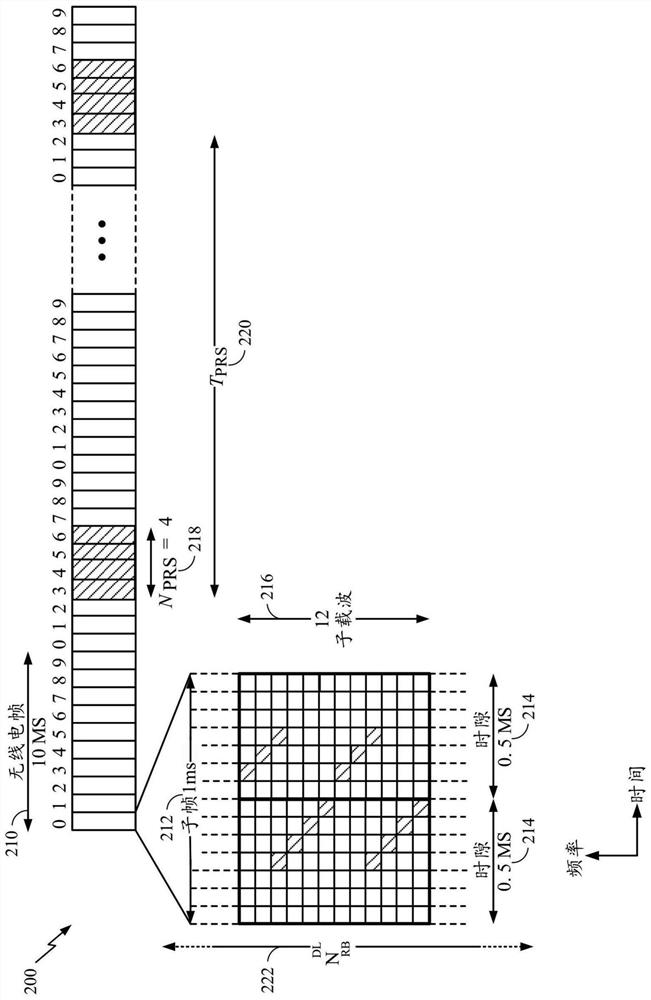
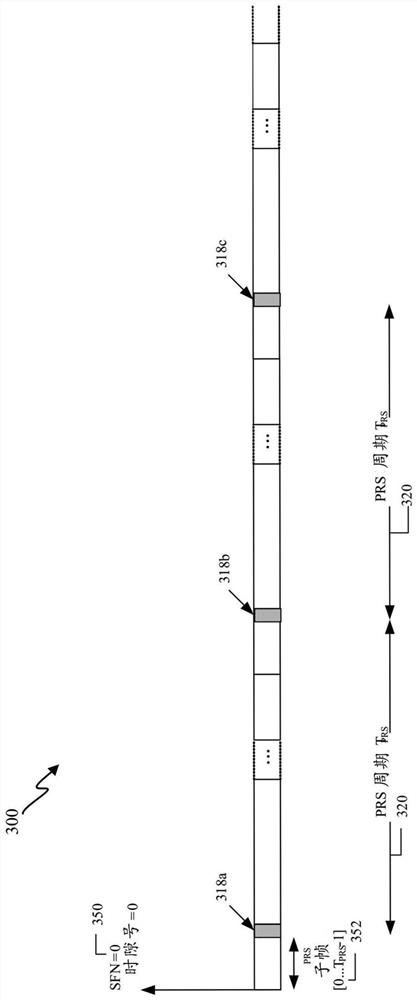
[0035] Positioning Reference Signals (PRS) are broadcast by base stations and are used by UEs for positioning in wireless networks such as ...

the structure of the environmentally friendly knitted fabric provided by the present invention; figure 2 Flow chart of the yarn wrapping machine for environmentally friendly knitted fabrics and storage devices; image 3 Is the parameter map of the yarn covering machine
Login to View More

PUM

No PUM Login to View More

Abstract

Disclosed are methods and apparatuses for resolving aliasing ambiguities produced when using channel state information reference signal, a sounding reference signal (SRS) or other transmission as a positioning reference signal (PRS) occupying a subset of tones of a PRS bandwidth. The aliasing ambiguity results in a plurality of different possible positioning measurements, such as time of arrival (TOA), reference signal timing difference (RSTD), or reception to transmission difference (Rx-Tx). The aliasing ambiguity may be resolved using a previous position estimate that may be used to produce an approximation of the expected positioning measurement. A position estimate may be generated using a multiple stage PRS configuration, in which one or more stages provide a coarse position estimate that has no ambiguity, which can be used to resolve the ambiguity of a more accurate position estimate resulting from the PRS signal.

Description

[0001] Cross References to Related Applications [0002] This application claims Greek Patent Application No. 20190100184, filed April 25, 2019, entitled "SYSTEMS AND METHODS FOR POSITIONING REFERENCE SIGNAL STAGGERING CONFIGURATION" and filed April 9, 2020, entitled "SYSTEMS AND METHODS FOR POSITIONING REFERENCE SIGNAL STAGGERING CONFIGURATION" 16 / 844,884 of "U.S. Nonprovisional Patent Application No. 16 / 844,884," both of which are assigned to the present assignee and are expressly incorporated herein by reference in their entirety. technical field [0003] The following relates generally to wireless communications, and more particularly to techniques for supporting location services for user equipment (UEs) in wireless networks. Background technique [0004] Wireless communication systems are widely deployed to provide various types of communication content such as voice, video, packet data, messaging, broadcast, and so on. These systems may be capable of supporting commu...

Claims

the structure of the environmentally friendly knitted fabric provided by the present invention; figure 2 Flow chart of the yarn wrapping machine for environmentally friendly knitted fabrics and storage devices; image 3 Is the parameter map of the yarn covering machine
Login to View More

Application Information

Patent Timeline
no application Login to View More
IPC IPC(8): H04L5/00H04W4/02H04W64/00H04L25/02G01S5/02G01S5/10
CPCH04L5/0048H04L5/0051H04L5/0007H04W4/023H04W64/006H04L25/0224H04L25/0226G01S5/0236G01S5/0268G01S5/10H04W56/001H04W64/00H04W64/003H04B7/0626
Inventor S.阿卡拉卡兰T.罗A.马诺拉科斯G.R.奥普肖格J.B.索里亚加S.费希尔
Owner QUALCOMM INC
Features
  • R&D
  • Intellectual Property
  • Life Sciences
  • Materials
  • Tech Scout
Why Patsnap Eureka
  • Unparalleled Data Quality
  • Higher Quality Content
  • 60% Fewer Hallucinations
Social media
Patsnap Eureka Blog
Learn More