
Application of osteopontin inhibitor in rheumatoid arthritis treatment
A technology of osteopontin and rheumatoid, applied in the direction of anti-inflammatory agents, bone diseases, non-central analgesics, etc., can solve problems such as unclear functional relationship, unclear pathogenesis, and obstacles to the diagnosis and treatment of rheumatoid arthritis
- Summary
- Abstract
- Description
- Claims
- Application Information
AI Technical Summary
Problems solved by technology
Method used
Image

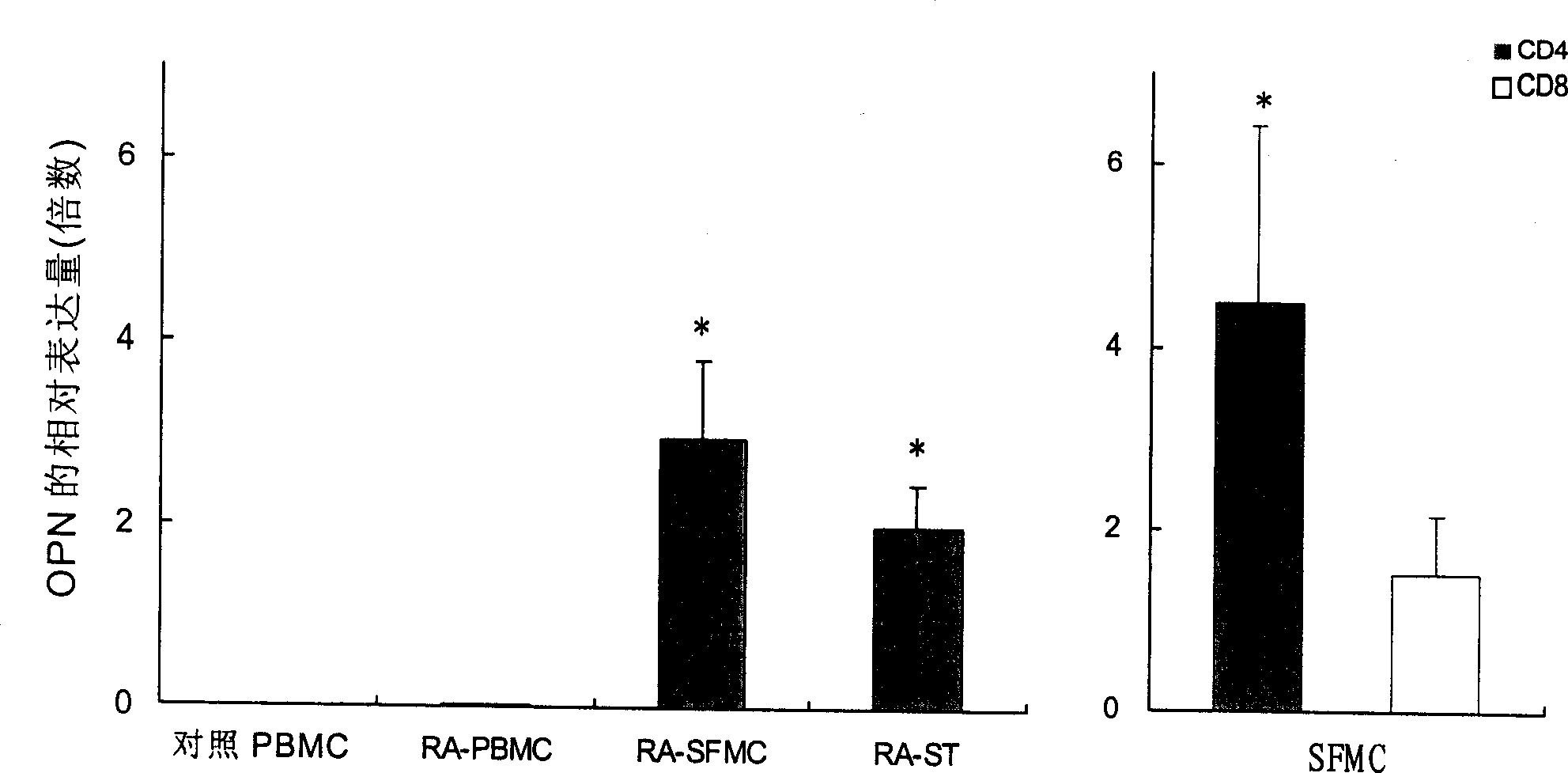
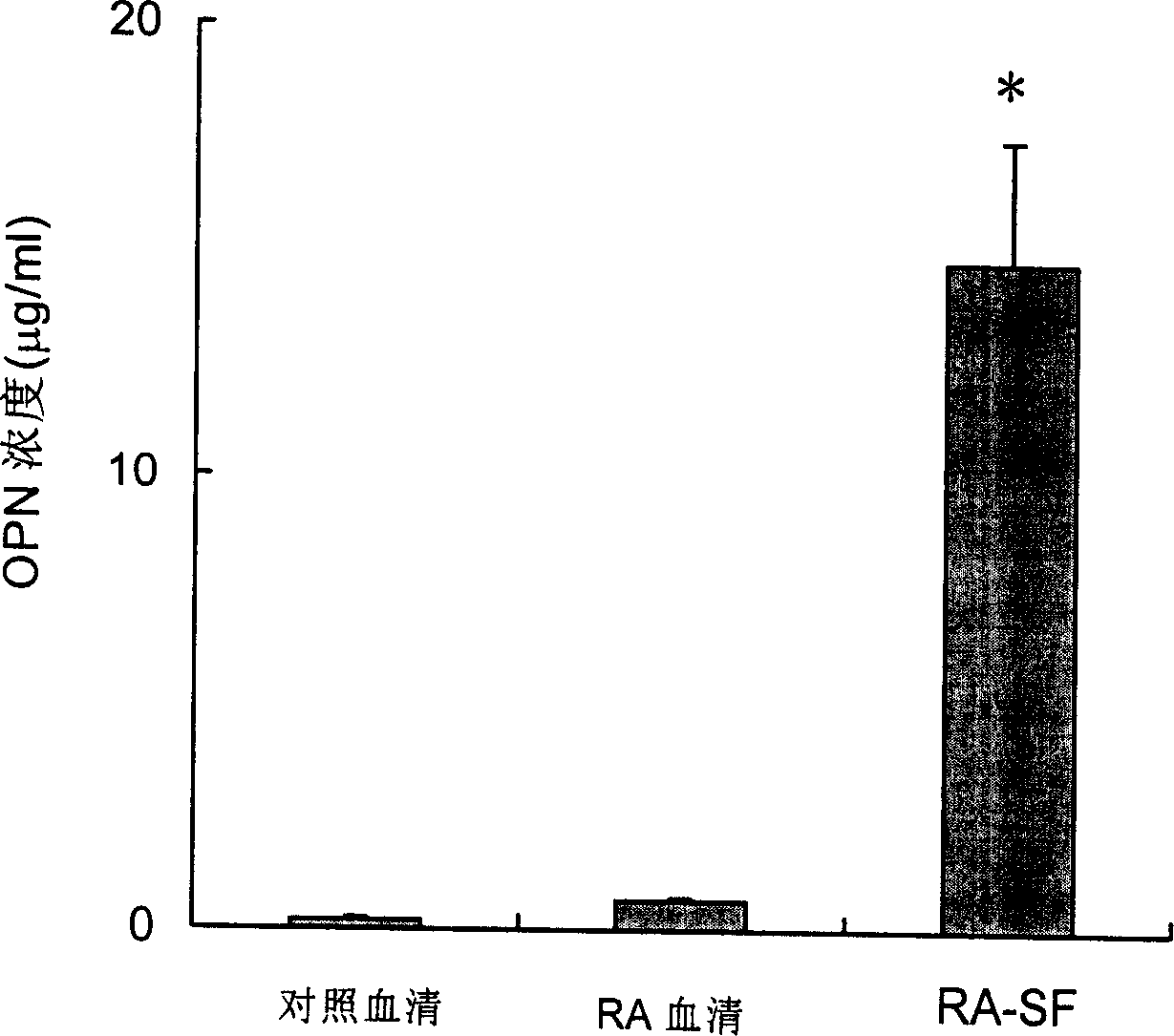
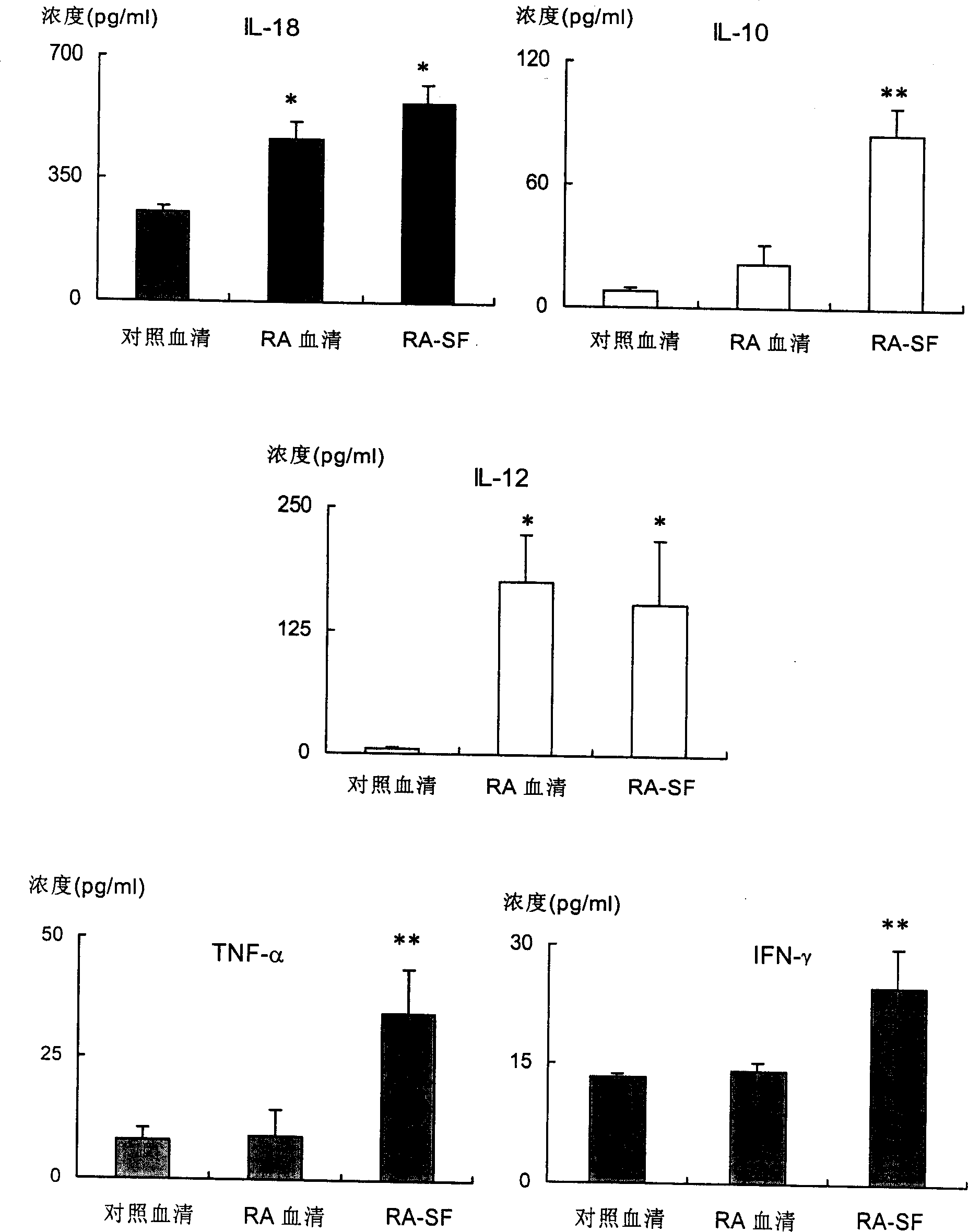
Examples
Embodiment
[0063] method:
[0064] Patients and Experimental Materials
[0065] A total of 95 RA patients were collected in this study. All patients met the diagnostic criteria of the American College of Rheumatology. The sex ratio of RA patients was: 68 females and 27 males; the disease duration was 15±12 years. The patient's age was 54±19 years old. There were 32 complete paired samples, and each patient had peripheral blood, joint fluid and joint synovial tissue. Another group of 63 paired samples had synovial fluid and serum (without cells), and ELISA was used to analyze the concentrations of OPN and cytokines. Control T cells and serum were obtained from 31 healthy volunteers, similar in sex and age to the RA group. In the 2 months before sample collection, the patient had not used immunosuppressants and immunomodulators. All patients signed an informed consent form before sample collection. The research process complied with the research convention.
[0066] Synovial tissue...
PUM
 Login to View More
 Abstract
Description
Claims
Application Information
 Login to View More