
Variable stem for human-powered vehicle
a human-powered vehicle and variable stem technology, applied in the direction of steering devices, cycle brakes, cycle equipment, etc., can solve the problem of not being able to adjust the height of the handlebar
- Summary
- Abstract
- Description
- Claims
- Application Information
AI Technical Summary
Benefits of technology
Problems solved by technology
Method used
Image

Examples
first embodiment
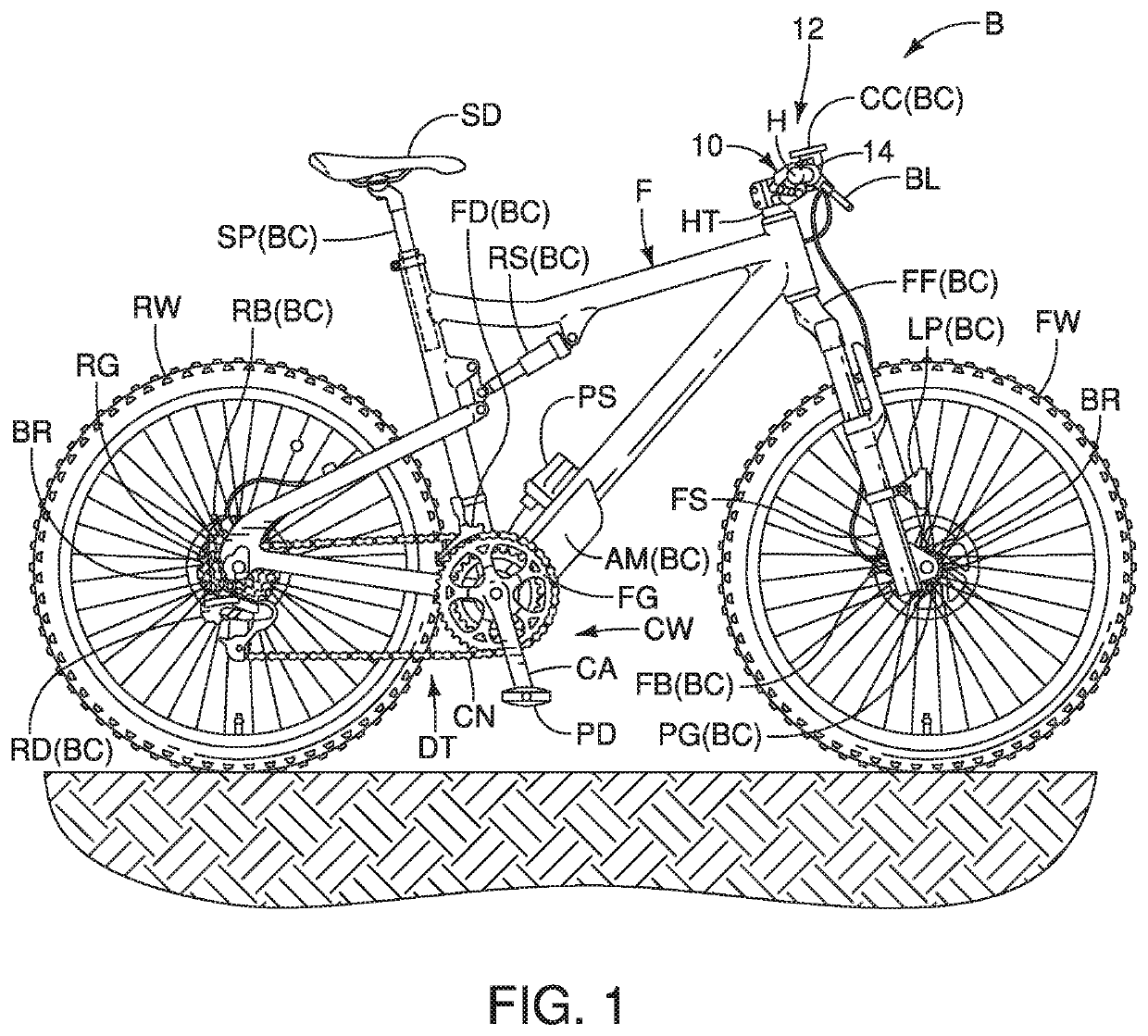
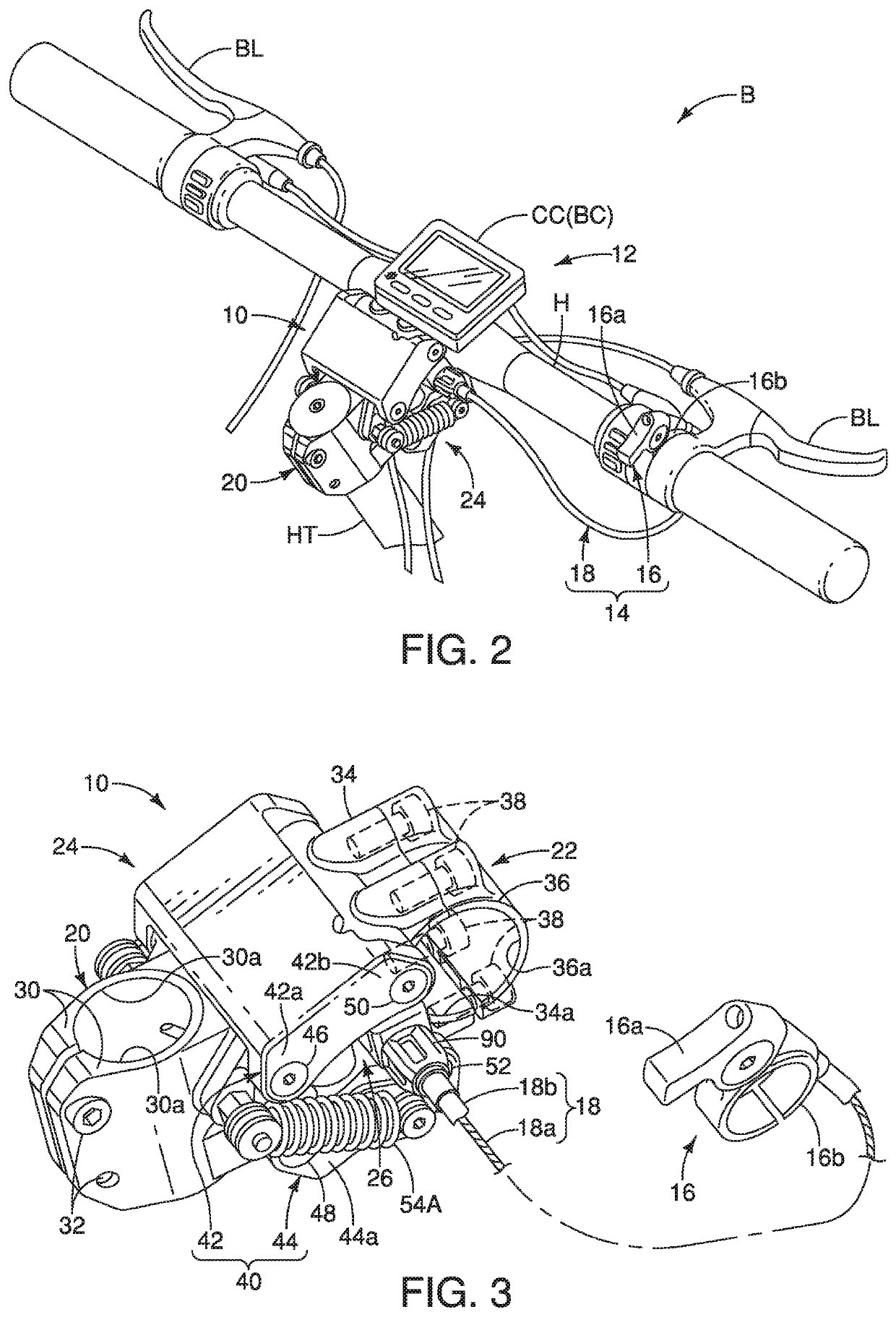
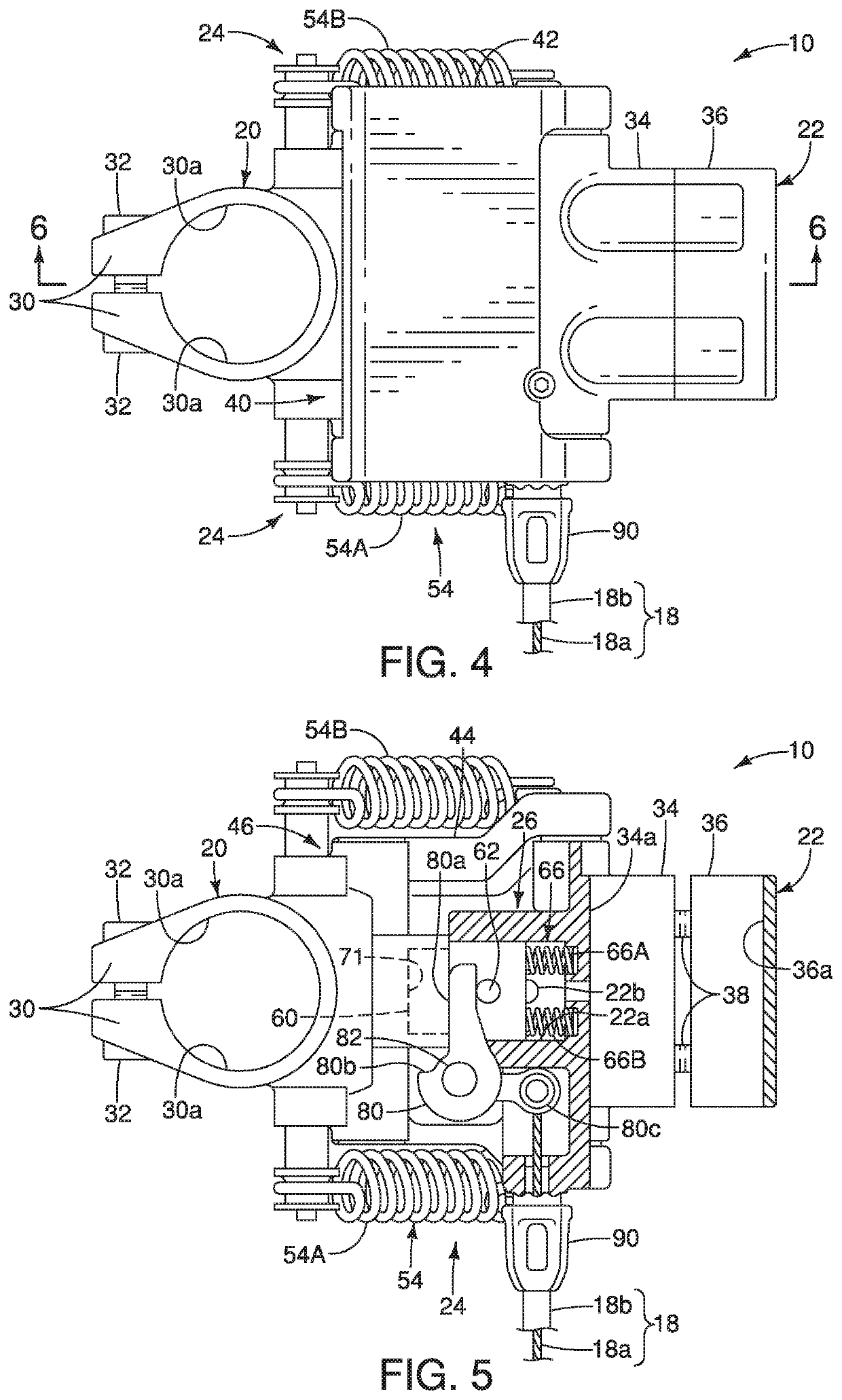
[0067]In the first embodiment, the variable stem 10 basically comprises a head tube mount 20, a handlebar mount 22, a stem body 24 and a positioning structure 26. Basically, the head tube mount 20 is configured to be mounted to a steerer tube or head tube HT of the front fork FF, while the handlebar mount 22 is configured to be mounted to the handlebar H. The stem body 24 couples the handlebar mount 22 to the head tube mount 20. In this way, the variable stem 10 is rigidly mounted to the head tube HT of the front fork FF and supports the handlebar H for turning the front fork FF and the front wheel FW with respect to the frame F.
[0068]The controller 14 is configured to control the positioning structure 26 while the human-powered vehicle B is in a driving state. Specifically, the controller 14 controls the positioning structure 26 to change the position of the handlebar H with respect to the frame F. More specifically, the controller 14 controls the positioning structure 26 to change...
third embodiment
[0087]In this third embodiment, the variable stem 210 comprises an electronic controller 214 and an electric actuator or motor 215 for controlling the positions of the variable stem 210. As seen in FIG. 14, the variable stem 210 further comprises the operating device 116 which is electrically connected to the electric motor 215 by an electrical cord 218. In this way, the variable stem 210 includes a manually operated controller (the operating device 116 and the electrical cord 218, which form a physically operated controller) for the user to manually control the positions of the variable stem 210 via the electric motor 215. The electronic controller 214 is also electrically connected to the electric motor 215 by the electrical cord 218. In this way, the electronic controller 214 is configured to automatically control the positions of the variable stem 210 via the electric motor 215 as explained below.
[0088]Thus, in the third embodiment, the variable stem 210 includes the stem body 2...
PUM
 Login to View More
 Abstract
Description
Claims
Application Information
 Login to View More