Supercharge Your Innovation With Domain-Expert AI Agents!

Endovascular graft with pressure, temperature, flow and voltage sensors

a technology of endovascular grafts and sensors, which is applied in the field of body lumen treatment, can solve the problems of high morbidity and mortality rates of abdominal surgery, and the associated high rate of implantation of endovascular grafts, and achieve the effect of less cost and increasing the potential for diagnosis and treatmen

Inactive Publication Date: 2006-07-06
LIFESHIELD SCI
View PDF49 Cites 7 Cited by
  • Summary
  • Abstract
  • Description
  • Claims
  • Application Information

AI Technical Summary

Benefits of technology

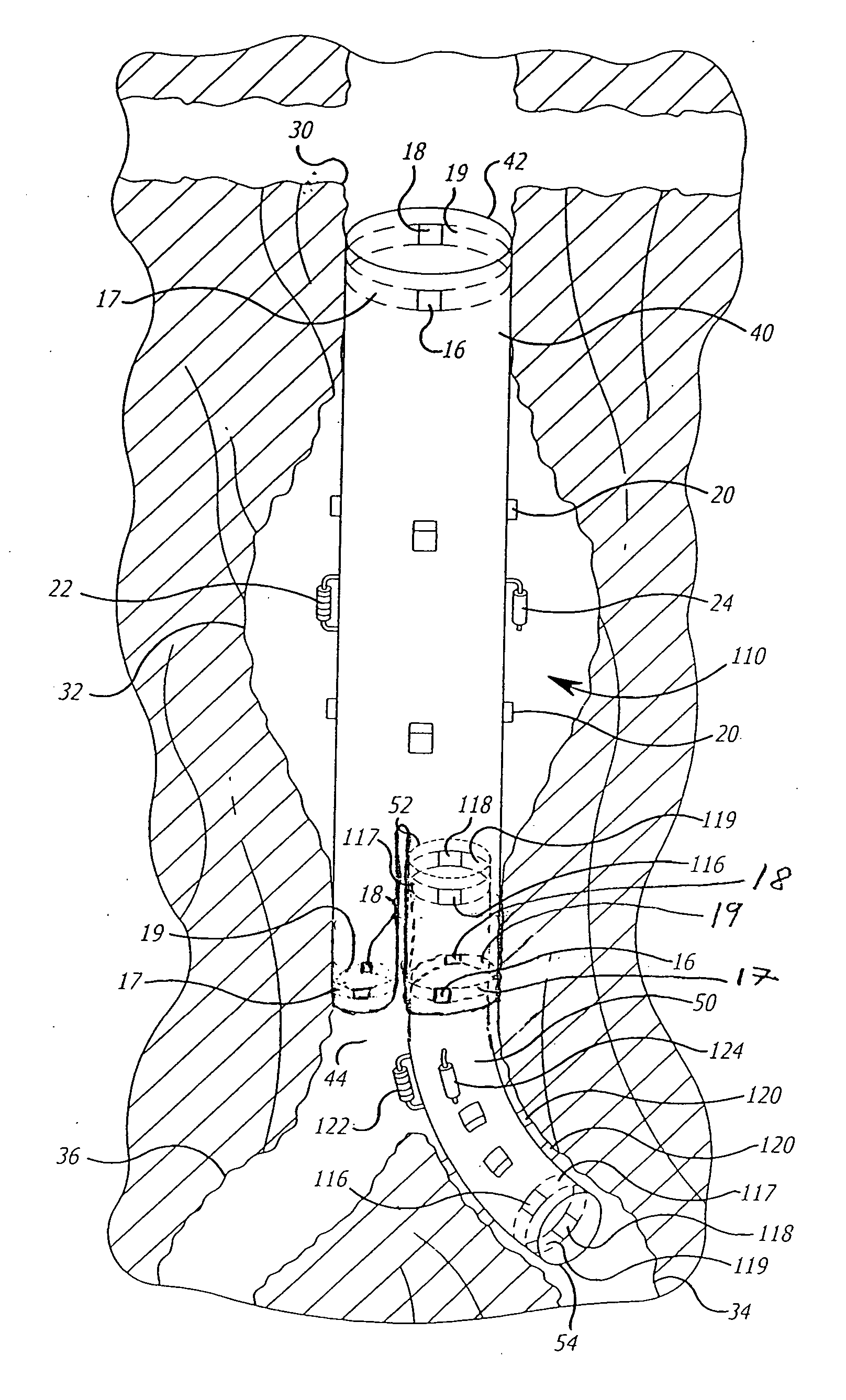
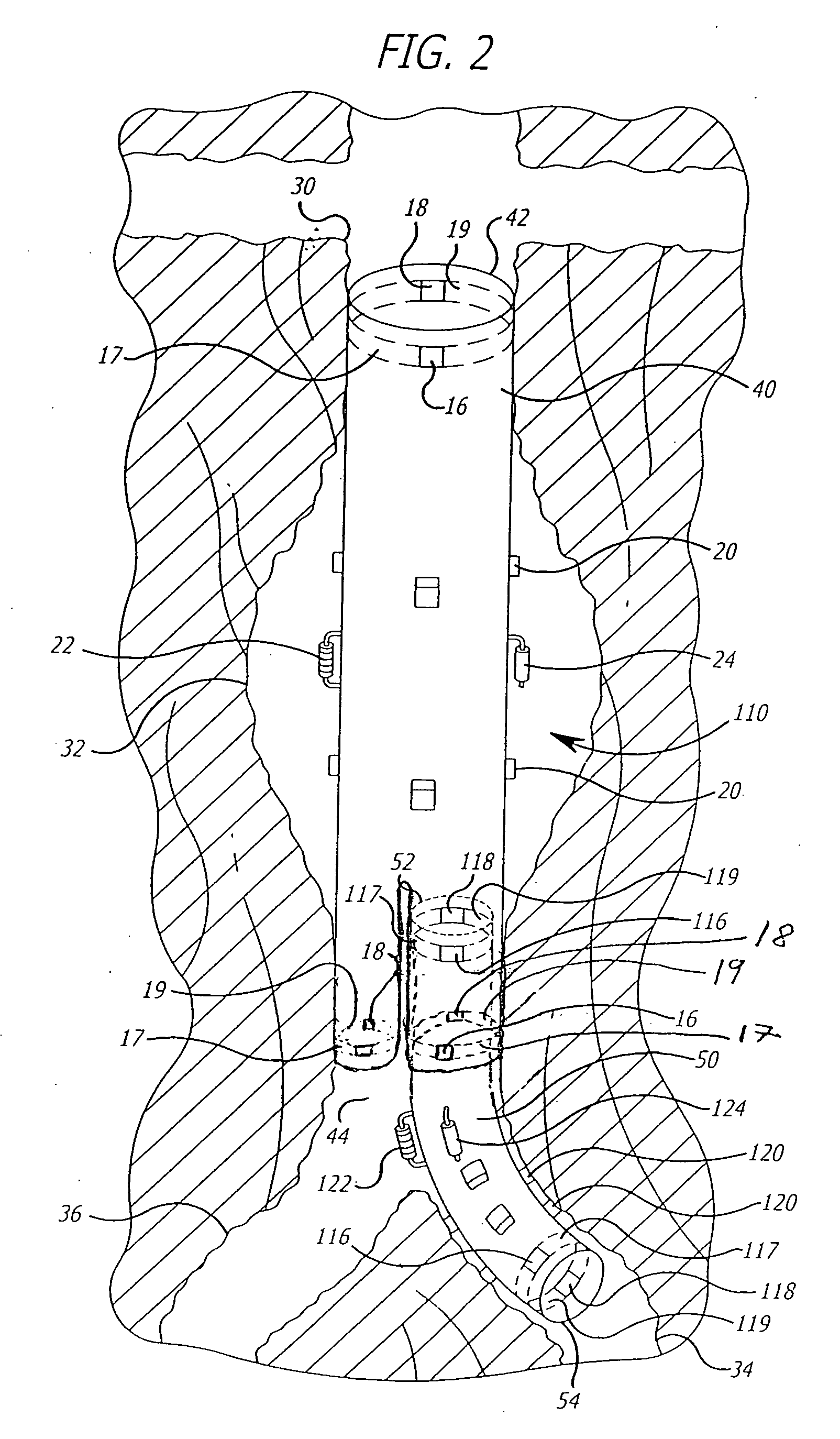
[0010] Briefly and in general terms, the present invention is embodied in an endovascular graft with sensors attached thereto. The device will have the ability to be delivered endovascularly and measure pertinent parameters within the excluded AAA. The endovascular graft would have the ability to transmit data about intra-sac parameters to an external monitoring device. Patient follow-up would be less costly (conducted in the physician office), non-invasive, and more accurate, allowing prompt intervention in those patients most at risk for acute rupture. The invention would also allow for more frequent patient follow-up, increasing the potential to diagnose and treat aneurysms at risk before acute rupture. The invention is applicable to all applications of endovascular grafts to treat aneurysmal segments of blood vessels. It is contemplated that the invention may be used with all shapes of endovascular grafts known within the art.
[0011] In one embodiment, sensors are attached to the endovascular graft at the superior end, inferior end and midsection. Measurements of pertinent parameters and comparison of those measurements may allow early identification of areas of the patient's vasculature at risk for aneurysm rupture, thrombus formation, infection, inflamation or other anomalies without the need for invasive procedures.
[0012] In another embodiment, a pattern of sensors are attached to the endovascular graft such that they cover the interior and exterior of the graft. The pattern of sensors allow a complete profile of pertinent parameters along the endovascular graft to be obtained. Such a profile may provide more accurate identification of anomalies.
[0014] An antenna or other data transmitter and a power source may be attached external the endovascular graft, allowing a physician or technician to monitor graft and vessel health without the need for an invasive procedure. The transmitter transmits measurements made by the sensors to a receiver located outside the patient's body.

Problems solved by technology

Conventional open surgical repair of AAA involves major abdominal surgery with associated high rates of morbidity.
Untreated AAA has been shown to continue to expand until rupture, with an associated high mortality rate.
Implantation of endovascular grafts have also been associated with high complication rates, including perioperative death, conversion to open repair, the need for further intervention, the need for hemodialysis, a failure to cure the AAA, and wound complications.
The inability to obtain or maintain a secure seal between the vessel wall and the endovascular graft is a complication unique to endovascular aneurysm exclusion.
It is believed that persistent endoleaks result in continued aneurysm expansion, which may eventually lead to aneurysm rupture.
Failure to properly exclude the aneurysm from systemic arterial blood pressure keeps the patient at risk of impending rupture.
Preoperative patent side branches are not a good predictor of postoperative endoleaks.
Thrombosed aneurysm sacs may still receive pressurization from a sealed endoleak and this continued pressurization keeps the aneurysm at risk for rupture.
All of these methods are costly and involve invasive procedures that have associated morbidity.
None of the imaging methods are completely successful in detecting endoleaks.
Some physicians are advocating that the follow-up examinations of AAA patients focus on pressure measurements, but that this is not currently clinically feasible.

Method used

the structure of the environmentally friendly knitted fabric provided by the present invention; figure 2 Flow chart of the yarn wrapping machine for environmentally friendly knitted fabrics and storage devices; image 3 Is the parameter map of the yarn covering machine
View more

Image

Smart Image Click on the blue labels to locate them in the text.
Viewing Examples
Smart Image
  • Endovascular graft with pressure, temperature, flow and voltage sensors
  • Endovascular graft with pressure, temperature, flow and voltage sensors
  • Endovascular graft with pressure, temperature, flow and voltage sensors

Examples

Experimental program
Comparison scheme
Effect test

Embodiment Construction

[0019] As shown in the exemplary drawings and for purposes of illustration, the invention is embodied in a prosthetic endovascular graft implant having the ability to measure pertinent parameters inside and outside the graft material and transmit the measurements to a receiver located external the patient within whom the endovascular graft is implanted. In one aspect, the invention includes a graft with sensors mounted on the external and internal surface that measure parameters such as pressure, temperature or voltage. In another aspect the invention includes a transmitter and energy source which facilitate transmission of parameters measured by the sensors to a receiver located outside the patient's body.

[0020] Referring to FIG. 1, an embodiment of the invention is shown in which a generally tubular, including flared or tapered, endovascular graft 10 having a superior end 12 and inferior end 14 is implanted in a body vessel 30 across an aneurysm sac 32 with the superior end 12 se...

the structure of the environmentally friendly knitted fabric provided by the present invention; figure 2 Flow chart of the yarn wrapping machine for environmentally friendly knitted fabrics and storage devices; image 3 Is the parameter map of the yarn covering machine
Login to View More

PUM

No PUM Login to View More

Abstract

An endovascular graft having one or more sensors attached to its internal and external surface, one or more power sources attached to its external surface and one or more transmitters attached to its external surface, the sensors capable of measuring pertinent parameters and each transmitter capable of transmitting signals containing pertinent parameters to one or more receiving devices located outside the patient's body. The sensors may measure pressure, temperature, blood flow, electrical potential, or any combination thereof. The sensors may be attached at specific locations on the graft material, thereby providing pertinent parameters from critical points inside the vasculature, or may be attached to form an array of sensors over the internal and external surface of the graft material, thereby providing a complete profile of pertinent parameters throughout the vasculature covered by the endovascular graft.

Description

BACKGROUND OF THE INVENTION [0001] This invention relates to the treatment of body lumens and, more particularly, to the endovascular placement of a prosthetic graft within vasculature for the purpose of repairing the same. [0002] Ruptured abdominal aortic aneurysms (AAA) are a leading cause of death in the United States. Treatment options to repair AAA include conventional open surgery and implantation of an endovascular graft. Conventional open surgical repair of AAA involves major abdominal surgery with associated high rates of morbidity. Endovascular grafts have been developed to endoluminally bypass abdominal aortic aneurysms through minimally invasive surgery. Many patients that are unacceptable surgical risks for open repairs are eligible for endovascular graft implantation. Deployment of transfemoral, endovascular grafts to treat AAA is appealing for many reasons: avoidance of an abdominal incision, lack of aortic cross clamping, the potential for regional anesthesia, and a ...

Claims

the structure of the environmentally friendly knitted fabric provided by the present invention; figure 2 Flow chart of the yarn wrapping machine for environmentally friendly knitted fabrics and storage devices; image 3 Is the parameter map of the yarn covering machine
Login to View More

Application Information

Patent Timeline
no application Login to View More
Patent Type & Authority Applications(United States)
IPC IPC(8): A61F2/06A61B5/00A61B5/0215A61B5/026A61B5/07A61F2/02
CPCA61B5/01A61B5/02014A61B5/0215A61B5/026A61B5/076A61B5/1459A61F2/07A61F2002/065A61F2250/0002Y10S623/912A61F2/89A61F2002/075
Inventor HAYASHI, REID K.CONCEMI, ALFRED
Owner LIFESHIELD SCI
Features
  • R&D
  • Intellectual Property
  • Life Sciences
  • Materials
  • Tech Scout
Why Patsnap Eureka
  • Unparalleled Data Quality
  • Higher Quality Content
  • 60% Fewer Hallucinations
Social media
Patsnap Eureka Blog
Learn More