[0008] In one embodiment, the sewing cuff may be conformable for at least partially adopting a shape of tissue above or within the biological annulus. In addition or alternatively, the sewing cuff may be penetrable by fasteners for securing the sewing cuff to tissue surrounding the sinus cavity. Optionally, the sewing cuff may include one or more conformable elements, e.g., a plurality of flexible ribs and / or a lattice, e.g., to enhance sealing between the prosthetic valve and the annulus member. For example, the conformable element(s) may include a silicone, foam, fabric, or other core secured within fabric to provide the sewing cuff having sufficiently flexibility to conform to yet provide a seal against the surrounding tissue.
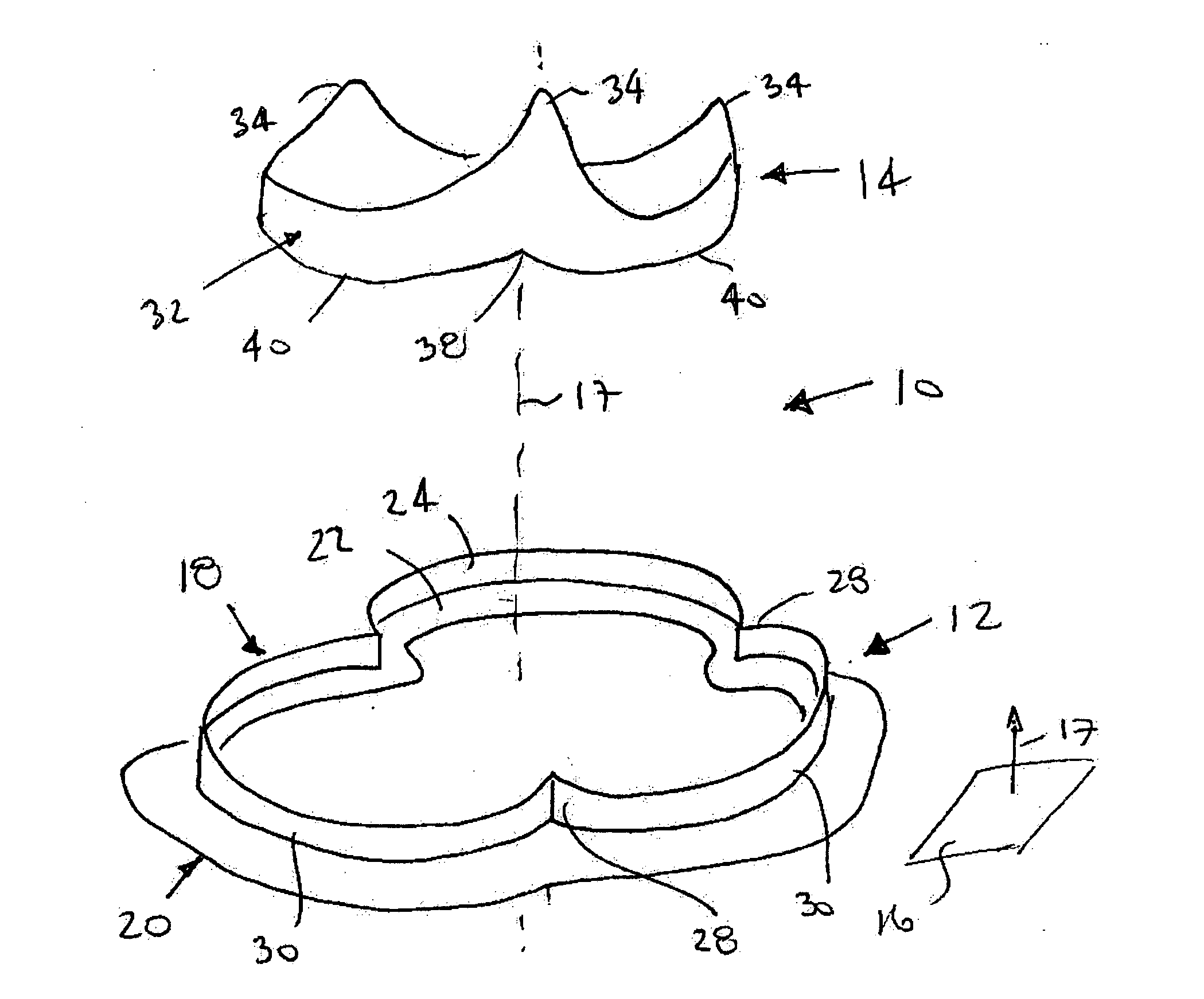
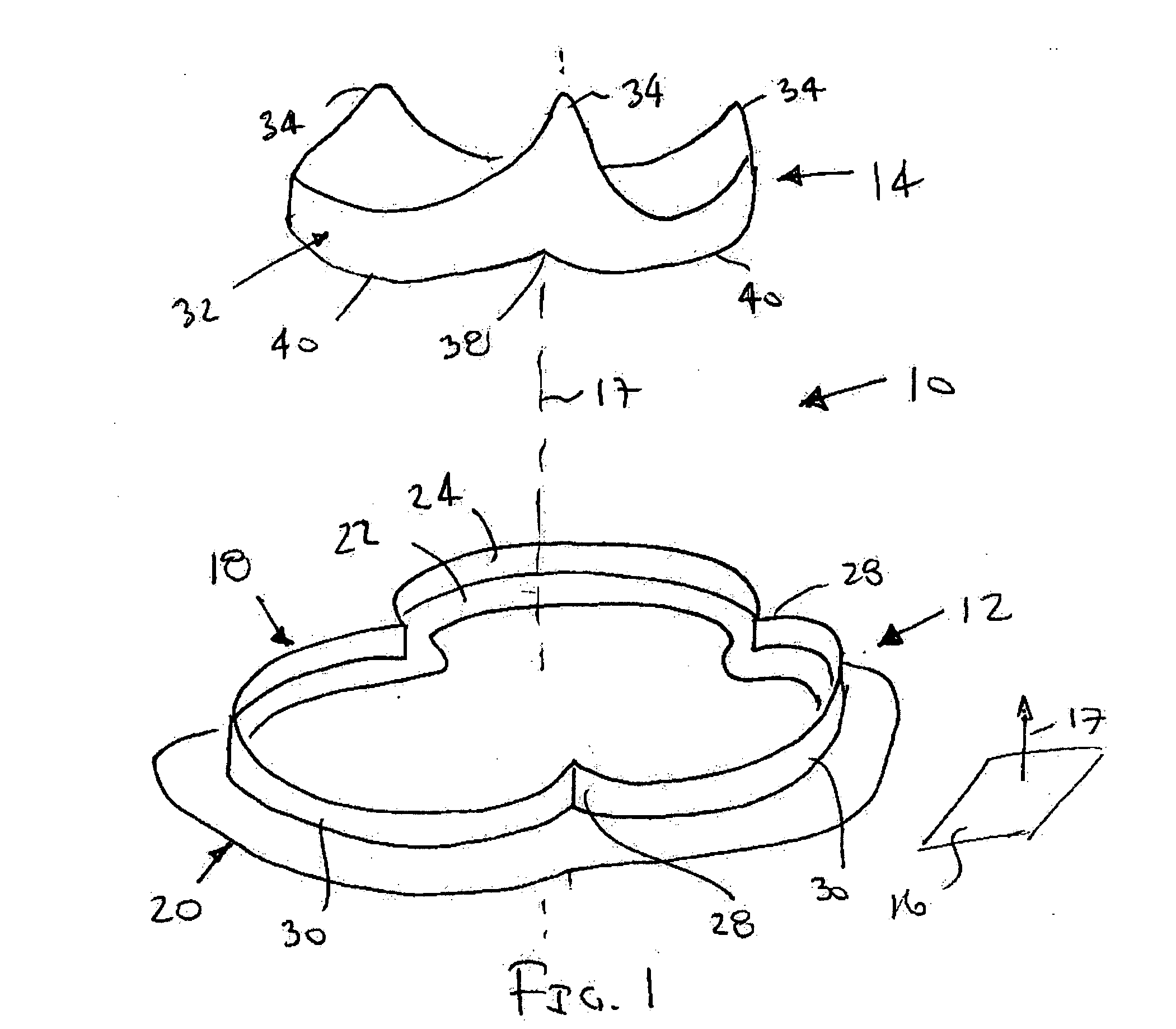
[0011] In one embodiment, the sewing cuff may be resiliently flexible for conforming at least partially to the multiple lobular shape of the prosthetic valve and / or to the surrounding tissue, e.g., to enhance a seal between the prosthetic valve, the annular member, and / or the surrounding tissue. In addition or alternatively, the prosthetic valve, annular member, and / or sewing cuff may include a flexible skirt for enhancing a seal between the prosthetic valve and the annular prosthesis. Such enhanced seals may facilitate implanting a prosthetic valve having a multiple-lobular shape, e.g., corresponding to the supra-annular above a biological annulus, and an annular member having a substantially circular shape, e.g., corresponding to the biological annulus.
[0013] In accordance with yet another embodiment, a method is provided for implanting a prosthetic heart valve assembly to replace a natural or prosthetic heart valve implanted within a biological annulus below a sinus cavity. An annular member may be introduced into the biological annulus to direct tissue surrounding the biological annulus outwardly, e.g., to at least partially dilate the biological annulus. A valve prosthesis may be advanced into the sinus cavity, and secured relative to the annular member. A flexible sewing cuff or skirt may extend around the annular member that may be engaged by the valve prosthesis for enhancing a seal between the valve prosthesis and the annulus member.
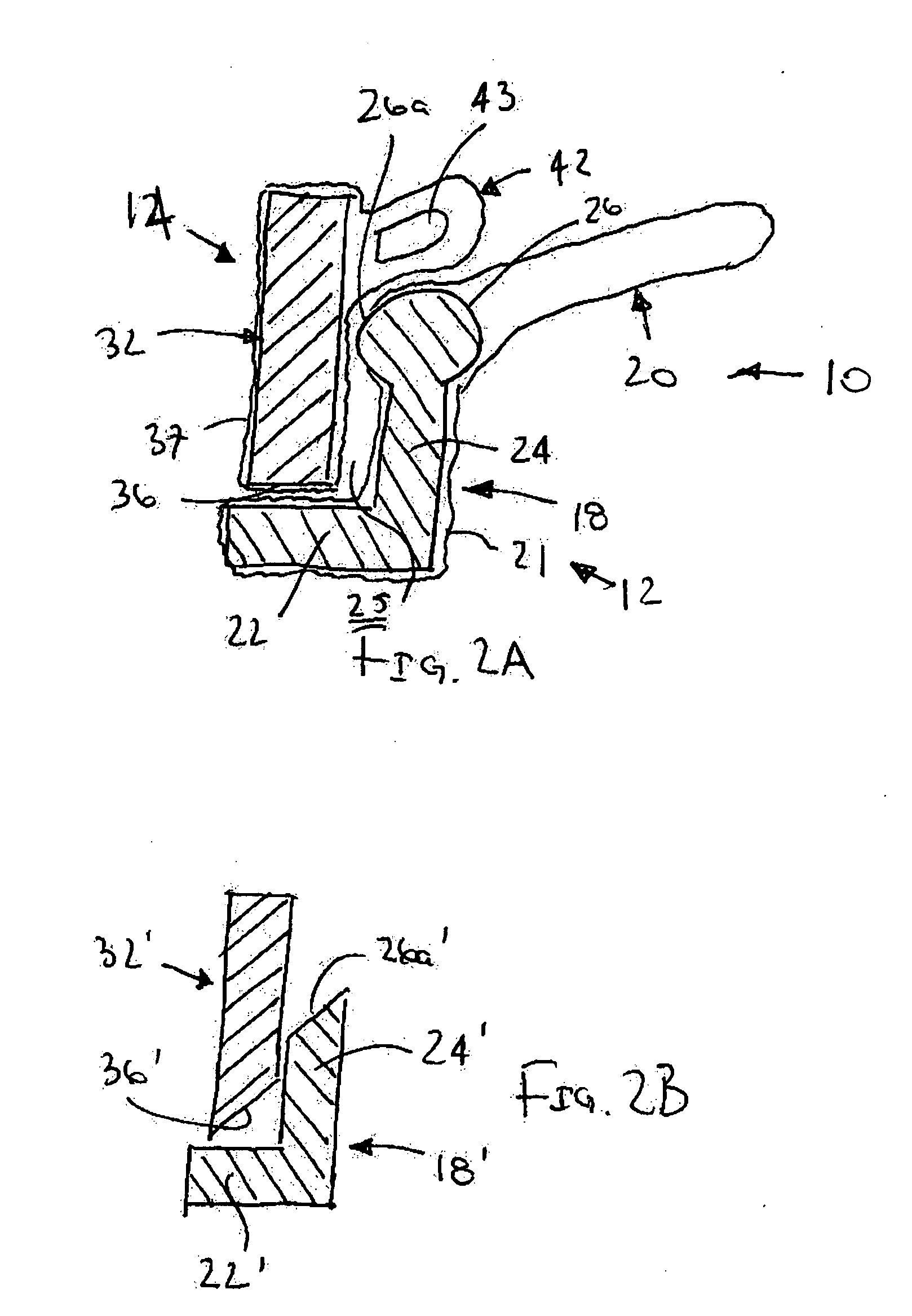
[0015] In addition or alternatively, the rim may include a ramped and / or tapered surface, e.g., upper edge for guiding the lower edge of the valve member into engagement with the rim. In addition, the lower edge of the valve member may include a ramped and / or tapered surface, and / or may include a plurality of tabs or other elements for engaging the rim of the base member. Optionally, the rim may be deflectable radially outwardly (or inwardly) when the lower edge of the valve member is guided into engagement with the rim, the rim being biased to return radially inwardly (or outwardly) to enhance an interference fit between the rim and the valve member.
[0016] In another option, a flexible skirt may extend from the base member and / or valve member for enhancing a seal between the valve member and the base member when the valve member is secured to the base member. For example, the base member may be sufficiently flexible to conform at least partially to the annulus of the heart, and the flexible skirt may deform to accommodate irregularities between the valve member and the base member, e.g., to enhance sealing between the valve member and the base member. The flexible skirt may extend laterally from the valve member and / or base member. For example, the flexible skirt may extend outwardly and / or upwardly from the base member or outwardly and / or downwardly, from the valve member, e.g., such that the flexible skirt enhances contact between the valve member and the base member. Exemplary materials for the flexible skirt may include foam, fabric, and / or silicone.



 Login to View More
  Login to View More