
Primary high energy density balanced cell with safety circuit
a high energy density, balanced cell technology, applied in primary cell maintainance/servicing, non-aqueous electrolyte cells, batteries, etc., can solve the problems of reducing the capacity of the whole cell, reducing the capacity, etc., and achieves a more balanced stoichiometric ratio and capacity increase
- Summary
- Abstract
- Description
- Claims
- Application Information
AI Technical Summary
Benefits of technology
Problems solved by technology
Method used
Image

Examples
Embodiment Construction
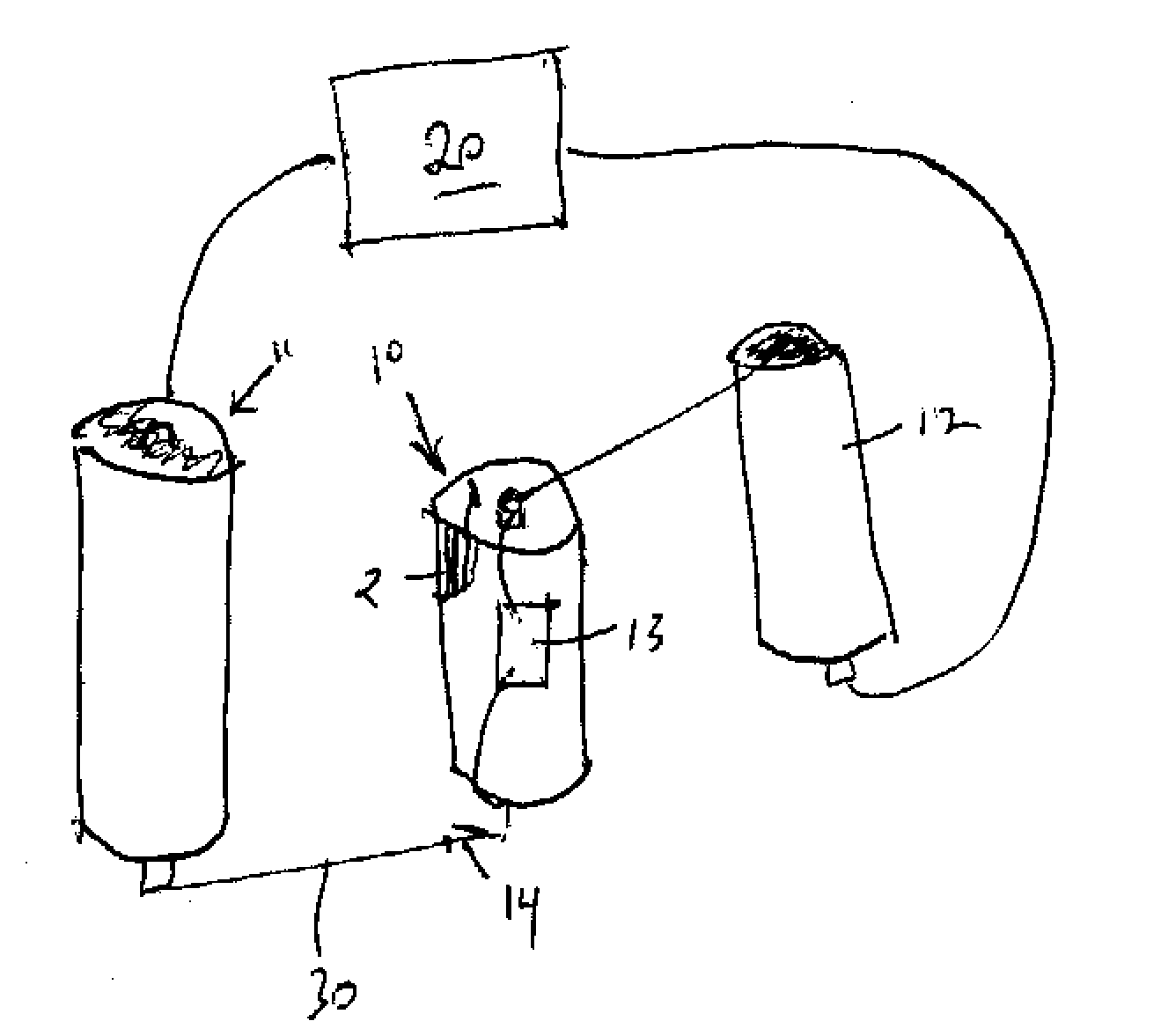
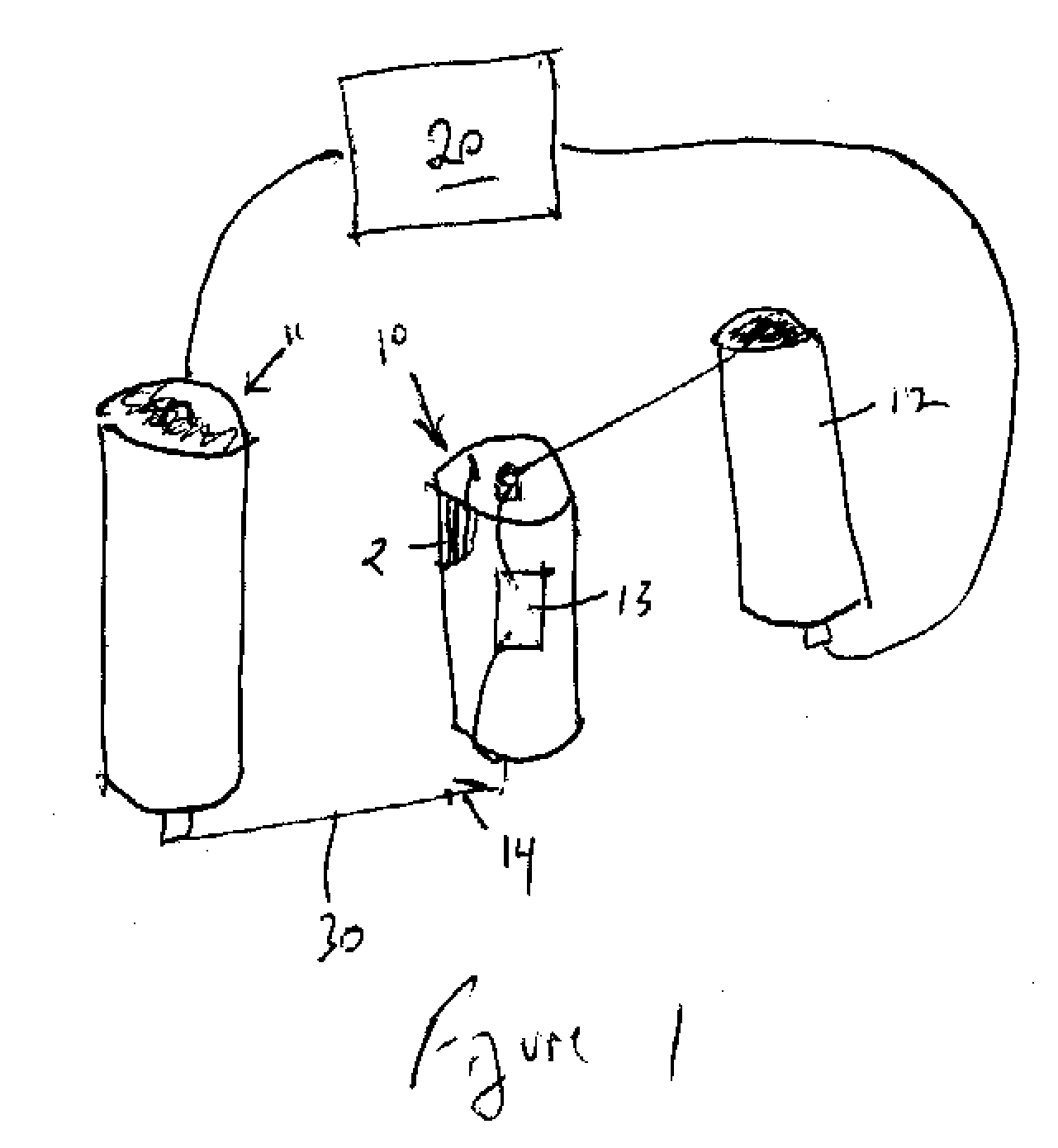
[0008]Generally the present invention comprises a primary electrochemical cell having a lithium metal anode or similar high energy density anode including sodium, potassium, calcium, magnesium and the like. Typical cathode active materials in such primary cells include sulfur dioxide, thionyl chloride and various metal oxides such as manganese dioxide, cobalt oxide, nickel oxide, iron oxide and the like. In accordance with the present invention the electrodes in the cells are essentially electrochemically balanced to attain maximum capacity from the high energy density electrochemical system. Cells with an overall capacity of at least about 0.5 AHr, can present a safety problem with cell reversal or anode plating in a primary cell. A typical D size cell with a lithium anode, sulfur dioxide depolarizing cathode material and a carbon cathode has capacity of about 8-9 AHr while the slightly more expensive C cell Li / MnO2 has a capacity of 11-12 AHr with both of such cells being discharg...
PUM
| Property | Measurement | Unit |
|---|---|---|
| cutoff voltage | aaaaa | aaaaa |
| discharge voltage | aaaaa | aaaaa |
| energy density | aaaaa | aaaaa |
Abstract
Description
Claims
Application Information
 Login to View More