
Method for manipulating a dental virtual model, method for creating physical entities based on a dental virtual model thus manipulated, and dental models thus created
- Summary
- Abstract
- Description
- Claims
- Application Information
AI Technical Summary
Benefits of technology
Problems solved by technology
Method used
Image

Examples
Embodiment Construction
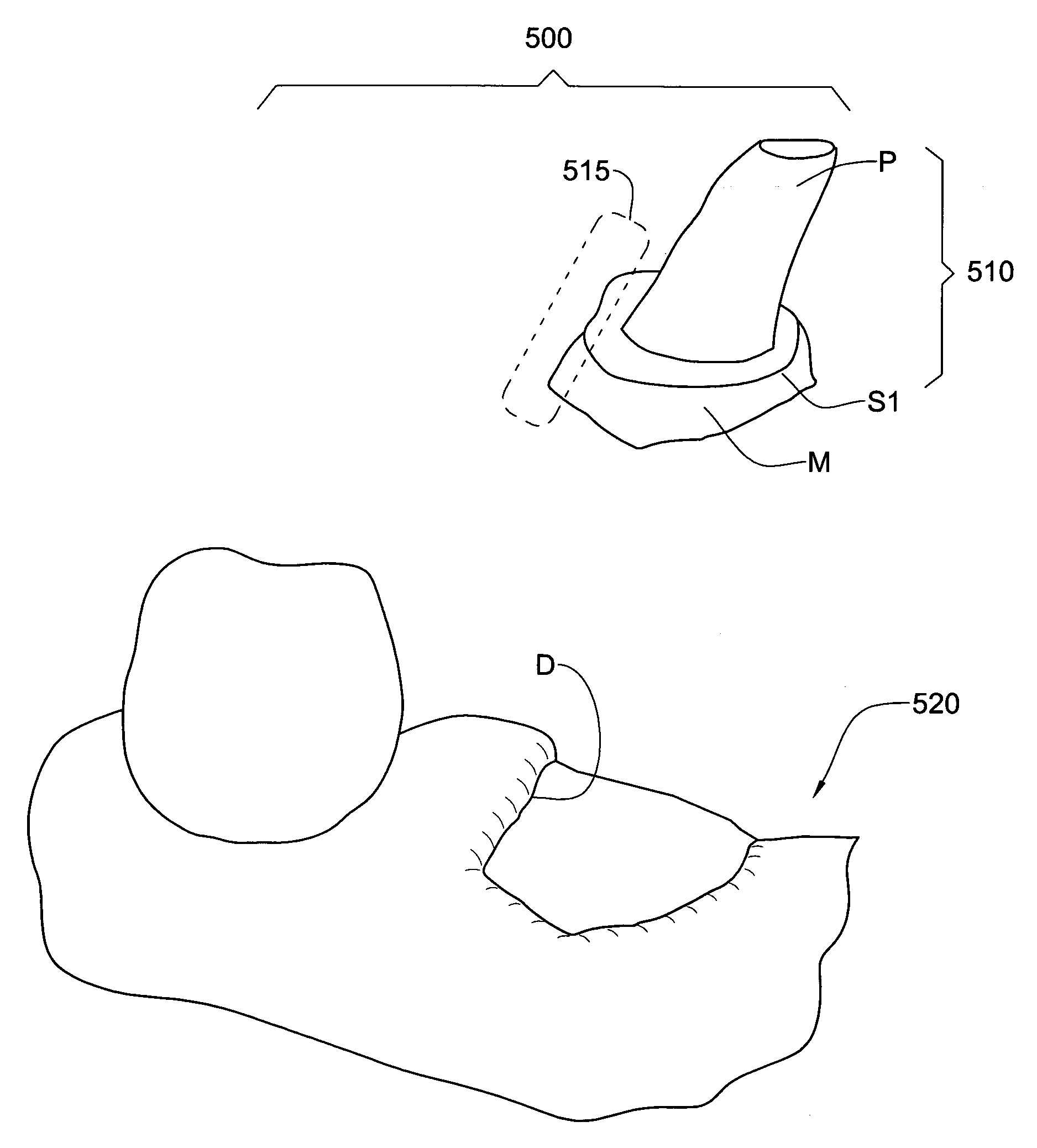
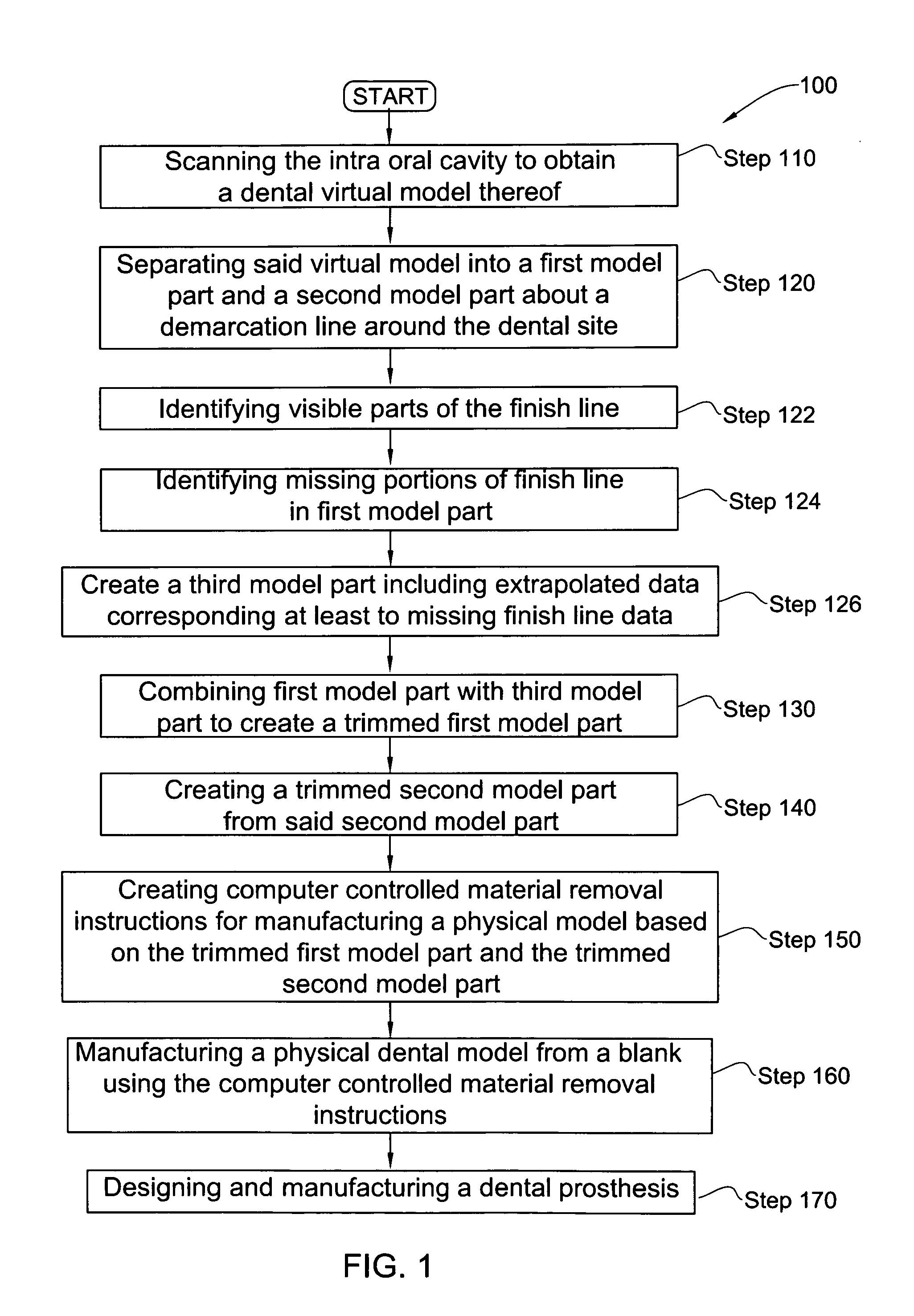
[0066]A computer-based method for manipulating a virtual dental model, particularly useful for defining a finish line (also referred to herein as “margin line”), according to the invention is illustrated in FIG. 1. Accordingly, acquiring an accurate 3D representation (herein also referred to as “three-dimensional model”, “3D model”, “virtual model” and the like) of the intraoral cavity is the first step 110 that is carried out by the method 100. This first virtual model is generally designated with the numeral 500 in the accompanying figures.
[0067]The target parts of the intraoral cavity that are to be scanned are first identified. The target parts are the parts (also referred to interchangeably as zones or areas) of the intraoral cavity 200 which form the focus of a particular dental procedure for a particular patient and regarding which it is desired to obtain the 3D topographical or surface data thereof. The target parts typically include the part of the tooth or the teeth on whi...
PUM
| Property | Measurement | Unit |
|---|---|---|
| color | aaaaa | aaaaa |
| depth dimension | aaaaa | aaaaa |
| depth | aaaaa | aaaaa |
Abstract
Description
Claims
Application Information
 Login to View More