
Process and System for Treating Radioactive Waste Water to Prevent Overloading Demineralizer Systems
a technology of demineralizer system and radioactive waste water, which is applied in water treatment multi-stage treatment, water/sewage multi-stage treatment, separation process, etc., to achieve the effect of easy backflushing
- Summary
- Abstract
- Description
- Claims
- Application Information
AI Technical Summary
Benefits of technology
Problems solved by technology
Method used
Image

Examples
Embodiment Construction
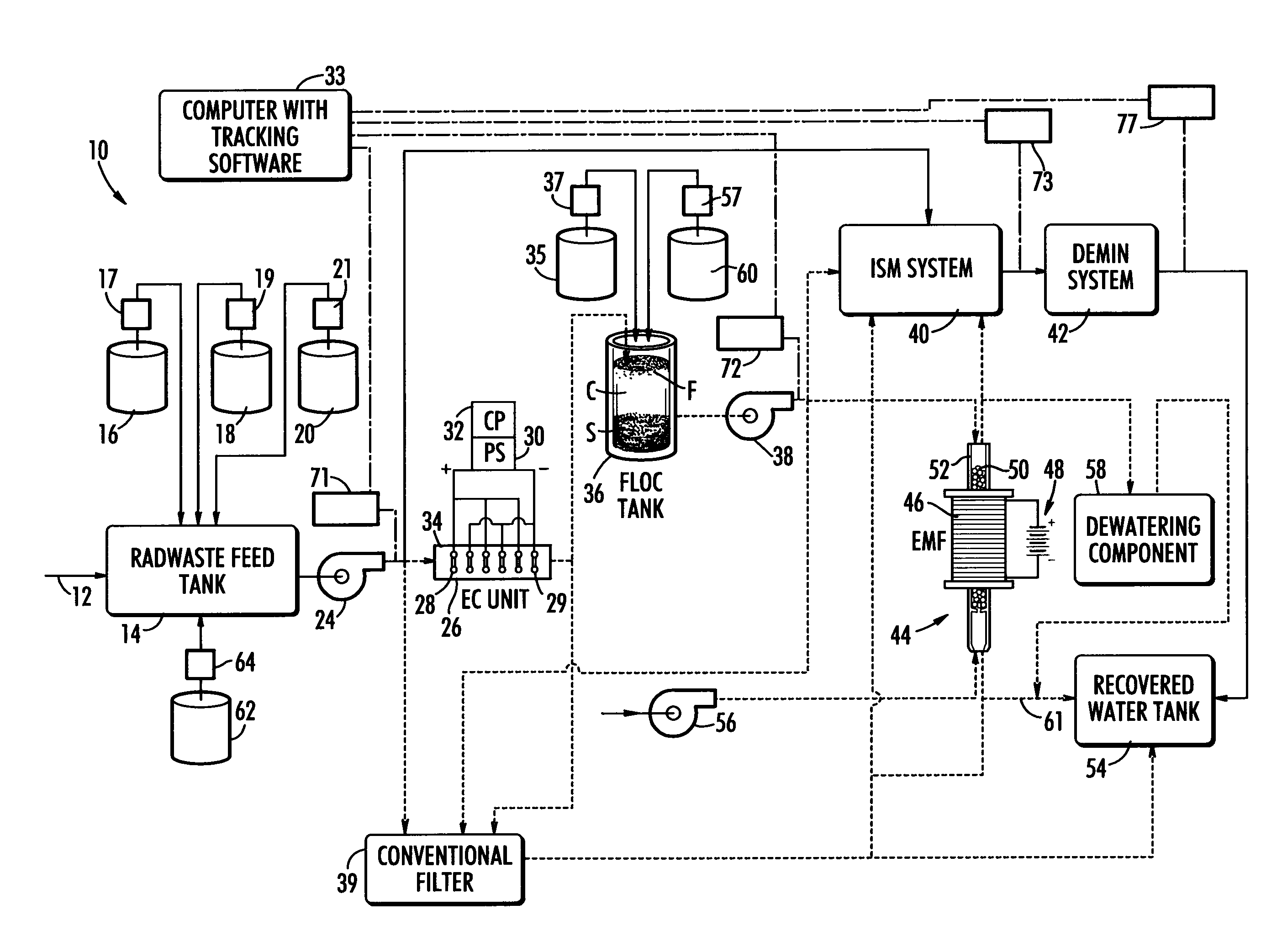
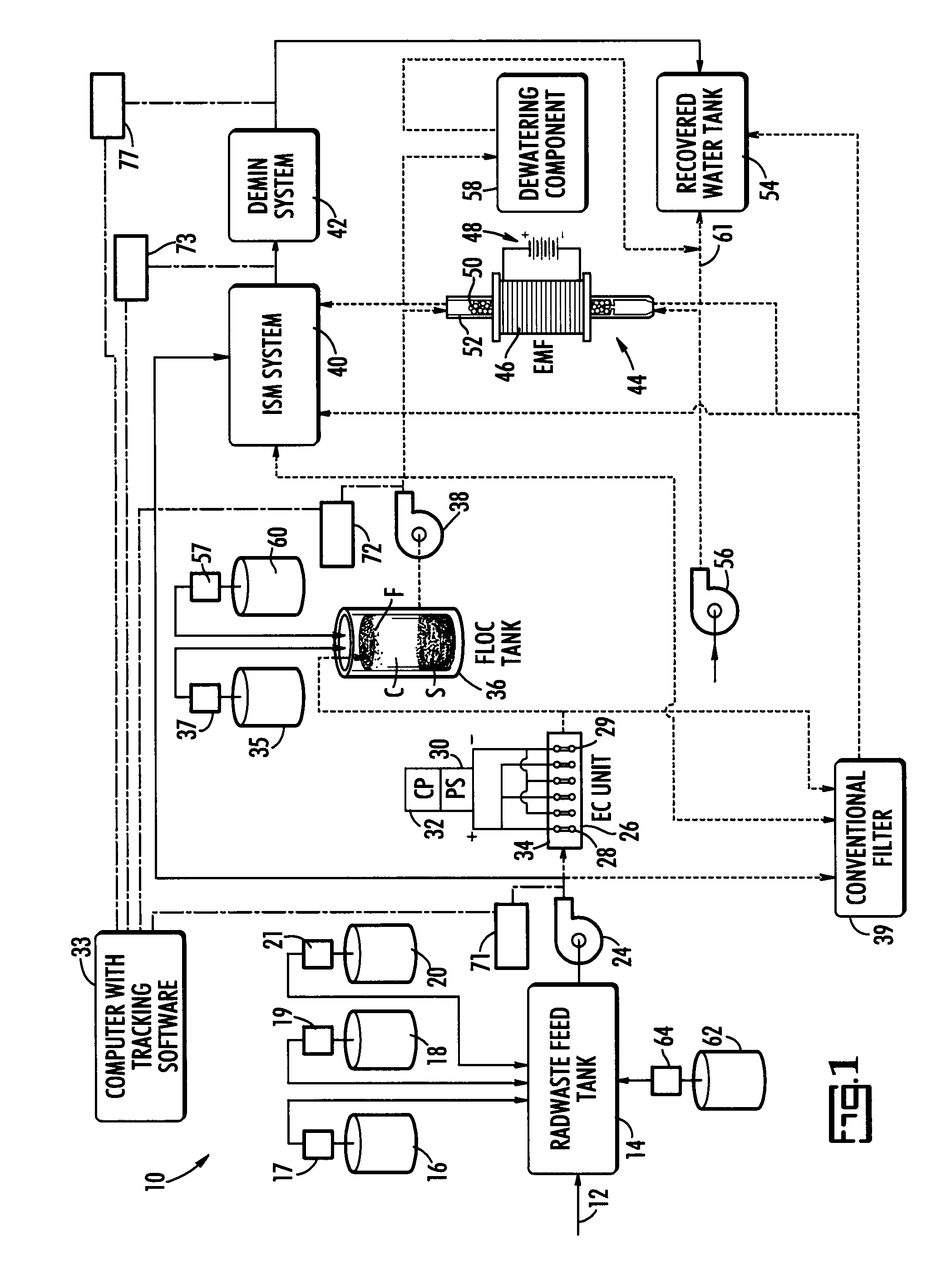
[0051]Referring now to FIG. 1, there is shown a radioactive water treatment system, generally designated 10. Depending on the contents of the radwaste influent 12, a precipitate inducing chemical and / or a flocculating inducing chemical may be introduced directly into a radwaste feed tank 14 from a supply tank 62 via a metering pump 64, and the resulting participates and / or floc removed by a mechanical separation device 39, such as conventional filtering equipment of the types described above. Depending on the chemical used, this floc may contain and assist in removing a specific driver radionuclide. Also, depending on the contents of the aqueous radwaste, the effluent from tank 14 and pump 24 may be sent preferably to an EC unit 26 or alternatively, to an ISM System 40 for further processing as described below.
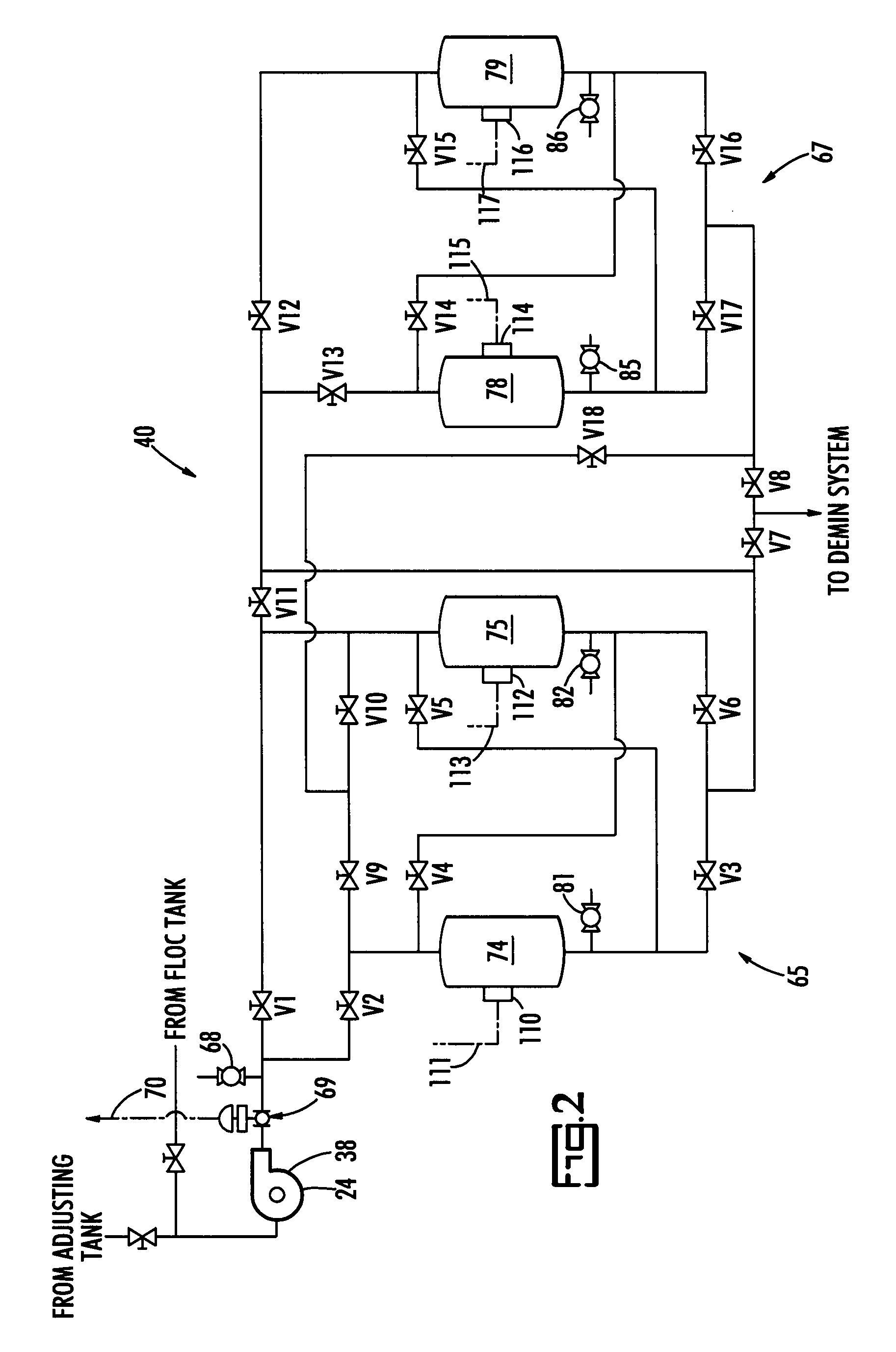
[0052]It is believed that the most effective and economical removal of specific driver radionuclides can be achieved by employing the ISM System 40, which may comprise one or ...
PUM
 Login to View More
 Abstract
Description
Claims
Application Information
 Login to View More