
Silent solenoid valve for fluid regulation system
- Summary
- Abstract
- Description
- Claims
- Application Information
AI Technical Summary
Benefits of technology
Problems solved by technology
Method used
Image

Examples
second embodiment
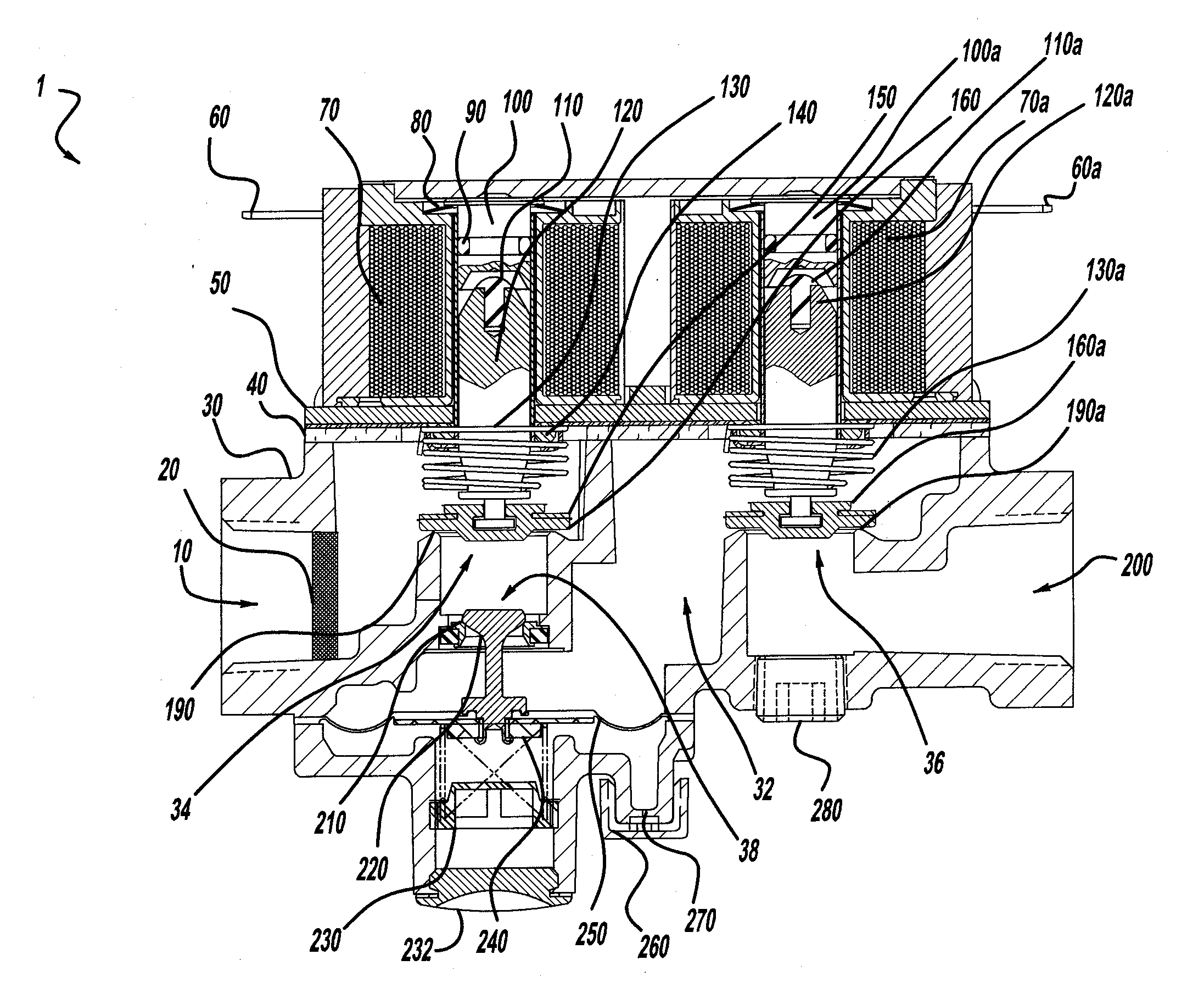
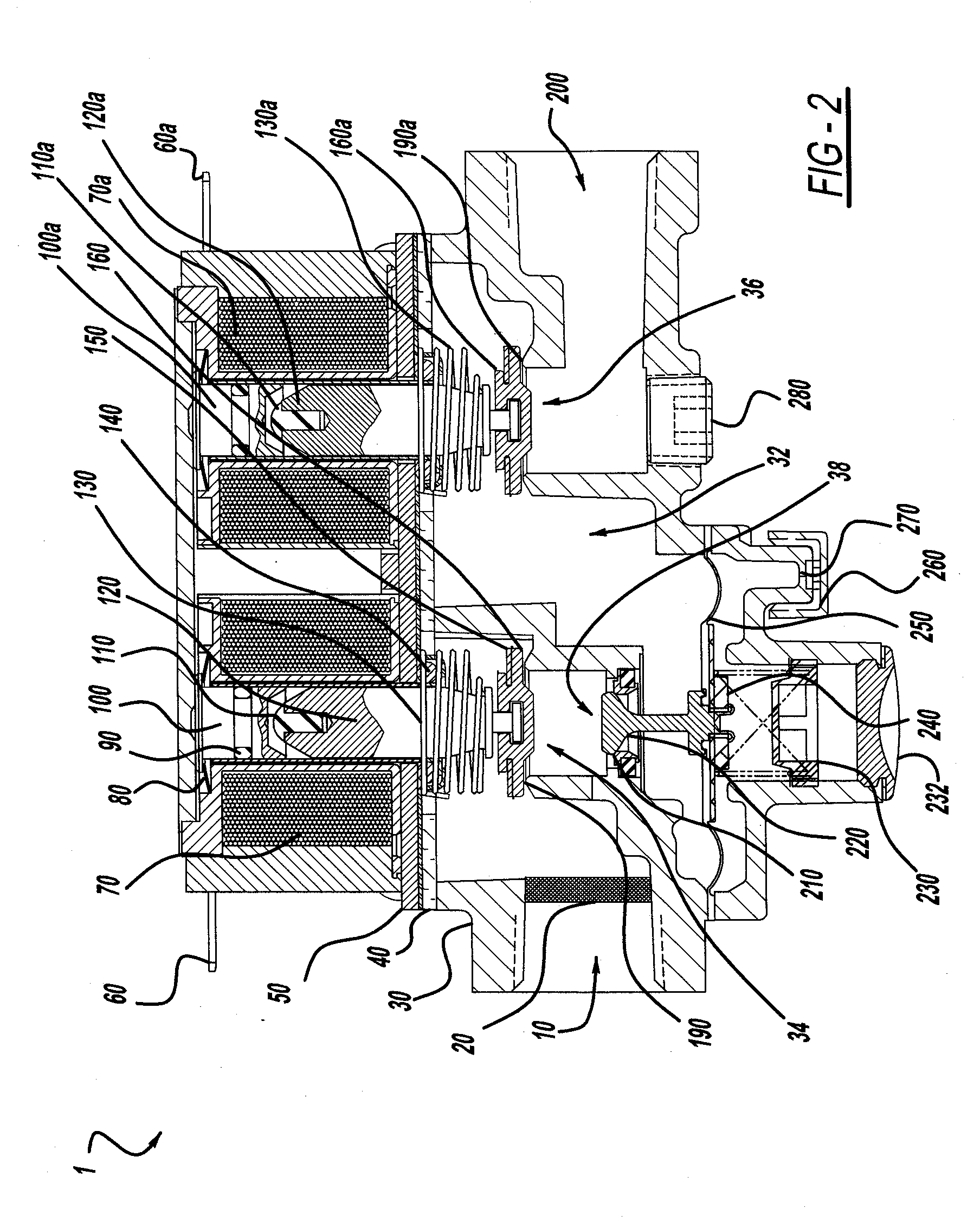
[0027]FIGS. 4 and 5 show a first embodiment of the plungers 120, 120a while FIGS. 6 and 7 show the plungers 120, 120a. Each plunger 120, 120a includes a top 312, a bottom 313, and a side wall 314 extending between the top 312 and the bottom 313. In these illustrated embodiments, the side wall 314 has a cylindrical shape. The top 312 and bottom 313 each have a frustoconical shape, as can be seen in FIGS. 7 and 9. That is, the top 312 and bottom 313 each have an angled portion (not numbered) extending inward away from the side wall 314 and a flat portion 316, wherein a diameter of the flat portion 316 is less than a diameter across the side wall 314.
[0028]The bottom 313 of each plunger 120, 120a is connected to the respective valve member 160, 160a, as can be seen in FIGS. 2 and 3. The plunger springs 130, 130a are also preferably connected to the bottom 313 of each respective plunger 120, 120a.
[0029]A recess 310 is defined by the top 312 of each plunger 120, 120a. More specifically,...
first embodiment
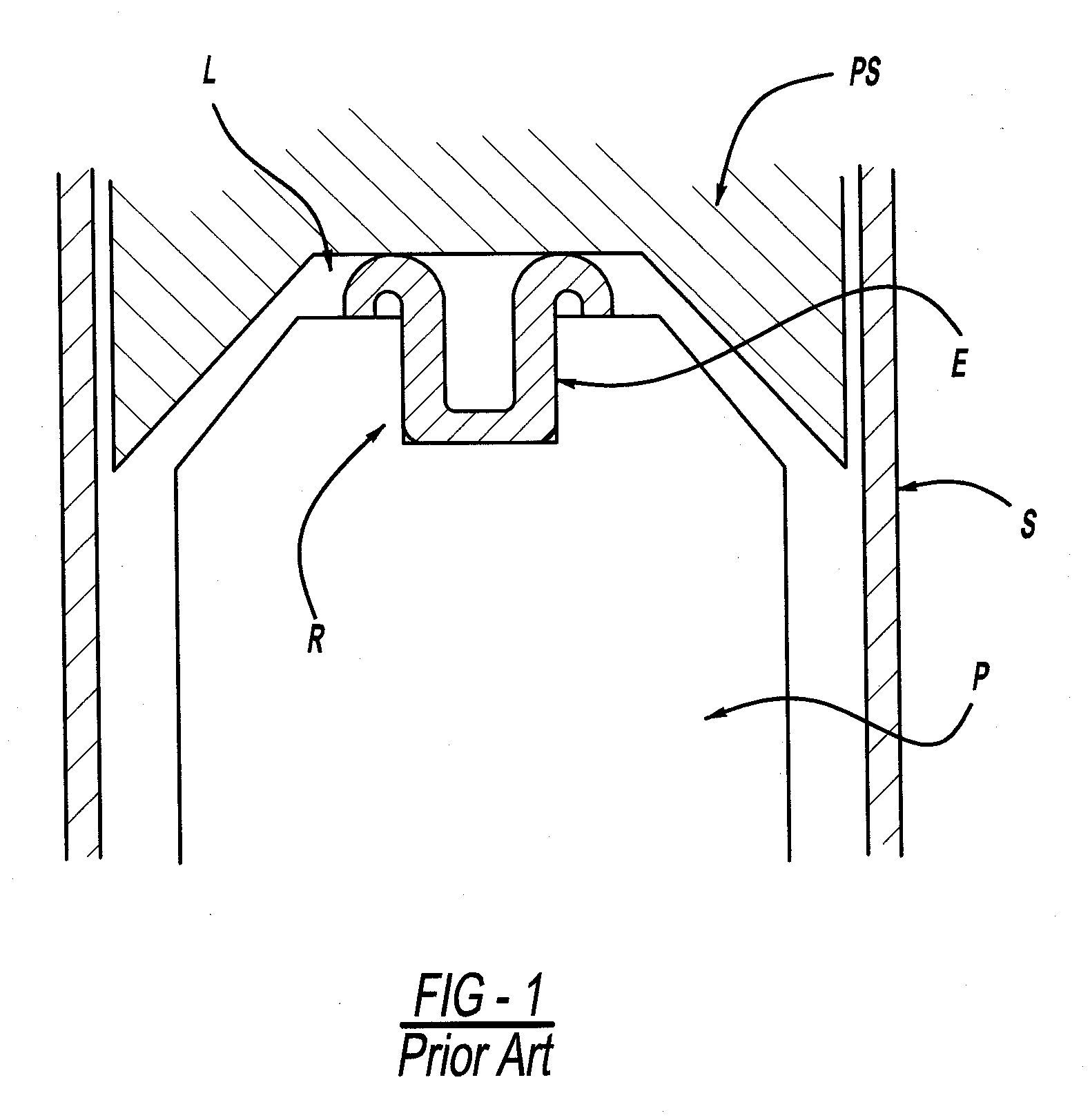
[0031]In the first embodiment, as shown in FIGS. 4 and 5, the plunger bumper assembly 300 includes a plunger recess part 302. The plunger recess part 302 includes a base portion 308 and a lip portion 306. The base portion 308 is disposed at least partially within the recess 310. As such, the base portion 308 has a cylindrical shape to cooperate with the cylindrical shape of the recess 310. The lip portion 306 extends generally perpendicularly away from the base portion 308 to define a ring shape. The lip portion 306 is separated from, i.e., does not make direct contact with, the top 312 of the plunger 120, 120a. The plunger recess part 302 is preferably formed of a metal, however, other materials, such as plastics, may be used, as is known to those skilled in the art. Regardless of the particular material chosen, the plunger recess part 302 should be durable, rigid, and if possible, non-magnetic. Said another way, the plunger recess part 302 may be non-resilient.
[0032]The resilient ...
PUM
 Login to View More
 Abstract
Description
Claims
Application Information
 Login to View More