

Identifying activities using a hybrid user-activity model
- Summary
- Abstract
- Description
- Claims
- Application Information
AI Technical Summary
Benefits of technology
Problems solved by technology
Method used
Image

Examples
Embodiment Construction
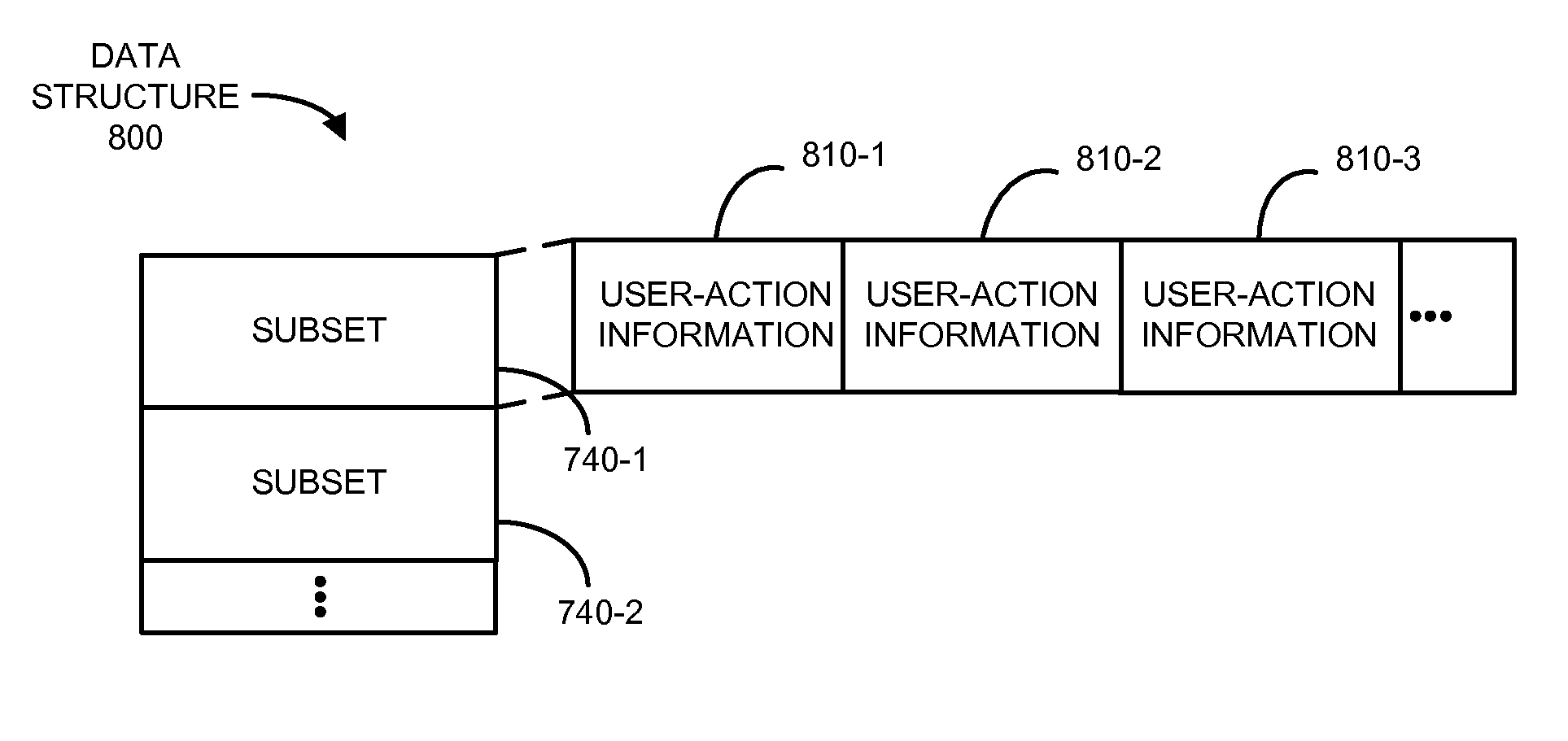
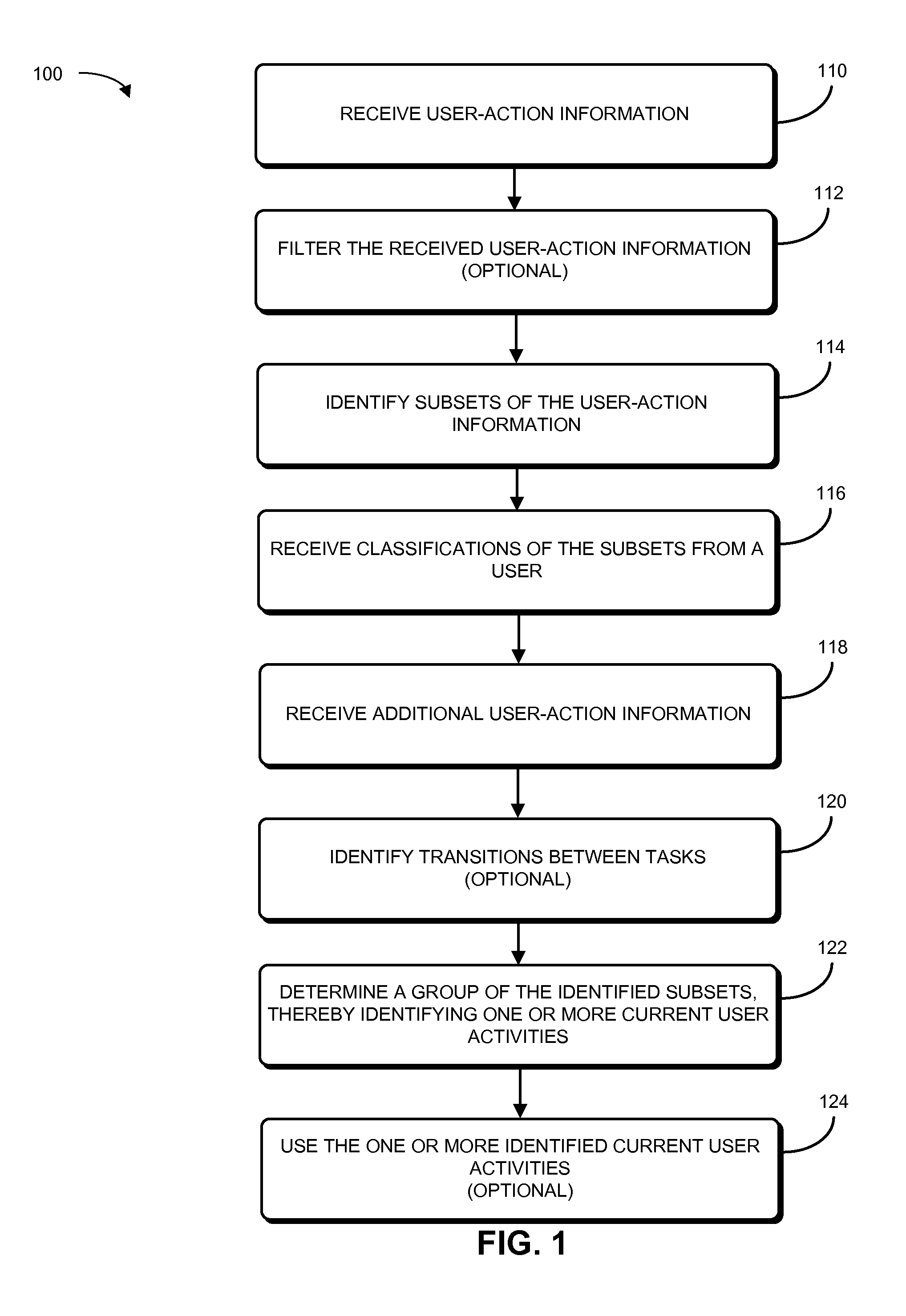
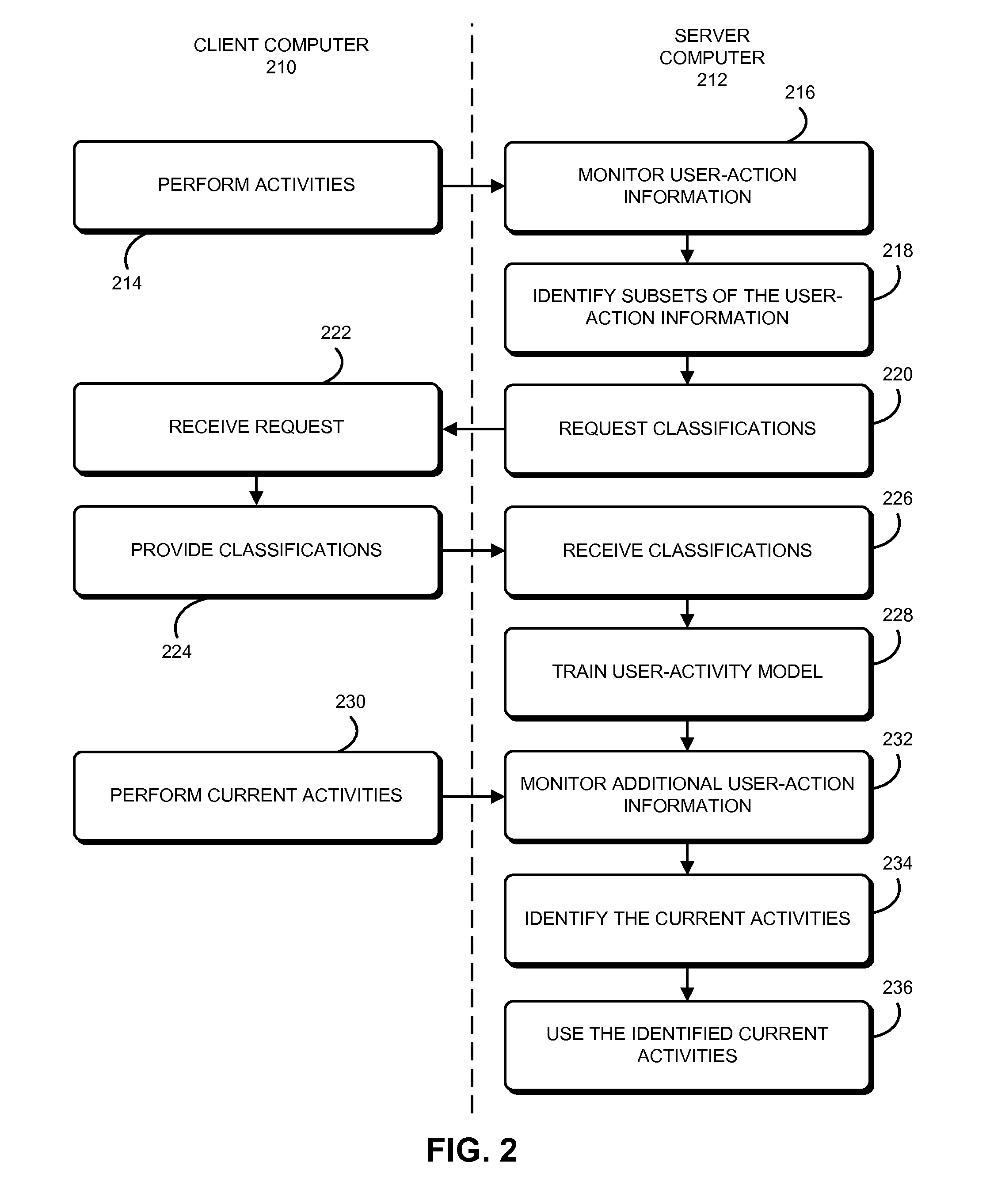
[0024]Embodiments of a computer system, a method, and a computer-program product (e.g., software) that identify one or more current user activities are described. In a user-activity identification technique, a user's actions are monitored while the user is using a computer. While these user actions are associated with user activities, the user activities are initially unspecified, so the tracked user actions constitute unsupervised data. Then, the tracked user actions are aggregated into subsets (for example, using clustering analysis), and user-activity classifications for the subsets (such as activity labels) are provided by the user, so the subsets constitute supervised data. Subsequently, when additional user actions (which are associated with one or more initially unspecified current user activities) are tracked, they can be associated with one or more of the classified subsets. For example, information about the additional user actions can be mapped in real time (or near real ...
PUM
 Login to View More
 Abstract
Description
Claims
Application Information
 Login to View More