
Systems And Methods For Processing Sylvinite And Carnallite Ores
a technology of sylvinite and carnallite, which is applied in the field of systems and methods for processing sylvinite and carnallite ores, can solve the problems of high energy cost, low degree of potassium chloride recovery from sylvinite ore, and the like, and achieves the effects of reducing energy and material costs, increasing the production and purity of artificial carnallite, and reducing material costs
- Summary
- Abstract
- Description
- Claims
- Application Information
AI Technical Summary
Benefits of technology
Problems solved by technology
Method used
Image

Examples
second embodiment
of the System for Producing Artificial Carnallite
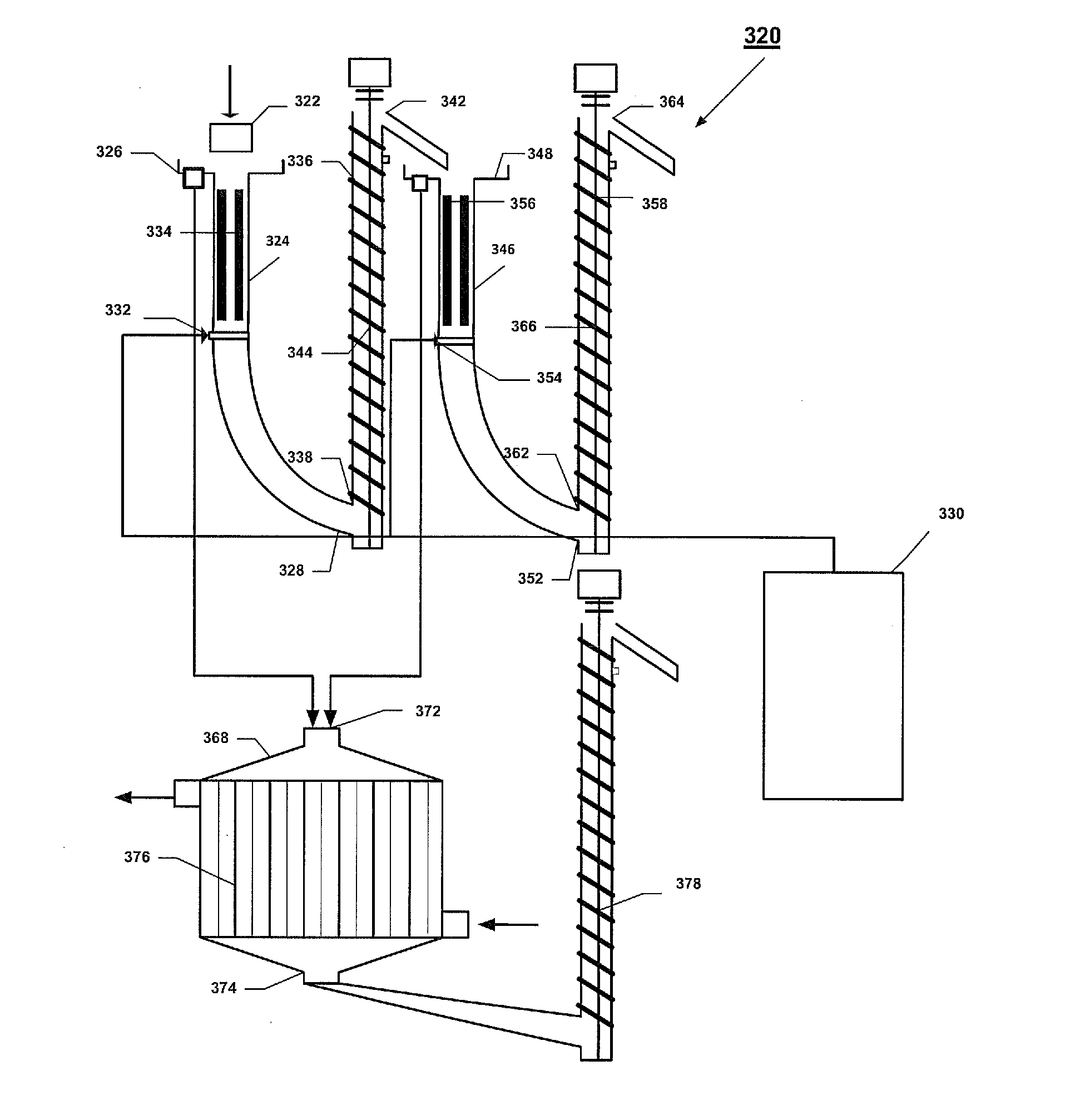
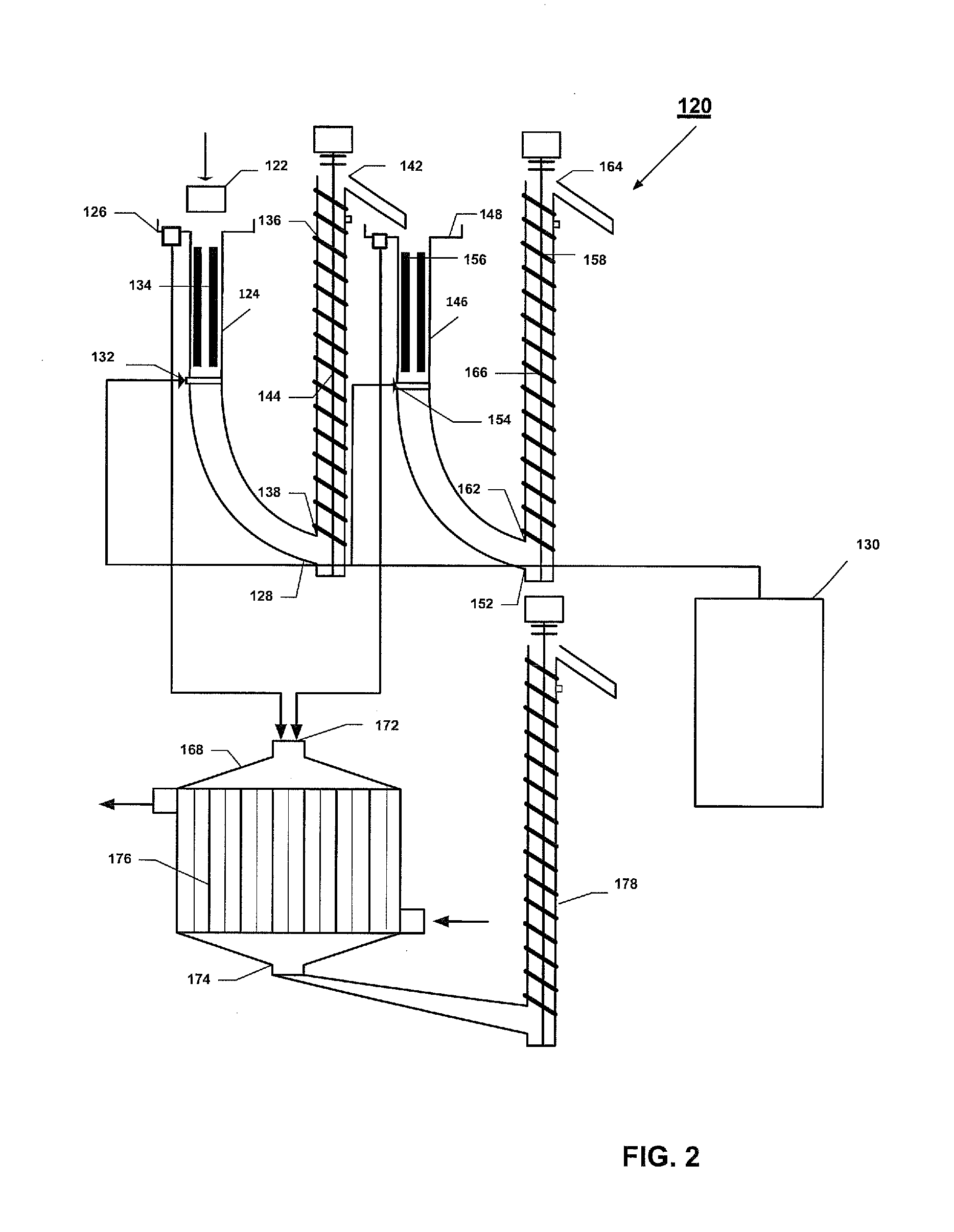
[0055]FIG. 4 shows a diagram of an alternative system 320 for processing carnallite ore. System 320 is similar in most respects to system 120 for processing sylvinite ore. System 320 includes a measuring hopper 322 and a first dissolving apparatus 324. Dissolving apparatus 324 is in the form of a column. The cross section of the column determines the flow rate of the ore to be processed. Dissolving apparatus 324 further includes a spillway 326 at the upper end, an outlet 328 at the lower end, and a port 332 along the intermediate extent. Alternating supply and grounding electrodes 334 are preferably positioned within the interior area of apparatus 324 and are in alignment with the direction of the flow of lye. One of the electrodes is a supply electrode the other is a grounding electrode. Supply electrodes are preferably connected through electronic keys to a source of power of alternating current with a variable frequency of 1-3 Hert...
PUM
| Property | Measurement | Unit |
|---|---|---|
| frequency | aaaaa | aaaaa |
| frequency | aaaaa | aaaaa |
| length | aaaaa | aaaaa |
Abstract
Description
Claims
Application Information
 Login to View More