

Identifying and destroying potentially misappropriated access tokens
a technology of access tokens and access tokens, applied in the field of automatic identification and destruction of potentially misappropriated access tokens, can solve problems such as access tokens being misappropriated
- Summary
- Abstract
- Description
- Claims
- Application Information
AI Technical Summary
Benefits of technology
Problems solved by technology
Method used
Image

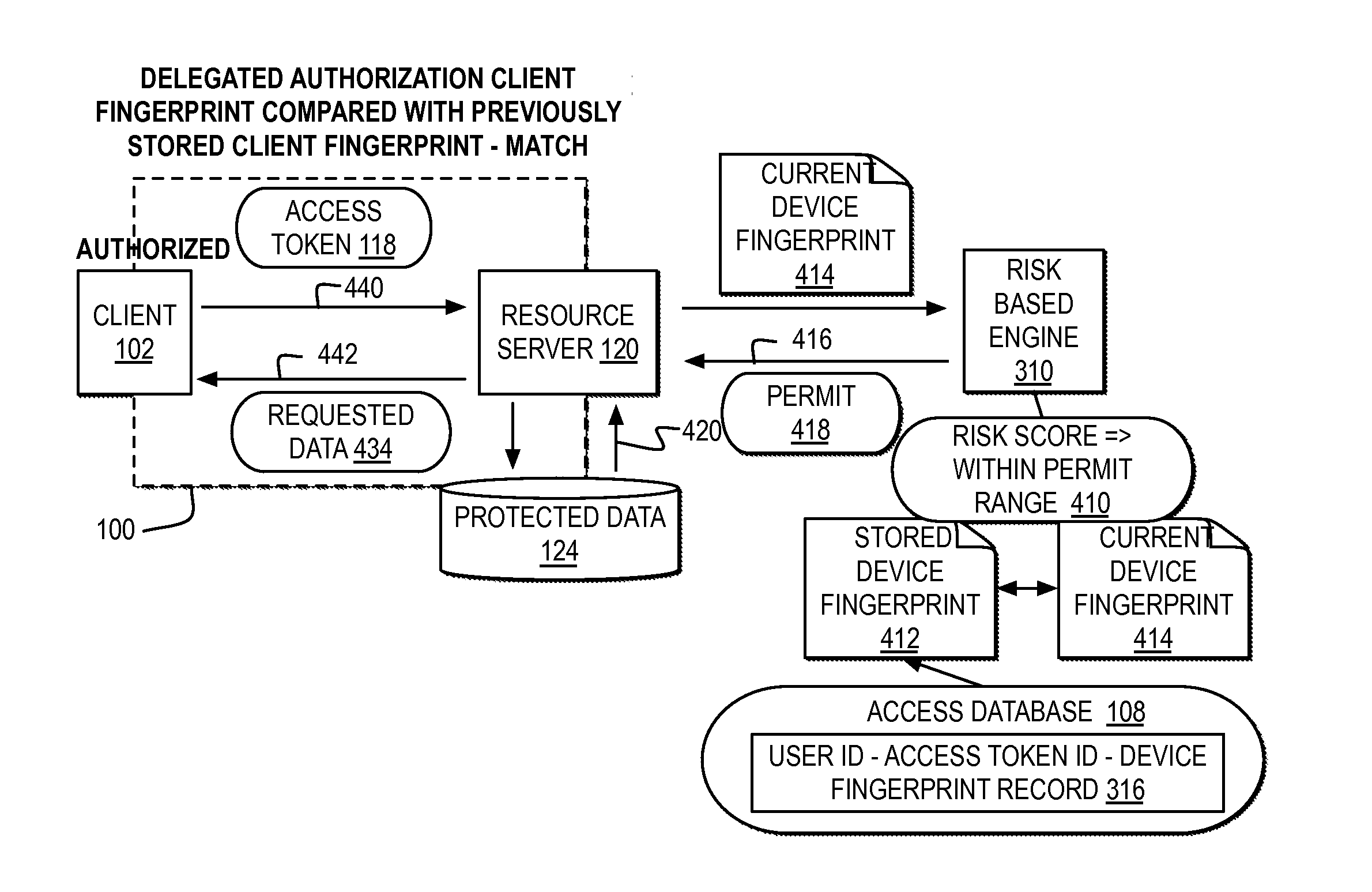
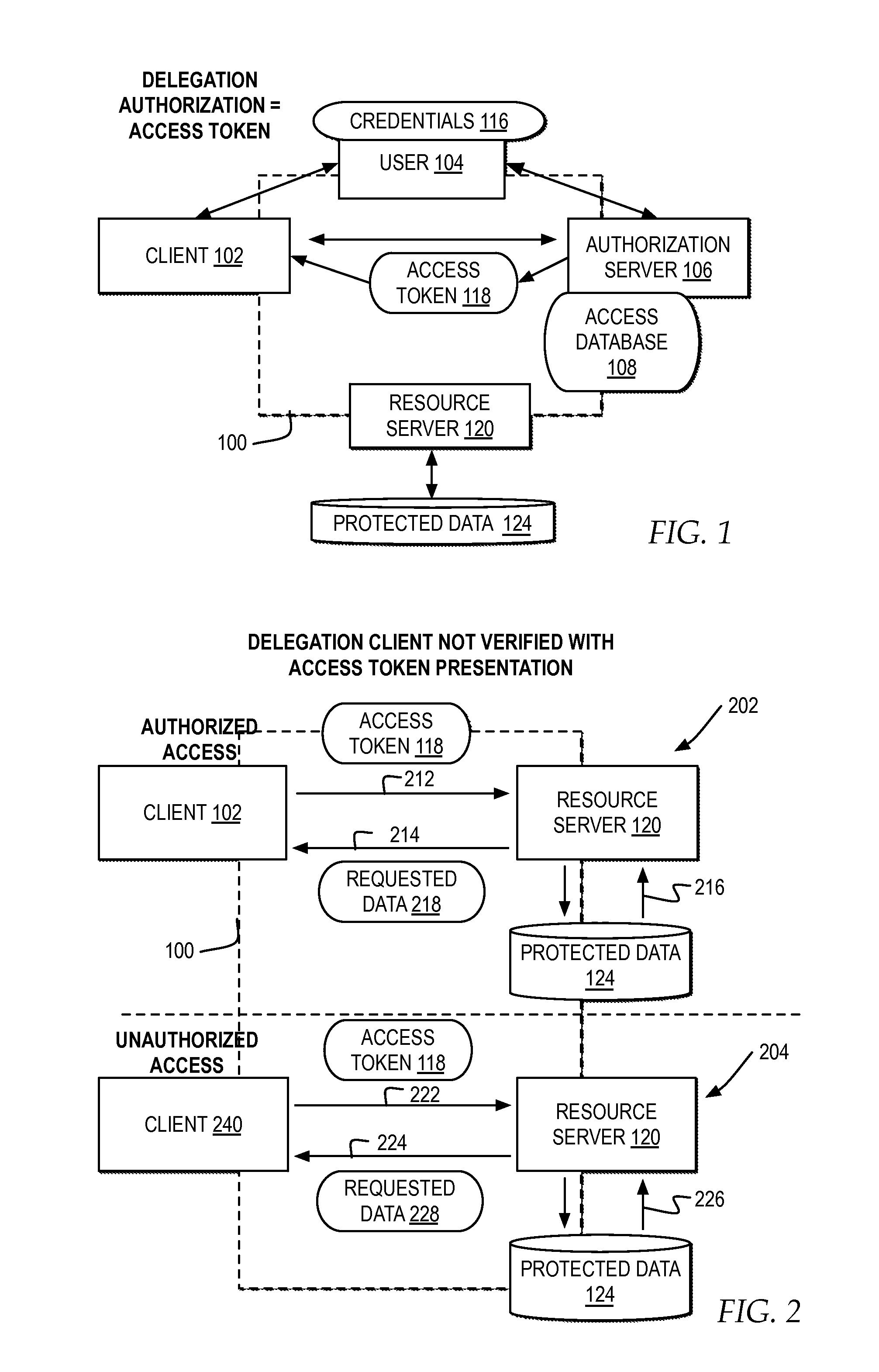
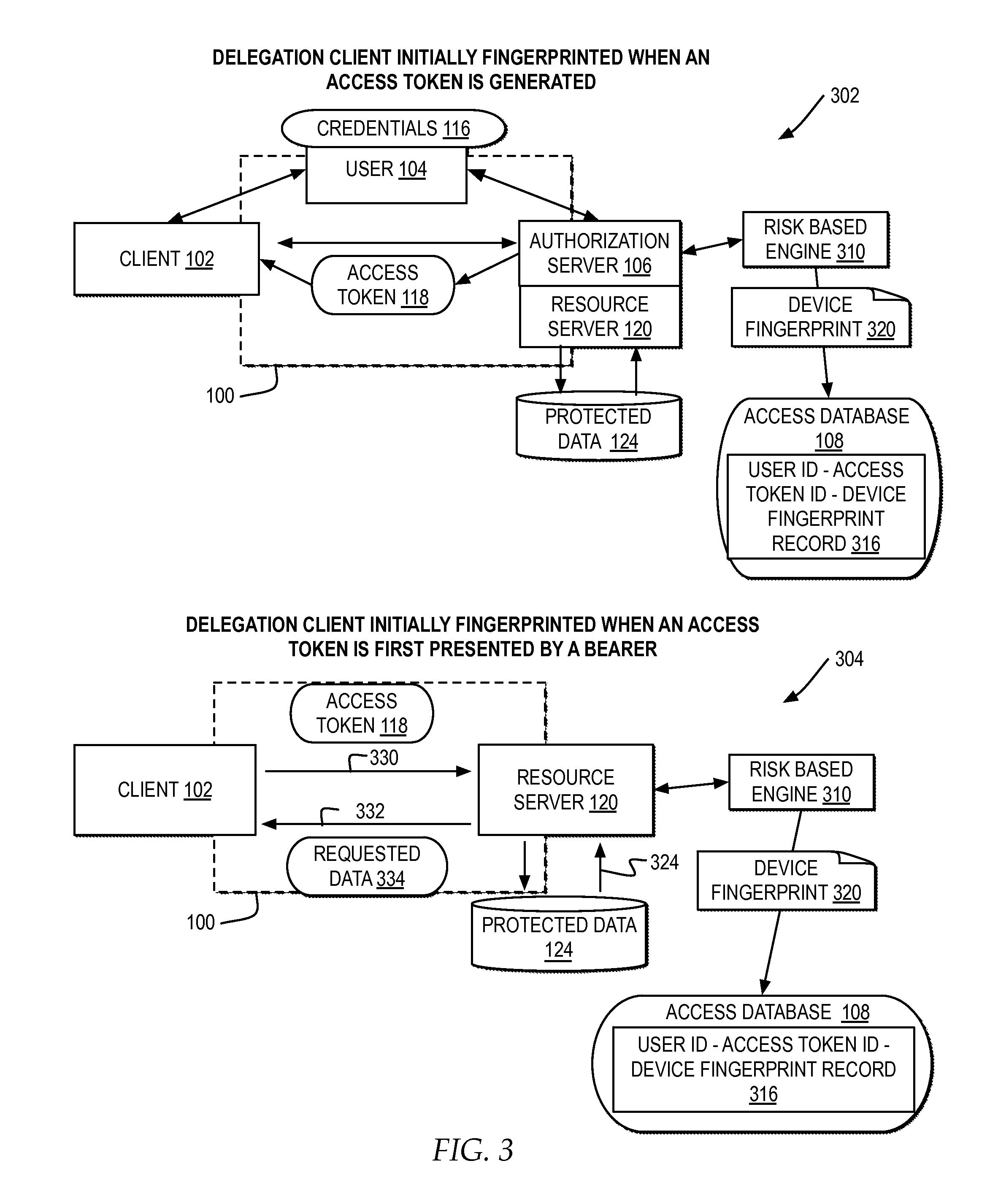
Examples
Embodiment Construction
[0030]In the following description, for the purposes of explanation, numerous specific details are set forth in order to provide a thorough understanding of the present invention. It will be apparent, however, to one skilled in the art that the present invention may be practiced without these specific details. In other instances, well-known structures and devices are shown in block diagram form in order to avoid unnecessarily obscuring the present invention.
[0031]In addition, in the following description, for purposes of explanation, numerous systems are described. It is important to note, and it will be apparent to one skilled in the art, that the present invention may execute in a variety of systems, including a variety of computer systems and electronic devices operating any number of different types of operating systems.
[0032]As described herein, embodiments of the invention provide a solution for identifying and destroying misappropriated, and potentially misappropriated, acces...
PUM
 Login to View More
 Abstract
Description
Claims
Application Information
 Login to View More