
Composition for cancer diagnosis
- Summary
- Abstract
- Description
- Claims
- Application Information
AI Technical Summary
Benefits of technology
Problems solved by technology
Method used
Image

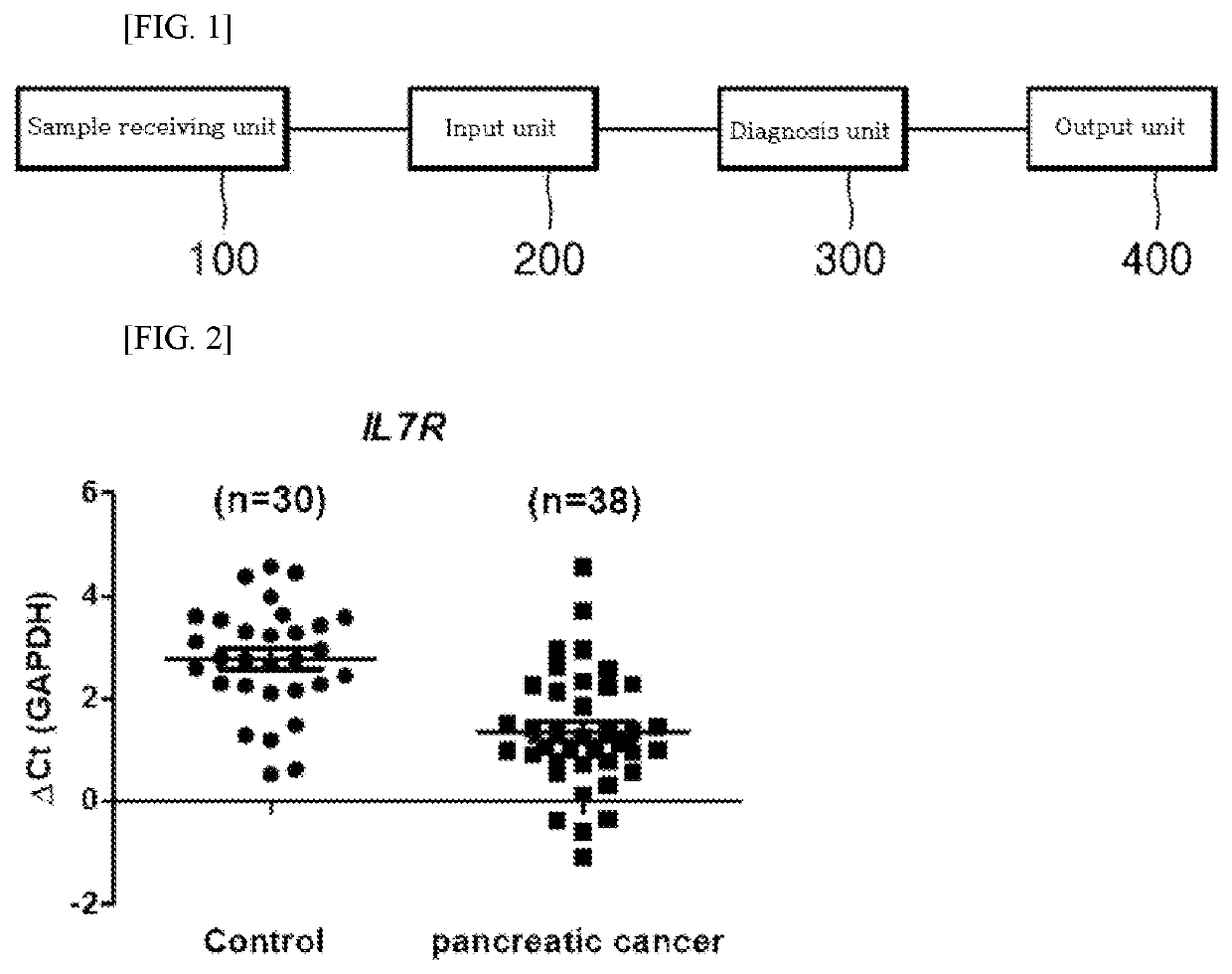
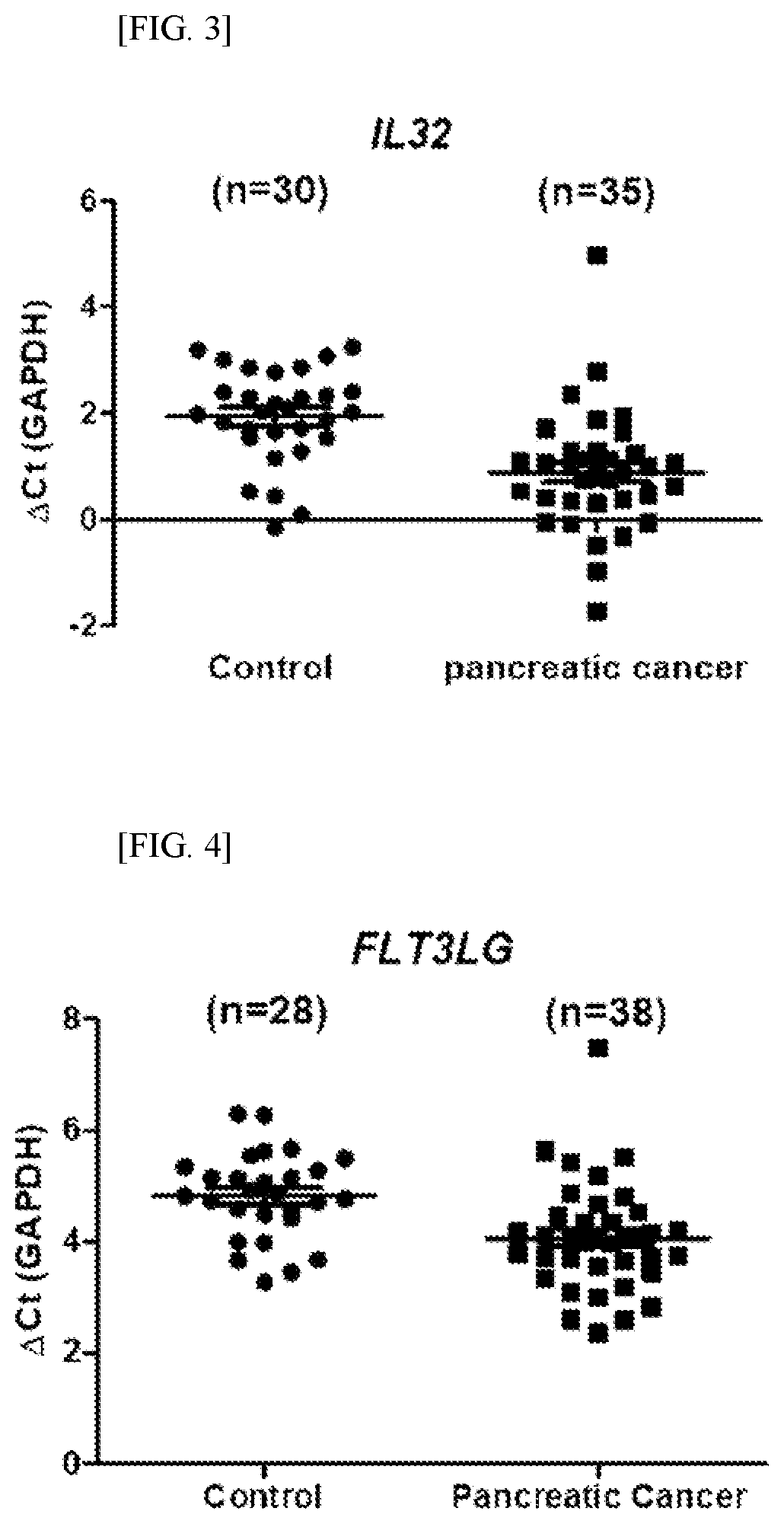
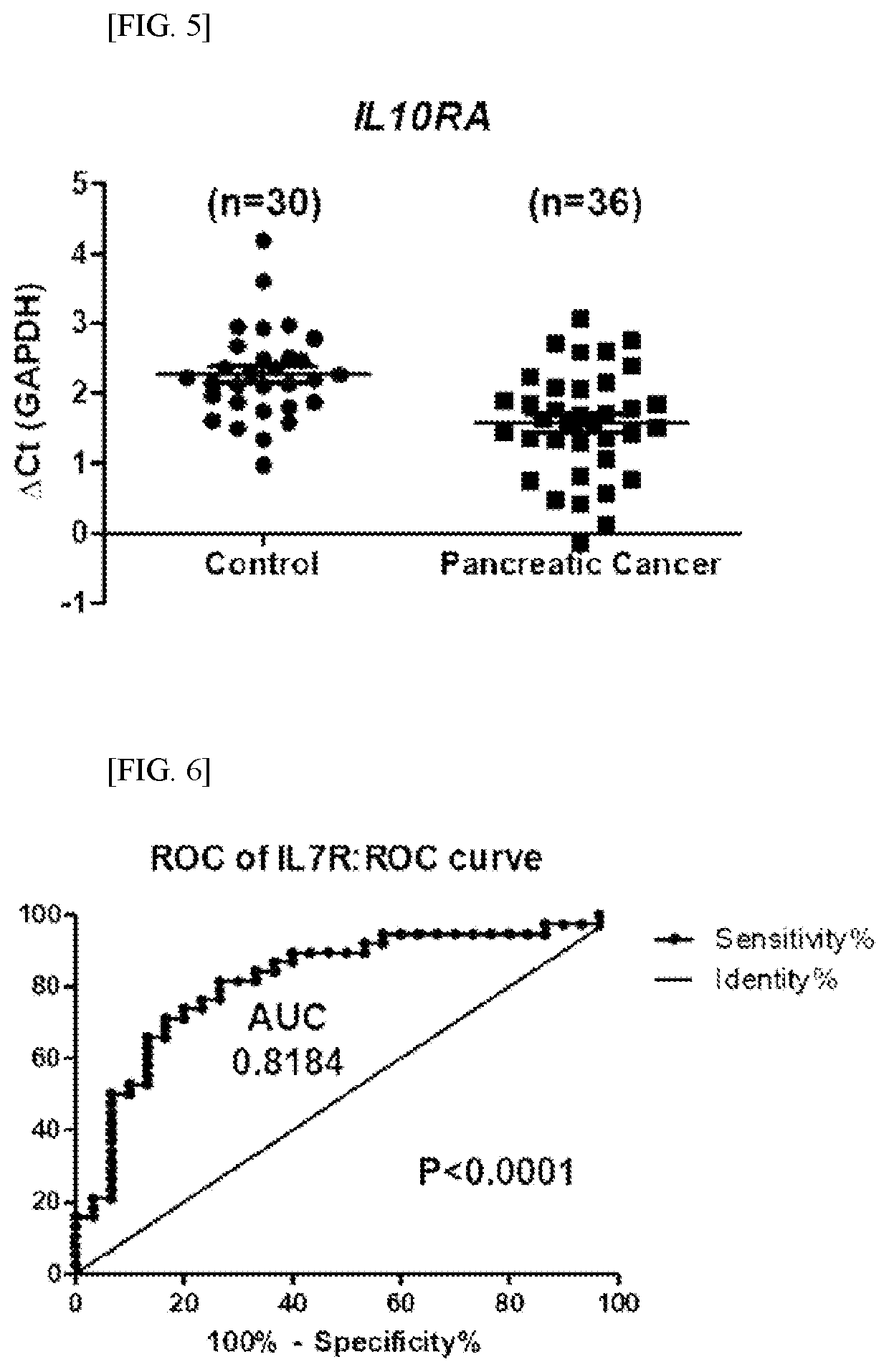
Examples
experimental example 11
Identification of Pancreatic Cancer-Specific Biomarkers (1)
[0167]1. scRNA-seq Experiment
[0168]IL-10RB+ cells were enriched from peripheral blood mononuclear cells (PBMCs) of Pancreatic Ductal Adeno Carcinoma (PDAC) patients using a FACS Aria III flow cytometer (BD Biosciences). In order to count the number of cells and determine the cell death rate, the isolated cells were stained with trypan blue and diluted to a concentration of 1×10⁵ to 2×10⁶ cells / ml. The cell death rate was estimated to be about 90%. A scRNA-seq library was formed using the Chromium system (10× Genomics) together with the Chromium Single Cell 3′ Library & Gel Bead Kit v2. The cell suspension was loaded on a Chromium Single Cell A Chip to capture 5,000 to 6,000 cells per channel. Cell lysis and reverse transcription were performed in gel bead-in-emulsions (GEMs) using a C1000 Touch Thermal Cycler (Bio-Rad). Next, cDNA amplification and library preparation were performed, and sequencing libraries were pooled for ...
experimental example 5
[0203]Evaluation of Efficacy OF Pancreatic Cancer-Specific Biomarkers Using Pancreatic Cancer Animal Model
[0204]Evaluation of the efficacy of the pancreatic cancer-specific biomarkers using a pancreatic cancer animal model was performed as shown in FIG. 16. Specifically, 2×10⁶ cells / 20 μL of Pan02 PDAC cells (pancreatic ductal adenocarcinoma cell line, Pan02) were transplanted directly into the pancreas of each 8-week-old wild-type (WT) mouse (C57BL / 6, OrientBio), thereby constructing an orthotopic pancreatic cancer mouse animal model. On days 2, 4, 5, 7, and 11 from the day the Pan02 PDAC cells were transplanted, the animal model was sacrificed, and the weight of each of tumor tissue and spleen was measured. In addition, after isolation of peripheral blood mononuclear cells from the blood of the animal model, FACS analysis was performed using an IL-7R, IL-22R1 or IL-10RB specific antibody (mIL7R, APC (BD, Cat. 564175), mAR, Percp (R&D, Cat. FAB42941C), or mBR, APC (R&D, Cat. FAB536...
PUM
 Login to View More
 Abstract
Description
Claims
Application Information
 Login to View More