

Heading determination using sensors mounted on rotatable assembly
- Summary
- Abstract
- Description
- Claims
- Application Information
AI Technical Summary
Benefits of technology
Problems solved by technology
Method used
Image

Examples
Embodiment Construction
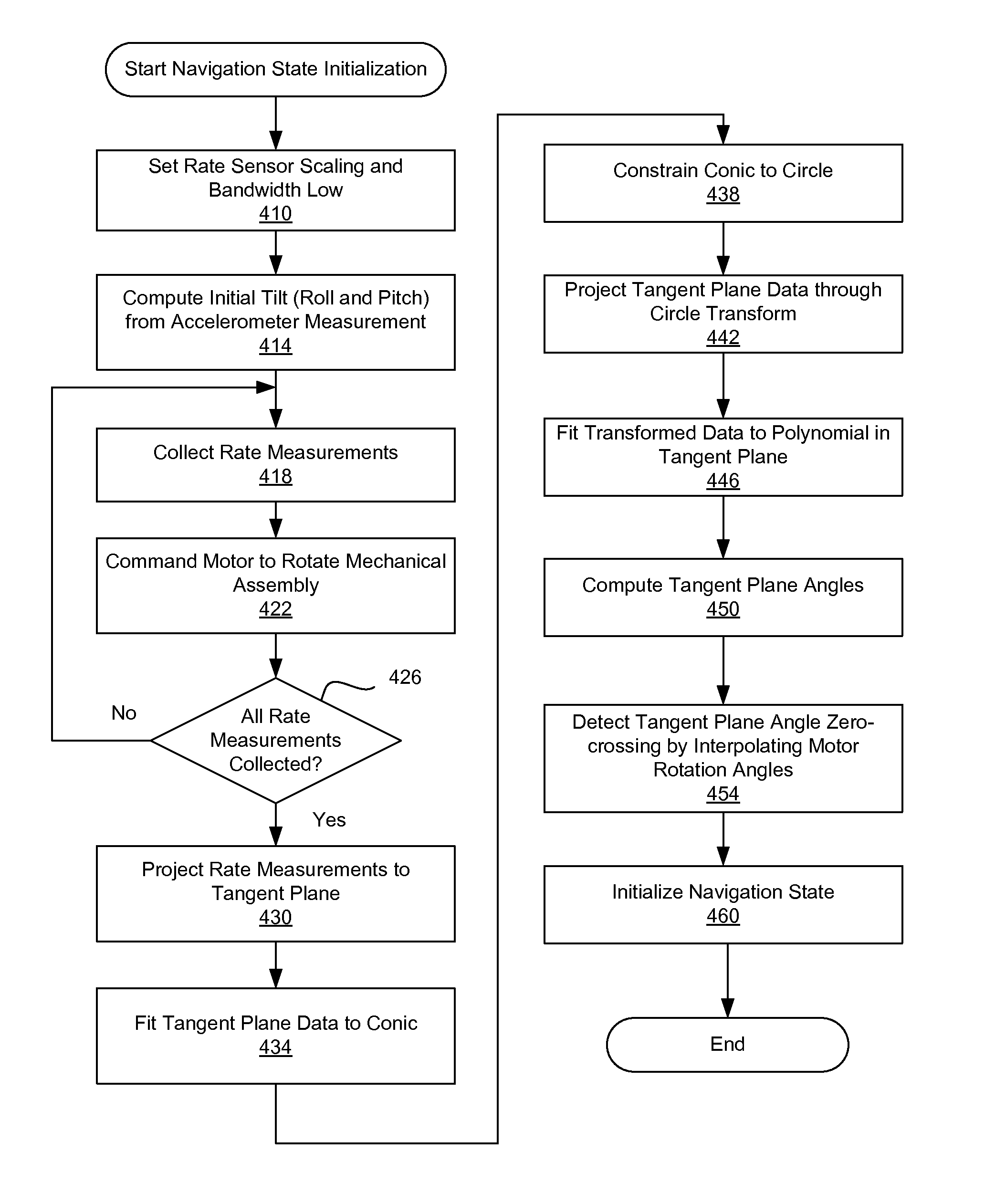
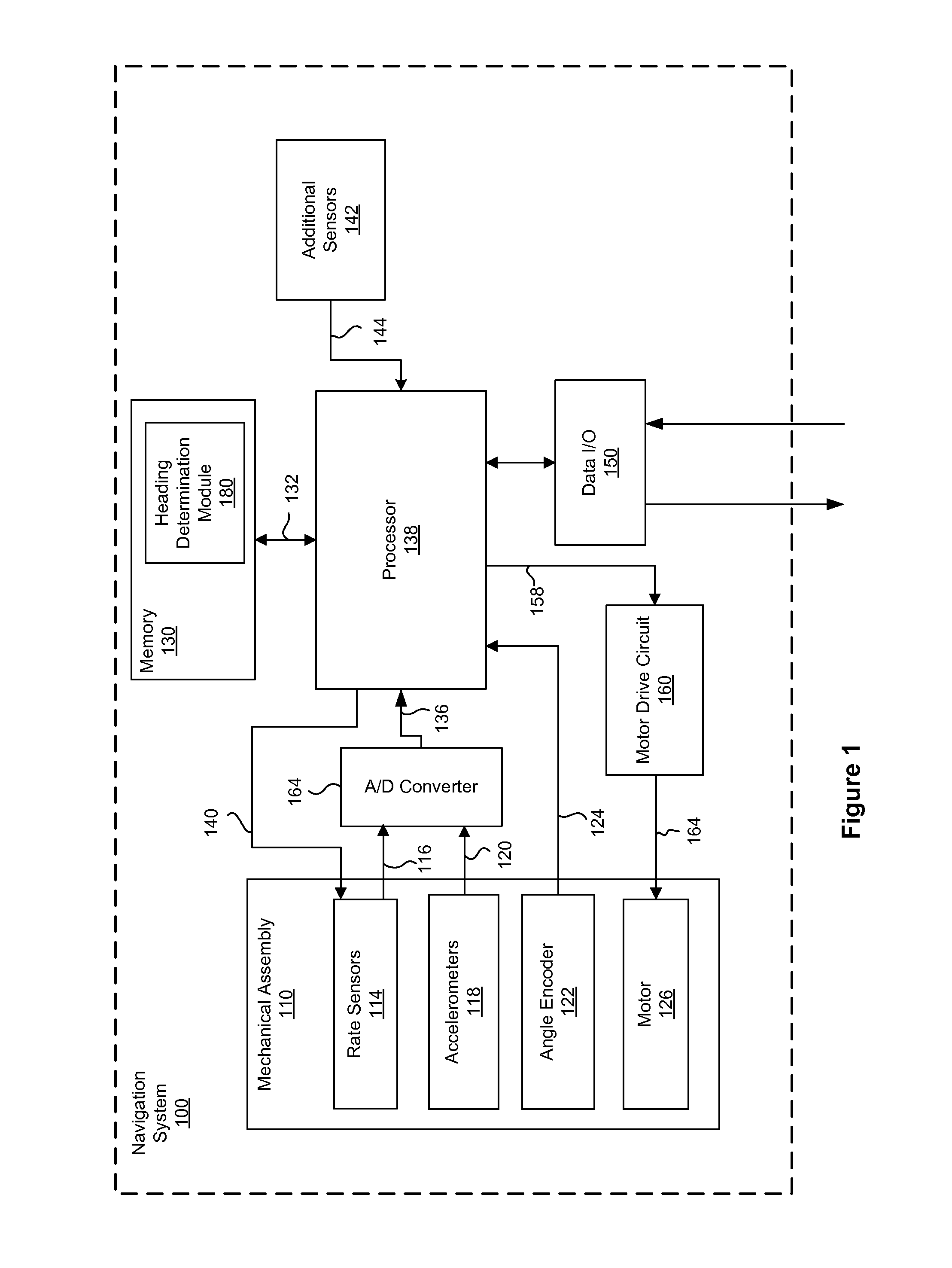
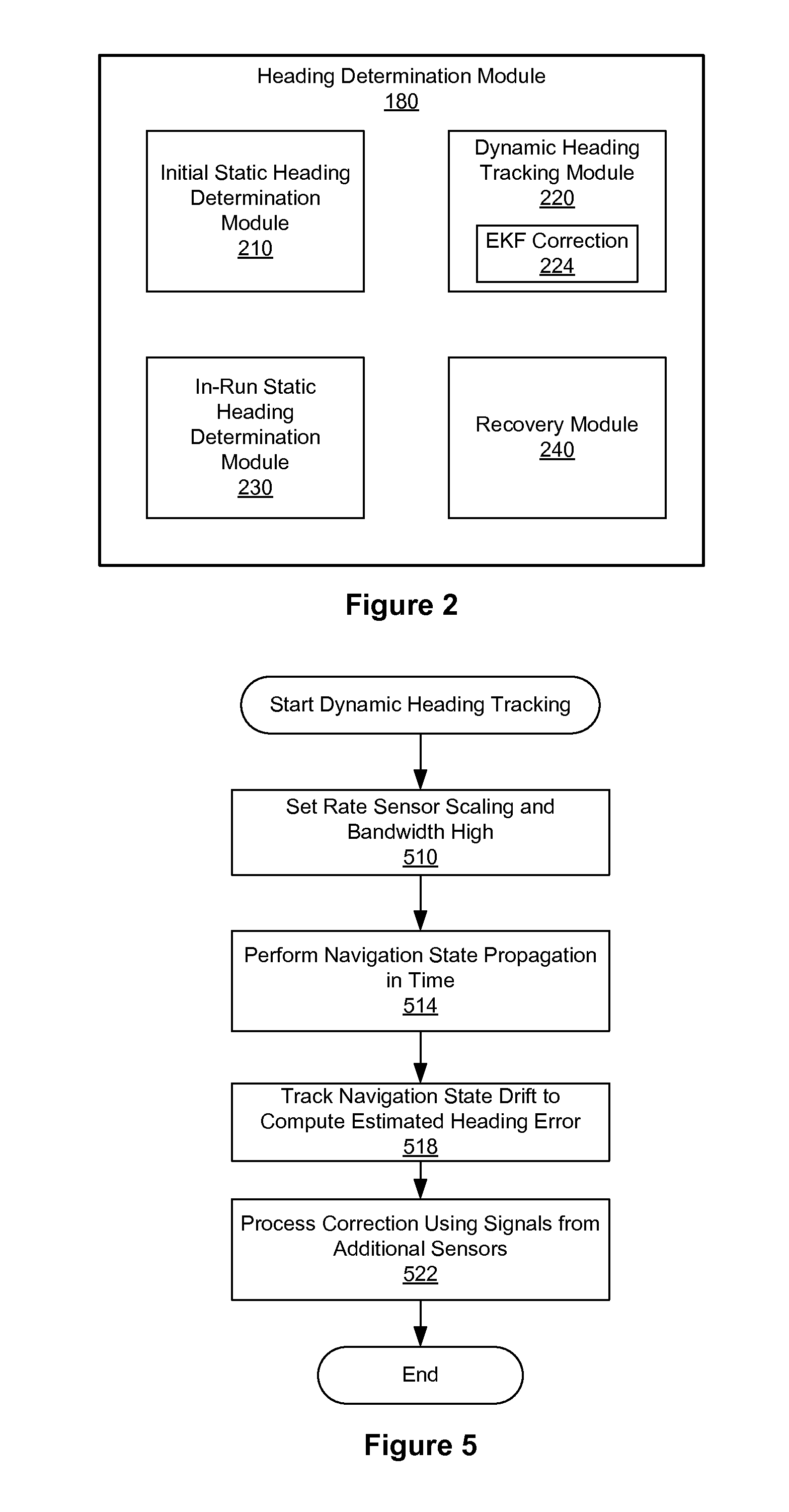
[0017]Embodiments of the invention relate to a system and method for more accurately and robustly determining the heading of a vehicle by taking measurements of angle rates by rate sensors mounted on a movable mechanical assembly. In a quasi-static state of the vehicle, the mechanical assembly is rotated around axes perpendicular to the tangent plane of the Earth, and angle rates are measured by the rate sensors at different rotational angles of the mechanical assembly. The measurements of the angle rates are then computed to determine the initial heading of the vehicle relative to a true north of the Earth in the quasi-static state of the vehicle. After determining the initial heading, navigation state propagation is performed to determine the heading of the vehicle in a dynamic state of the vehicle. By taking measurements of the rate sensors at different rotation angles of the mechanical assembly and performing computation based on the measurements, the heading of the vehicle rela...
PUM
 Login to View More
 Abstract
Description
Claims
Application Information
 Login to View More