
Systems and methods for bariatric therapy
a bariatric and systemic technology, applied in the field of systems and methods for bariatric therapy, can solve the problems of not being able to achieve sustained reduction in connection with gastroplasties, the prevalence of obesity continues to rise at alarming rates, and the effect of minimizing absorption of nutrients
- Summary
- Abstract
- Description
- Claims
- Application Information
AI Technical Summary
Benefits of technology
Problems solved by technology
Method used
Image

Examples
Embodiment Construction
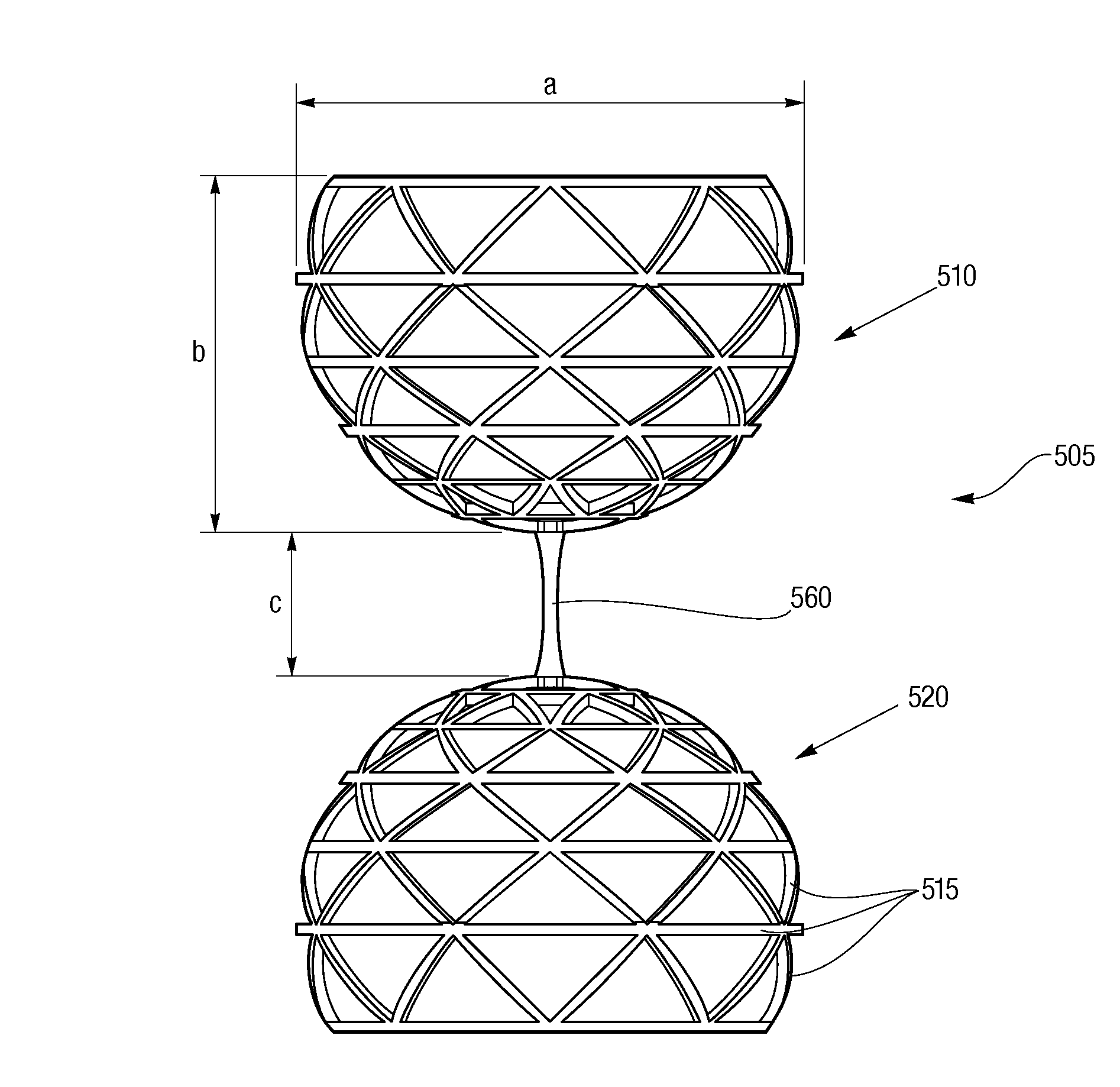
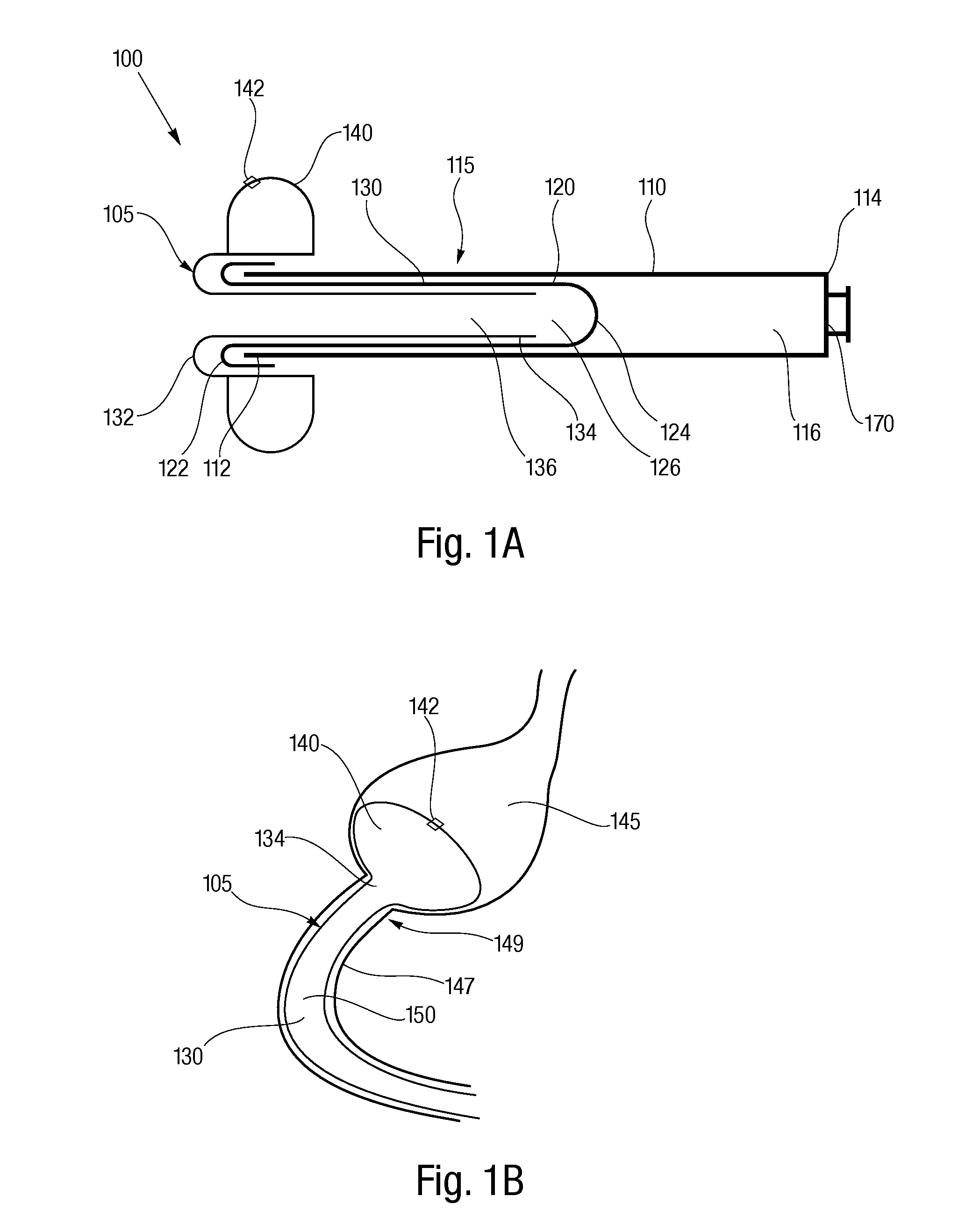
[0027]In accordance with one embodiment of the present invention, a system is provided herein for bariatric therapy. One system, as described hereinafter, may be used to employ volume restriction within the stomach and / or enhance malabsorption within the small intestine. Such a system of the present invention includes, in one embodiment, a gastrointestinal implant device having an anchoring mechanism designed to be positioned within the stomach to anchor the device, and an intestinal sleeve attached at one end to the anchoring mechanism. The sleeve can be designed to extend along a portion of the small intestine to minimize or prevent nutrient absorption by the small intestine. In one embodiment, the anchoring mechanism may be a space occupying ring, an inflatable balloon, a self-expanding anchor or frame, or any combination thereof. As will be seen hereinafter, the system can also include a delivery mechanism for delivering or placing the device at a site of implantation.
[0028]Gene...
PUM
 Login to View More
 Abstract
Description
Claims
Application Information
 Login to View More