
Self-propelled endoscopic device
a self-propelled, endoscopic technology, applied in the field of medical devices, can solve the problems of affecting affecting the progress of the device through the intestines, and other conventional endoscopic devices are not capable of autonomous or semi-autonomous locomotion through the patient's body cavity, so as to achieve the same degree of flexibility, hinder the efficiency of the device's locomotion during us
- Summary
- Abstract
- Description
- Claims
- Application Information
AI Technical Summary
Benefits of technology
Problems solved by technology
Method used
Image

Examples
Embodiment Construction
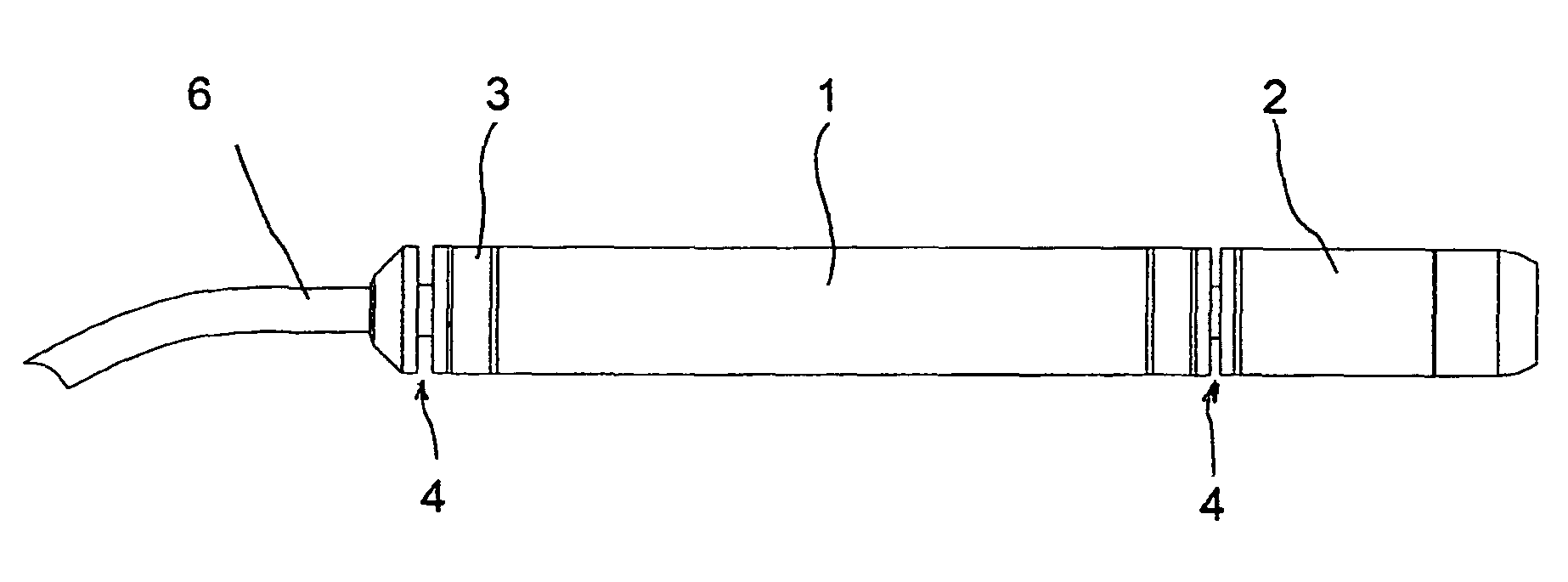
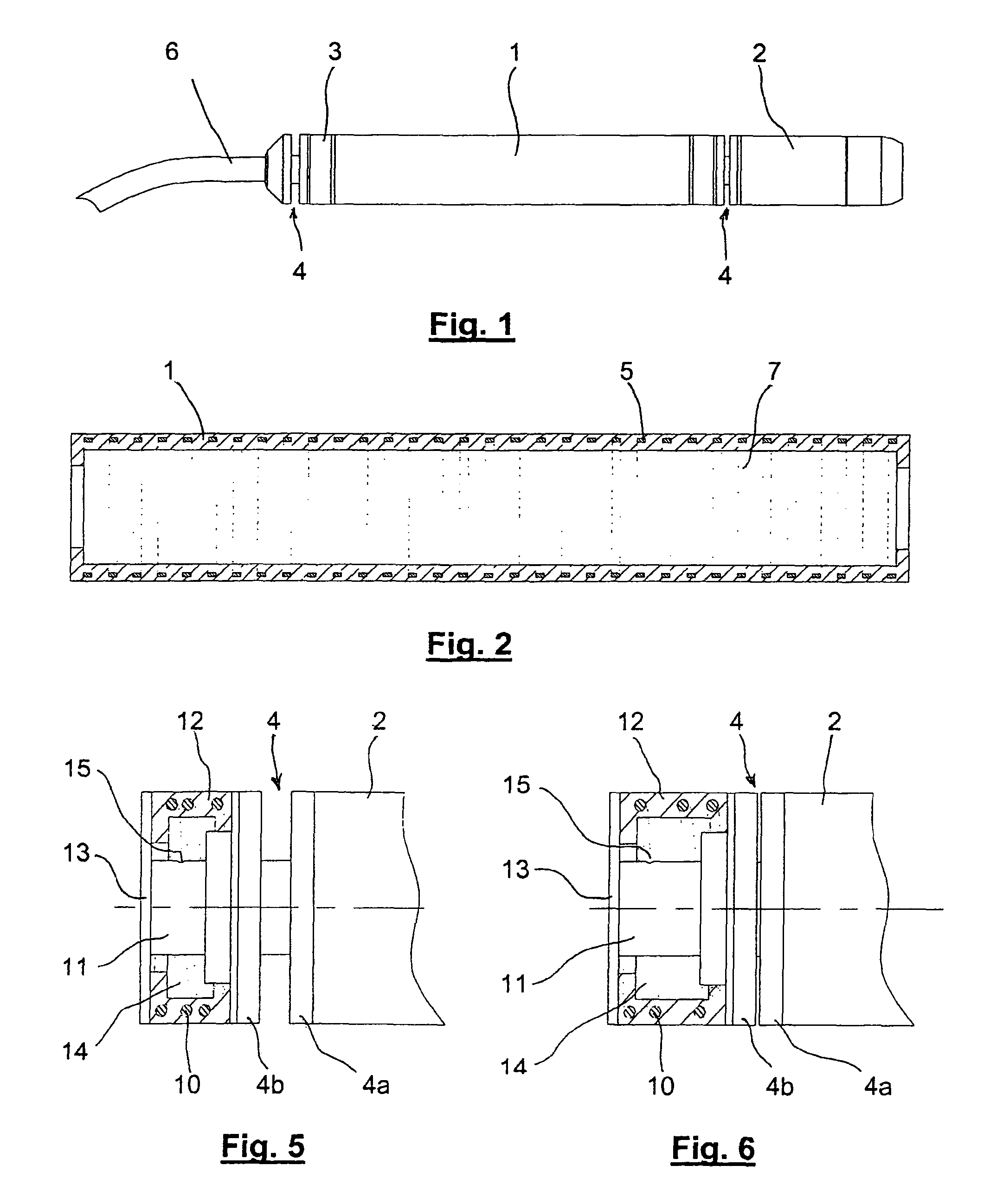
[0022]Referring now to the drawings and, more particularly, to FIGS. 1-6, there is shown generally a self-propelled endoscopic device, in accordance with various aspects of the present invention. According to one embodiment, as set forth in FIG. 1, the device comprises a tubular body 1 extending between two end portions, referred to generally as front and rear end portions 2 and 3, respectively, the terms front and rear referring to the device's direction of locomotion through a selected body cavity, as indicated generally by arrow F. In this manner, the device is preferably and advantageously moveable in both forward and reverse directions within the body cavity.
[0023]Respective front and rear end portions 2, 3 include an anchor 4, e.g., a clamp, by which the device temporarily and alternately becomes attached to the wall of the body cavity to enable device locomotion in a conventional manner.
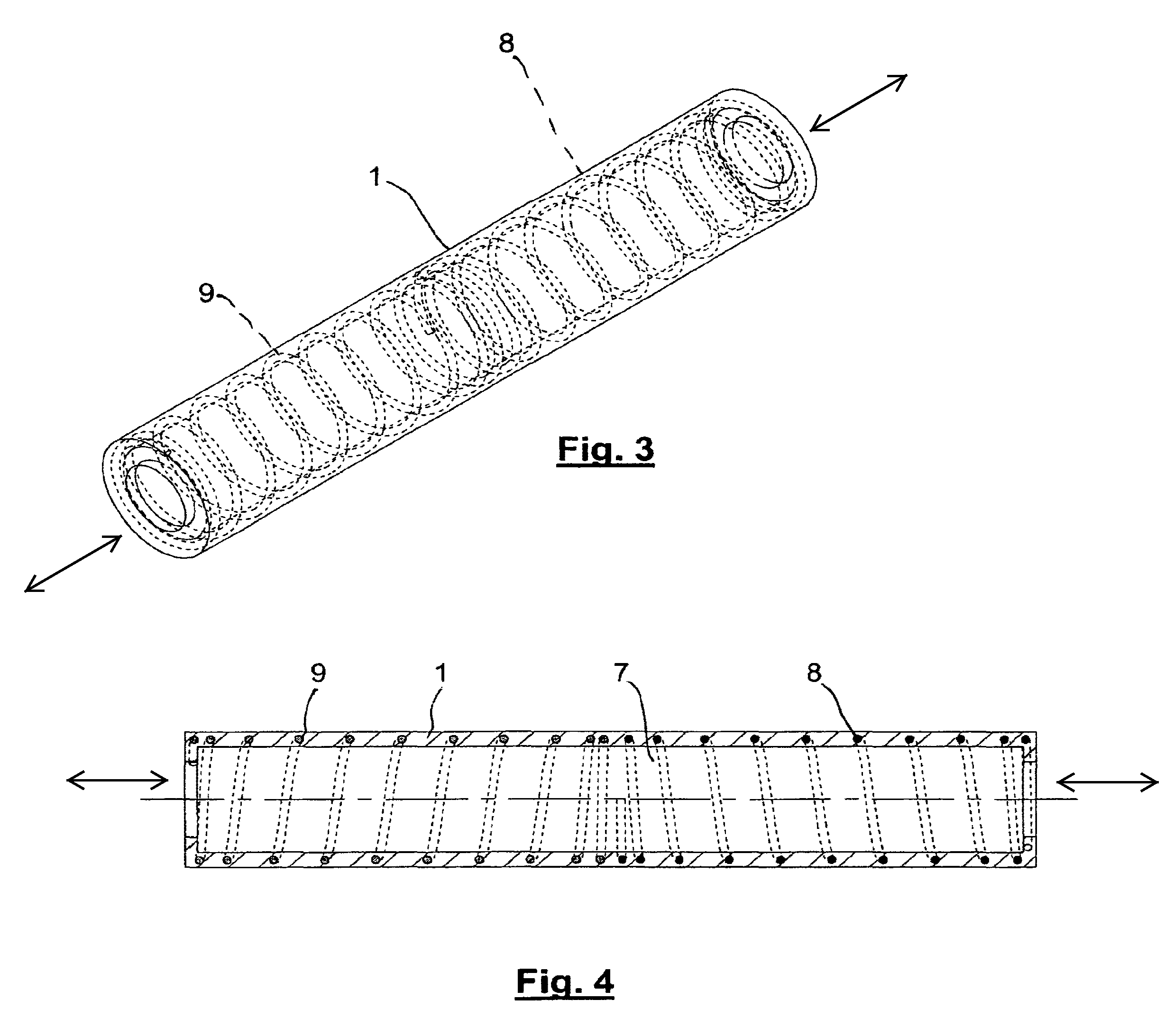
[0024]According to the present invention, tubular body 1 is made of a low-hardness elastom...
PUM
 Login to View More
 Abstract
Description
Claims
Application Information
 Login to View More