Check patentability & draft patents in minutes with Patsnap Eureka AI!

Clustering without shared storage

a technology of shared storage and clustering, applied in computing, instruments, electric digital data processing, etc., can solve the problems of valuable data being lost or destroyed, single computer may be limited in the number of client devices, and electronic content being unavailable to client devices

Active Publication Date: 2015-03-10
ADOBE INC
View PDF11 Cites 2 Cited by
  • Summary
  • Abstract
  • Description
  • Claims
  • Application Information

AI Technical Summary

Benefits of technology

The patent describes how a master node can receive a lock request from a slave node in a cluster without shared storage. The master node can grant the lock request to the slave node, allowing the slave node to update data in its own repository. The method helps to ensure data consistency and avoids conflicts between different nodes in the cluster. The technical effect of the patent is to provide a reliable and efficient way to manage data in a cluster without shared storage.

Problems solved by technology

While using a single computer to send electronic content to client devices allows for a simple configuration, it also results in disadvantages.
For example, a single computer may be limited in the number of client devices it can communicate with at any given time.
Furthermore, a hardware or software failure in the computer may result in electronic content being unavailable to client devices.
A failure may also result in valuable data being lost or destroyed.
Thus, a single computer does not provide the scalability, performance, high-availability, and failure recovery mechanisms often required when providing electronic content to requesting client devices.
In addition, because of redundancies between computers in the cluster, a hardware or software failure in a single computer in the cluster may not result in the loss or destruction of data.
Clustering computers, however, adds numerous layers of complexity as opposed to configuring a single computer to make various types of electronic content available to requesting client devices.
However, if the SAN or NAS fails or if communication between the SAN or NAS and the nodes is severed, then none of the nodes in the cluster may be able to access the data associated with the cluster.
Thus, while a shared-disk cluster provides scalability and load-balancing, a shared-disk cluster may have a single point of failure in the SAN or NAS.
Furthermore, because each computer in the cluster communicates with the same SAN or NAS, the scalability of the cluster may be limited by the number of requests the SAN or NAS can handle over a given period of time.
Until the manual reconfiguration takes place, the ability to write data related to the master node may not be possible.
However, each of the currently existing clusters has numerous disadvantages and suffers from various deficiencies.

Method used

the structure of the environmentally friendly knitted fabric provided by the present invention; figure 2 Flow chart of the yarn wrapping machine for environmentally friendly knitted fabrics and storage devices; image 3 Is the parameter map of the yarn covering machine
View more

Image

Smart Image Click on the blue labels to locate them in the text.
Viewing Examples
Smart Image
  • Clustering without shared storage
  • Clustering without shared storage
  • Clustering without shared storage

Examples

Experimental program
Comparison scheme
Effect test

Embodiment Construction

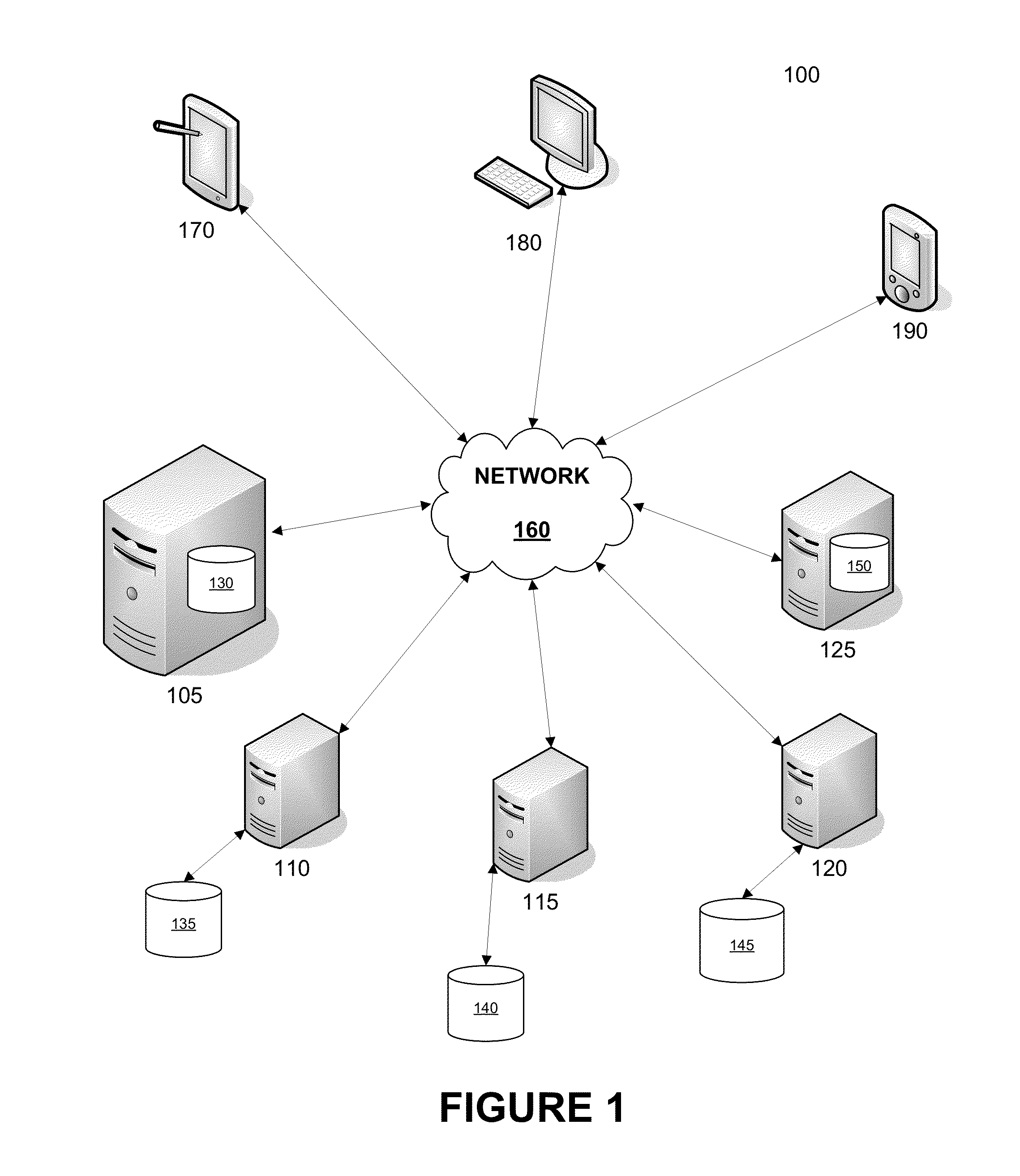
[0019]Systems and methods disclosed herein relate generally to clustering computers and more particularly relate to clustering without shared storage. Embodiments described herein facilitate the dynamic creation of a cluster without shared storage. For example, a new node may automatically determine that it is a master node if the new node is unable to communicate with another node. If the new node is able to communicate with other nodes in the cluster without shared storage, then the new node may determine that it is the preferred master, thereby automatically setting itself as a master node and setting the former master node as a slave node. If the new node is not the preferred master, then the new node may set itself as a slave node and join the cluster without shared storage.

[0020]When a new node is added to a cluster without shared storage, the new node may automatically communicate with a master node or slave node and receive data such as a repository from at least one of the ...

the structure of the environmentally friendly knitted fabric provided by the present invention; figure 2 Flow chart of the yarn wrapping machine for environmentally friendly knitted fabrics and storage devices; image 3 Is the parameter map of the yarn covering machine
Login to View More

PUM

No PUM Login to View More

Abstract

One embodiment involves communicatively connecting a master node and a plurality of slave nodes in a cluster without shared storage where each node has a separate repository. Each node in the cluster without shared storage can be configured to exclusively update its repository. The method may include receiving a lock request from a first slave node in the cluster without shared storage. The lock request may be associated with an update request received by the first slave node. The lock request can indicate that the first slave node requires exclusive write access to a data item in the repository of the first slave node. The method includes sending a response to the first slave node granting the lock request based at least in part on data in the repository of the master node. The response may authorize the first slave node to append data to the data item in the repository of the first slave node.

Description

FIELD OF THE INVENTION[0001]This disclosure relates generally to clustering computers and more particularly relates to clustering without shared storage.BACKGROUND[0002]A computer, and in particular a server, may be used to make various types of electronic content available to requesting client devices. While using a single computer to send electronic content to client devices allows for a simple configuration, it also results in disadvantages. For example, a single computer may be limited in the number of client devices it can communicate with at any given time. Furthermore, a hardware or software failure in the computer may result in electronic content being unavailable to client devices. A failure may also result in valuable data being lost or destroyed. Thus, a single computer does not provide the scalability, performance, high-availability, and failure recovery mechanisms often required when providing electronic content to requesting client devices.[0003]In an attempt to addres...

Claims

the structure of the environmentally friendly knitted fabric provided by the present invention; figure 2 Flow chart of the yarn wrapping machine for environmentally friendly knitted fabrics and storage devices; image 3 Is the parameter map of the yarn covering machine
Login to View More

Application Information

Patent Timeline
no application Login to View More
Patent Type & Authority Patents(United States)
IPC IPC(8): G06F15/16
CPCG06F9/526
Inventor MULLER, THOMASPFISTER, DOMINIQUE
Owner ADOBE INC
Features
  • R&D
  • Intellectual Property
  • Life Sciences
  • Materials
  • Tech Scout
Why Patsnap Eureka
  • Unparalleled Data Quality
  • Higher Quality Content
  • 60% Fewer Hallucinations
Social media
Patsnap Eureka Blog
Learn More