Power budget allocation in multi-processor systems

a multi-processor system and power budget technology, applied in multi-programming arrangements, instruments, liquid/fluent solid measurements, etc., can solve the problem of increasing the amount of power consumed by servers

US9052895B2Active Publication Date: 2015-06-09CARNEGIE MELLON UNIV +1
5 Cites 3 Cited by

Patent Information

Authority / Receiving Office
US · United States
Patent Type
Patents(United States)
Current Assignee / Owner
Publication Date
2015-06-09

Smart Images

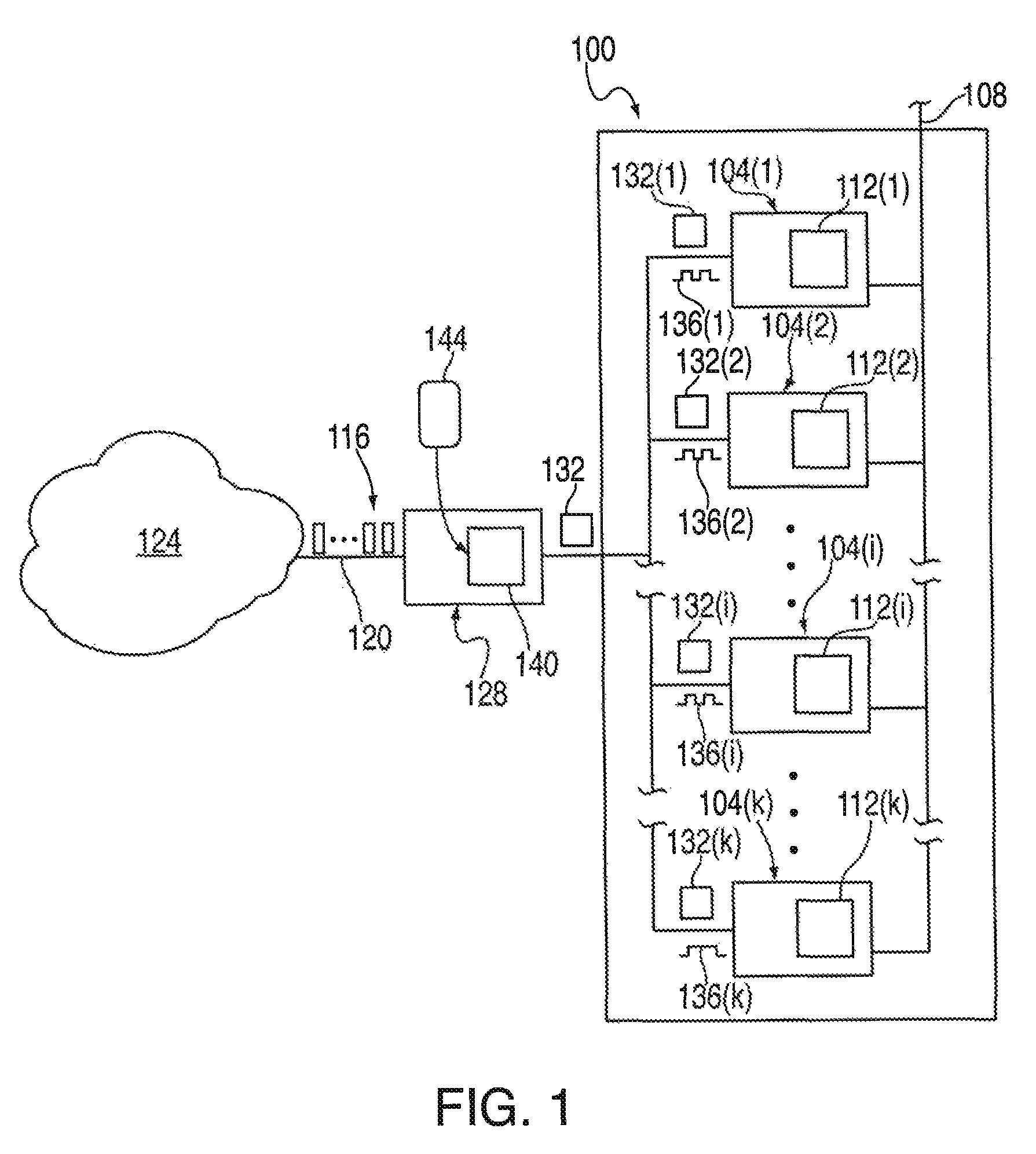
  • Figure 1
    Figure 1
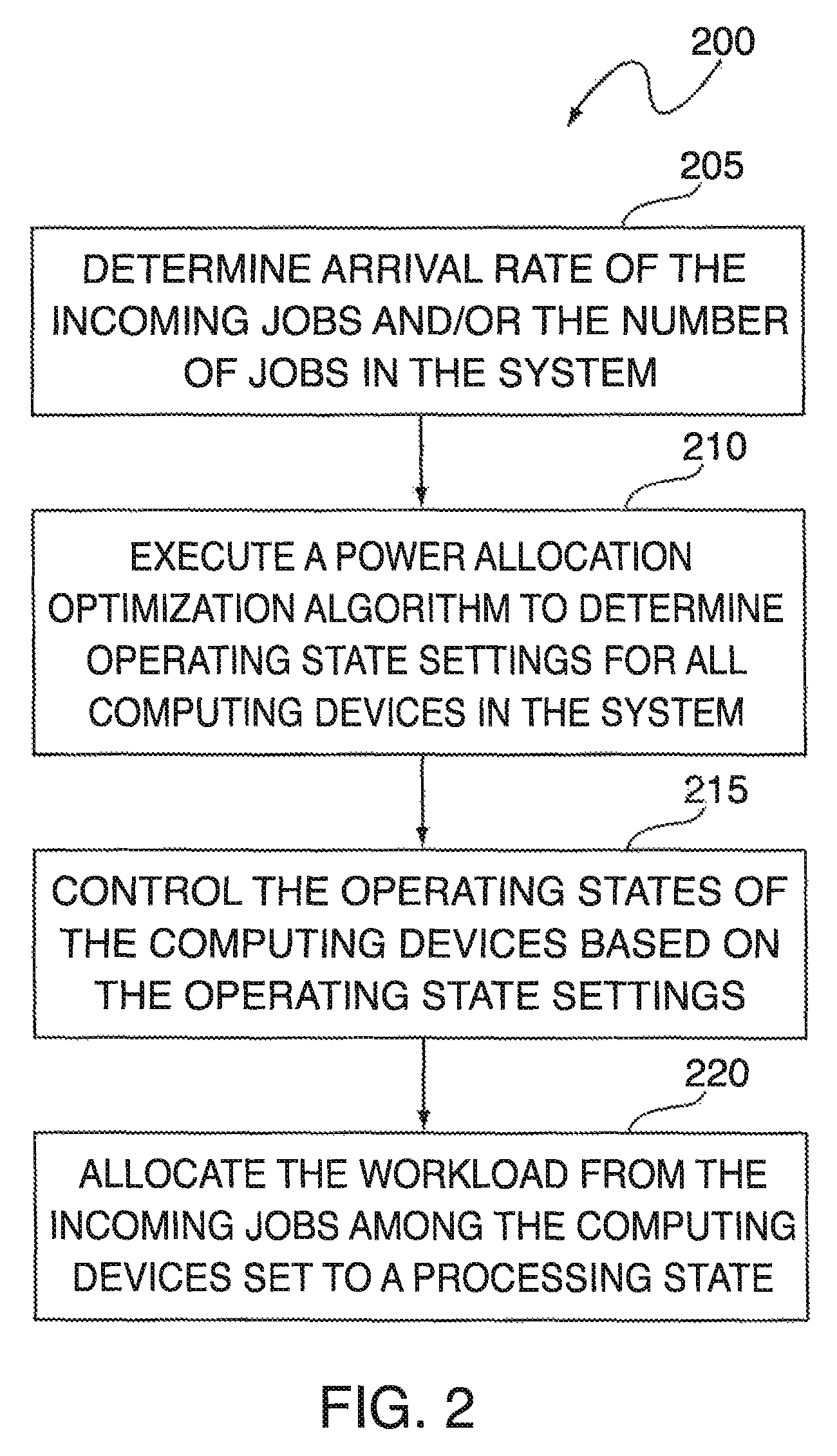
  • Figure 2
    Figure 2
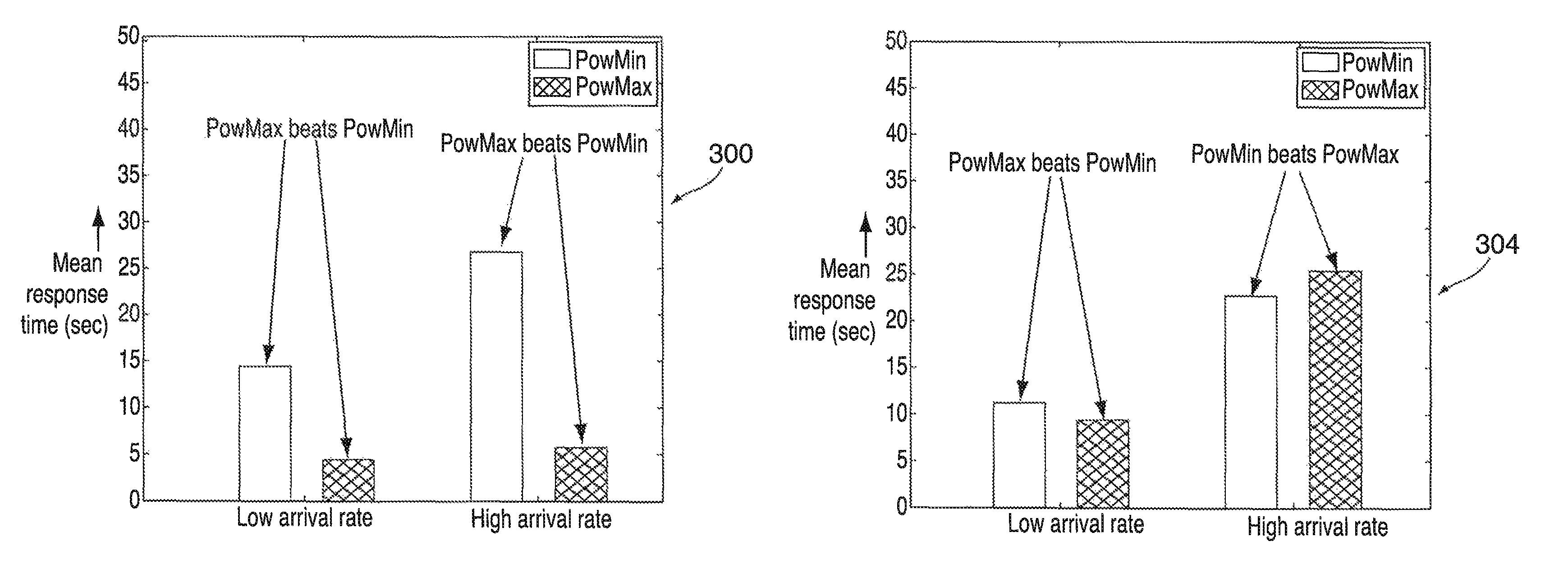
  • Figure 3
    Figure 3
Patent Text Reader

Abstract

Systems, apparatuses, methods, and software that implement power budget allocation optimization algorithms in multi-processor systems, such as server farms. The algorithms are derived from a queuing theoretic model that minimizes the mean response time of the system to the jobs in the workload while accounting for a variety of factors. These factors include, but are not necessarily limited to, the type of power (frequency) scaling mechanism(s) available within the processors in the system, the power-to-frequency relationship(s) of the processors for the scaling mechanism(s) available, whether or not the system is an open or closed loop system, the arrival rate of jobs incoming into the system, the number of jobs within the system, and the type of workload being processed.
Need to check novelty before this filing date? Find Prior Art

Description

RELATED APPLICATION DATA

[0001] This application claims the benefit of priority of U.S. Provisional Patent Application Ser. No. 61 / 341,922, filed Apr. 7, 2010, and titled “Optimal Power Allocation In Server Farms,” which is incorporated by reference herein in its entirety.STATEMENT REGARDING FEDERALLY SPONSORED RESEARCH AND DEVELOPMENT

[0002] This invention was made in part with government support under National Science Foundation SMA / PDOS Grant CCR-0615262. The United States Government may have certain rights in this invention.FIELD OF THE INVENTION

[0003] The present invention generally relates to the field of managing power and performance of computing devices. In particular, the present invention is directed to power budget allocation in multi-processor systems.BACKGROUND

[0004] For some time now, the amount of power consumed by servers has been increasing, as has the number of servers placed in various facilities. Servers today consume ten times more power than they did ten years ago. ...

Examples

Embodiment Construction

[0036]Aspects of the present invention are directed to optimizing allocation of a fixed power budget in a multi-processor system, such as a server farm, that processes streams of jobs coming into the system. Some of these aspects are directed to a power allocation optimization scheme that implements a queuing theoretic model that minimizes the mean time for executing the incoming jobs. The queuing theoretic model accounts for a number of factors, such as the power-to-frequency relationship of the processors in the system, the arrival rate of the jobs, the power budget, among others, that affect the mean response time of the system, i.e., the mean time that it takes the processors within the system to complete the incoming jobs, and leverages the ability to selectively control the operating frequencies of the individual processors in a way that minimizes the mean response time for a given power budget. These and other aspects of the present invention are described and exemplified bel...