
Method and apparatus for the disinfection or sterilization of medical apparel and accessories
a technology for disinfection or sterilization of medical and laboratory apparel and accessories, applied in the direction of instruments, cleaning using liquids, therapy, etc., can solve the problems of putting an inefficient and expensive burden on hospitals, contaminated uniforms, scrubs, etc., to prevent user exposure to uv illumination, facilitate reflection of uv light, and maximize exposure to medical effects
- Summary
- Abstract
- Description
- Claims
- Application Information
AI Technical Summary
Benefits of technology
Problems solved by technology
Method used
Image

Examples
example 1
Disinfection Cabinet with UV Scanning Devices to Disinfect Hospital Uniforms
[0125]UV-C radiation can efficiently eliminate vegetative bacteria and is widely being used in hospitals. However, it has not been used to disinfect white coats that are used by health care workers, which tend to carry pathogenic bacteria, as shown by several studies.
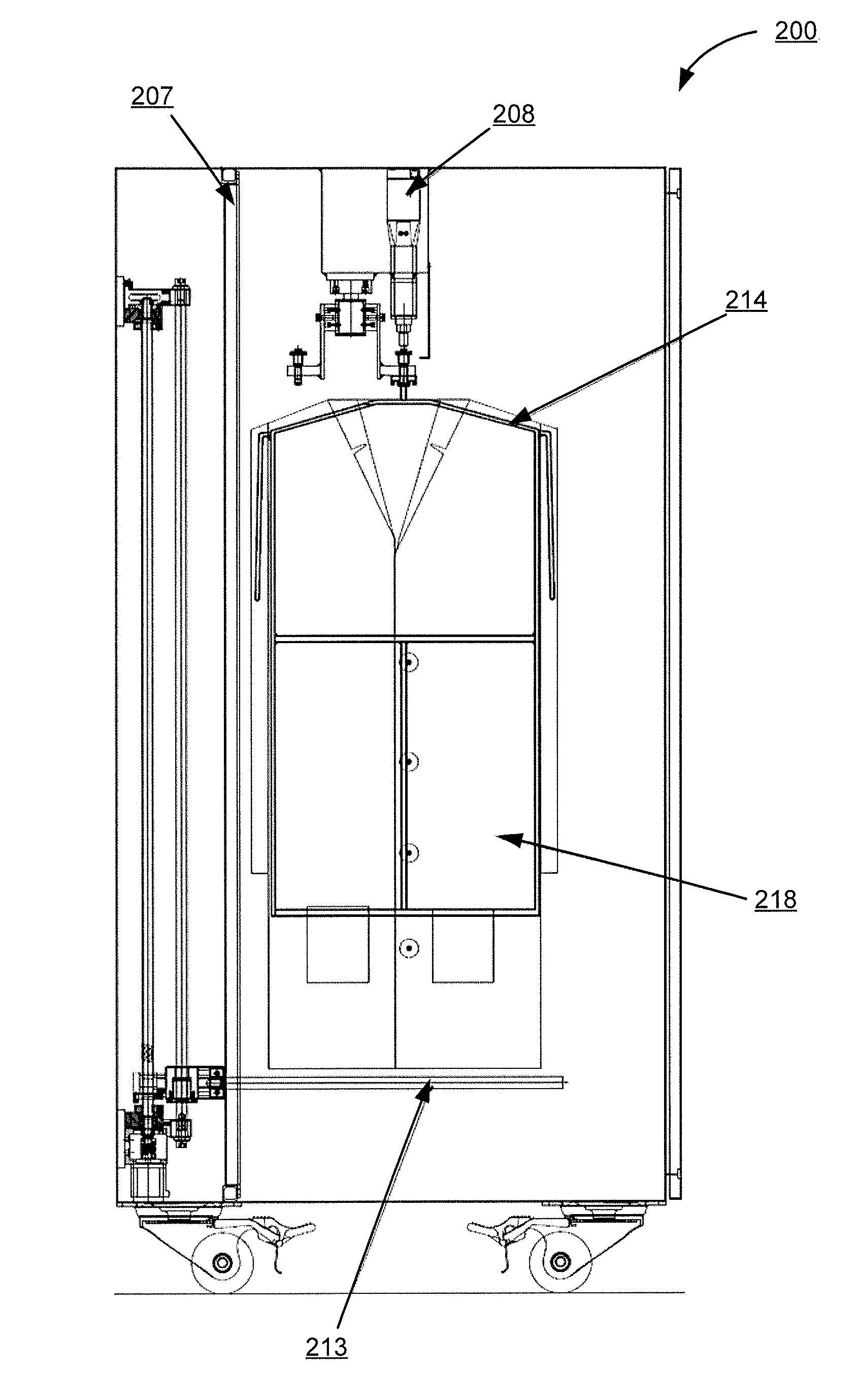
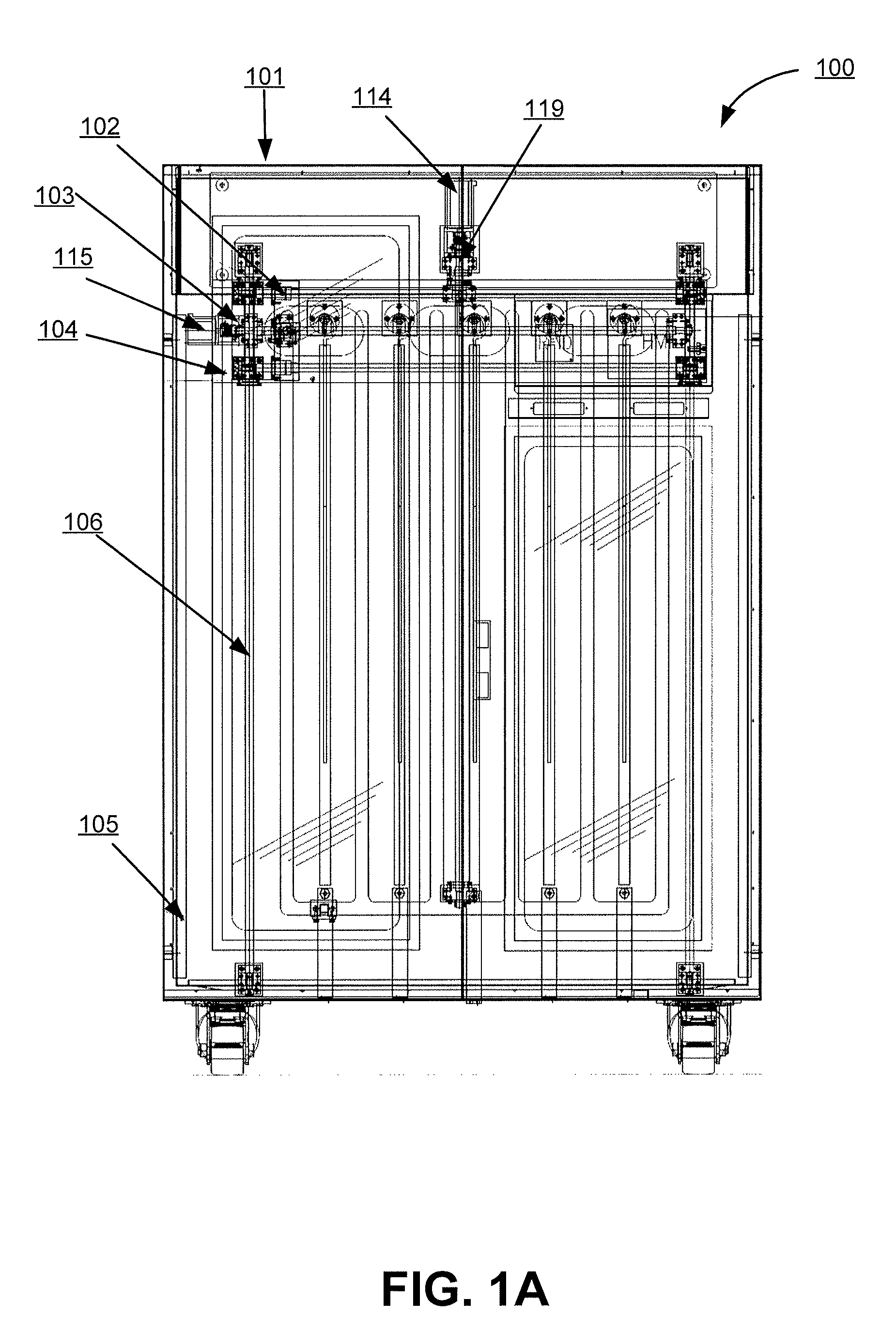
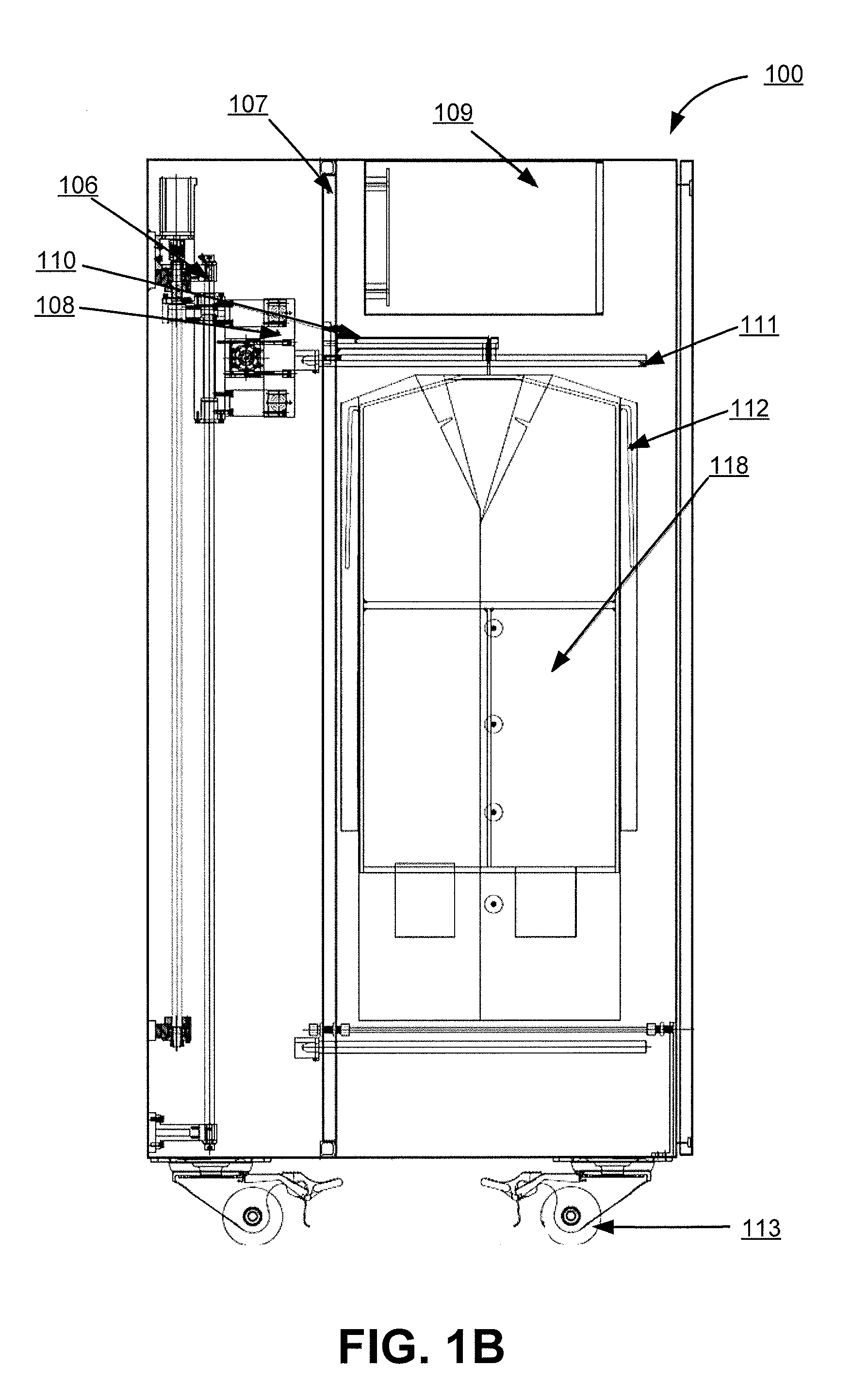
[0126]The disinfection cabinet described herein is designed to focus on four main objectives: (1) maximize exposure of UV-C on the fabric or accessory surface; (2) hold multiple items of apparel and / or accessory; (3) ensure safety to users; and (4) gather usage statistics of the cabinet by each health care worker in order to send reminders to disinfect items of apparel and / or accessories at regular intervals. The basic design of the cabinet is illustrated in FIGS. 1A-C and FIGS. 2A-C.
[0127]The disinfection cabinet comprises the following components:
[0128]Scanning system: The scanning system is the primary mechanical assembly within the cabinet. ...
example 2
Testing Results
[0134]Methods: The efficiency of the disinfection of the invention was measured by collecting bacterial samples from the white coats of physicians (both short sleeve and long sleeve coats). FIG. 3 illustrates the locations from which samples were collected as indicated by the circled regions on the coats (FIG. 3-300; 310). Samples were collected using standard procedures using swabs. Samples were grown on bacterial growth cultures under standard laboratory conditions by an accredited medical diagnostic laboratory. The culture plates were then incubated to observe bacterial growth. After 24 hours, the culture plates were analyzed to determine whether there was any bacterial growth. Tests were specifically performed to identify Gram positive bacilli, Gram negative bacilli and Gram positive cocci.
[0135]Observations:
[0136]Anywhere from 2-100 CFU (colony forming units) of bacteria (mentioned above) were isolated from several locations on coats before the disinfection proce...
PUM
| Property | Measurement | Unit |
|---|---|---|
| time | aaaaa | aaaaa |
| duration of time | aaaaa | aaaaa |
| time period | aaaaa | aaaaa |
Abstract
Description
Claims
Application Information
 Login to View More