
Preparation method of nitrogen-doped carbon nanotube wave-absorbing agent
A nanotube and azacarbon technology, applied in the directions of carbon nanotubes, nanocarbons, electrical components, etc., can solve the problems of tube wall distortion and low doping amount, and achieve simple process, easy large-scale production, and efficient electromagnetic wave absorption. performance effect
Patent Information
- Authority / Receiving Office
- CN · China
- Patent Type
- Applications(China)
- Current Assignee / Owner
- Publication Date
- 2022-04-12
Smart Images
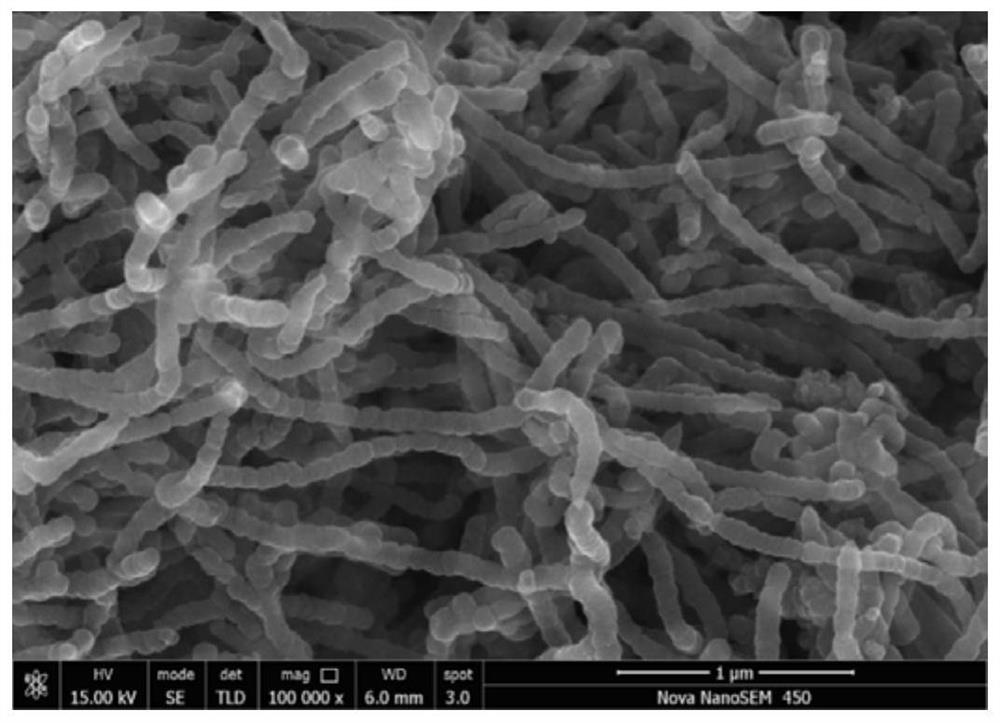
Figure 1 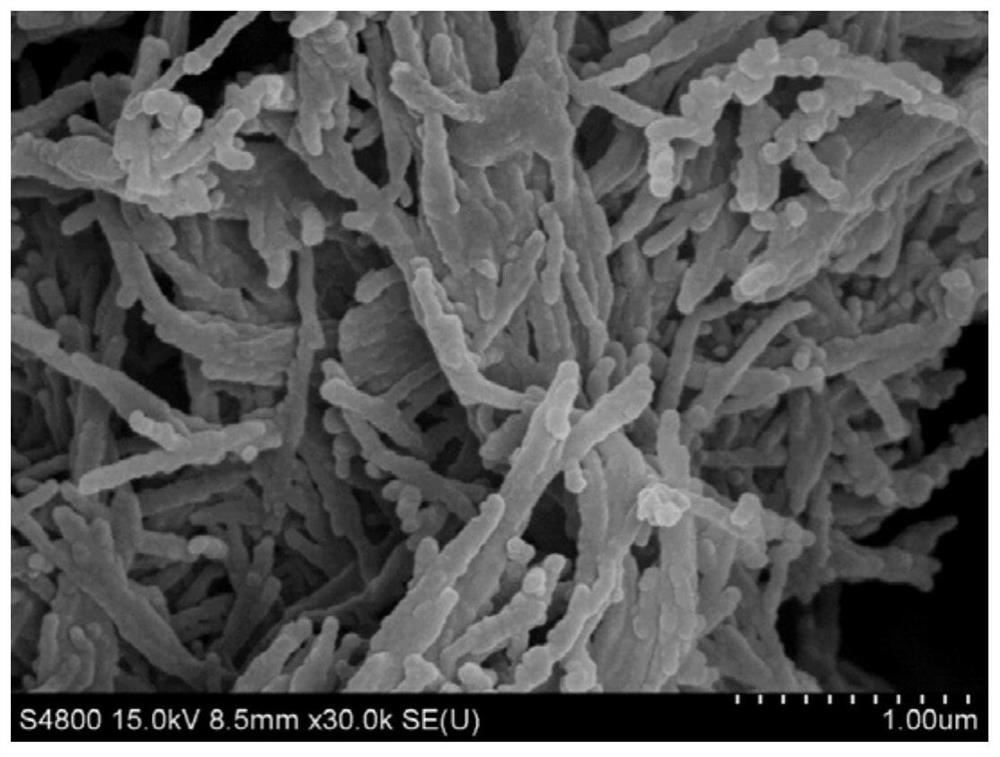
Figure 2 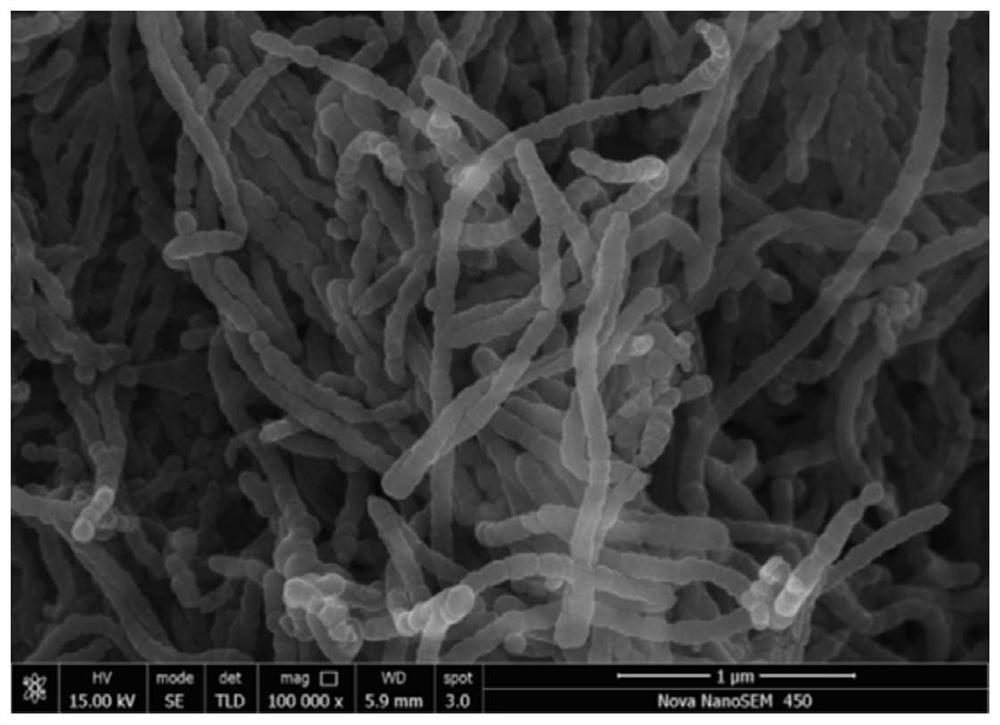
Figure 3
Abstract
Description
technical field
[0001] The invention relates to a preparation method of an azacarbon nanotube wave absorbing agent, belonging to the technical field of wave absorbing material preparation. Background technique
[0002] With the acceleration of the modern informationization process, the problems of self-disturbance, mutual disturbance, enemy disturbance and radiation leakage in the electromagnetic environment have become serious problems faced by current national defense projects and environmental security. The development of high-performance absorbing materials is an important way to solve the problem of electromagnetic interference in the current complex electromagnetic environment. Among many new materials, carbon nanomaterials, especially carbon nanotubes, have received extensive attention because of their excellent electrical conductivity and stability. Because the electrons in carbon nanotubes can only move axially along the graphitized tube wall, they exhibit unique e...
Examples
Embodiment 1
[0028] The preparation method of azacarbon nanotube sample 1 comprises the following steps:
[0029] Step 1: Weigh 20 mg of pyrrole and dissolve it in 15 mL of methanol, add 192.8 mg of induction reagent polyethylene glycol octylphenyl ether (the molar ratio of induction reagent to pyrrole monomer is 1:1), stir well to dissolve, add 15 mL The 1M ferric chloride solution of the oxidizing agent was stirred rapidly for 4 hours, followed by filtering, washing with ethanol, washing with water, and vacuum drying to obtain polypyrrole nanotubes.
[0030] Step 2: Place the polypyrrole nanotubes in a tube furnace, protect them with argon, raise the temperature from room temperature to 500°C at 10°C / min and keep it warm for 3 hours to obtain azacarbon nanotubes, which are designated as sample 1.
Embodiment 2
[0032] The preparation method of azacarbon nanotube sample 2 comprises the following steps:
[0033] Step 1: Weigh 20 mg of pyrrole and dissolve it in 15 mL of methanol, add 85.9 mg of induction reagent sodium dodecyl sulfate (the molar ratio of induction reagent to pyrrole monomer is 1:1), stir well to dissolve, add 15 mL of oxidant 1M chlorine The ferric chloride solution was stirred rapidly for 4 hours, followed by steps of filtration, ethanol washing, water washing, and vacuum drying to obtain polypyrrole nanotubes.
[0034] Step 2: Place the polypyrrole nanotubes in a tube furnace, protect them with argon, and raise them from room temperature to 500°C at 10°C / min and keep them warm for 3 hours to obtain azacarbon nanotubes, which are designated as sample 2.
Embodiment 3
[0036] The preparation method of azacarbon nanotube sample 3 comprises the following steps:
[0037] Step 1: Weigh 100 mg of pyrrole and dissolve it in 30 mL of methanol, add 96.4 mg of induction reagent polyethylene glycol octylphenyl ether (the molar ratio of induction reagent to pyrrole monomer is 1:10), stir well to dissolve, add 15 mL The 1M ferric chloride solution of the oxidizing agent was stirred rapidly for 4 hours, followed by filtering, washing with ethanol, washing with water, and vacuum drying to obtain polypyrrole nanotubes.
[0038] Step 2: Place the polypyrrole nanotubes obtained in step 1 in a tube furnace, protect them with argon, raise them from room temperature to 500°C at 10°C / min and keep them warm for 3 hours to obtain azacarbon nanotubes, denoted as Sample 3.