
Low Thermal Stress Engineered Metal Structures
a technology of engineered metal and low thermal stress, applied in metal-working apparatus, transportation and packaging, coatings, etc., can solve the problems of severe design constraints, large temperature changes of many structures of technological importance, and severe thermal stress of heat exchangers that undergo non-continuous use, so as to reduce overall system temperatures and/or control thermal stress. , the effect of dissipating thermal energy
Patent Information
- Authority / Receiving Office
- US · United States
- Current Assignee / Owner
- Publication Date
- 2020-10-22
Smart Images
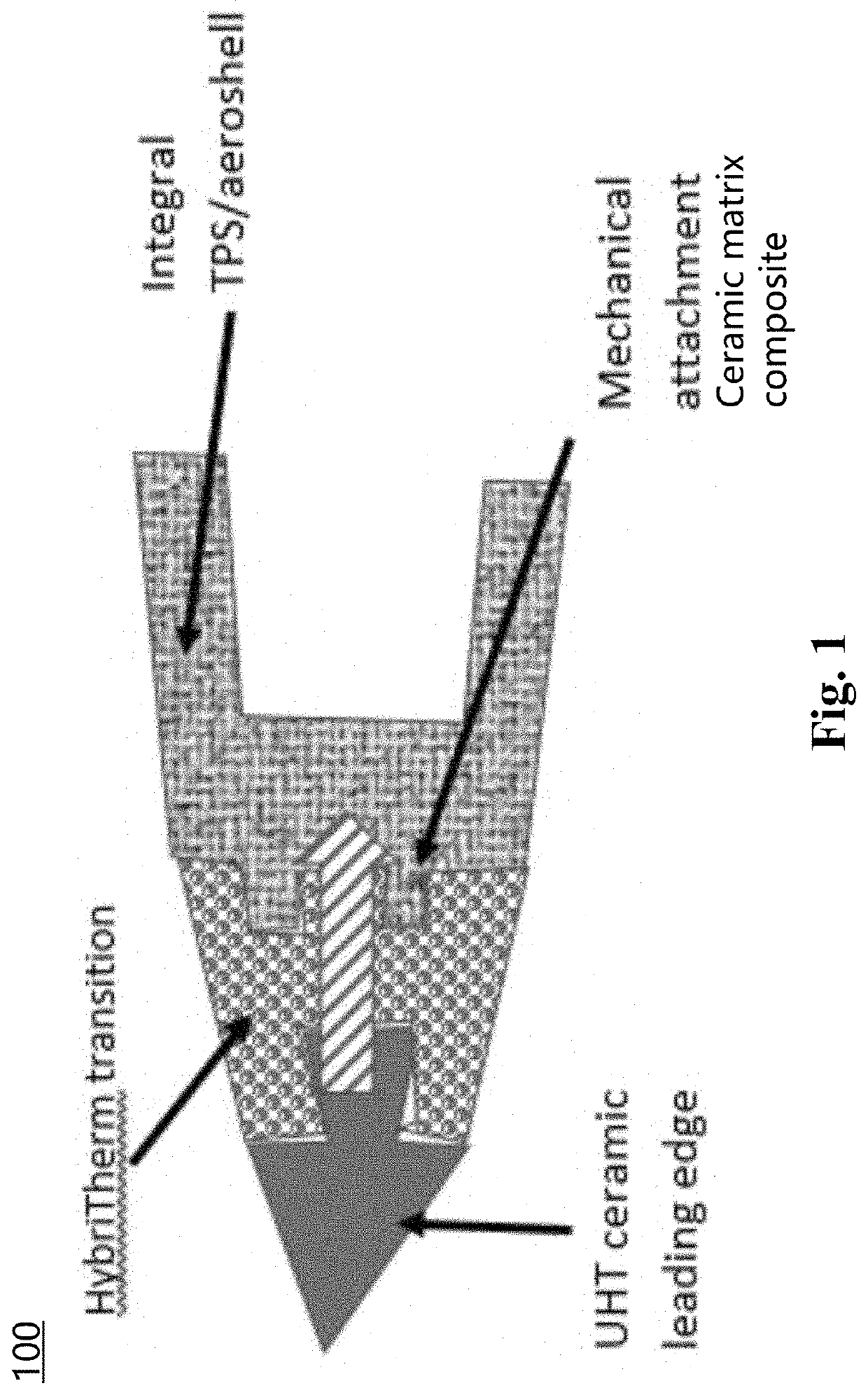
Figure 1 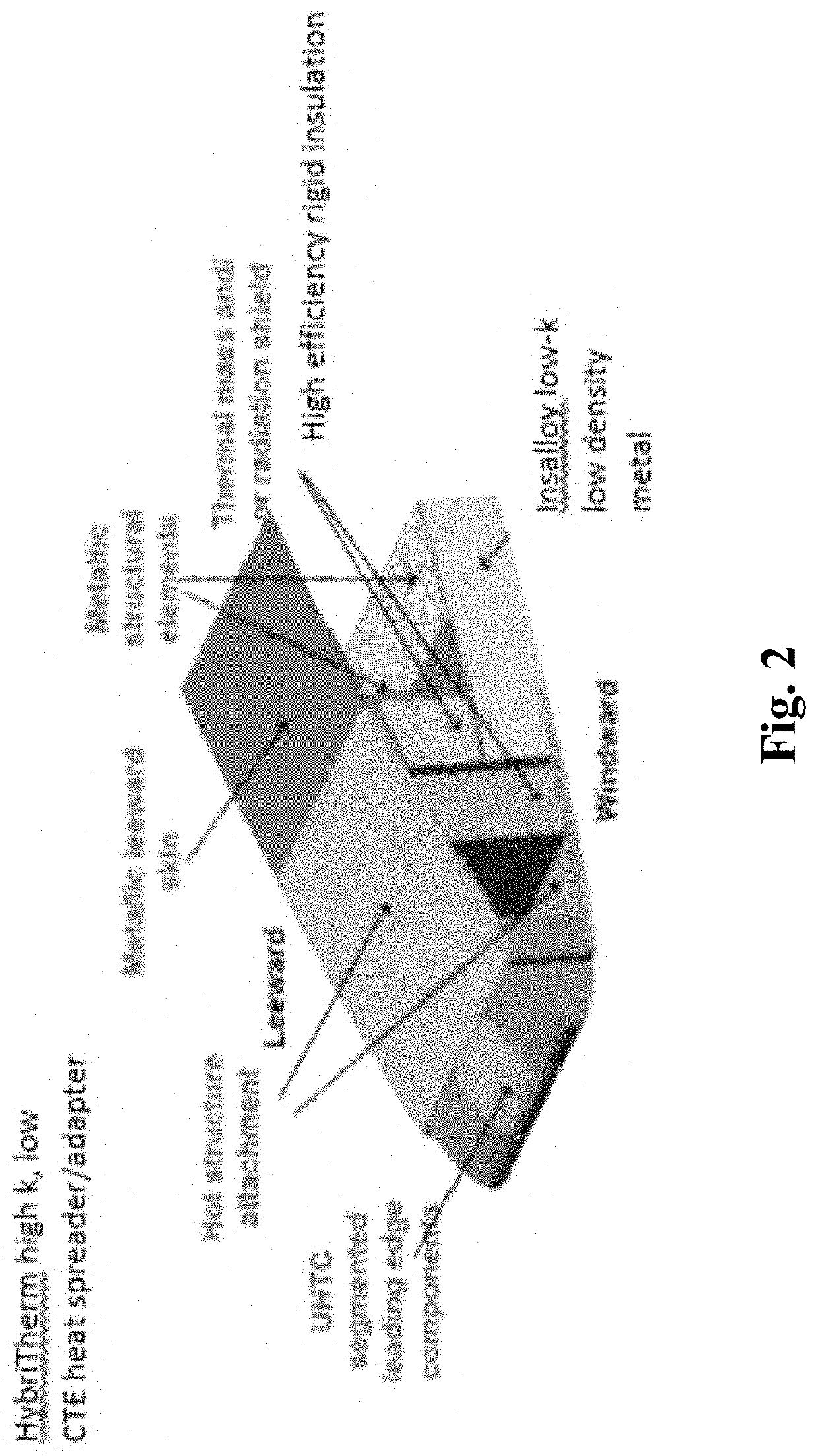
Figure 2 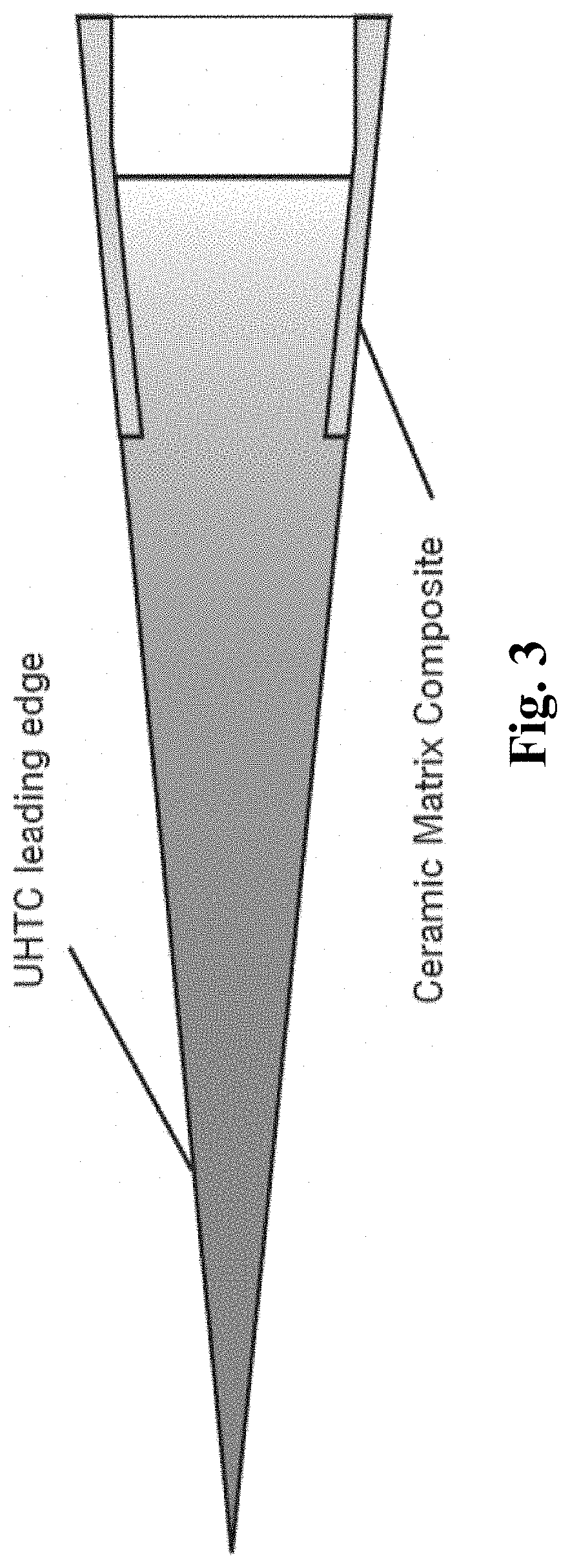
Figure 3
Abstract
Description
[0001] The present disclosure claims priority on U.S. Provisional Patent Application Ser. No. 62 / 866,927 filed Jun. 25, 2020, which is incorporated herein by reference.
[0002] The present disclosure is a continuation-in-part of U.S. Ser. No. 16 / 110,600 filed Aug. 23, 2018, which in turn claims priority on U.S. Provisional Patent Application Ser. No. 62 / 549,704 filed Aug. 24, 2017, which is incorporated herein by reference.
[0003] This application is also a continuation-in-part of U.S. Ser. No. 16 / 110,600 filed Aug. 23, 2018, which in turn a continuation-in-part of U.S. Ser. No. 14 / 752,166 filed Jun. 26, 2015 now U.S. Pat. No. 10,092,954; issued Oct. 9, 2018), which in turn claims priority on U.S. Ser. No. 13 / 445,810 filed Apr. 12, 2012 (now U.S. Pat. No. 9,096,034; issued Aug. 4, 2015), which in turn claims the benefit of U.S. Provisional Application Ser. No. 61 / 474,712 filed Apr. 12, 2011.REGARDING FEDERALLY SPONSORED RESEARCH OR DEVELOPMENT STATEMENT
[0004] Portions of this invention wer...
Examples
example 1
[0241]A high speed vehicle airframe panel was designed using a ceramic leading edge insert and an insulating structure. A thermal transition piece is fabricated from a BN-filled FeCrAlY, in the structure illustrated in FIG. 1 or 2 or 3. The HybriTherm thermally-engineered attachment structure includes a MA956 alloy (37-57 wt. % iron, 16-23 wt. % chromium, 2-7 wt. % aluminum, 0-1 wt. % titanium, 0-1 wt. % copper, 0-1 wt. % manganese, 0-1 wt. % cobalt, 0-1 wt. % nickel, 0-1 wt. % Y2O3, <0.2 wt. % carbon) multi-phase composite that is fabricated by premixing 40 vol. % of 60 micron D50 spheroidized BN fillers (boron nitride), which possess a 80-92 wt. % increase (and all values and ranges therebetween) addition of nickel coating by a solution based adsorption method, with 15-35 vol. % (and all values and ranges therebetween) (e.g., 25 vol. %) of 1-10 micron powder (and all values and ranges therebetween) mixture of 70-80 wt. % iron (and all values and ranges therebetween) (e.g., 75.5 wt...
example 2
[0242]A multi-phase composite panel was fabricated using powder metallurgy processing from Hastelloy-N (e.g., 68-73 wt. % nickel, 5-8 wt. % chromium, 14-18 wt. % molybdenum, <0.2 wt. % carbon, <0.5 wt. % cobalt, <0.5 wt. % copper, 0-1 wt. % tungsten, <0.6 wt. % aluminum, <0.6 wt. % titanium) and alloy powders using the sequence described in Example 1, but sintered at 950-1200° C. (and all values and ranges therebetween) (e.g., 1080° C.). The material was fabricated into thin sheets, which were alternately etched with complex channels. The solid panels and machined panels were stacked and spark plasma bonded into a solid core of a heat exchanger. The material demonstrates a 400-500% increase (and all values and ranges therebetween) in thermal conductivity compared to its parent metal, Hastelloy-N. Additional property modifications include a 65-90% reduction (and all values and ranges therebetween) reduction in modulus, a 5-15% reduction (and all values and ranges therebetween) in ...
example 3
[0243]A magnesium multi-phase composite electronic box was fabricated by melt infiltrating a calcium-modified AZ61 alloy containing calcium and cerium (85-92 wt. % magnesium, 5.80-7.2 wt. % aluminum, 0.4-1.5 wt. % zinc, up to 0.15 wt. % manganese, up to 0.1 wt. % silicon, up to 0.05 wt. % copper, up to 0.005 wt. % nickel, up to 0.005 wt. % iron, up to 2 wt. % calcium, up to 1 wt. % cerium, up to 1.5 wt. % graphene platelets) into a 35-50 vol. % (and all values and ranges therebetween) (e.g., 40 vol. %) spheroidized BN filler preform space using prealloyed AZ61 (88-92 wt. % magnesium, 5.80-7.2 wt. % aluminum, 0.4-1.5 wt. % zinc, up to 0.15 wt. % manganese, up to 0.1 wt. % silicon, up to 0.05 wt. % copper, up to 0.005 wt. % nickel, up to 0.005 wt. % iron)+titanium powders applied (blended) to the fillers using squeeze casting. The 2″ thick billets were extruded into a complex finned profile for use as heat sinks in electronic boxes.